



A pool deck can look finished and still feel incomplete when wide joints collect dirt, weeds, and standing water. Artificial grass between pavers gives Florida pool areas a cleaner transition between hard surface and greenery, ultimately elevating the look of your outdoor space without the constant trimming that natural grass requires.
I have seen this combination work especially well around patios, screen enclosures, outdoor kitchens, and concrete pavers on pool walkways. But the installation has to begin with stable pavers, proper drainage, and turf selected for Florida heat. The right preparation makes the difference between a clean upgrade and a maintenance problem.
Key Takeaways
- Synthetic turf can soften the appearance of brick pavers around a pool while creating a low maintenance landscape transition.
- Drainage and paver stability must be checked before installation.
- Pool chemicals, sun exposure, foot traffic, and heat affect turf selection.
- Narrow joints may not provide enough room for a durable turf strip.
- Professional preparation helps prevent loose pavers, uneven edges, and drainage issues.
Artificial Grass Between Pavers: Is It Right for a Pool Deck?
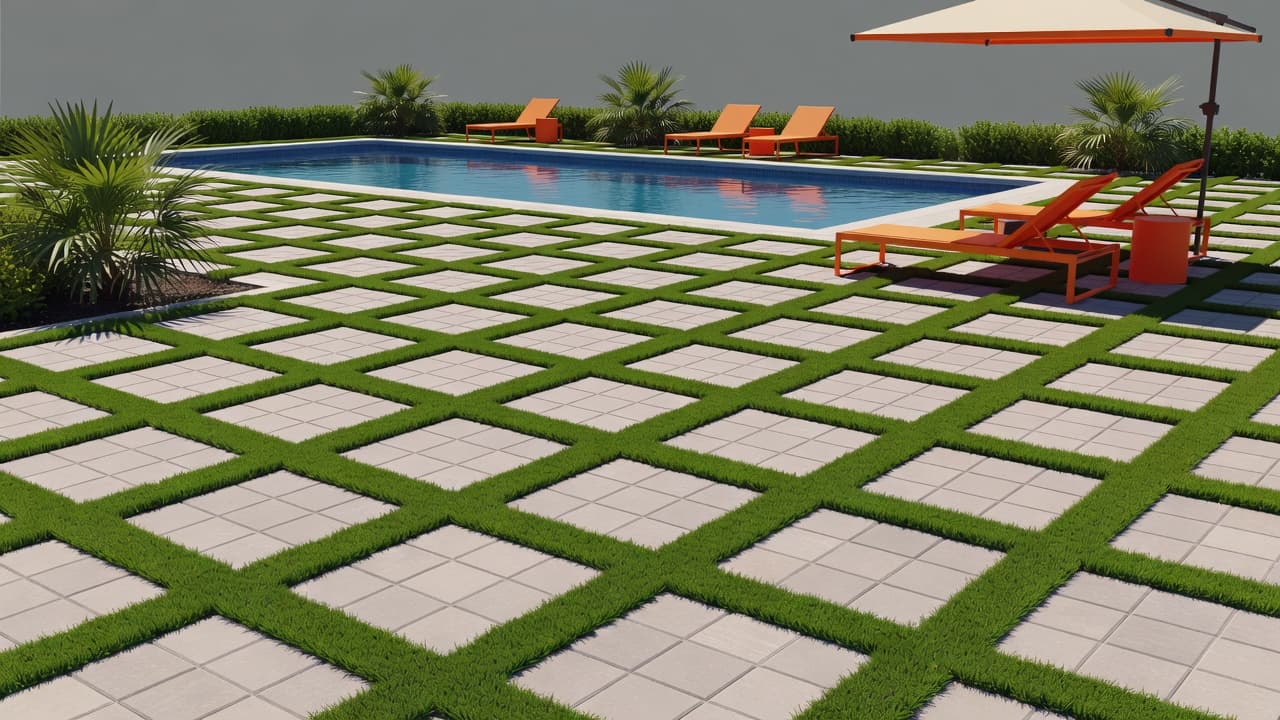
Artificial grass between pavers is not the same as laying turf across an entire yard. Here, the turf is cut into strips or sections and installed in selected joints, borders, or larger spaces between paver areas.
The finished look can be attractive because synthetic turf breaks up large areas of brick, natural stone, or concrete pavers. A pool deck with rows of pavers can otherwise feel hard and plain. Turf adds color and a softer visual line without introducing muddy soil beside the water.
This option also works well for homeowners who want a low maintenance pool area. Natural grass beside a pool often gets worn down by foot traffic, splashing water, furniture, and pool equipment. It can also bring clippings and soil onto the deck. Artificial turf avoids mowing and reduces the need to edge narrow spaces every week.
There are limits. Turf can become hot in direct Florida sun, and it still needs cleaning. It also shouldn’t be used to hide pavers that are sinking, rocking, or holding water. If the base underneath is moving, the turf will not correct the problem.
Artificial turf can improve the appearance of a pool deck, but it cannot replace proper paver repair or drainage work.
A pool area has more demanding conditions than a decorative garden path. The surface needs to stay comfortable, drain properly, and remain safe when wet so your outdoor space stays functional year round. That starts with an inspection before any material is ordered.
Why Florida Pool Areas Need More Planning
Southwest Florida brings intense sun, heavy rain, humidity, and long periods of outdoor use. Pool decks also deal with chlorine, saltwater, sunscreen, wet feet, and furniture being moved across the surface.
The first concern is drainage. Water should move through the turf and away from the pool deck instead of collecting underneath it, ensuring the pool surround acts as an effective drainage area. If the pavers already have low spots, clogged joints, or poor slope, installing turf over the area can trap the problem below the surface.
I check for loose pavers, uneven edges, missing joint material, and signs of settlement. Whether inspecting a standard paver walkway or a complex patio, any shifted foundation needs attention. In some cases, a paver section needs to be lifted and reset before the turf is installed. In other cases, the existing layout is stable and only the joint material needs to be removed.
Poolside turf providers often discuss drainage and heat control as part of any artificial turf installation. This South Florida pool turf guide is useful for understanding why the backing, synthetic turf materials, and surrounding elements matter around a swimming pool.
The size of the joint also matters. Very narrow joints may not hold a useful strip of turf. The cut can look uneven, and the edges may pull loose when people walk across them or when cleaning equipment passes over the area. Wider joints, decorative borders, and open sections between pavers usually provide a better result.
The safest approach is to inspect the entire pool deck, not only the areas where you want green color. Water movement, paver alignment, coping, drains, and the screen enclosure can all affect the finished work.
How Artificial Turf Is Installed Between Pavers
A quality artificial turf installation is more than cutting green material and pushing it into the joints. The surface must be prepared so the turf has support and the pavers remain stable.
The process usually begins with marking the areas for turf. I look at the paver pattern and choose lines that make sense visually. Straight joints may call for clean strips, while curved pool edges often need careful templates and several smaller cuts made with a sharp utility knife.
Next, the joint material or unwanted surface section is removed to the depth required by the turf system. The opening is cleaned, and a sturdy sub-base layer is prepared by adding decomposed granite or leveling sand over a layer of landscape fabric. If the pavers have shifted, they should be reset before the turf goes in.
The base must be firm and reasonably level. Loose soil, excess sand, or debris beneath the opening can cause the turf to dip later. The turf is then cut carefully, positioned, and secured according to the layout using landscape adhesive along joint borders or turf nails where appropriate. Edges need attention because a loose corner can become a trip point and collect dirt.
If turf infill is part of the selected system, it must be applied according to the manufacturer instructions. Not every product uses the same infill, and pool areas need materials that won’t create a mess when wet. The installer should also leave drainage paths open and avoid covering drains or inspection points.
The final stage is cleaning the pavers and checking the transition. Turf should not sit high enough to catch bare feet or furniture. It also should not be pushed so low that water and debris collect along the edge.
A professional installation includes the surrounding pavers, not only the grass strips. That is important because a beautiful turf insert cannot make a sunken pool deck safe.
Choosing Turf, Pavers, and Joint Details
The turf should match the way you use the pool area. A decorative strip beside a planter has different needs than a walkway used every day.
Look for a product designed for outdoor use with UV protection, drainage backing, and a pile height that fits the surrounding concrete pavers. Taller turf can look full, but shorter turf is often easier to keep clean around a pool. When evaluating options, check how the density of the turf blades holds up against chlorine, salt, pets, furniture, and frequent foot traffic.
For sub-base preparation, contractors often rely on leveling sand or decomposed granite under narrow gaps, paired with landscape fabric to prevent unwanted weed growth in joints. Selecting the right synthetic turf also involves choosing a stable turf infill, such as silica sand, which helps resist pool deck moisture and keeps the installation secure.
Color matters too. Bright green turf beside faded pavers can look disconnected. I prefer to compare samples against the actual pavers, coping, stone, and house exterior. A mix of green tones often looks more natural than a single bright shade.
Paver color and pattern also affect the layout. Red and brown brick pavers can pair well with darker turf, while light concrete or travertine may look better with a softer green. The goal is not to fill every joint. A measured pattern usually looks cleaner than adding turf wherever space is available, especially along a busy paver walkway.
A local comparison of poolside turf and pavers in South Florida can help homeowners think through drainage, maintenance, and heat before choosing materials.
I also recommend planning around furniture legs, gates, drains, steps, and the pool equipment area. Turf placed under a heavy chair or beside a gate may wear differently than turf in a low-traffic border. Good design considers how the space works every day, not only how it looks in a photograph.
Maintenance After Installation
Synthetic turf needs less care than natural grass, keeping your pool deck wonderfully low maintenance compared to traditional lawn edging. Even so, it isn’t completely maintenance-free, and leaves, pollen, dirt, and small debris can still settle in the fibers and along the paver edges.
Use a leaf blower, soft broom, or a stiff bristle brush to keep the area clean and gently lift flattened turf blades. Lightly rinse the synthetic turf when sunscreen, drinks, or pool water leave residue, ensuring the surface stays fresh. If there is a spill, clean it promptly with a mild product approved for synthetic turf. Avoid harsh chemicals unless the turf manufacturer says they are safe.
Pavers still need regular care. Algae and dirt can make a wet deck slippery, while aggressive pressure washing can remove joint material or damage the surface. I always recommend using the right pressure and nozzle for the paver type, then replacing missing joint material when needed.
Keep an eye on small changes. A loose paver, lifted turf edge, or low spot should be addressed early. Water that sits after rain may point to a drainage issue beneath the surface, so keeping the entire zone clear ensures a proper drainage area. It is better to correct that before the base washes out or more pavers begin moving.
Sealing the pavers can also affect the appearance of the entire area. The sealer should be compatible with the paver material and applied only after the surface is properly cleaned and dry. A cloudy or uneven finish can make new turf look out of place.
When Professional Installation Makes Sense
Some homeowners can handle a small turf border when the pavers are stable and the area is easy to access. Pool decks are different because they often include tight corners, screen enclosure posts, coping, drains, steps, and several surface levels that make artificial turf installation much more challenging.
I recommend a professional inspection when pavers are sinking, the joints are washed out, or water sits after rain. A thorough review of the underlying sub-base layer helps determine if the foundation needs reinforcing before securing joints with landscape adhesive or turf nails. The same applies when turf needs to connect to a pool deck, lanai, outdoor kitchen, or screen enclosure, as these transitions require careful cuts.
At Platinum Pavers of SWFL, I work with homeowners in Fort Myers, Cape Coral, Bonita Springs, Punta Gorda, Sarasota, and nearby communities. My team handles paver installation, repair, restoration, pressure washing, sealing, and artificial grass, so I can look at the full outdoor space instead of treating one visible symptom.
Homeowners have also told us they appreciate clear communication and clean work areas. One pool project involved resetting a sinking paver section, and another customer mentioned that the crew completed the work neatly and kept the homeowner updated during the job. That is the kind of straightforward service I believe in.
If you are planning a pool deck upgrade, Get a Free Quote so I can review the pavers, drainage, layout, and artificial grass between pavers needs before you commit to materials.
Frequently Asked Questions
Will artificial grass between pavers get too hot around a Florida pool?
Yes, synthetic turf can absorb heat and become warm under direct sunlight. Choosing lighter-colored turf, products with cooling technology, or rinsing the area with water can help keep the surface comfortable for bare feet.
Can artificial turf be installed over sinking or uneven pavers?
No, artificial grass cannot fix a compromised base or stop pavers from shifting. Any structural issues, low spots, or loose pavers must be repaired and leveled before the turf is installed.
How do you maintain artificial grass between pavers?
Maintenance is relatively simple and involves removing leaves and debris with a leaf blower or soft broom. Occasionally rinsing the turf with water helps wash away pool chemicals, sunscreen, and dust while keeping the fibers standing upright.
Conclusion
Artificial grass between pavers can give a Florida pool area a cleaner, softer appearance while reducing the upkeep associated with natural grass. The strongest results come from stable pavers, open drainage, proper cuts, and synthetic turf chosen for sun, moisture, and pool use.
I don’t recommend covering a paver problem and hoping it disappears. Have the base, joints, edges, and water flow checked first. With the right preparation, this combination of pavers and turf provides a long-lasting, attractive accent for any Florida pool deck or outdoor space.