

Yes, you can install pavers around an outdoor shower drain, provided the surface has proper support and the water has a suitable destination. I put base preparation and water routing first, because an attractive shower floor won’t stay dependable if water washes away the material underneath.
Your pavers can connect with an existing patio or form a separate shower area. The right water route starts with your soil, water use, and disposal requirements.
Key Takeaways
Water disappearing between pavers doesn’t prove the water-management system is working. It may be carrying bedding material away and creating tomorrow’s sinking pavers.
Standard pavers aren’t automatically permeable. A dependable installation needs coordinated surface grading, supporting layers, joints, and an outlet.
Which Drainage Option Fits Your Outdoor Shower?
I recommend choosing the water-handling plan before choosing the paver pattern. These four options handle water differently.
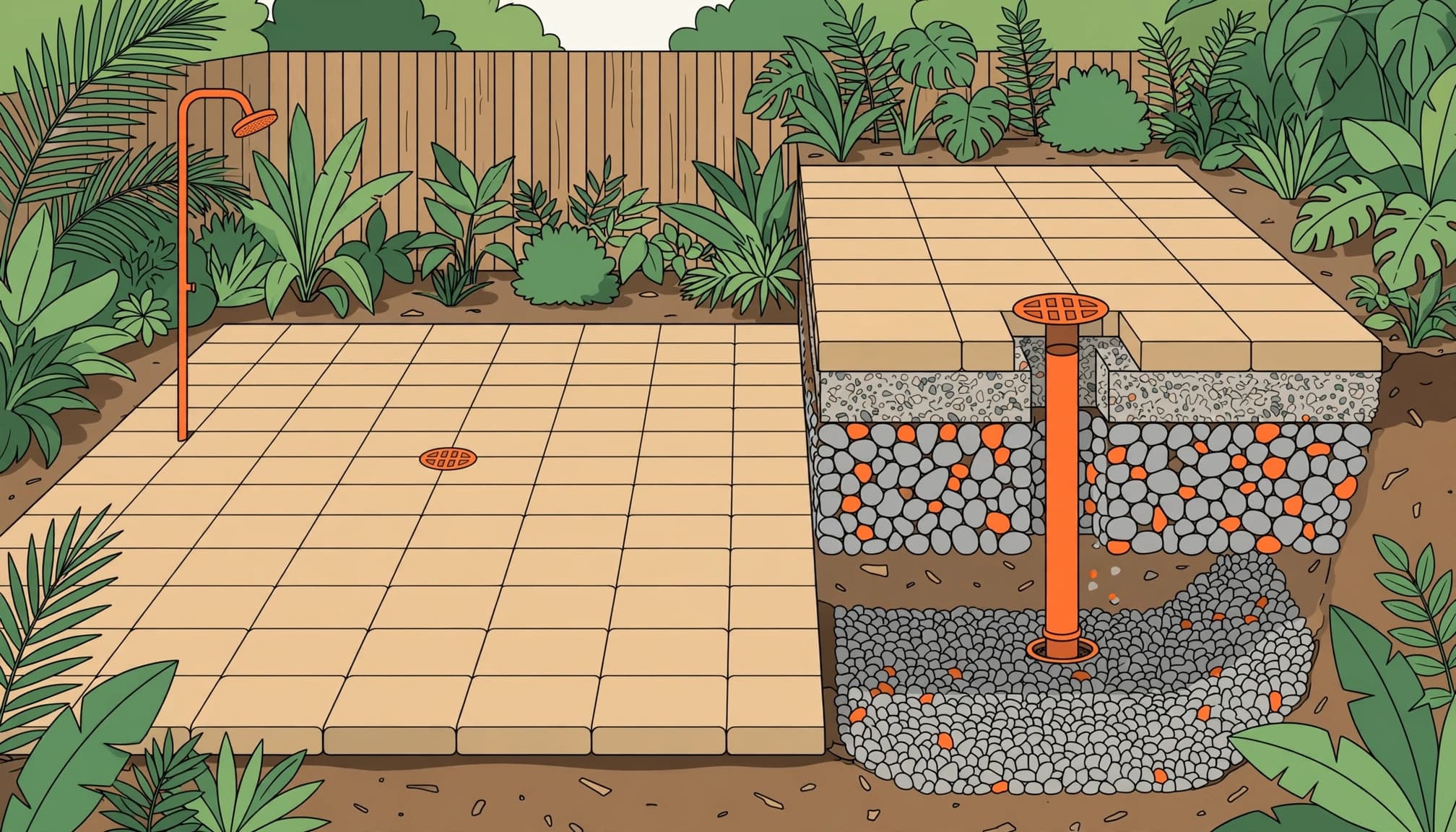
- Stone pavers over a dry well can extend your patio or create a standalone shower foundation. Gravel beneath the surface provides temporary storage and lets water infiltrate suitable soil. The supporting assembly must keep the pavers stable. The aggregate can trap sediment, but it doesn’t make soapy wastewater safe for discharge.
- Cedar flooring over a shower pan provides a flat standing surface with gaps for water to pass through. A metal, plastic, or rubber pan collects water underneath. An attached tube carries it to an approved system for that discharge or a garden-bed reuse arrangement where permitted. The removable wood floor also provides access for cleaning.
- A French drain uses an aggregate-filled trench and concealed perforated pipe to collect and move water. Soil or landscaping can conceal the trench, depending on its design. It needs an approved destination away from the home. I wouldn’t connect an open French drain directly to a sanitary sewer.
- A small infiltration pit is sometimes proposed for occasional rinsing. One DIY suggestion uses a two-foot hole lined with landscape fabric, filled with pea gravel, and topped with slatted wood. That depth isn’t a sizing standard, and this arrangement doesn’t establish that the soil or discharge route is suitable.
Will Your Soil and Local Rules Allow It?
Dry wells need soil that absorbs water
A dry well won’t work where the ground stays saturated. Clay, compacted soil, and high groundwater can limit infiltration, while sandy ground may absorb water more readily.
The New Jersey dry-well guidance explains that dry wells discharge through infiltration into the subsoil. Gravel stores water temporarily, but the surrounding ground still has to accept it.
An infiltration assessment of the yard soil, along with the shower’s flow rate and expected duration, guides sizing.
Shower wastewater and rainwater need separate planning
Local codes govern dry-well placement and construction. Plumbing and discharge rules cover shower water, connections to a sanitary sewer line, and permitted reuse.
Rainwater normally stays out of sanitary sewers. A rain-exposed French drain that carries run off water can introduce stormwater and increase backup risk.
The EPA’s drainage-well guidance addresses groundwater protection and regulatory requirements. A stormwater infiltration design doesn’t automatically authorize shower wastewater disposal. I recommend a qualified plumber for the plumbing connection, particularly where soap use is planned.
How to Install Pavers Around the Drain
Establish the grade and supporting base
I start with the finished surface height and follow the entire water route. Keep drainage away from foundations, screen-enclosure footers, pool structures, and neighboring properties.
Pitch the shower surface toward its collection point without creating uncomfortable footing. Include roof runoff, irrigation, and surrounding grades in the design.
Remove unstable material, build the specified aggregate base in controlled lifts, and provide firm edge restraint. Our paver installation preparation guide explains why elevations and water flow belong in the plan before paving begins.
Use textured, barefoot-friendly pavers, and keep the removable grate accessible. Ordinary pavers need their specified bedding and joints; permeable systems need compatible open-graded aggregate instead.
Set the channel drain before finishing the pavers
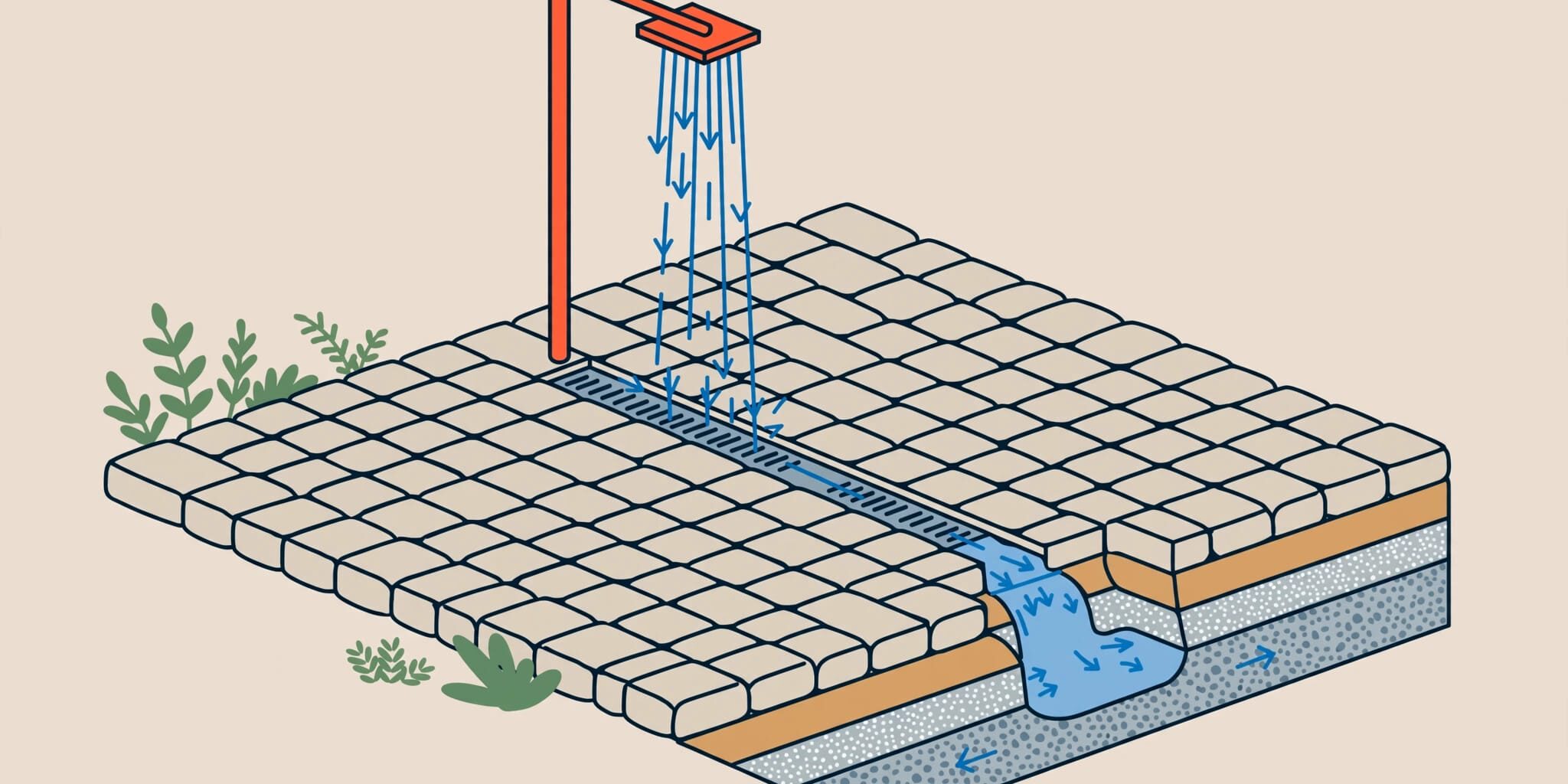
A linear channel can collect water along one edge. Some kits use 304 stainless steel in one-metre sections, with snap-out grates and narrow slots that reduce leaf and small-object entry.
For a concrete-supported channel drain kit, the installation sequence is:
- Excavate the trench with room for its support.
- Place the specified cement-based concrete bedding.
- Set the U-channel to its required elevation and outlet fall.
- Level and firmly seat the assembly without distorting it.
- Fit the cover plate and concrete support along both sides.
- Finish the adjoining pavers without blocking grate removal.
Some kits have cuttable pipe lengths and specialty sealing tape. Watertight joints depend on the specified connection method; tape isn’t a substitute for proper fittings.
After curing, run water through the assembly. Look for ponding, leaking connections, rocking pavers, or water escaping into the bedding.
Outdoor Shower Drain FAQ
Is a shower pan necessary?
Not every approved outdoor rinse arrangement needs a pan. Some homeowners consider one excessive for occasional rinsing, but a pan provides controlled collection. I favor that control when wastewater must enter plumbing rather than soak into the ground.
Can a stainless-steel trench drain support cars?
Only when the complete drain assembly is rated and installed for vehicle loads. Some kits advertise thickened grates strong enough for cars, but stainless steel alone doesn’t establish load capacity. A shower-area drain doesn’t need driveway loading unless vehicles actually cross it.
Start With Dependable Drainage
Pavers can make an outdoor shower comfortable, attractive, and easy to connect with your patio. The lasting result depends on stable support and controlled water flow, including what happens below the surface.
I recommend settling the water route before selecting the finish. Contact us to Get a Free Quote for your paver project and a free consultation.