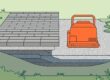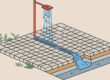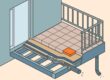


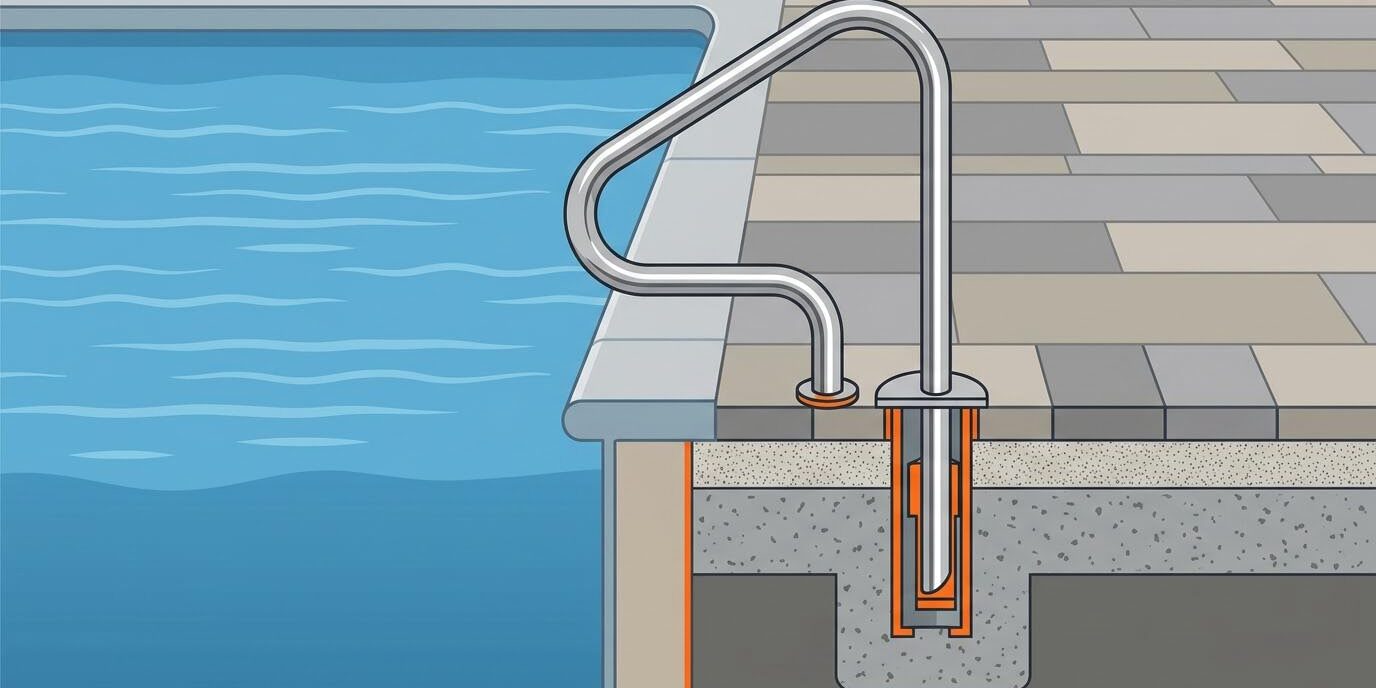
Pool handrail anchors need solid structural support beneath the deck, and the surrounding pavers need a firm, properly graded base. For a secure rail and a clean finish, the sleeve height must match the completed deck detail without leaving a raised lip or a low pocket.
I recommend looking below the surface before repairing this area. A loose handrail and sinking pavers can have different causes, even when they appear together.
Start with the support, then work toward the finished height.
Key Takeaways
- Secure the anchor in its designed concrete support, never in loose bedding sand or a paver alone.
- Match the rail diameter, socket depth, spacing, and finished deck height before installation.
- Correct drainage and base movement before resetting pavers, and keep anchor hardware accessible for service.
How Pool Handrail Anchors Hold the Rail
Pool handrail anchors secure in-ground ladders, handrails, and stair rails to concrete decks or coping supports. Above ground ladders need different mounting hardware. The visible paver cutout is only the finish around the connection.
The sleeve needs structural support
A sand-set paver deck allows limited movement between individual units. A handrail anchor must resist the force placed on the rail when someone uses it for support.
That means the socket needs its specified concrete installation or approved structural mounting system. Polymeric sand helps stabilize paver joints, but it cannot provide the anchorage a handrail needs.
The wedge locks the rail inside
In a wedge-style assembly, tightening the bolt draws a bronze or other metal wedge against the rail inside the socket. This creates the clamping pressure that holds the pipe.
A loose wedge and a moving concrete support require different repairs. Tightening the bolt won’t correct a cracked or settling anchor foundation.
The CDC’s aquatic facility inspection guide addresses anchored grab rails, ladders, and deck condition for public pools. Those are separate conditions worth watching around a residential pool, too.
Match Rail Size, Socket Depth, and Spacing
I wouldn’t choose a handrail anchor set by appearance alone. It must match the rail and mounting geometry, since small differences can leave you with hardware that won’t fit correctly.
Rail diameter and socket depth matter
Common rail outside diameters are 1.90 inches and 1.875 inches, also written as 1-7/8 inches. A 1.90 rail and a 1.875-inch rail aren’t interchangeable.
Handrail diameter also appears in PHTA’s draft residential pool standard, but a permitted rail dimension doesn’t establish compatibility with a particular socket.
Standard embedded sockets are typically 3 to 4 inches deep. Some specialized kits specify up to 101 mm, approximately 4 inches. Overall socket length, rail insertion depth, and required concrete support depth are different measurements. Confirm that the anchor socket matches the rail’s actual outside diameter and locking assembly.
A product described as a 6-inch socket doesn’t automatically require only a 6-inch concrete footing.
Measure spacing center to center
“On-center” means the distance between socket centerlines. Permacast’s 8-inch on-center sets position the two anchor centers 8 inches apart.
Some anchors come paired on an 8-inch channel and are cast into concrete before the deck is poured. The channel holds their relationship during placement.
The rail’s mounting legs determine the number and arrangement of sockets. Many two-legged handrails use two anchors, but an 8-inch set isn’t universal. The rail geometry must match the anchor layout without forcing either leg.
Which Anchor Material Makes Sense?
Pool conditions are hard on hardware, especially with repeated wetting, chemicals, and coastal exposure. Bronze, aluminum, 316-grade stainless steel, and polymers such as Cycolac are used in pool anchor products designed for these conditions.
Bronze, aluminum, and stainless steel
This alloy is common in embedded sockets and wedge assemblies, where bronze anchors are designed for compatible pool rail systems. Aluminum anchors are another option when designed for the particular pool rail system.
Marine grade 316L stainless offers good corrosion resistance, including in coastal environments, but it isn’t immune to corrosion. Even marine grade 316L stainless needs attention to water chemistry, deposits, and compatible fasteners.
I favor a complete, compatible assembly over choosing a metal simply because it sounds stronger. Select bronze anchors only as part of an approved, compatible assembly, and don’t mix corroded parts into new hardware.
Polymer anchors and bonding requirements
Plastic anchors, including products made with Cycolac, avoid corrosion of the plastic body. Choose plastic anchors only when the approved rail system specifies them.
A plastic socket doesn’t automatically eliminate electrical bonding requirements for a metal rail. A qualified pool electrician should handle bonding connections and any changes that affect them.
My advice is simple: choose the system for its approved application, then protect the connection during the paver work.
Set the Sleeve Height Before Installing Pavers
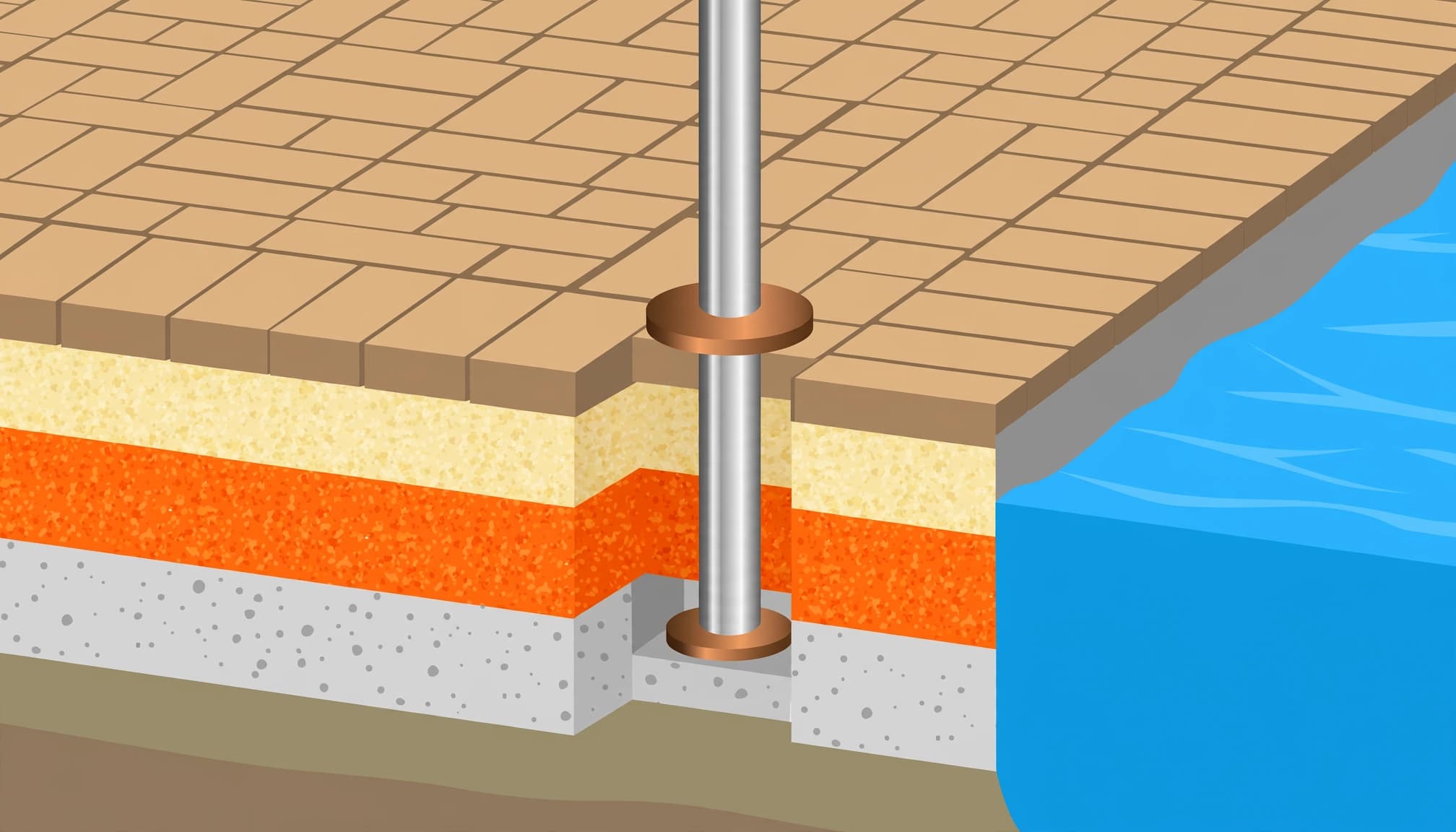
A secure installation starts with the finished deck elevation. Paver thickness and bedding depth must be included before the anchor support is placed.
For new work or a replacement anchor, the installation follows this order:
- Establish the rail position, mounting-leg spacing, finished paver height, and drainage slope. Locate pool plumbing, electrical lines, and bonding components before excavation or drilling.
- Expose or construct the specified concrete support. A channel assembly is positioned before concrete placement; a retrofit socket needs its approved anchoring detail.
- Hold the sockets at the required alignment and elevation while the anchoring material cures. Keep concrete and debris out of the openings.
- Rebuild the surrounding base, prepare the bedding layer, and cut the pavers neatly around the sleeves. Avoid narrow, unsupported pieces that can crack or rock.
- Finish the joints and install the rail and locking hardware using the specified tightening procedure. Keep the rail out of service until the anchoring materials have cured.
Don’t use socket insertion depth as a substitute for a structural installation design. Concrete dimensions, reinforcement, edge distance, and anchoring material depend on the system and site.
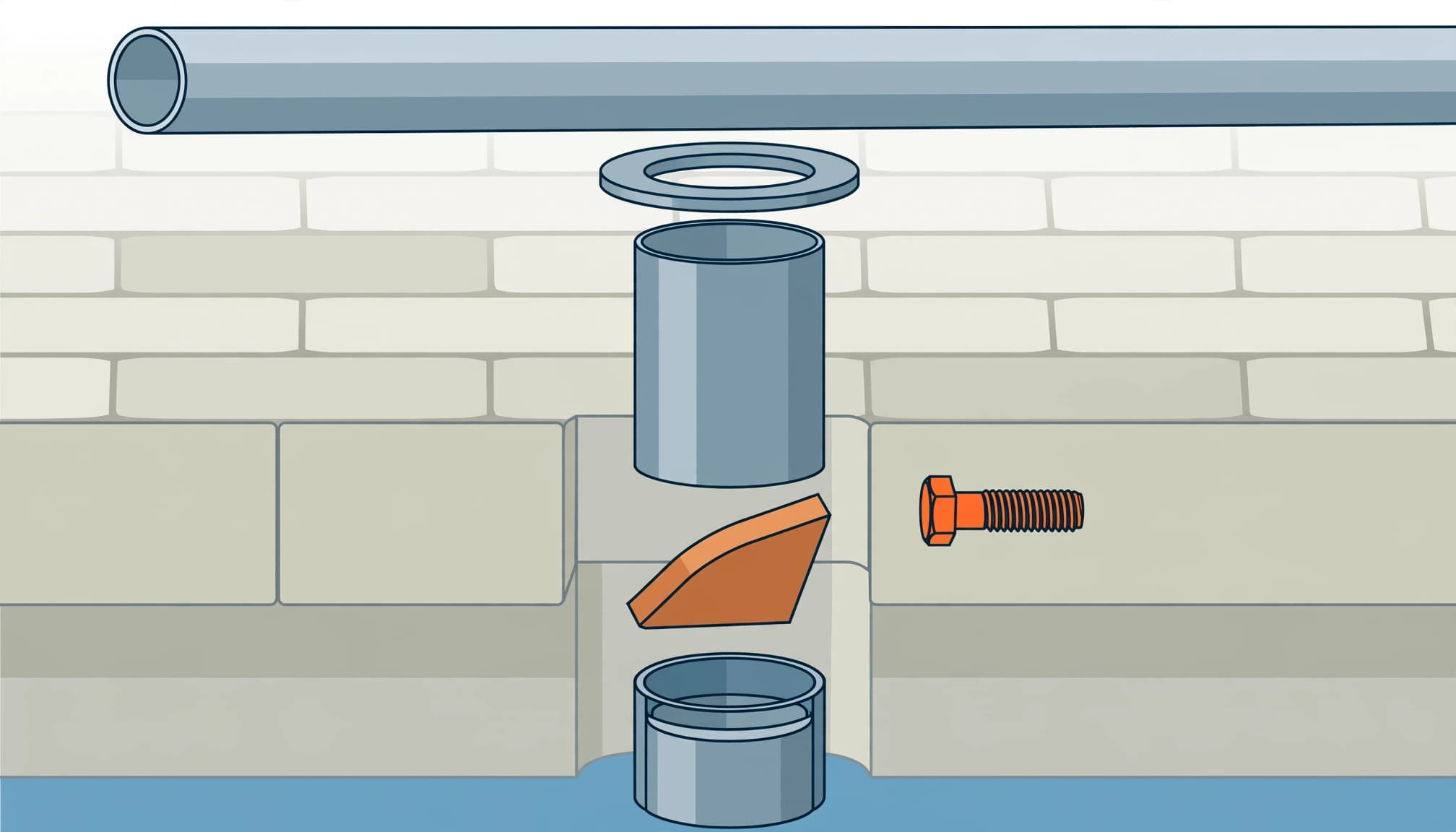
Flush follows the intended finished surface. It doesn’t mean flattening a sloped deck around the socket. The anchor rim, cap, or cover should meet its installation detail without creating a trip edge or collecting water.
Keep access to wedge bolts clear. Don’t bury hardware under grout, sealant, or a tight paver cut.
Anchor Options and Hardware Prices
A paver deck socket accommodates the deck assembly, a stanchion anchor supports its designated post, and an in-pool socket is made for a different mounting location. An in-pool anchor is designed for an in-pool mounting location, not the deck. A deck mounted stair rail needs hardware compatible with its designated deck mounting system.
Swimming Pool Supply USA lists these hardware prices:
| Product | Model | Listed price |
|---|---|---|
| Permacast bronze 8-inch on-center set | PC-4008-BC | $130 regular |
| Permacast plastic 8-inch on-center set | PC-4008-P | $59 regular |
| S.R. Smith 6-inch bronze stanchion anchor with cap | AS-100D | $89.63 sale; $135 regular |
| Permacast 6-inch bronze paver deck socket for 1.90-inch rail | PS-6019-BC | $52.64 sale |
| S.R. Smith double bronze anchor assembly | 34-306A | $699 |
The listed double bronze anchor assembly is a paired hardware option, not a generic replacement for every socket.
These are hardware prices, not installed project totals. Concrete work, paver removal, base repair, cutting, and bonding work affect the installation cost.
The category includes Saftron, Zodiac, Global Pool Products, Permacast, and S.R. Smith. A listing for “ladders steps and hand rails” may include several kinds of pool hardware, so identify the specific replacement part.
Repair Loose Pavers Without Hiding the Cause
A solid anchor can look too high when the surrounding pavers sink. A loose rail can remain after the pavers are reset. The rail, base, and paver height can shift for different reasons, so identify the cause before retightening hardware or resetting pavers.
Correct drainage and base movement
Check periodically for rail movement, rocking pavers, open or depleted joints, and a sleeve rim that sits too high or low. Recheck after heavy rain or drainage problems. Irrigation, downspouts, or poor grading can undermine the bedding and base around a fixed anchor support.
The repair starts by lifting affected pavers and inspecting underneath. Replace unsuitable material, restore compaction, and reset the surface at the proper grade.
Our pool deck paver repair services address base correction and resetting rather than covering movement with a surface patch. Where runoff keeps returning, pool deck drainage channels may be part of the correction.
Preserve joints and service access
Keep any designed isolation joint between concrete support, coping, and adjacent deck materials. Hard grout across an intentional separation can crack when the surfaces move differently.
Joint sand helps the surrounding pavers stay interlocked. It cannot repair a failed footing, and sealer cannot hold a loose sleeve in place.
If the coping is moving too, include the pool edge coping repair in the assessment. Don’t hide that movement beneath a new trim plate.
Common Questions About Anchor Repairs
Can an escutcheon fix a loose rail?
No. An escutcheon covers the opening around the rail and gives the installation a finished appearance. It doesn’t replace the anchor’s structural support or wedge connection.
Bumpers have another job, commonly cushioning ladder contact against the pool wall. Neither accessory repairs a moving socket. Stop using an unstable rail until the mounting problem is corrected.
Can pavers be raised around an existing sleeve?
Yes, when the finished installation preserves proper rail engagement, accessible locking hardware, and the required anchor height.
A deck overlay can leave an existing socket buried too low. That may require a compatible paver deck socket or another approved retrofit assembly. Don’t improvise an extension with stacked washers, loose pipe, or a shallow rail connection.
Secure Support Makes a Clean Finish Last
Pool handrail anchors and surrounding pavers need dependable support, but each has its own job. A tight wedge won’t repair a failing base, and new joint sand won’t secure a loose socket.
I recommend correcting the cause first, then setting the sleeve and pavers to the right finished height. That’s how you protect the rail connection and keep the deck comfortable underfoot.
For help with your pool deck paver project, Get a Free Quote for a free consultation and estimate.