

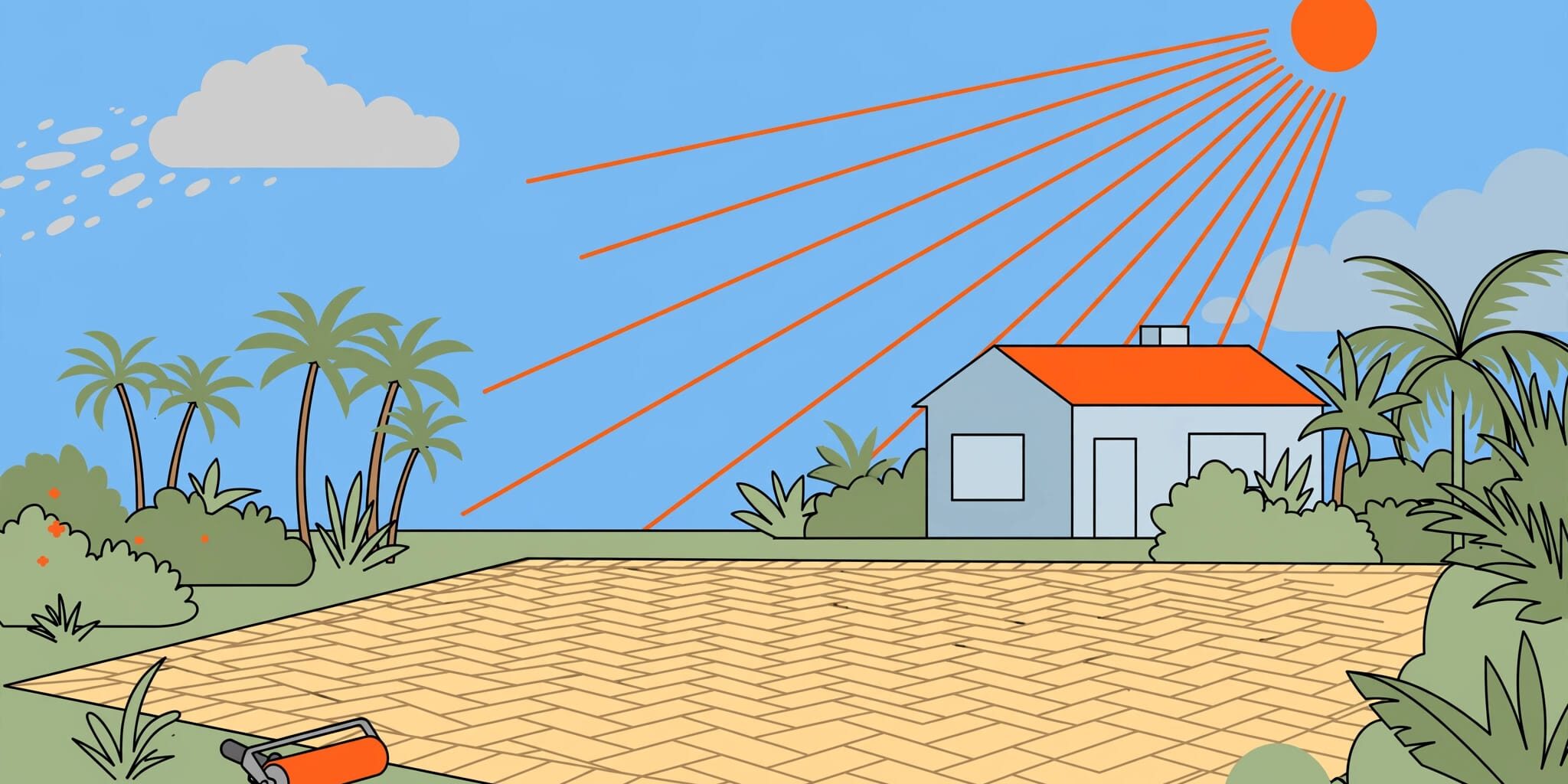
Plan for at least 24 to 48 hours without rain after sealing pavers in Florida, unless the product requires longer. Paver sealer dry time also depends on humidity, surface moisture, and how heavily the coating is applied.
I recommend planning around the overall waiting period, because a driveway can feel dry before it’s ready for rain or parked cars. Start with the sealer type, then allow enough time for preparation and Florida’s changing weather.
Key Takeaways
- Most manufacturers recommend protecting freshly sealed pavers from rain for at least 24 to 48 hours.
- Solvent-based sealers generally allow vehicle traffic sooner than water-based products, but a dry surface doesn’t prove full cure.
- Pressure washing, polymeric sand activation, shade, and morning dew can extend the job beyond application day.
Paver Sealer Dry Time by Sealer Type
These are general planning ranges for properly prepared pavers under favorable drying conditions.
| Sealer type | Surface dry | Light foot traffic | Vehicle traffic and full cure |
|---|---|---|---|
| Solvent-based | 1 to 3 hours | 2 to 4 hours | 24 to 48 hours |
| Water-based | 3 to 5 hours | 4 to 6 hours | 48 to 72 hours |
I use these ranges to organize access to a patio or driveway, but the product’s stated restrictions take priority. As TCC Materials’ drying guidance explains, cool temperatures and high humidity slow drying.
Topical acrylic and polyurethane sealers
Topical products form a coating over the paver face. General guidance allows about 3 to 4 hours of drying per coat and at least 48 hours before parking cars.
These categories overlap with water-based and solvent-based products. An acrylic can use either carrier, so don’t treat the coating name as a separate promise about curing. I also keep heavy furniture and planters off until the coating reaches its specified service time.
Penetrating silicate and fluoropolymer products
Some penetrating products dry in about 1 to 2 hours and allow heavy use after 6 to 24 hours. These figures don’t apply to every penetrating sealer.
I select these products by material compatibility and intended protection first. A fast surface-dry time doesn’t automatically mean the product suits brick, concrete pavers, or natural stone.
How Long Should Sealed Pavers Stay Out of Rain?
The rain-free window begins after the final coat, not after washing or the first application. I include irrigation, downspout discharge, and pool splash in that restriction too. Water can reach a fresh coating without a storm overhead.
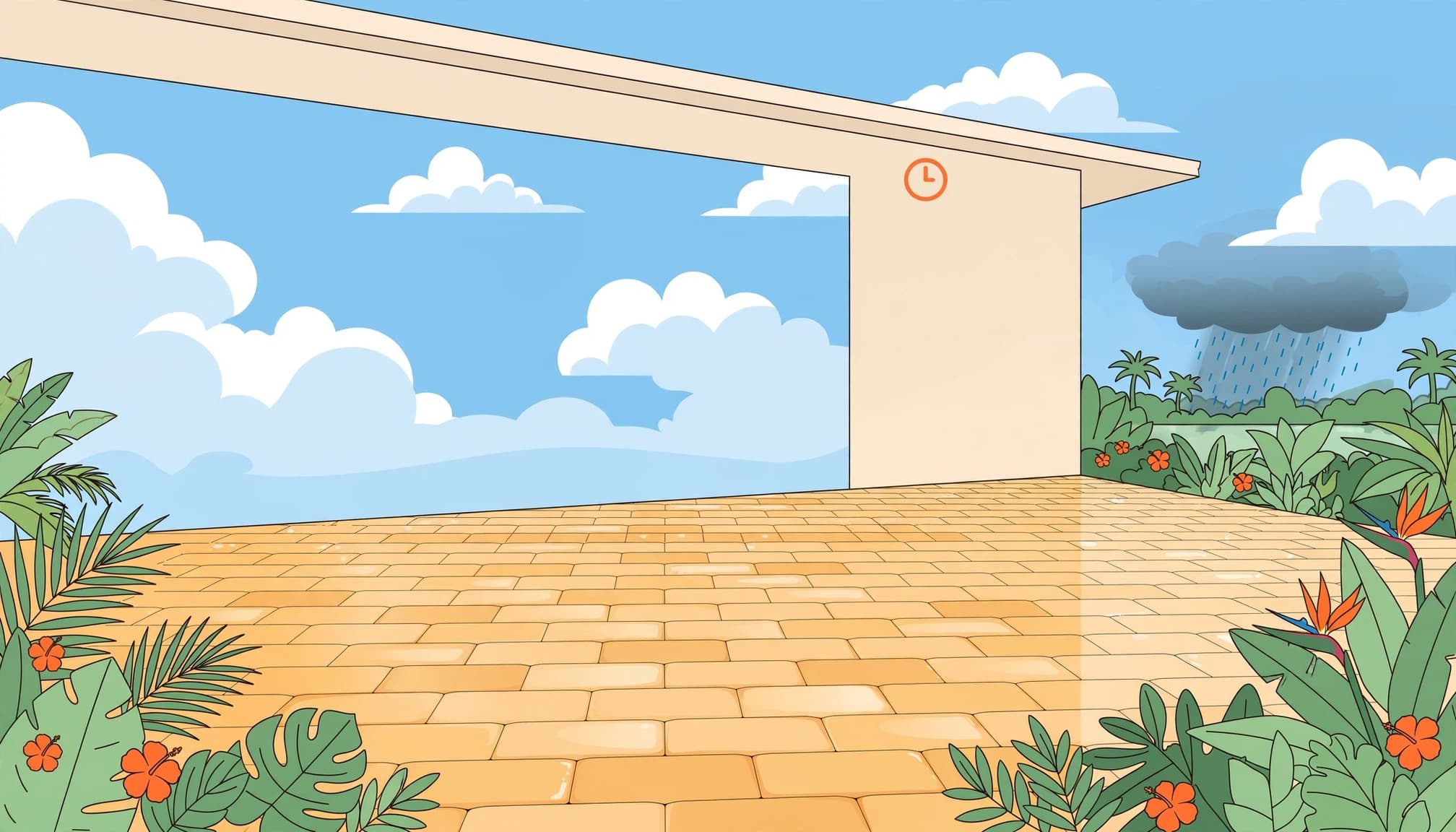
Some products have shorter rain-resistance ratings. For example, Techniseal’s WL-87 technical sheet states resistance to unexpected rain after 80 minutes. That rating belongs to that particular product. It doesn’t establish the schedule for another sealer or mean vehicles can return.
Rain resistance, touch dryness, and vehicle readiness are different stages. Reaching one doesn’t mean the others are complete.
If afternoon storms threaten before the required protection period ends, I recommend postponing. A rushed coating can leave streaks, diluted areas, or material washed into neighboring surfaces.
Florida Weather Can Change the Schedule
Temperature and direct sunlight
Warm conditions around 75°F generally help drying, and moderate sunlight speeds evaporation. Below 50°F, drying can slow dramatically.
Bulletproof Pavers recommends 50°F to 85°F and relative humidity below 60% for water-based film-forming sealers. It also warns that solvent-based products can flash too quickly when the paver surface exceeds 90°F.
That surface temperature matters. A driveway in direct sun can be much hotter than the air. I don’t recommend chasing faster drying by applying sealer to overheated pavers.
Humidity, shade, and overnight dew
High humidity, cloud cover, and limited airflow reduce evaporation. A shaded pool deck may stay damp while the driveway looks ready.
Morning fog also leaves moisture on paver faces and inside joints. I wait until fog clears and inspect shaded areas before application. Overnight condensation matters during the early drying period too.
Our guide to choosing paver sealer for Florida weather explains why surface conditions matter as much as the finish you want. Water-based doesn’t mean suitable for wet pavers.
Prepare and Test the Surface Before Sealing
Allow enough drying after pressure washing
After pressure washing, allow 24 to 48 hours in warm, breezy conditions. Shaded areas or high humidity can require 72 hours or longer.
I inspect the joints and low spots as well as the paver faces. Surface color alone doesn’t tell you whether moisture remains underneath.
Use the pressure washer carefully to remove dirt without cutting into the joints. Replace missing sand as needed, and correct rocking pavers or drainage problems before coating. Our paver cleaning and sealing process explains why preparation matters: paver sealing cannot repair a weak base.
Use the plastic-sheet test and a moisture meter
Tape a 300-by-300-millimeter plastic square, approximately 12 inches square, tightly against the pavers. Leave it for two hours and look underneath for condensation.
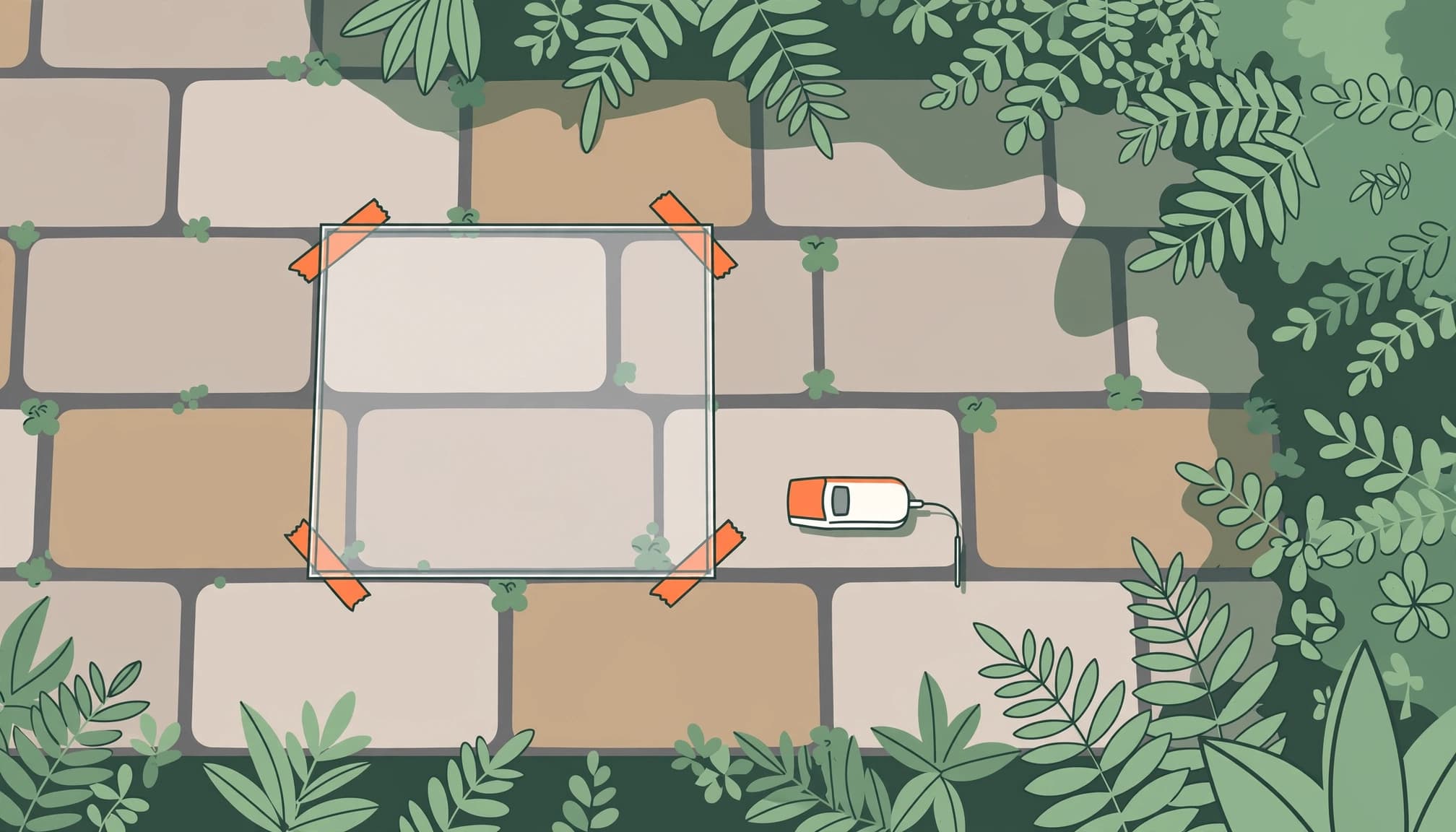
Condensation means moisture remains and sealing needs to wait. A clear sheet is a useful screening result, but it doesn’t prove every joint or shaded section is equally dry.
Bunnings recommends using a moisture meter before sealing. Damp pavers can cause poor adhesion and an uneven finish. I use moisture assessment alongside the surface inspection rather than relying only on yesterday’s forecast.
Joint Sand and New Pavers Need Separate Waiting Periods
Let polymeric sand cure before coating
Polymeric sand commonly reaches handling strength in 12 to 24 hours and full cure in 48 to 72 hours under warm, ventilated conditions. Cool or humid weather can roughly double those periods.
After resetting pavers with polymeric sand, allow 48 to 72 hours of dry weather before sealing. When nighttime lows fall below 50°F, that wait can extend to 4 to 7 days.
For its sealing process, Sealnlock specifies sand approximately 1/8 inch below the chamfer edge. Oversanding leaves material where the coating needs contact with the paver face.
I also remove loose surface dust before activation. Too little water leaves binder poorly activated, while excessive watering can wash it out. Sand activation and sealer application are separate operations, each requiring suitable conditions.
Separate installation age from drying time
Perfect Paver Co suggests waiting 30 to 60 days after installation so rain can wash away construction debris. That is an installation-age recommendation, not a cure time for fresh sealer.
For unsealed concrete pavers, my more conservative approach is to consider first sealing around one year when early efflorescence needs time to appear and be addressed.
These waits aren’t interchangeable. New-paver moisture, recurring white deposits, and cured joint sand are different concerns. I don’t seal over active efflorescence simply because a date has arrived.
Apply Thin Coats and Respect the Recoat Window
Avoid pooling and premature second coats
Heavy coats trap solvent or moisture and extend drying and curing. More product can also leave a slick, uneven finish. I recommend thin, controlled coverage at the product’s stated application rate.
Recoat timing is product-specific. DYCO’s drying and recoat information lists 2 hours to touch and 2 to 4 hours before recoating at 77°F and 50% relative humidity. The product’s specified interval controls when it’s safe to apply a second coat.
Before recoating, inspect an inconspicuous section for tackiness, soft areas, or material transfer. The specified interval still controls. A dry-looking surface alone isn’t permission to coat again.
Keep vehicles off until the full interval ends
Don’t use a tire as a cure test. Parking too early can mark or damage a coating that feels dry under a shoe.
I keep vehicles, heavy furniture, and dragging loads away through the applicable service interval. If the surface remains sticky beyond its expected window, keep traffic off and don’t cover the problem with another coat.
Humidity, trapped moisture, excessive application, or an incompatible old coating may be responsible. Persistent softness needs assessment before more material is applied.
What If Rain Falls Before the Sealer Cures?
Keep people and vehicles off the affected area and let conditions dry. Don’t pressure wash fresh sealer or immediately apply another coat.
Once dry, inspect for cloudy patches, streaking, peeling, washed-out areas, and uneven sheen. Photograph the damage before attempting cleanup.
I don’t recommend treating every white patch as ordinary dirt. Moisture trapped in or beneath a coating can require professional correction, sometimes including stripping, thorough drying, and resealing.
Also identify the water source. A downspout, sprinkler, or low area that repeatedly holds water needs attention before another application. Otherwise, the same finish problem can return after the next soaking.
Frequently Asked Questions
Is spraying or rolling paver sealer better?
Both methods can work when the product permits them. I choose the method that gives controlled, even coverage across the pavers and joints. Avoid puddles, heavy roller edges, and overspray onto walls, plants, or the pool.
Does polymeric sand harden like concrete?
No. Its binder firms the sand into a joint that can accommodate limited movement. It doesn’t create a concrete slab or rebuild washed-out bedding. Loose or sinking pavers need repair before new sand and sealer.
How often do sealed pavers need maintenance?
Bulletproof Pavers gives general maintenance-coat ranges of 2 to 4 years for driveways and 3 to 5 years for patios and walkways. Traffic, exposure, and coating condition affect that schedule. Our paver sealing and maintenance tips explain ongoing care between applications.
Give the Surface Time for a Quality Finish
I recommend planning paver sealing around dry pavers and a reliable service window. Preparation time, sand curing, and protection after the final coat all belong in that schedule.
A quality finish starts with stable pavers, proper drainage, and controlled application. Rushing any of those steps can cost more than waiting for better weather.
For help with your driveway, patio, or pool deck, Get a Free Quote for a consultation and project estimate.