


Florida sun, afternoon rain, morning fog, and high humidity can wear down a beautiful paver surface faster than many homeowners expect. Choosing a sealer Florida homeowners can trust is not only about getting a shiny or wet look. The sealer must match the paver material, joint sand, moisture conditions, and needs of residential homes.
I have seen good paver installations look tired because the wrong product was applied over damp pavers or an unstable base. Water-based and solvent-based sealers both have a place, but the right choice depends on the surface and preparation. Here is how I compare them for Florida homes.
Key Takeaways
- The best paver sealer for Florida homes depends on the paver material, desired finish, moisture conditions, drainage, and product requirements—not simply whether it is water-based or solvent-based.
- Water-based sealers generally provide a more natural finish and lower odor, while solvent-based sealers often create deeper color and a wet look but require more ventilation and careful moisture control.
- Pavers must be stable, clean, properly sanded, and completely dry before sealing. Sealer will not correct sinking pavers, poor drainage, open joints, or a weak base.
- Florida humidity, fog, shade, and afternoon rain can cause cloudiness, peeling, streaking, or uneven color, so application should follow the label and take place during a reliable dry weather window.
- A test area is important for brick pavers, concrete pavers, travertine, and other natural stone because absorption, color change, sheen, and traction can vary significantly.
What Florida weather does to sealed pavers
Southwest Florida’s tropical climate brings intense sunlight and UV rays to hardscape surfaces. Driveways face hot tires, oil, and heavy rain. A properly selected coating can improve stain protection against oil, sunscreen, and organic debris, but won’t prevent every stain. Pool decks collect sunscreen, leaves, pool chemicals, and standing water; screened patios may stay damp with less sun and airflow.
That moisture matters because a sealer performs well only when pavers are clean, stable, and dry enough for the product. Moisture can remain in joints filled with silica sand, especially beneath covered or shaded areas. Applying sealer over trapped moisture can lead to cloudiness, peeling, uneven color, or a soft finish. In some cases, the sealer gets blamed when poor drainage or a weak paver base is the actual problem.
Sealer also doesn’t repair sinking pavers, open joints, or soil that has washed out below the surface. If a paver rocks when you step on it, I check the base before discussing sealer. When water collects in one low area after rain, I check drainage too. A new coating over movement won’t stop movement.
Paver sealer Florida homeowners should choose: water or solvent?
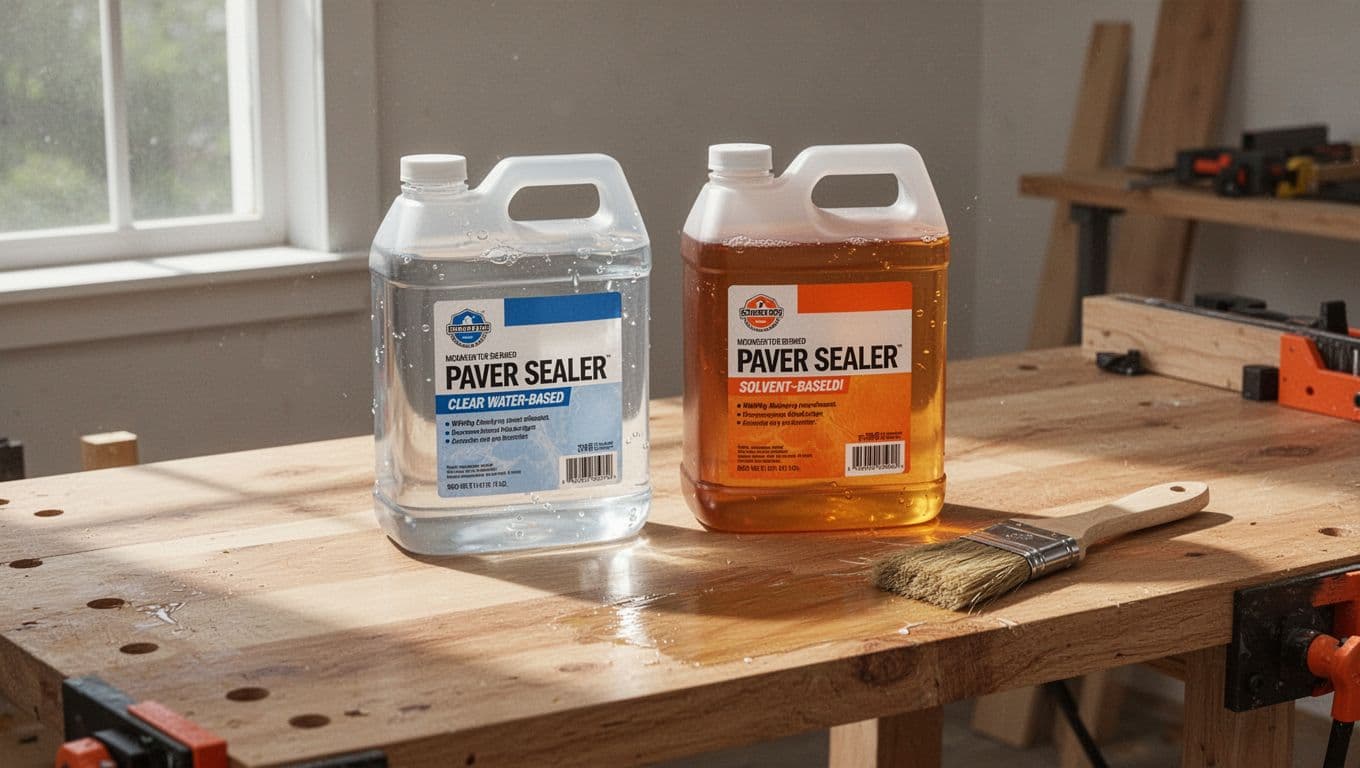
The short answer is that neither type is automatically better for every Florida property. I look at the finish you want, the material being sealed, the moisture in the area, and the product’s technical requirements.
| Feature | Water-based sealer | Solvent-based sealer |
|---|---|---|
| Appearance | Usually natural or low-sheen | Often deeper color and wet look |
| Odor | Generally lower odor | Stronger odor during application |
| Cleanup | Usually easier with water, if allowed by the label | Requires the recommended solvent |
| Moisture tolerance | Still needs proper surface conditions | Trapped moisture can cause clouding or failure |
| Common use | Natural appearance, pool areas, low-odor projects | Color enhancement and stronger visual enrichment |
When water-based sealer makes sense
Water-based products usually have less odor and leave a more natural finish. That can be a good fit for homeowners who don’t want their brick pavers to look dark or glossy. A water-based coating may also suit occupied homes, screened patios, and some pool areas where strong fumes are a concern.
A commercial grade sealer, such as Ure-Seal H2O, may offer better durability than a basic acrylic product. I still check the product data before using any formula on a specific surface.
Water-based does not mean you can seal wet pavers. Morning fog, dew, or recent surface cleaning can leave enough moisture in the joints to affect the finish. Product instructions control the application, and a test area is always a smart step. This water-based paver sealer comparison also shows why the label and intended surface matter more than the word “water” alone.
When solvent-based sealer makes sense
Solvent-based sealer is often chosen when the homeowner wants stronger color enhancement or a wet-look finish. It can bring out the color in concrete pavers and brick pavers, making older surfaces look richer and more uniform.
The tradeoff is stronger odor and a greater need for ventilation and fire safety during application. Solvent-based products can also become cloudy if moisture is trapped below the coating. High humidity, shaded pool decks, and unexpected rain make timing especially important.
I don’t recommend choosing solvent sealer only because the sample looks attractive in the store. A dark, glossy finish can become slippery when wet, especially on a smooth surface. Around a pool, I consider texture, drainage, bare-foot comfort, and whether an anti-slip additive is needed.
Brick pavers, travertine, and concrete need different treatment
Methods for brick paver sealing differ from those for concrete pavers, although both are common around Florida homes. Concrete surfaces often show a strong color change with solvent-based sealer, while some brick pavers look better with a lower-sheen water-based finish. The porosity, age, previous coating, and surface texture all affect the result on these hardscape surfaces.
Travertine and other natural stone surfaces need more caution, especially during travertine sealing. Travertine is porous and often used around pools because its texture and density can feel comfortable under bare feet. A sealer should protect the stone without filling the surface with a thick film that changes traction or traps moisture. Natural stone needs a breathable, traction-conscious approach, so travertine sealing tests are especially important.
I test an inconspicuous section before committing to the entire area. The test shows color, sheen, absorption, and whether the sealer leaves a slick feeling. Three heavy coats are not automatically better. Many systems call for two controlled coats, while some require a different number based on absorption and product design. Thick applications can trap moisture and create problems.
Sealing also does not completely stop weeds, mold, or mildew. It can reduce sand loss and make the surface easier to clean, but seeds, leaves, moisture, and shade can still create new growth. A labeled weed and mold inhibitor may help, but it complements rather than replaces drainage, sweeping, and cleaning. The best results come from compatible joint sand, such as silica sand when the product allows it, along with good drainage, regular sweeping, and timely cleaning.
Proper preparation makes the sealer last
I don’t start with the sealer. I start by checking whether the hardscape is ready to receive it.
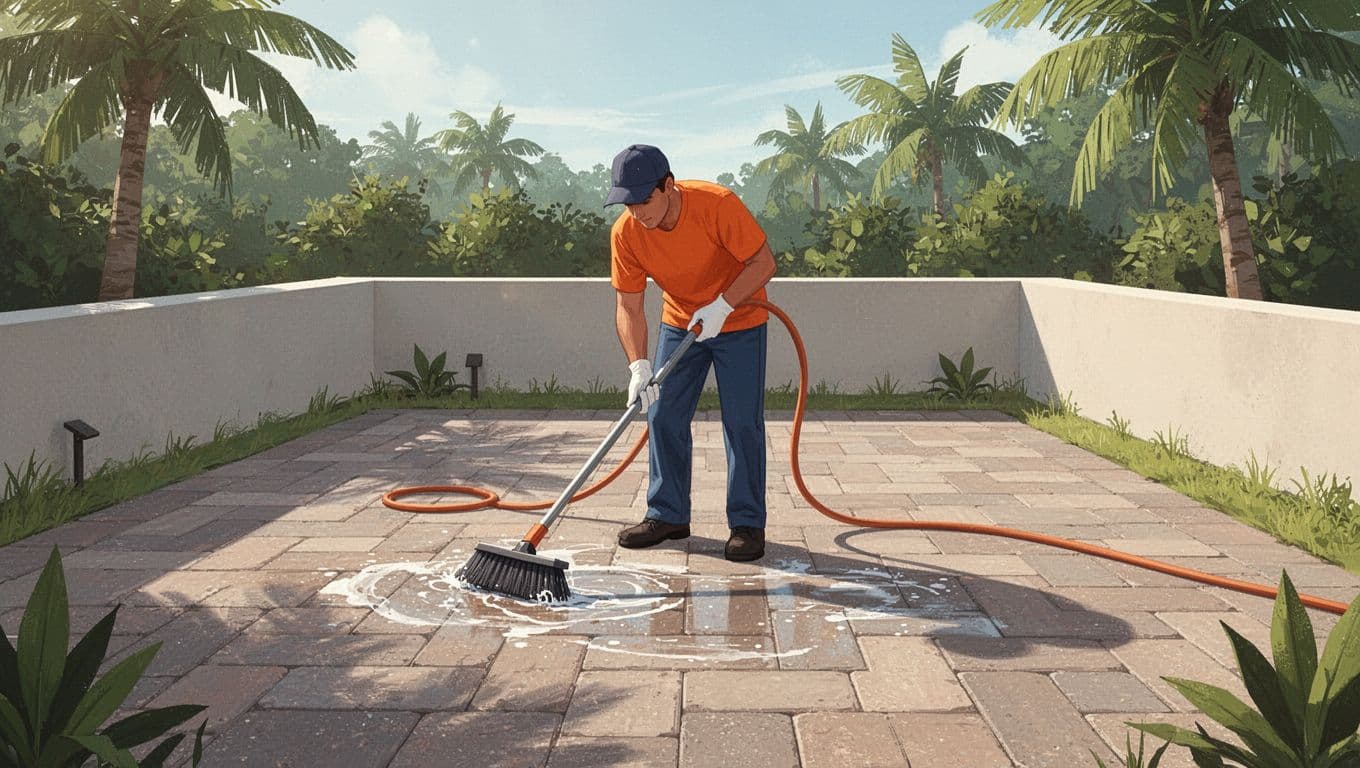
- Inspect the surface and drainage. I look for rocking pavers, sunken areas, open joints, failed edge restraints, downspouts, irrigation overspray, and standing water. If a roof downspout keeps discharging beside the patio, that water problem needs correction first.
- Clean the pavers carefully. Pressure cleaning removes dirt, algae, old organic material, and surface stains. Power washing with too much pressure can chip pavers or blow sand out of the gaps. A surface-cleaner attachment and controlled pressure usually provide a more even result than holding a narrow nozzle against one joint.
- Treat efflorescence and organic growth. White mineral deposits may require an efflorescence cleaner followed by the correct neutralizing and rinsing process. Mold and mildew may need a separate treatment. I don’t mix cleaners together, and I follow the label for dwell time and rinsing.
- Strip old sealer when necessary. Peeling, cloudy, thick, or incompatible sealer may need chemical stripping before recoating. I identify the existing product first, since Ure-Seal H2O may require compatible preparation and recoating products. The stripper must match the existing coating. Cleaning alone will not fix a failed film sitting on top of the pavers.
- Replace and level the joint sand. For many sealing jobs, clean 20/30 silica sand or fractured angular sand is used instead of treating every project as a polymeric sand installation. The sand should sit about one-eighth inch below the paver surface, not cover the top edges. The selected silica sand must also match the sealer, joint depth, and drainage conditions.
Once the surface is clean, repaired, sanded, and dry, I apply a small test area before using heavy coats across the entire project. That test can reveal a color change or moisture issue before the full driveway or pool deck is coated.
Handling Florida humidity, fog, and afternoon rain
How do you deal with high humidity and fog? You plan around them instead of trying to force Florida paver sealing when conditions aren’t right.
Morning fog can leave a thin layer of moisture that is easy to miss. I wait until the surface is visibly dry and the fog has cleared, then check shaded areas and joints before application. The product instructions should state temperature, moisture, and cure requirements. If the surface is damp or the dew point leaves condensation forming, the job needs to wait.
Florida weather can change quickly, especially during the summer. I watch the forecast and radar for a long enough dry window, not only the next hour. Rain during the early cure period can streak the finish, dilute the product, or wash sealer into unwanted areas.
A normal cleaning, sanding, and sealing project may be completed in one day when the surface is stable and the weather cooperates. Larger jobs, old sealer removal, repairs, or slow drying conditions can take longer. A professional should explain the expected schedule instead of promising a fixed turnaround in every weather condition.
DIY or professional paver sealing?
DIY sealing can work for a small, stable patio when the existing coating is known, the pavers are easy to clean, and you have time to wait for the correct dry conditions. The material cost may look lower, but mistakes can become expensive when a cloudy coating needs to be stripped.
I am careful with big-box products because the container may not provide enough information about old sealer compatibility, coverage on porous pavers, moisture limits, or pool-deck traction. The lowest price per gallon does not always mean the lowest total cost. Ask about coverage, coats, cure time, cleanup, and whether Ure-Seal H2O is labeled for brick pavers, concrete pavers, or natural stone. Also ask whether a 3 year warranty is actually included.
Professional paver sealing is a better choice when the area has widespread stains, efflorescence, movement, missing sand, old coating, or drainage concerns. More complex Florida paver sealing may require careful timing. Specialized brick paver sealing is especially important when old coatings, stains, or unstable joints are present.
At Platinum Pavers, I inspect all hardscape surfaces before recommending a product. I then explain whether the project needs cleaning, sanding, repairs, sealing, or a combination. This professional preparation matters for driveway sealing and pool deck sealing, where drainage and traction affect the finished result. If you want the area checked, request a custom quote through Get a Free Quote for a straightforward consultation.
Frequently Asked Questions
Is water-based or solvent-based sealer better for Florida pavers?
Neither type is automatically better for every property. Water-based sealer is often suitable for a natural finish and lower odor, while solvent-based sealer may be preferred for stronger color enhancement and a wet-look finish.
Can I seal pavers when they are damp from fog or rain?
No, pavers and joint sand need to be dry enough for the selected product. Moisture trapped below the coating can cause cloudiness, peeling, uneven color, or other finish problems.
Does paver sealer prevent weeds, mold, and mildew?
Sealer can reduce sand loss and make the surface easier to clean, but it does not completely prevent weeds, mold, or mildew. Good drainage, regular sweeping, timely cleaning, and compatible joint sand remain important.
Should travertine be sealed differently from concrete pavers?
Yes, travertine and other natural stone surfaces require a product and application method that protect the stone without creating a thick, slick film or trapping moisture. An inconspicuous test area is especially important to check absorption, color, sheen, and traction.
Is professional paver sealing worth it?
Professional sealing is often worthwhile when pavers have old sealer, widespread stains, efflorescence, missing sand, movement, or drainage concerns. Proper preparation and weather timing can prevent costly problems that may result from applying a new coating over an unstable or damp surface.
Choosing the right protection for your Florida home
The best paver sealer Florida homeowners can use depends on the surface, its condition, and application-day weather. Water-based sealer usually suits a natural finish and lower odor. Solvent-based sealer can add deeper color and a wet look when preparation is thorough.
Neither coating replaces a stable base, filled joints, or effective drainage. Careful cleaning, suitable sand, weather timing, and thin, controlled coats matter most. When pavers are ready and the sealer suits the material, your driveway, patio, or pool deck can stay attractive and durable through Florida’s heat and rain.