


When homeowners search paver thickness Florida driveways, they usually want one practical answer. For most residential driveways, 60mm pavers are the accepted minimum. I often recommend 80mm pavers for trucks, trailers, frequent turning, or heavier loads.
Thickness matters, but driveway paver thickness isn’t the whole driveway. It must be evaluated with the foundation, drainage, edge support, and installation pattern. The foundation spreads vehicle loads into the soil through compacted base material. Base preparation supports the complete driveway system. Material type, manufacturer ratings, and the supporting assembly can affect recommendations for concrete pavers, natural stone pavers, and porcelain pavers. Thin pavers need an approved overlay or specialty system. Here is how I choose the correct system for Florida properties.
Key Takeaways
- 60mm pavers are the standard minimum for most residential Florida driveways used by passenger vehicles.
- 80mm pavers are better suited for trucks, trailers, RVs, work vans, frequent turning, and heavier vehicle loads.
- Paver thickness works as part of a complete system that includes stable soil, properly compacted base material, drainage, edge restraints, and suitable joint sand.
- A common starting point is 6 to 8 inches of compacted base, although poor soil, drainage issues, and heavier loads may require 8 to 12 inches or more.
- Thin 30mm pavers should only be used in a manufacturer-approved driveway overlay system over a sound, stable concrete slab.
Paver Thickness Florida Driveways Need for Daily Use
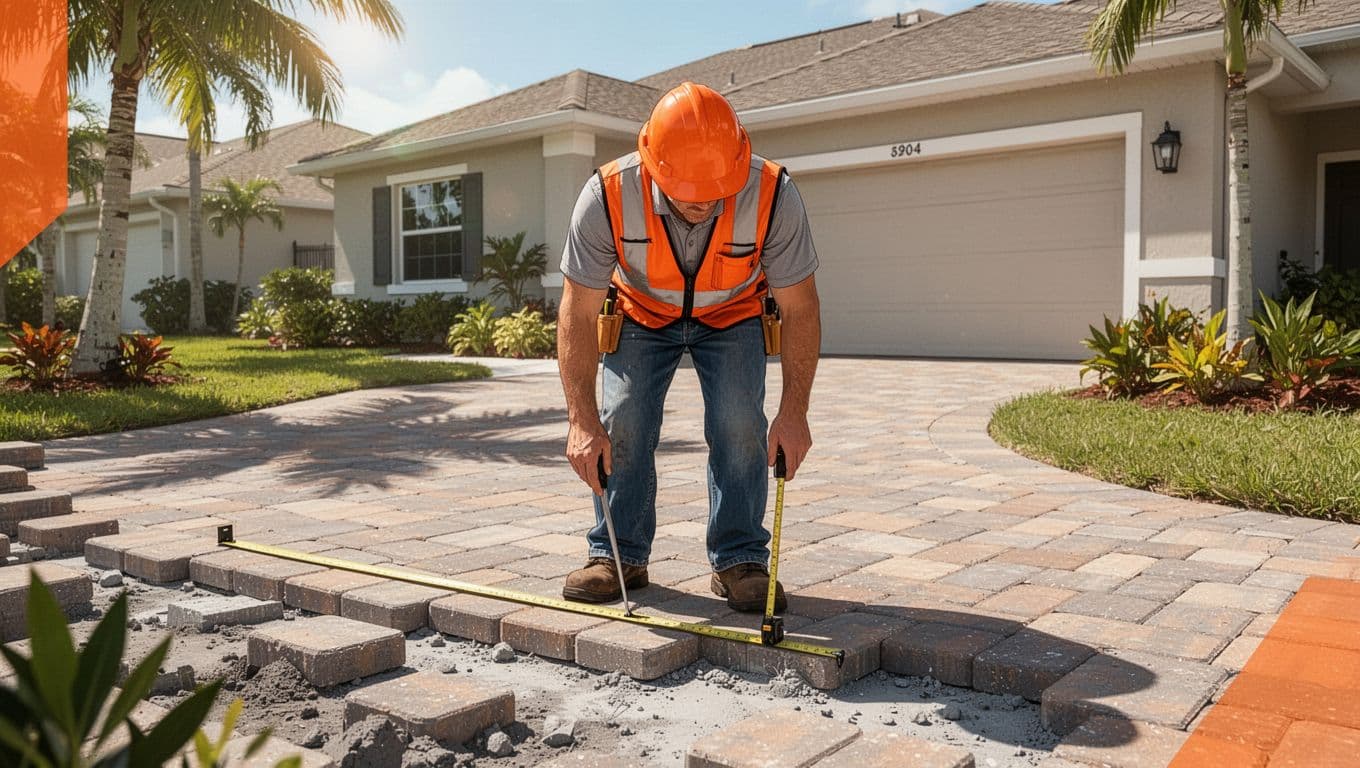
The standard residential driveway paver is 60mm thick, or about 2 3/8 inches. The 60mm and 80mm measurements describe the paver unit, while base depth is a separate decision. This driveway paver thickness suits passenger vehicles over a properly prepared foundation.
I recommend 80mm, or 3 1/8 inches, for light trucks, work vans, boats, RVs, trailers, or a heavy vehicle load. The extra thickness gives the system more support, but the foundation still controls most of the performance.
| Paver thickness | Approximate size | Typical use |
|---|---|---|
| 30mm | About 1 3/16 inches | Outdoor patios, garden walkways, and approved overlay systems |
| 60mm | 2 3/8 inches | Standard residential driveways and passenger cars |
| 80mm | 3 1/8 inches | Trucks, trailers, RVs, commercial access, and heavy use |
30mm pavers are thin pavers, not the normal choice for a new driveway built over soil. Thin pavers such as vehicle-rated porcelain pavers may suit an approved overlay system, but only when the concrete slab, drainage, bonding method, and product instructions support vehicle use.
Concrete pavers are a common driveway choice because they offer consistent dimensions and broad load ratings, while natural stone pavers provide a distinctive look. Brick pavers create a traditional appearance, but appearance never replaces checking thickness, shape, and load ratings. Some vehicle-rated porcelain pavers can work in approved assemblies, but they remain a thin surface product rather than a conventional driveway unit.
The shape also matters, since a long, narrow 60mm unit can flex more than a compact unit. I always review the manufacturer’s specifications for concrete pavers, natural stone pavers, and porcelain pavers instead of choosing by thickness alone.
A thicker paver cannot rescue a weak base. It only gives a weak base a heavier surface to carry.
For most Southwest Florida homeowners, my starting recommendation is 60mm for a normal car driveway and 80mm when there is any doubt about vehicle weight or turning stress.
Base Preparation: Build the Base Before Choosing the Surface
Base preparation controls long-term performance. The pavers are the visible layer, but compacted base material carries the load and distributes it into the soil.
For many residential Florida driveways, a common starting range is 6 to 8 inches of compacted crushed concrete or dense-graded road base, followed by about 1 inch of bedding sand. Poor soil, clay, wet pockets, fill, drainage problems, and larger vehicles can require 8 to 12 inches or more.
The base depth excludes the paver thickness and bedding sand. Excavation must allow room for the aggregate, bedding sand, and surface while keeping the finished driveway at the correct height beside the garage, sidewalk, street, and landscape areas. Before placing the aggregate, verify the elevations and drainage slope around neighboring properties and structures.
Conventional concrete pavers commonly use this base system. Natural stone pavers and porcelain pavers may have different manufacturer requirements for bedding, drainage, and support. Approved vehicle-rated porcelain pavers require a system designed specifically for driveway use.
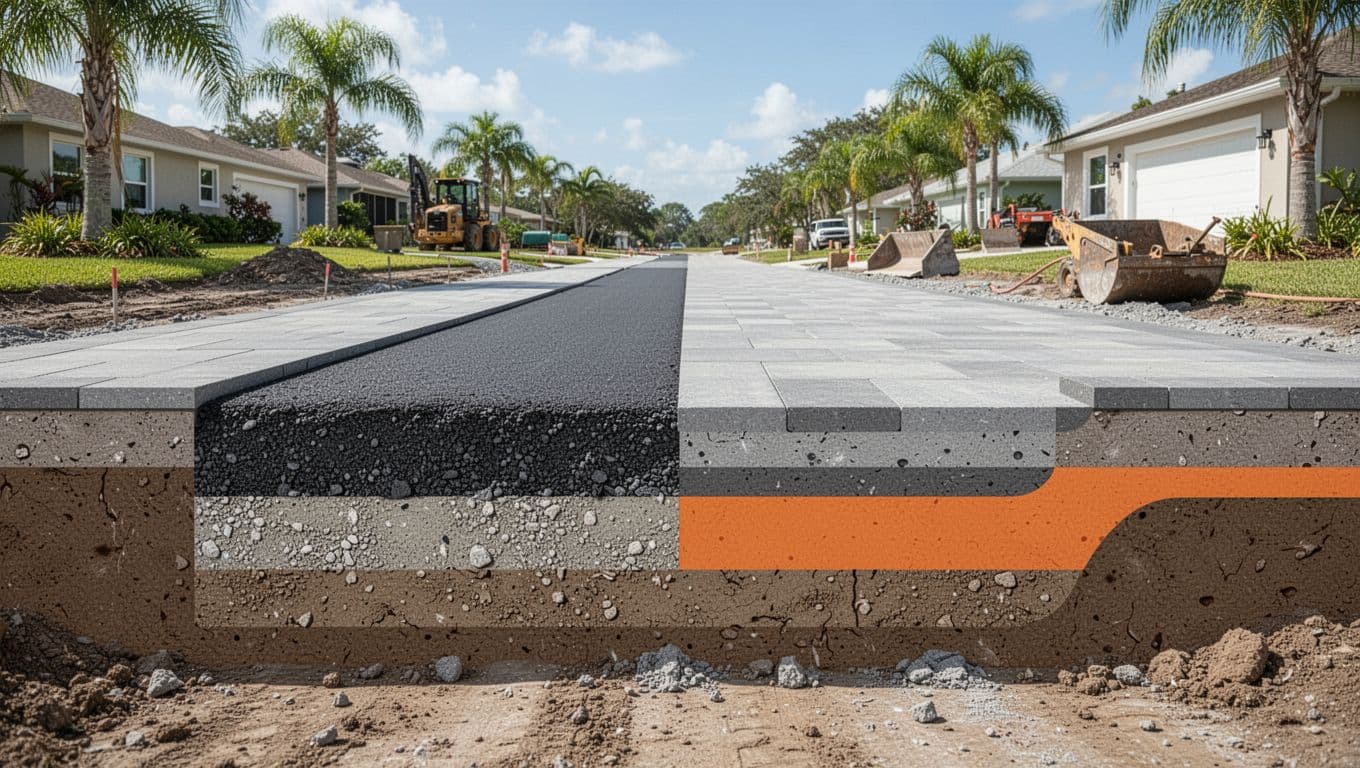
I normally look for these steps during paver installation:
- Remove organic material, roots, loose fill, wet pockets, and unstable subgrade soil until stable ground is reached.
- Compact the subgrade before placing stone.
- Install the crushed base in several thin lifts instead of dumping the full depth at once.
- Compact each lift with the right equipment and check for soft spots.
- Add a consistent bedding layer, then place and compact the pavers.
A deep base is not automatically a good base. Lift thickness and compaction quality matter more than simply specifying a deep excavation. If the material is placed too thickly in one pass, the top may feel firm while the lower portion remains loose. That is when low spots and rocking pavers show up later.
Unilock’s driveway base guidance also places driveway base recommendations in the 8-to-12-inch range for many conditions and notes that soil type affects the required depth. A public Escambia County paving specification, although written for asphalt, illustrates the same construction principle: the finished surface depends on a prepared and stable base below it.
Dense-Graded or Open-Graded Base?
A dense-graded aggregate base contains a blend of larger stone, smaller stone, and fines. It compacts into a tight foundation and is commonly used beneath concrete pavers.
Open-graded base uses clean, angular stone with fewer fines. It allows water to move through the base more easily, which can help on sites with a properly designed drainage outlet. It is not automatically the better choice simply because Florida receives heavy rain. Without a drainage plan, water can move into the wrong area and soften the soil below.
The correct material depends on the site, not a one-size-fits-all rule. I consider soil stability, especially where clay, fill, wet pockets, or soft areas are present, along with elevation, runoff, nearby structures, and the expected vehicle load.
Patterns and Edges That Stop Pavers from Shifting
A driveway experiences more than straight-down weight from vehicular traffic. Tires brake, turn, accelerate, and repeatedly follow the same paths. These forces can push pavers sideways when the pattern or edge support is weak.
That is why I prefer an interlocking herringbone pattern for driveways. The angled layout spreads tire and braking forces across multiple pavers instead of allowing a straight joint to become a movement line. A 45-degree or 90-degree layout can work when the surrounding system is properly supported by firm borders.
Unit shape also affects joint alignment. Concrete pavers and natural stone pavers have different unit shapes, so their joints must align consistently throughout the pattern.
Vehicle-rated porcelain pavers require the manufacturer-approved installation method and suitable edge support. Those requirements still apply when porcelain pavers are used in a driveway pattern.
Edge support is just as important, and the driveway perimeter needs a firm edge restraint made for paver installation. Inspect each edge restraint to confirm it is anchored into stable material. Without it, the outside rows can spread, the joints open, and the interior pavers gradually shift.
Polymeric sand helps fill the joints and lock the pavers together after installation. It also reduces weed growth and limits the amount of water and debris entering the gaps. The joints must be clean and dry before installation, and the sand needs to be activated according to the product instructions.
The most common causes of sinking, cracking, and shifting include:
- Poor compaction below the pavers or too little base material.
- Water washing out the base or softening unstable soil.
- Missing or weak perimeter restraint.
- Utility trench backfill, tree roots, or disturbed soil.
- Heavy vehicles turning in an area designed for passenger cars.
- Aggressive pressure washing that removes joint sand.
If a paver rocks under your foot, loose joint sand isn’t a lasting repair. The same applies when water collects in one low spot after every storm. The affected area may need to be lifted, the base corrected, and the pavers reset.
Florida Permits, Drainage, and Existing Concrete
Do you need a building permit for a paver driveway in Florida? Often, yes. Exact requirements depend on the city or county, project size, property location, drainage changes, setbacks, and whether the work enters a right-of-way.
Some Florida jurisdictions separate paver driveways from concrete slabs and may require a zoning permit, a building permit, or both. A driveway expansion can have different requirements than replacing an existing surface. I tell homeowners to contact the local building department before demolition, excavation, or ordering materials.
Drainage also needs attention before the first paver is installed. A planned drainage slope should move water away from the garage, house, pool deck, screen enclosure, and neighboring property. Proper elevations and controlled discharge are more useful than hoping water will find its own path.
I also recommend installing PVC sleeves beneath the driveway when future irrigation, lighting, internet, or utility work is possible. This small step can prevent someone from cutting through a finished driveway later.
Can 30mm Pavers Go Over a Concrete Driveway?
Sometimes, but not as a simple shortcut. Thin pavers can go over concrete only when the slab is structurally sound and stable. It must also be properly sloped and free from major settlement or drainage problems. The manufacturer must approve the overlay for driveway use.
Evaluating the slab is part of base preparation, not a shortcut around correcting settlement or drainage defects. Soil stability also matters because movement beneath the slab can cause an overlay to fail.
An approved overlay may use concrete pavers or natural stone pavers, depending on the manufacturer’s specifications. Both concrete pavers and natural stone pavers need a sound, stable slab.
An engineered overlay may accept a 30mm porcelain product only when porcelain pavers are covered by a manufacturer-approved driveway system. The manufacturer must approve porcelain pavers for the intended loads. Porcelain pavers cannot correct a failed slab. Thin pavers will follow cracks, settlement, or ponding when the slab is unsound.
For a new driveway built over soil, I stay with conventional concrete units unless a specific engineered system says otherwise.
Sealing and Maintaining a Florida Paver Driveway
A paver sealer protects the surface from stains, weather, and fading, but it cannot repair or strengthen a weak foundation. I want the pavers stable, clean, dry, and properly sanded before applying any sealer.
Many residential sealers last about 2 to 5 years, but high-use driveways may need attention sooner. Absorption, staining, and product compatibility vary between concrete pavers and natural stone pavers. Porcelain pavers have product-specific sealing needs, so I follow the product manufacturer’s instructions and inspect the surface before recoating.
Pressure washing requires care, especially with porcelain pavers, which have surface-specific cleaning needs. High pressure can chip paver edges and blow joint sand out of the joints. For light cleaning, soap, water, and a stiff brush may be enough. For pressure washing, I use a broad fan spray, keep the nozzle moving, and avoid direct blasts into the joints. Afterward, I replace lost joint material with polymeric sand only when the surface and joints are properly dry.
If the pavers rock, the joints keep opening, or water remains after cleaning, maintenance is not the full answer. The base and drainage should be inspected before sealing.
Frequently Asked Questions
Are 60mm pavers thick enough for a Florida driveway?
Yes, 60mm pavers are the standard choice for most residential driveways used by passenger cars. They must be installed over a properly prepared and compacted base with adequate drainage and edge support.
When should I use 80mm driveway pavers?
Use 80mm pavers for trucks, trailers, RVs, work vans, frequent turning, or other heavier vehicle loads. The thicker paver adds support, but the foundation and base preparation still control most of the driveway’s performance.
How deep should the base be under Florida driveway pavers?
A common starting range is 6 to 8 inches of compacted crushed concrete or dense-graded road base, plus about 1 inch of bedding sand. Poor soil, wet areas, drainage problems, fill, or heavier vehicles may require 8 to 12 inches or more.
Can 30mm pavers be used for a driveway?
Only in an approved overlay or specialty system designed for vehicle use. The existing concrete slab must be structurally sound, stable, properly sloped, and approved by the manufacturer for the intended loads.
Do paver driveways require permits in Florida?
Often, yes, although requirements vary by city or county, project size, drainage changes, setbacks, and right-of-way conditions. Contact the local building department before demolition, excavation, or ordering materials.
Conclusion
For a normal passenger-vehicle driveway, driveway paver thickness starts with 60mm pavers over a properly compacted base. 80mm pavers suit heavier vehicles, trailers, frequent turning, or commercial-style use. Thin pavers, including the 30mm option, belong only in approved overlay systems with a sound concrete foundation.
Concrete pavers offer a practical, durable choice, while natural stone pavers and porcelain pavers provide distinct design options. For natural stone pavers, verify the manufacturer’s load rating and installation requirements.
The best driveway works as one complete system, with stable soil, the right base depth, controlled drainage, a herringbone pattern, solid borders, and properly filled joints. If you want the site reviewed in Fort Myers, Cape Coral, Bonita Springs, Punta Gorda, Sarasota, or nearby Southwest Florida communities, Get a Free Quote and I can help determine the right thickness and foundation for your property.