

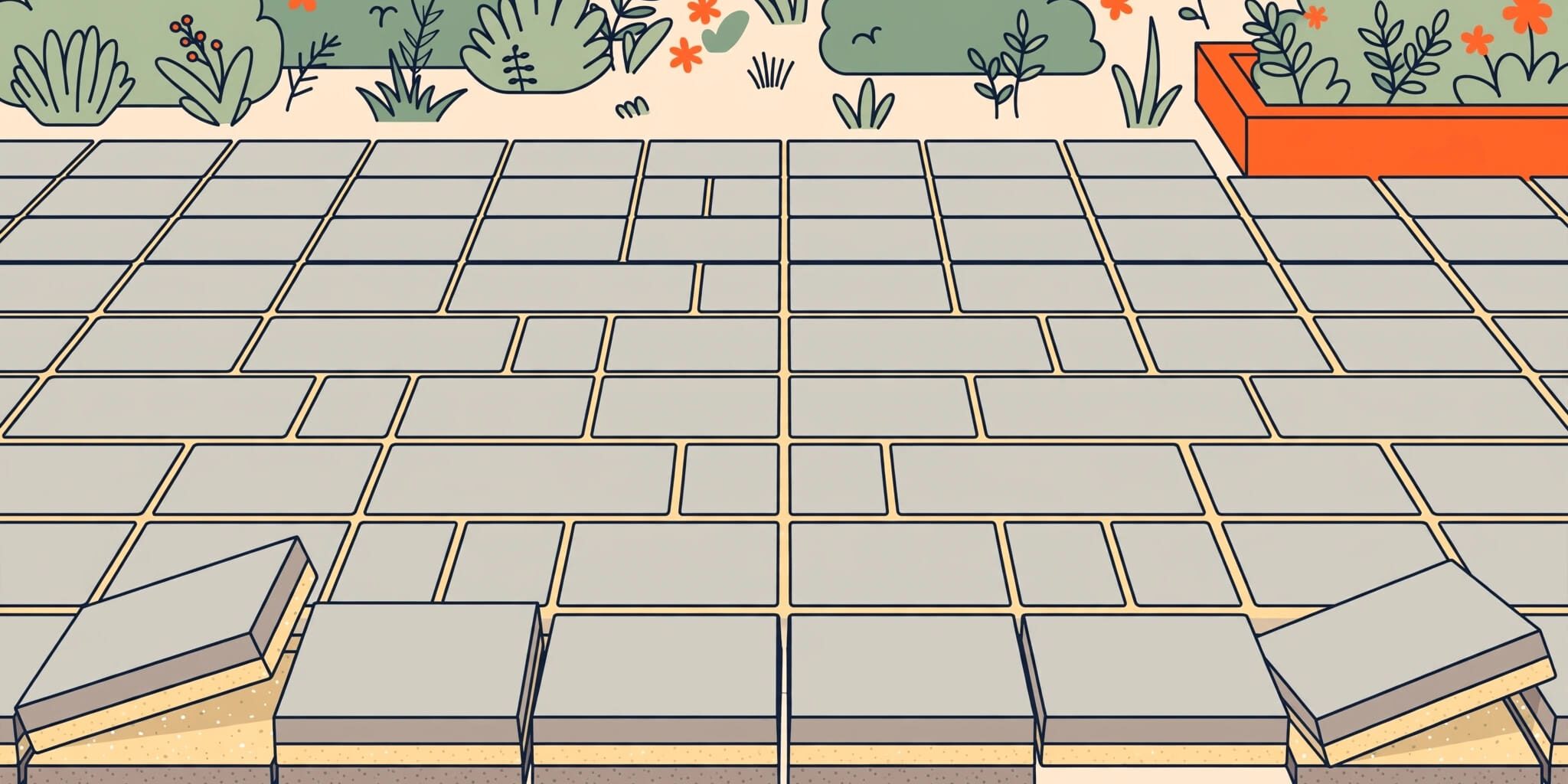
For standard concrete pavers, 1/8 inch is a common starting point, not a universal rule. Typical joints range from 1/16 to 3/16 inch, depending on paver type, laying pattern, manufacturer specifications, and compatible joint filler.
I recommend choosing the spacing and joint filler together, since the joints need proper support and drainage. Start with the numbers below, then match the installation method to your patio, walkway, or driveway.
Key Takeaways
- Standard concrete pavers commonly use 1/8-inch joints with compatible jointing sand or polymeric sand.
- Permeable paving uses clean, crushed angular stone in the joints, with open-graded drainage layers underneath.
- Polymeric sand has product-specific width limits, so one brand’s recommended range doesn’t apply to every bag.
- Stable pavers, secure edges, dry surfaces, proper compaction, and controlled watering all matter. Fresh joint sand can’t repair a failing base.
Paver Joint Width: Quick Reference
These ranges help you match the gap size with the material that belongs inside it.
| Paver or joint type | Typical width or product range | Matching joint material |
|---|---|---|
| Standard concrete pavers | 1/16 to 3/16 inch; 1/8 inch common | Specified jointing sand or compatible polymeric sand |
| Permeable joint around 1/4 inch | System-specific; Unilock lists ASTM #9 for joints 1/4 inch or less | Clean, crushed angular chip stone |
| Permeable joint up to 1/2 inch | System-specific; Unilock lists ASTM #8 for joints 1/2 inch or less | Clean, crushed angular chip stone |
| Calstone narrow-joint permeable system | 4 mm | System-specified permeable aggregate |
| SmartSand polymeric sand | Ideal range of 1/16 to 3/8 inch | Product-compatible conventional joints |
| HP NextGel polymeric sand | Ideal range of 1/16 to 1 inch | Product-compatible conventional joints |
The important distinction is between a paver spacing requirement and a joint-filler capacity. A sand that handles a 1-inch gap doesn’t mean your concrete pavers should sit 1 inch apart.
Measure the joint size at the actual opening between paver bodies, and follow the system’s specifications. A beveled edge makes the surface opening look wider, and decorative false joints aren’t necessarily full-depth gaps between separate units.
Keep the spacing consistent across the pattern. Don’t squeeze the last few joints closed to avoid cutting a border piece.
Which Joint Filler Fits Your Concrete Pavers?
Standard joints need compatible sand
For a sound, conventional patio, I often recommend polymeric sand when the product suits the installation. Its water-activated binders help resist washout, limit weed growth, and reduce loose spaces where ants become a nuisance.
Conventional loose sand remains an option where the paving system specifies it, but it stays loose and may need more replenishment. Bedding material and material swept into the joints serve different purposes, so don’t treat them as interchangeable.
Polymeric sand also isn’t grout. Keep it inside the joints rather than spreading a thin coating across the paver faces.
Product limits decide whether the sand fits
Sakrete describes its polymeric jointing sand as working best in joints between 1/4 inch and 1.5 inches. Wider joints take longer to harden. That guidance belongs to its product, rather than every polymeric sand available.
For a common 1/8-inch concrete paver joint, SmartSand’s stated 1/16-to-3/8-inch ideal range includes that opening. HP NextGel’s stated ideal range also includes it.
For narrow joints, I’d select a compatible product rather than widen a standard layout to suit a different sand. Check the bag’s minimum width, maximum width, and required installation depth before choosing.
A polymeric sand’s maximum joint width is a product limit, not a recommended spacing for every paver.
What Makes a Paver Joint Permeable?
Joint width and open area work together
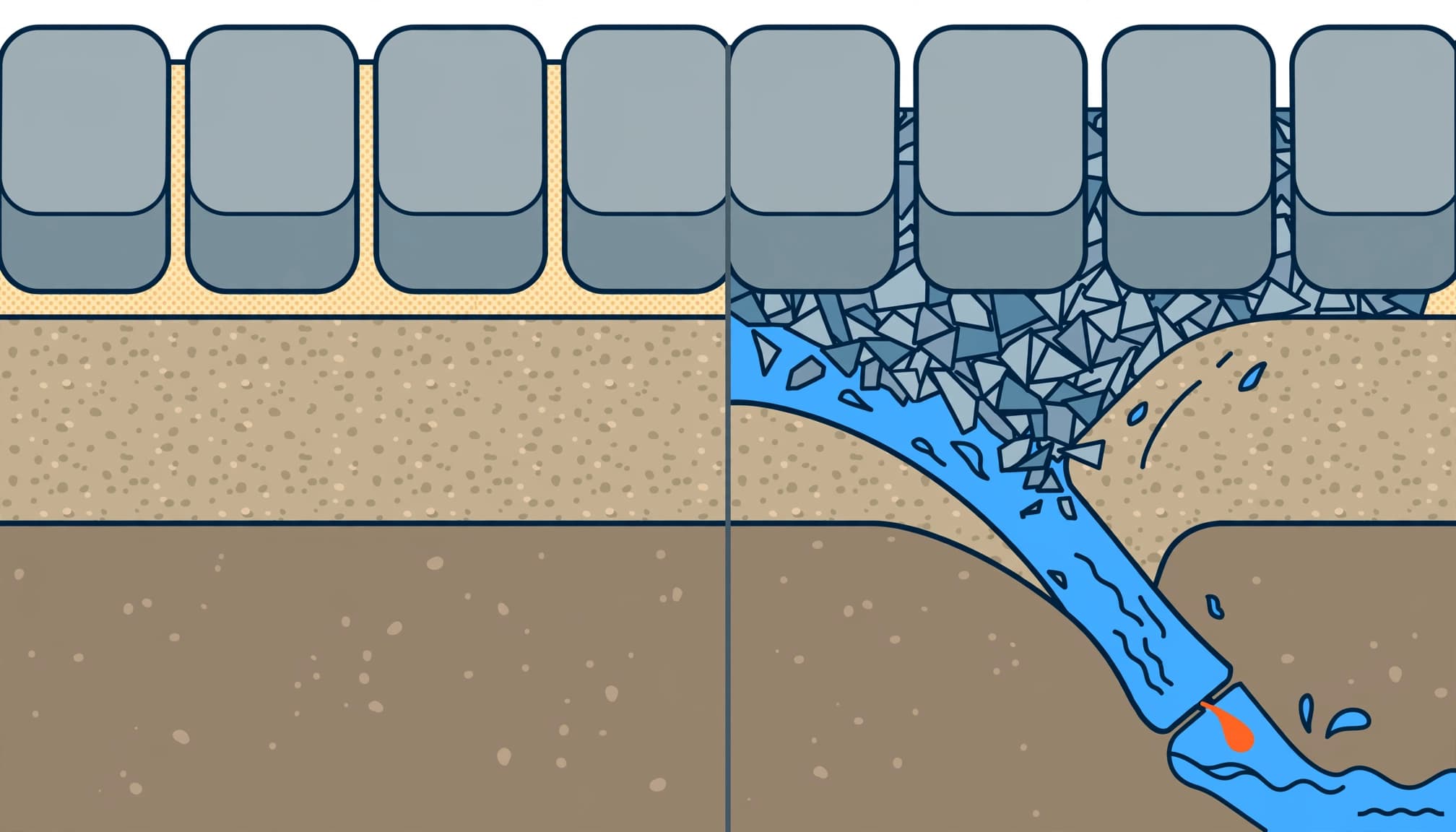
Unilock describes a permeable paver as having joints at least 1/4 inch wide and a void space ratio of at least 4 percent. That percentage describes the surface area available for rainwater to enter.
This isn’t a universal minimum for every engineered system. Calstone’s narrow-joint permeable system uses 4 mm joints and reports initial infiltration above 150 inches per hour.
The distinction matters. A narrow joint can belong to a designed permeable system, while an ordinary patio with widened gaps still lacks the drainage layers needed underneath. My permeable paver driveway guide explains how those layers work together.
Chip stone keeps the water paths open
Permeable joints use washed, crushed angular chip stone rather than ordinary sand. Unilock describes chip sizes ranging from 1/16 to 3/8 inch, with aggregate grading matched to the joint opening.
Clean stone leaves connected spaces for rainwater to flow quickly. Sand and accumulated fines can block those spaces.
Unilock reports a surface infiltration rate of 300 to 1,000 inches per hour for properly installed systems, measured under ASTM C1781. That infiltration rate is a surface-test result, not a measure of how quickly the underlying soil absorbs rainwater.
The Federal Highway Administration’s permeable pavement guidance includes infiltration testing after joint cleaning and aggregate replacement. Keeping the joints open remains part of maintaining drainage.
How to Install Joint Sand Properly
I recommend doing the support work before opening the sand bags. Rocking pavers, spreading borders, and low areas need repair first.
- Set the pavers on stable support. Prepare and compact the base, establish drainage, and secure the perimeter. Lay the units with consistent joints. Filled joints and secure perimeter restraints provide lock-up against lateral movement. A decorative border still needs dependable support.
- Prepare existing joints completely. For replacement work, Sakrete’s polymeric sand instructions call for removing old sand to the full paver depth. Pressure washing and sand installation shouldn’t happen the same day. Both the faces and joints must dry completely.
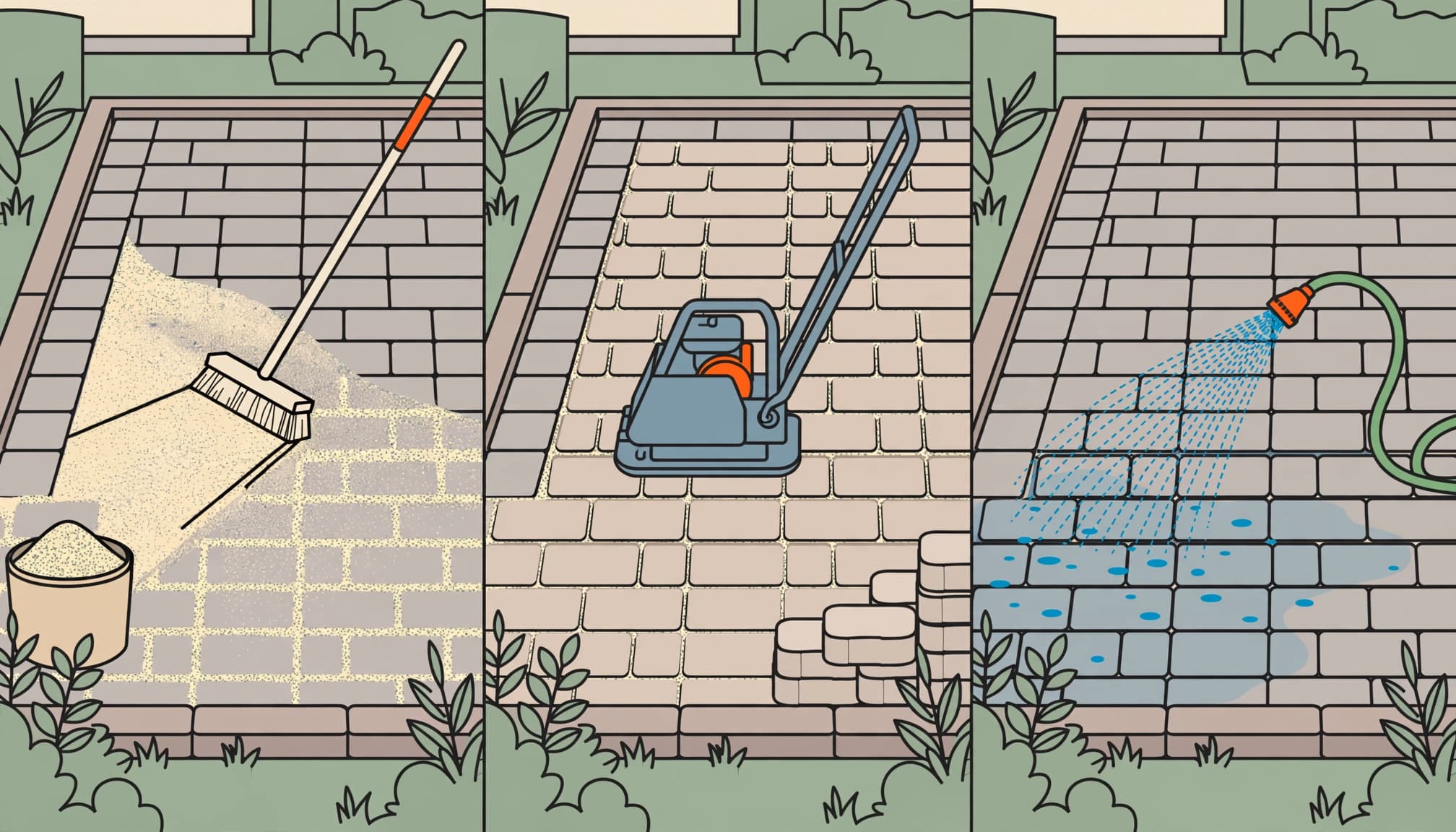
- Sweep, settle, and refill. Work sand down through the joints rather than leaving a shallow cap. Use the compaction method permitted by the paving system, including a protective mat where required. Refill after settling until the joints are properly packed.
- Finish below the surface and clean thoroughly. Sakrete calls for filling to within 1/8 inch of the paver top, or to the bottom of the bevel. Remove surface dust with a soft broom or carefully controlled blower before adding water.
For an older patio, replacing missing joint filler also means looking at why the material disappeared. Concentrated runoff or a loose edge can undo fresh sanding.
Don’t cover a designed isolation joint with polymeric sand. Those separation details may require compressible filler or flexible sealant instead.
Watering, Curing, and Sealing Without Haze
How much water should reach the joints?
Use the activation method specified for the sand, with enough water to wet the joint material without washing out its binder. There isn’t one universal gallon amount for every product, joint depth, and weather condition.
Sakrete recommends working in sections no larger than 10 feet by 10 feet. Stop before polymers float out onto the paver faces. That runoff can leave white haze and staining.
Too little water leaves poorly activated material below the surface. Too much can remove the binder that should stay in the joint. Finish filling and cleaning before activation, and don’t add fresh dry sand onto wet joints.
When can you walk, drive, or seal?
Sakrete’s guidance keeps pedestrian traffic off for 24 hours and vehicle traffic off for 72 hours after installation. Wider joints take longer to harden, so appearance alone isn’t a reliable cure test.
Keep irrigation away during curing and plan around Florida’s afternoon storms. A rushed application between rain showers can leave you with joints that need replacement.
Sakrete recommends applying a water-based sealer, such as Wet Look, after the sand has set, usually a few days later. The surface must also be dry and suitable for that sealer.
Sealing can protect the finished paving, but it won’t restore missing support or correct poor drainage. I recommend fixing those conditions before spending money on the final finish.
Frequently Asked Questions
Can you apply polymeric sand twice?
Yes, joints can be renewed, but don’t spread a thin new layer over failed material. For the Sakrete replacement method, remove the existing sand through the paver depth, allow complete drying, and refill properly.
If the joints failed because the pavers moved, repair that movement first. Another application won’t hold up loose bedding or replace washed-out base aggregate.
Does the same spacing work for bluestone?
Cut bluestone is a different material from molded concrete pavers. Contractor discussions commonly favor around 1/4-inch joints for cut stone because 1/8-inch spacing makes small dimensional differences more visible.
That is practical trade discussion, not a universal stone standard. Don’t transfer a concrete paver joint width directly to irregular stone, and choose joint filler rated for the actual opening.
Will polymeric sand stop all weeds and movement?
It reduces loose openings where seeds collect and helps resist joint washout, but it isn’t completely weed-proof or waterproof. Debris can still settle above the joints, and movement can create cracks.
Keep the surface swept and use controlled pressure when cleaning. A strong, narrow pressure-washer jet can remove joint sand and damage paver faces. Support underneath and restraint around the perimeter still carry much of the responsibility for a durable surface.
Build Consistent Joints on Solid Support
For standard concrete pavers, 1/8 inch is a useful starting point, with the final spacing matched to the paving system and joint filler. Permeable installations need compatible stone-filled joints and drainage layers working together.
I recommend repairing movement before sanding, then giving cleanup, watering, and curing the attention they deserve.
For help with your patio, walkway, or driveway, Get a Free Quote for a consultation and estimate.