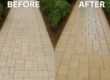



One heavy Florida downpour can expose a weak spot in a paver patio before a hurricane arrives. Water enters open joints, pushes through a low edge, and carries bedding sand and base material away.
That is why paver hurricane preparation should start before a named system is on the map. After more than 20 years working with Southwest Florida pavers and hardscaping, I know storm damage often begins with a low spot, loose border, or drainage problem already in place.
Inspect the surface early as the first step in storm preparation and practical property preparation. This simple check also supports emergency preparedness by identifying problems before they become urgent.
Inspect Pavers Before Severe Weather
Do this before the forecast gets busy. A short walk around your property can show whether the surface remains locked together or if water is starting to take it apart.
Check for Movement, Open Joints, and Low Spots
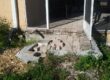
Walk the driveway, walkway, pool deck, and patio. Mark pavers that rock underfoot, edges that spread, joints with missing sand, and low sections that hold water after a hose test. These are small warnings, but hard rain can turn them into washout and movement.
Don’t slide loose pavers back over a shallow layer of new sand. I lift enough of the affected area to inspect the bedding layer and base, then rebuild and compact the support below if water or settlement created a void.
Give Screen Enclosures Extra Attention
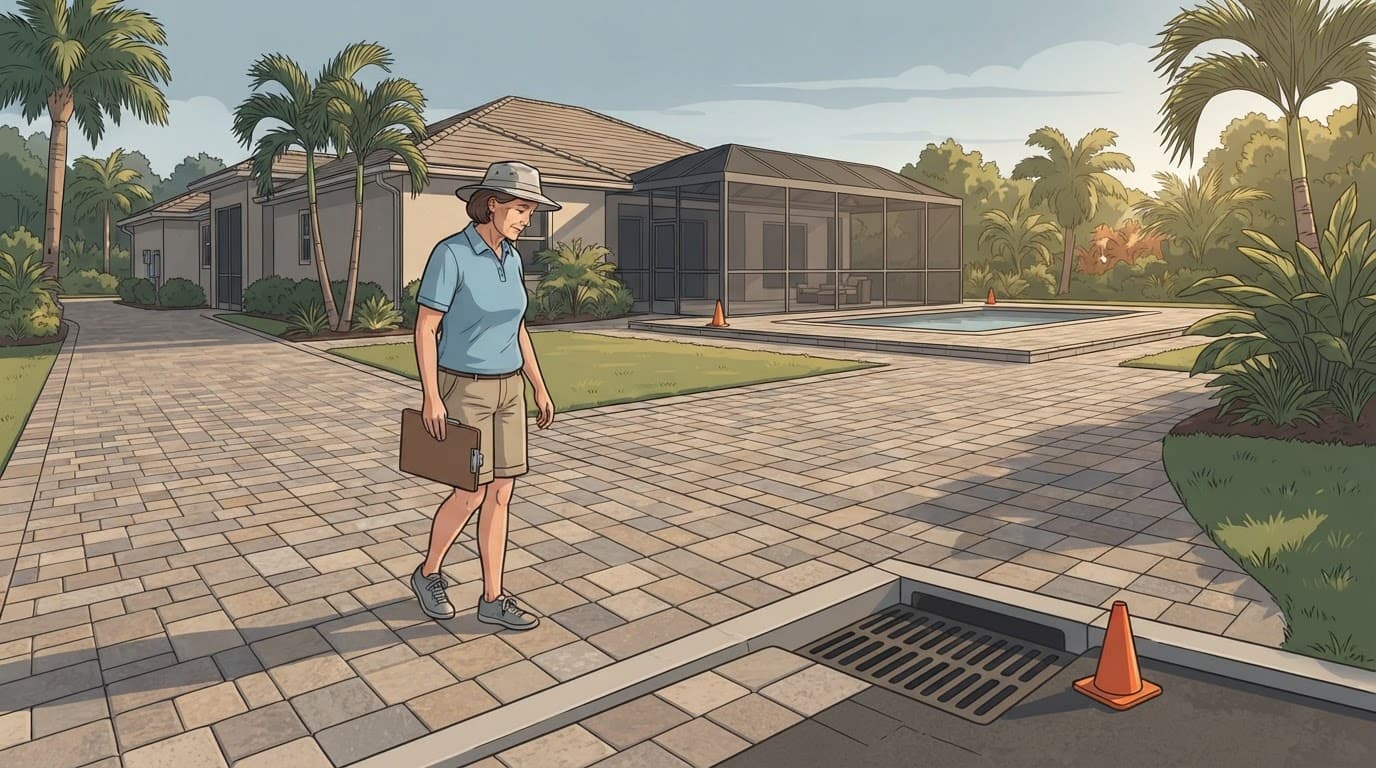
Cracks beside a pool cage deserve a close look. The enclosure footing and flexible paver field don’t move the same way, especially after heavy rain or excavation. I check the posts, concrete pavement edge, base, joints, and drainage together.
Never alter screen anchors or the concrete footing during a paver repair without qualified advice. Minor paver resetting may be simple, but work that affects the enclosure structure or footer can need local approval.
Keep Paver Drainage Clear Before Heavy Rain
Pavers are only as good as the ground and water route below them. Before heavy rainfall, I check drains, swales, and downspouts for clear exits. These drainage solutions support flood prevention by limiting trapped water that can soften sandy soil and move the base.
Clear Every Water Exit
Clear gutters, downspout outlets, swales, drain inlets, and the paver surface of leaves and mulch. The City of Palm Springs hurricane guidance warns that grass clippings and yard debris in the street can block storm drains and cause water buildup. Keep those materials off your paved areas too.
Follow the Water After a Hose Test
During paver hurricane preparation, run a hose over usual puddle spots, then watch where roof water exits through the drainage system. A downspout should not empty onto the lower paver edge or beside a screen-enclosure footing.
If water repeatedly runs toward the home, flood risk rises. Lift and reset the affected section or correct the drainage route before hurricane season.
If a low spot returns after every rain, new joint sand may improve the look, but it will not repair a base that has washed out.
Secure the Yard Before Wind Becomes the Problem
Loose outdoor items can injure people, damage a screen enclosure, and scrape across paved areas. I tell homeowners to secure the patio, pool deck, and outdoor living space early, not in the last few hours before a storm.
Before a watch or warning, take care of:
- Stack or store patio chairs, umbrellas, grills, planters, and toys inside a protected area.
- Arrange tree trimming for dead or hanging limbs, then remove all yard debris from the property.
- Bring in flags, hose reels, lightweight decor, and loose pool equipment covers.
Don’t leave trimmings at the curb once a named storm is approaching. They can become projectiles or wash into an inlet. For flood prevention, secure bins and keep loose materials away from inlets, fire hydrants, and access paths.
Seal Only After the Surface Is Sound
Sealing belongs after repairs, joint stabilization, and cleaning. Paver sealing can help with staining, support stable joints when it is part of the chosen system, and make routine cleaning easier, but it won’t fix sinking pavers or poor drainage.
Pick a Real Weather Window
Trident Hurricane Cat 5 is a two-part, water-based urethane product. The technical data sheet for Trident Hurricane Cat 5 calls for day and night temperatures between 45 F and 95 F.
Surface preparation includes cleaning and joint stabilization, and the cleaned surface needs at least 24 hours to dry before application. Turn off irrigation and check that rain is not expected for 24 hours. Plan for 24 to 36 hours of cure time, depending on weather conditions.
Loose pavers and damaged joints should be repaired first. The product mix needs a clean pail, low-speed drill mixing, and careful ratio control. Larger patios and driveways often benefit from a professional crew. The same applies to commercial or community hardscaping projects, including parking lots and other paved areas.
Clean Without Stripping the Joints
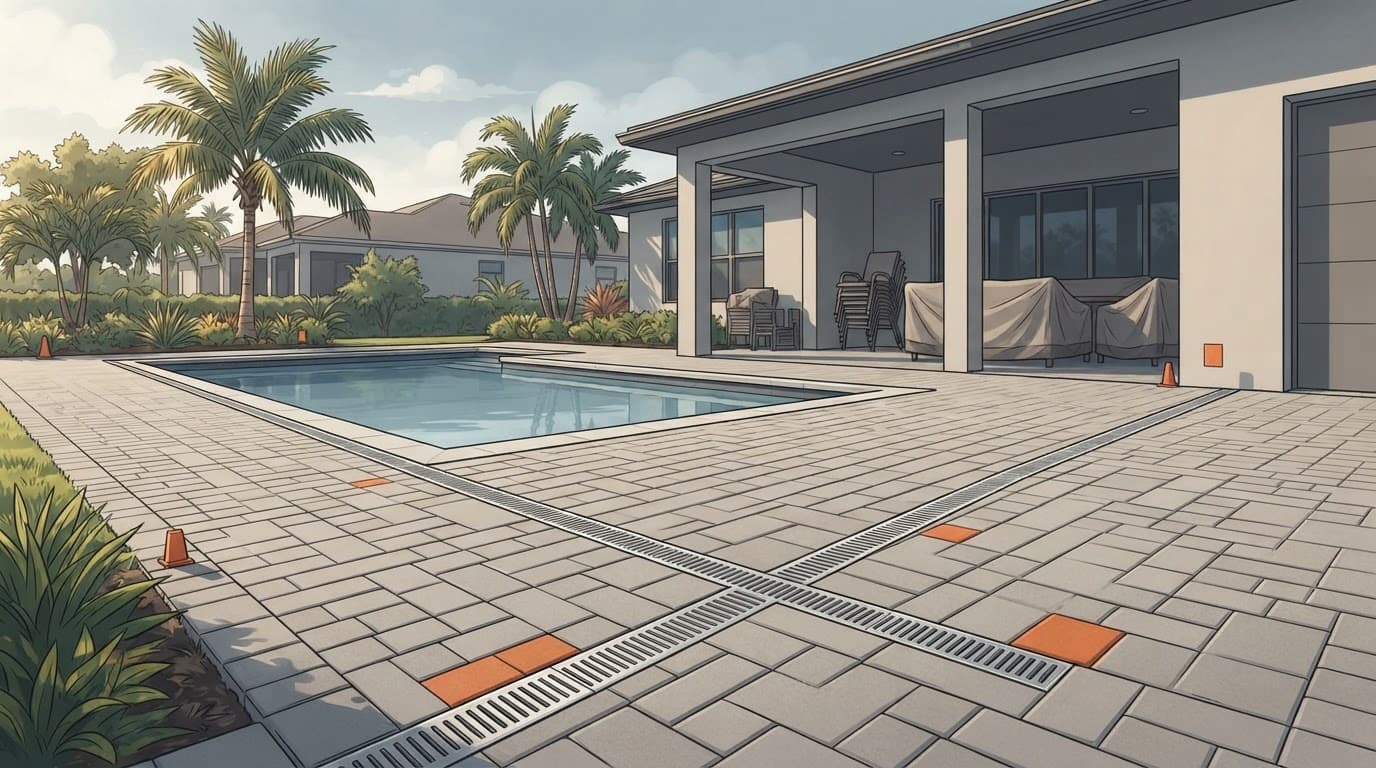
Pressure washing can remove algae and buildup, but too much force chips pavers and blasts sand from the joints. Use a broad fan pattern, keep the nozzle moving, and re-sand after cleaning when the joint level is low.
A maintenance job should not create a new washout problem.
Inspect Again After the Storm
As part of post-storm recovery, wait until conditions are safe and walk the driveway, patio, pool deck, and other paved areas again. Look for pooled water, exposed bedding material, shifted borders, new cracks, lost joint sand, and signs of water damage.
Repair the Cause, Not Only the Surface
Take photos before you clean anything. If a small area is stable, new joint sand may be all it needs. If stones rock, the border pulls apart, or water still ponds, I check the base and drainage system before resetting anything.
A paver sitting over a soft or washed-out base will settle again. Ordinary joint-sand loss or isolated movement isn’t the same as flood damage, but recurring ponding may need drainage solutions and base repair. If you see movement, standing water, or open joints around your home, Get a Free Quote and I will look at the base, drainage, and paver condition before the next storm.
Frequently Asked Questions
Should I seal pavers before a hurricane?
Seal pavers only after repairing loose stones, open joints, and drainage problems. The surface must be clean and dry, with enough time for the sealer to cure before rain arrives.
How do I protect pavers from heavy rain and flooding?
Clear gutters, downspouts, swales, drain inlets, and paver surfaces so water has a clear route away from the home. If water ponds or runs toward the house, correct the drainage problem before the storm.
What should I do with outdoor furniture near a paver patio?
Move or secure chairs, umbrellas, grills, planters, toys, flags, and lightweight decorations before wind conditions worsen. Loose items can become projectiles, damage screen enclosures, or scrape across pavers.
How can I tell if storm damage requires paver repair?
Look for rocking pavers, shifted borders, missing joint sand, exposed bedding material, and low spots that hold water. Surface sand may help with minor joint loss, but recurring ponding or movement usually requires inspection of the base and drainage system.
Final Thoughts
Florida storms test every weak spot at once: rain, wind, loose objects, and poor drainage. Protect paved areas by keeping water moving, repairing the support below loose pavers, and securing the surrounding property before conditions worsen.
Small repairs can prevent larger problems during post-storm recovery. Check the base, not only the paver you can see.