


Two patios can be the same size and still differ by thousands of dollars. Excavation, soil, drainage, base preparation, aggregate, and labor shape the overall project price and total installed cost.
In Southwest Florida, I see homeowners focus on the pavers first, but they often make up only about 20% of the budget. The remaining cost creates a stable outdoor living space that can handle sandy soil, heavy rain, daily foot traffic, and Florida heat. Here is how I break down the numbers before starting a project.
Key Takeaways
- Professional paver patio installation in Southwest Florida commonly costs $8 to $24 per square foot, while a straightforward 400-square-foot Fort Myers patio may fall around $5,600 to $6,800.
- Pavers often make up only about 20% of the total budget. Excavation, base preparation, drainage, compaction, disposal, access, and labor usually have a greater effect on the final installed cost.
- Soil conditions, heavy rain, poor grading, restricted access, curves, borders, pool features, and premium materials can move a project well above the basic planning range.
- Compare itemized contractor quotes that explain the full scope of work, including aggregate, bedding material, edge restraint, joint sand, drainage, cleanup, disposal, and warranty terms.
- A stable, properly compacted base and safe water drainage are more important to long-term patio performance than the paver color or pattern alone.
Southwest Florida Paver Patio Price Range
For a professional paver patio installation in Southwest Florida, homeowners commonly see about $8 to $24 as the cost per square foot. That puts a 400-square-foot patio around $3,200 to $9,600, before unusual drainage work, major demolition, or premium features.
Those numbers are planning figures, not a promise for every property. Easy access and stable grading may keep a project near the lower end. Restricted access, poor grading, drainage issues, or unusual site work can move the price much higher.
A realistic starting range
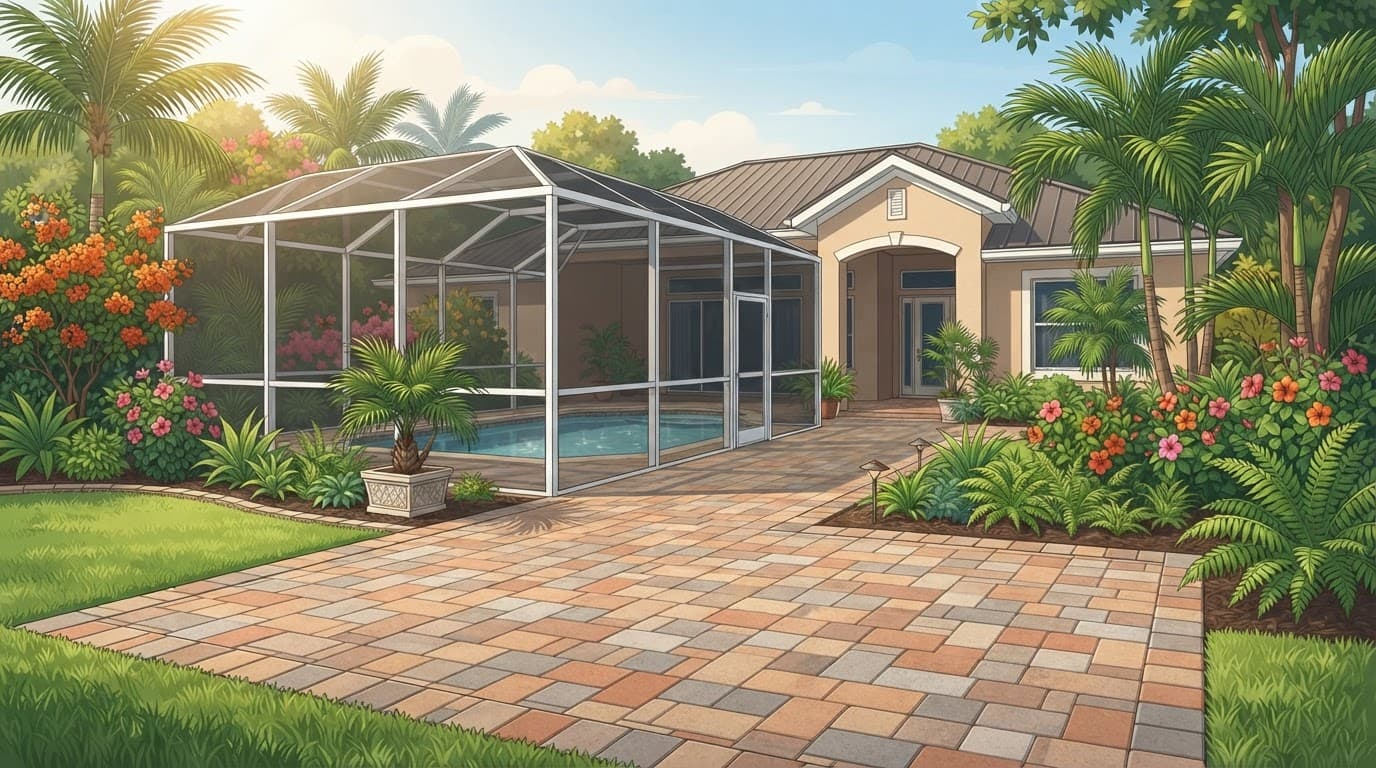
For a standard patio using concrete pavers, I would rather see a homeowner budget for the middle of the range than plan around the cheapest number online. A typical 400-square-foot project in the Fort Myers area is often estimated around $5,600 to $6,800 when the layout and site conditions are straightforward.
Small patios can also cost more per square foot because equipment, delivery, setup, and crew time still have to be covered. That is why a contractor may have a minimum project charge even when the patio is not very large.
What the price should include
An itemized quote should identify the material cost and account for layout, excavation, removal of unsuitable material, base aggregate, compaction, bedding material, pavers, edge restraint, joint sand, cleanup, and labor.
If a quote only says “$X per square foot” without explaining what is included, you don’t yet know the real cost. A low number can leave out the work that keeps the patio from settling later.
Local Paver Patio Pricing for Fort Myers, Cape Coral, and Nearby Areas
Local published planning figures show how wide the budget can be across Southwest Florida. Use the local cost per square foot figures as a starting point, not a guaranteed quote. Have the property inspected before ordering materials.
| Project or area | Planning range | 400 sq. ft. example |
|---|---|---|
| Broad Southwest Florida range | $8 to $24 per sq. ft. | $3,200 to $9,600 |
| Fort Myers standard patio | $14 to $17 per sq. ft. | $5,600 to $6,800 |
| Cape Coral basic layout | $8 to $9 per sq. ft. | $3,200 to $3,600 |
| Sarasota premium benchmark | $12 to $32 per sq. ft. | $4,800 to $12,800 |
| Pool-adjacent paver work | $20 to $35 per sq. ft. | $8,000 to $14,000 |
Bonita Springs and Punta Gorda homeowners can use the broader Southwest Florida range as an early budget. Review the soil, access, drainage, and material selection before ordering.
Sarasota-area projects may reach the higher end with porcelain pavers, natural stone pavers, premium finishes, or detailed pool-deck work.
The takeaway is simple. A square-foot number helps you start planning, but it doesn’t replace an itemized estimate.
How Material Choices Affect Paver Patio Cost
The surface material changes the appearance and the starting price, but it is not the only decision. I also look at how the material handles heat, moisture, foot traffic, pool water, furniture, and future repairs.
| Paver material | Broad installed planning range |
|---|---|
| Concrete pavers | $12 to $18 per sq. ft. |
| Brick pavers | $14 to $22 per sq. ft. |
| Travertine | $18 to $28 per sq. ft. |
| Porcelain pavers | $22 to $32 per sq. ft. |
| Natural stone pavers | $24 to $32 per sq. ft. |
These are broad Florida planning bands. The exact color, thickness, pattern, cuts, border, availability, and installation conditions can change the number. Concrete pavers are commonly used as a benchmark, and many suppliers sell them as interlocking pavers.
Material cost is only one part
The material cost is only one component of the total installed cost. A homeowner may spend more on premium pavers and still have most of the budget going toward labor and site preparation. In many projects, the actual paver purchase is close to one-fifth of the total cost.
That is why I don’t recommend choosing materials before looking at the base and drainage. A beautiful paver installed over weak support is still a weak patio. Quality workmanship below the surface protects the money spent on the visible finish.
Pool decks and premium finishes
Poolside work needs extra care around drainage, pool coping, screen enclosure footers, equipment pads, and finished elevations. Porcelain pavers and natural stone pavers often cost more, but homeowners may choose them for their appearance, surface feel, and design fit.
The pool deck price can rise when workers coordinate finished elevations and cuts. Drains, steps, columns, an existing lanai, or an outdoor kitchen can add complexity, while a simple open rectangle is less demanding.
Why Base Preparation Controls the Price
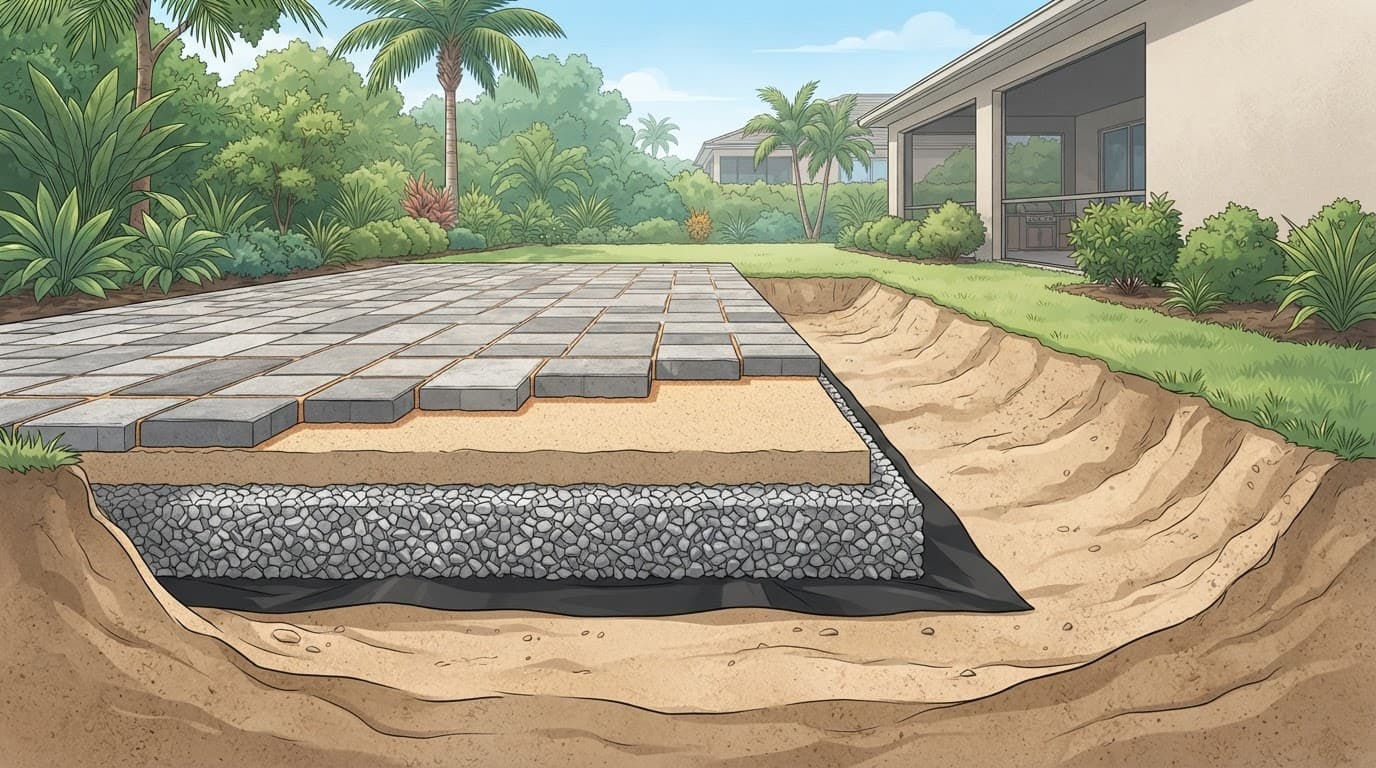
The base is the part you don’t see, but it carries the patio every day. In Southwest Florida, loose sand, fill soil, shell, limestone, previous construction, and heavy rain can all affect the preparation work.
Excavation and Disposal Under Varying Soil Conditions
The crew may need to remove grass, old concrete, existing pavers, roots, loose fill, or soft material before building the new base. For a patio made with concrete pavers, excavation depth depends on use, finished elevation, drainage, and the material found below grade.
Disposal is an easy cost for homeowners to miss. The aggregate’s material cost is only part of the preparation budget, since hauling and disposal can be substantial. Removing an old patio can add roughly $2.50 to $4.50 per square foot in broader Florida estimates. A 400-square-foot removal may add around $1,000 to $1,800, depending on the material and haul distance.
Drainage Management and Compaction
Heavy rain exposes weak work quickly. Water from a roof downspout, irrigation system, or sloped yard can wash out joint sand, erode bedding material, and soften the soil below the patio.
I look for puddles, low spots, open joints, rocking pavers, and borders that are spreading. A geotextile fabric may help keep subgrade soil and aggregate from mixing, but fabric cannot replace a properly compacted base.
A new paver over a weak base is still sitting on a weak base.
Downspouts should discharge several feet away from the patio when possible. If water keeps landing beside the edge, resetting the pavers without correcting the runoff only creates a short-term repair.
Design, Access, and Labor Costs
The patio design affects excavation, cuts, waste, and crew time. A square or rectangle is easier to lay than curves, multiple borders, steps, seat walls, fire pits, or an outdoor kitchen.
Layout and backyard access
Tight side yards can require more hand work and longer material movement. Project accessibility affects production when crews must carry aggregate and pavers through a narrow gate instead of using equipment near the installation area.
Curved edges also create more cuts and waste. Decorative borders add material and layout time, but they can give a basic patio a cleaner finished look. The right choice depends on your budget and how you plan to use the space.
Hidden costs in the estimate
Contractor overhead is not automatically a bad charge. Crews, trucks, compactors, insurance, delivery, scheduling, cleanup, and disposal all cost money. Broad project estimates often place combined overhead and markup around 13% to 22%.
I recommend asking whether the quote separates material cost from labor and includes:
- Demolition and haul-away of the existing surface.
- Aggregate, bedding sand, joint sand, and edge restraint.
- Drainage changes or downspout extensions.
- Cuts around the home, pool, lanai, drains, and screen enclosure.
- Cleanup, final grading, sealing, and any warranty terms.
A clear estimate from a professional contractor should show the same scope of work, so two homeowners can compare quotes.
Is a DIY Paver Patio Actually Cheaper?
A DIY paver patio using concrete pavers still requires excavation, delivery, aggregate, disposal, rented equipment, and grading. You also assume responsibility for base preparation, the foundation, and finished elevations.
Where DIY savings disappear
A plate compactor is not optional. The base needs to be placed and compacted in proper layers, and a hand tamper may not provide the same result over a large area. Renting equipment, hauling aggregate, and paying disposal fees can quickly reduce the savings.
I also see homeowners add loose sand beneath a sunken paver. That may level the stone for a short time, but loose sand cannot replace a washed-out or poorly compacted base.
Why professional installation can pay off
Before taking on a DIY paver patio, consider whether it’s worth the equipment, hauling, and risk of errors. DIY work can save money when the preparation is managed accurately.
A professional contractor can identify soil movement, drainage trouble, weak edges, and conflicts with pool equipment before the pavers go down. That inspection matters more than the surface pattern.
Professional installation also helps keep the patio at the correct height beside doors, lanai slabs, pool coping, screen enclosure footers, and drainage paths. When those elevations are wrong, water and trip hazards can become more expensive than the original labor.
Maintenance Costs and Long-Term Patio Performance
A professionally installed paver patio is a long-life hardscape system, but maintenance still matters. I don’t give homeowners an artificial lifespan promise because water, soil movement, traffic, and installation quality all affect performance.
Cleaning, sand, and sealing
Soap, water, and a stiff brush can handle ordinary dirt. Heavy buildup may need controlled pressure washing, but aggressive pressure can chip the paver face and remove the sand that locks the joints together.
When pressure washing is necessary, use a broad fan tip and moderate pressure. Keep the wand moving at a safe distance instead of blasting one joint. After cleaning, the joints may need fresh compatible sand. Polymeric sand can help limit weed growth and movement when the existing system is stable and installed correctly.
Sealing has a material cost separate from cleaning, joint-sand replacement, and structural repairs. A broad planning range is about $0.75 to $1.50 per square foot, or approximately $300 to $600 for 400 square feet.
Signs the patio needs structural repair
Open gaps, rocking stones, repeated low spots, and standing water usually point to more than a dirty surface. A larger reset or repair may call for paver patio renovation, so I inspect the pavers, joint material, edge restraint, base, and drainage together.
Pavers beside a pool screen enclosure need extra caution. The enclosure footing and surrounding pavers can settle at different rates, especially after excavation or heavy rain. Minor resetting may be enough, but changing the footing, anchors, or screen posts is separate structural work and should be reviewed by a qualified professional.
Permits and Contractor Quotes in Southwest Florida
Permit rules vary by city, property, project scope, setbacks, drainage changes, and nearby structures. Minor paver resetting generally differs from a new paver patio installation, structural footer changes, or screen enclosure modifications.
Does a paver patio need a permit?
I don’t rely on a general online statement that an uncovered patio never needs a permit. Cape Coral provides residential information through its permit document center, and homeowners can review Fort Myers permit applications before work begins.
The Fort Myers Beach permit FAQ also explains that Florida Building Code requirements can apply to construction, alteration, repair, and related building work. Check with the building department serving your property, especially when the patio affects drainage, a pool deck, screen enclosure, setback, or existing slab.
Call 811 before digging. Irrigation, electrical lines, pool equipment plumbing, and drainage pipes may run close to the planned patio.
What should a contractor quote show?
A professional contractor should explain the scope, exclusions, and site conditions instead of hiding everything behind one square-foot price. Request a line-item breakdown that separates the material cost from installation and other work.
I have spent more than 20 years working with homeowners, and I know a clear conversation before installation prevents many problems later.
If you want a property-specific review, Get a Free Quote and I can look at the layout, drainage, existing surface, access, and base conditions before recommending the right approach.
Frequently Asked Questions
How much does a paver patio cost in Southwest Florida?
Professional installation commonly runs about $8 to $24 per square foot. A straightforward 400-square-foot patio in the Fort Myers area is often estimated around $5,600 to $6,800, depending on access, grading, drainage, and material selection.
What should be included in a paver patio quote?
An itemized quote should cover layout, excavation, removal of unsuitable material, aggregate, compaction, bedding material, pavers, edge restraint, joint sand, cleanup, and labor. It should also identify drainage work, demolition, disposal, cuts, sealing, and warranty terms when they apply.
Why can two patios with the same size have different prices?
The total cost changes with soil conditions, drainage, access, excavation depth, layout, cuts, borders, and the selected paver material. Pool decks, screen enclosures, steps, outdoor kitchens, and poor grading can add more site and installation work.
Is a DIY paver patio cheaper?
DIY work can reduce labor costs, but excavation, aggregate delivery, equipment rental, disposal, grading, and compaction still add up. If the base or finished elevations are wrong, repairs can cost more than the original installation savings.
Does a paver patio need a permit in Southwest Florida?
Permit requirements vary by city, property, project scope, setbacks, drainage changes, and nearby structures. Check with the building department serving the property before work begins, and call 811 to locate irrigation, electrical, pool, and drainage lines.
The Right Budget Starts Below the Surface
The pavers you see are only one part of the project. Excavation, compaction, drainage, access, edge support, labor, and disposal usually affect the final paver patio cost more than color or pattern alone.
Use local ranges for early planning, then compare itemized quotes that address the entire installation. Whether you choose concrete or natural stone pavers, the base, drainage, access, and edge support matter more than color alone. When the base is stable and water has a safe path away from the patio, your investment has a much better chance to stay beautiful, level, and usable for years.