


A patio project can look beautiful on day one and still fail early if work below the surface was rushed. That is why the right paver contractor questions matter before you choose a price, a color, or a start date.
After more than 20 years around Southwest Florida patios, driveways, pool decks, and walkways, I’ve seen the difference good preparation makes. Ask direct questions now. It is much easier than lifting pavers and correcting a weak base later.
Key Takeaways
- Ask about licensing, insurance, permits, experience, and recent references before choosing a paver contractor.
- Confirm how the contractor will handle excavation, base preparation, compaction, edge restraints, grading, and drainage.
- Choose paver materials based on how the space will be used, especially traction and heat resistance around pools.
- Require a written scope that explains included work, pricing, change orders, schedule, cleanup, and access challenges.
- Get workmanship and material warranties in writing, along with clear instructions for cleaning, re-sanding, sealing, and long-term care.
Start With License, Insurance, and Real Experience
A qualified paver contractor or hardscape contractor should be comfortable answering basic business and licensing questions. If they avoid them, rush past them, or say paperwork does not matter, I would keep looking.
Ask which license applies to the work
Ask, “What license applies to my patio project, and can I verify it?” Paver work can overlap with drainage, site grading, pool areas, driveways, or structural changes. The answer depends on the actual scope and your municipality.
Florida homeowners can review the state’s construction industry licensing information before signing anything. You should also ask whether a permit, zoning approval, engineering review, or Notice of Commencement applies to your property.
A professional contractor will not promise that every project needs no permit. A new driveway, changed drainage path, work near a right-of-way, or pavers around a screen enclosure can have different requirements than a simple repair.
Ask for proof of insurance, not a verbal promise
“Are you licensed and insured?” is only the beginning. Ask for a current certificate of general liability insurance and proof of workers compensation insurance. Check that the business name matches the estimate.
Florida’s construction page includes access to the Construction Policy Tracking Database, which homeowners can use to review coverage status. It is a few minutes well spent.
A low quote is never low enough to make uninsured work a good idea. Your home, pool cage, irrigation, and driveway are worth protecting.
Look at finished jobs and recent references
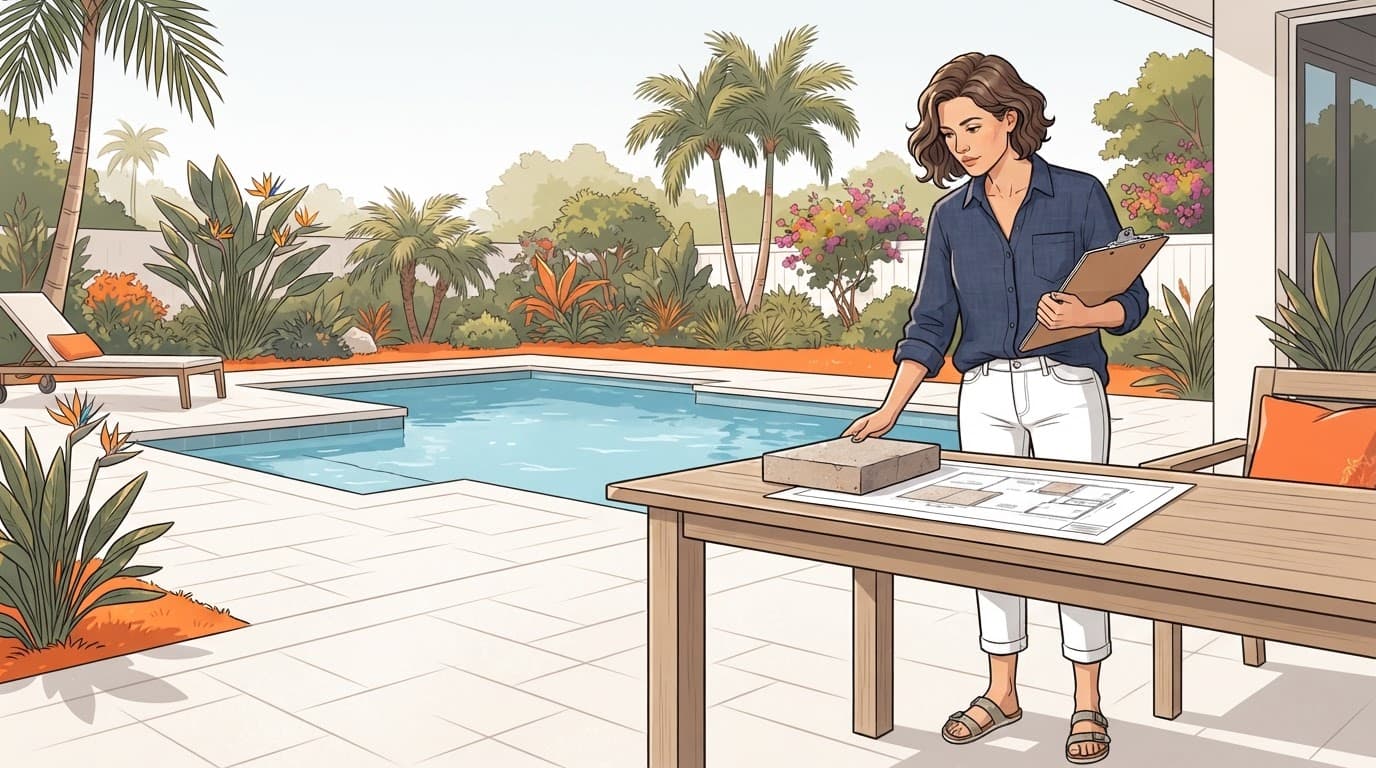
Photos are helpful, but I recommend comparing paving stone contractors. Ask each for five recent client references and a portfolio of past work from projects like yours.
A contractor who installs patios may not have the same experience as a driveway paver contractor. Ask whether they’ve handled heavy-use driveways or pool decks around screen enclosures.
Ask past customers if the crew arrived when promised, protected the property, handled issues fairly, and came back when needed. Also ask how the surface looks after a rainy season, not only how it looked at completion.
A good paver job should be judged after water, traffic, and time have tested it, not only after the final sweep-up.
Ask What Happens Below the Pavers
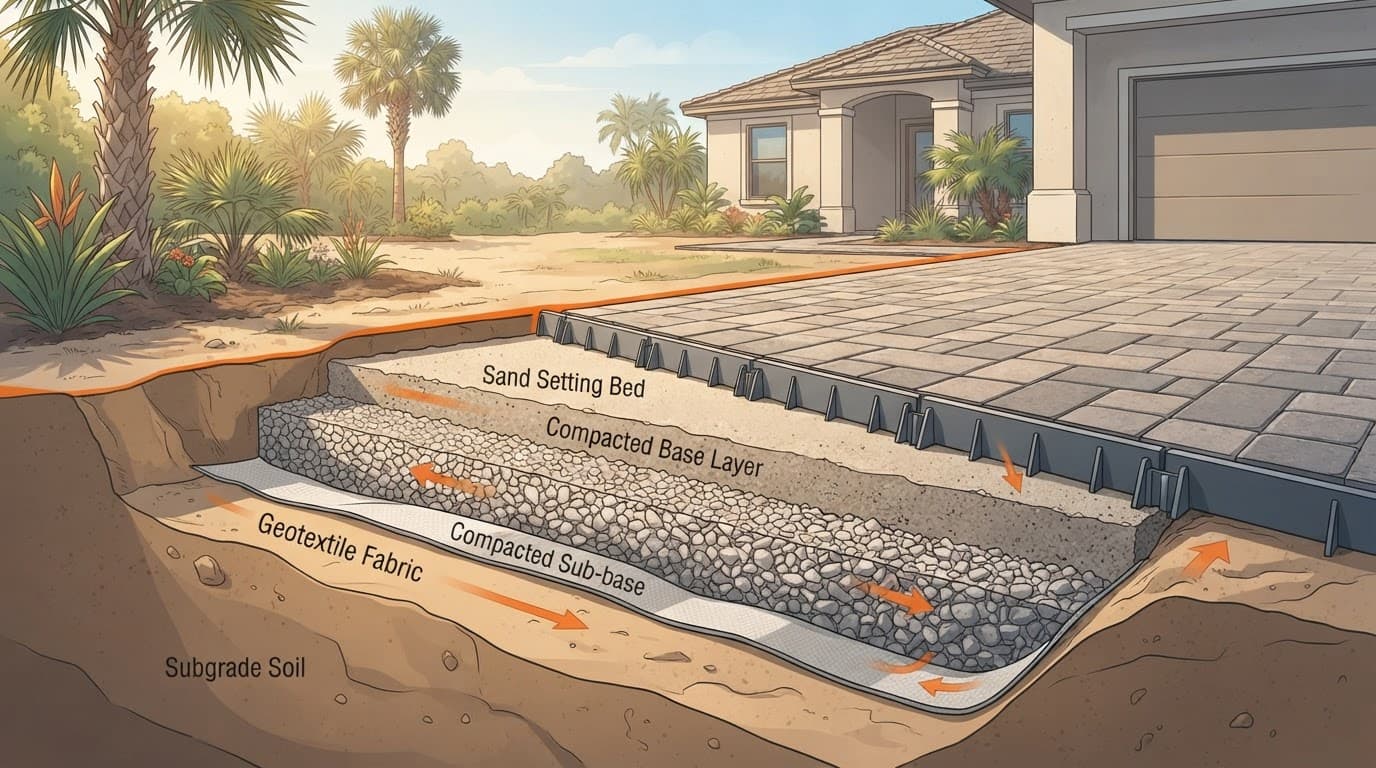
A durable paver installation depends on more than the visible surface. Excavation, aggregate, bedding material, compaction, and edge support keep the finished area level.
Get clear answers about base preparation
Ask how deep the crew will excavate and how they determine the base depth. No single depth works for every job. Soil conditions, vehicle weight, water flow, and project type all matter.
For a driveway, ask how the aggregate layers differ from those for a patio project. Ask the contractor to explain the installation process, including aggregate type, lift thickness, and layer-by-layer compaction.
I also ask homeowners to bring up geotextile fabric. It can help separate unstable soil from the aggregate base when site conditions call for it. It isn’t needed on every site, but a contractor should explain why it’s included or left out.
Ask how edges will stay locked in place
Interlocking pavers need proper edge restraints. Without them, the border can spread, joints can open, and the entire section can start to move.
Ask how the restraints will control lateral movement and be secured appropriately around curves, driveway edges, and transitions beside concrete. A border isn’t only decorative. It’s part of the support system.
Talk about drainage before the first paver arrives
In Southwest Florida, hard rain quickly exposes weak grading. Ask how drainage and grading will direct water when rain hits the patio, driveway, roofline, and pool deck.
A contractor should discuss slopes, downspouts, low areas, swales, and water that may run toward your home or screen enclosure. If water already ponds in one section, putting new pavers on top will not correct the underlying water flow problem.
Match the Paver Material to the Space
The material should fit how you use your outdoor living space, not only the picture you saved online. For your patio project, ask to see actual paving stones outdoors at your property. Sun, shade, texture, and color can look different at your house.
Compare concrete pavers, stone, and permeable options
Concrete pavers are popular for driveways, patios, and walkways because they offer many shapes, colors, and patterns. They are practical, durable, and easier to replace individually than a poured slab.
Natural stone can give a pool deck or patio a more distinct look, but each type has its own maintenance needs. Travertine, for example, needs cleaning products that won’t etch calcium-based stone. I wouldn’t use acidic cleaners without confirming they’re safe for the material.
Permeable pavers can help manage runoff, but they still need a properly designed base and maintenance plan. Ask how the joints, aggregate, drainage, and local approval requirements will be handled.
Ask about traction and heat around pools
Pool decks need extra thought. Wet feet, sunscreen, algae, and shade can all affect traction. A polished stone may look elegant but can become slick near water.
Ask whether the finish feels comfortable under bare feet and how it performs when wet. I recommend walking on samples outdoors before making a final choice. The best color in a showroom may not be the best surface around your pool.
Get a Written Scope and a Price You Can Understand
Good estimates for a patio project aren’t vague. They show what is included in the paver installation work, what is excluded, and what allowance may cover hidden site conditions.
Ask what the quote includes
A complete proposal should include a cost breakdown and identify your point of contact. It should cover demolition, removal and disposal, base aggregate, bedding material, pavers, edge restraint, cuts, joint sand, drainage and grading, and cleanup. It should also explain whether sealing is included, which product will be used, and how it will be applied.
Ask whether the price includes access challenges. A backyard with a narrow gate may need more hand work than an open driveway. Pool equipment, lanai walls, curved borders, and screen enclosure footings can also change labor and material needs.
The Florida DBPR offers guidance on services that require a DBPR license, which is useful when your project includes work beyond basic surface installation.
Ask how unexpected work is priced
A fixed-price estimate gives you a clear starting amount. It works well when the project scope is clear and site conditions are known.
Time and material billing may make sense for repairs or areas with hidden settling, washed-out base, or buried obstacles. Neither option is automatically better. Confirm the pricing method and approval process in the written contract. When site conditions change, ask for a cost breakdown showing how added excavation, settling, buried obstacles, or a washed-out base will be priced.
Don’t accept surprise costs without change orders. They should document the reason, added price, added time, and your approval before the crew moves forward.
Confirm the Schedule and Jobsite Plan
A paver contractor should provide a realistic project timeline, not a promise designed only to win the job. Weather, inspections, material availability, and site conditions can affect the schedule, but communication should remain clear.
Ask who will supervise the work
Find out who your daily point of contact will be. Confirm a backup point of contact with authority to address concerns and make decisions on site. Ask how often you’ll receive updates and how to reach someone when concerns arise.
Ask when material delivery is expected, where materials will be stored, and how equipment will access the property through narrow gates. Also ask how the crew will protect landscaping, pool equipment, irrigation, screen enclosures, and existing surfaces, since these details prevent frustration.
Ask about work near screen enclosures and utilities
Pavers beside a pool cage or screen enclosure need care. The paver system and structural footing can settle differently. A visible crack may point to water, disturbed soil, weak edge support, or movement below the surface.
Ask whether the crew will alter any footing, anchors, posts, or enclosure hardware. Minor paver resetting is one thing. Structural footing work is different and may require local approval. Before digging, utility locations should be addressed too, especially near irrigation, electrical lines, pool plumbing, and drainage.
Discuss Warranty and Long-Term Paver Care
The last paver laid is not the last question to ask. A good contractor explains what’s covered and how to care for the surface after the project is complete.
Separate workmanship from material warranties
Ask for the warranty on workmanship in writing. It should explain what happens if pavers settle, joints open, edges move, or an installation-related defect appears.
Material warranties are different. They usually come from the paver manufacturer, not the installer. Ask what product is being used and keep the paperwork for your records.
No warranty should promise to cover damage caused by later site changes, heavy equipment, tree roots, or work performed by another company. Clear terms protect both sides.

Ask how cleaning and re-sanding will be handled
Ask how maintenance and repairs, including cleaning and re-sanding, will be handled.
Pressure washing can improve dirty brick pavers, but too much pressure can chip the surface and blow joint sand out of the gaps. That sand helps lock the pavers together.
Ask which cleaning method and products fit your material. Find out whether joint sand needs replacement afterward, and whether sealing or resealing is appropriate. A maintenance job should not create loose pavers, open joints, or new drainage problems.
Frequently Asked Questions
What should I ask a paver contractor before hiring them?
Ask about licensing, insurance, permits, recent similar projects, references, and who will supervise the work. You should also request a written estimate that explains the installation process, materials, schedule, warranty, and payment terms.
How important is base preparation for a paver project?
Base preparation is one of the most important parts of a durable paver installation. Proper excavation, aggregate, compaction, bedding material, and edge support help prevent settling, spreading, and open joints.
How can I tell whether a paver contractor understands drainage?
Ask how the contractor will manage slopes, downspouts, low areas, swales, and water flowing near your home or pool enclosure. A qualified contractor should address existing ponding and explain how grading will direct water before installation begins.
What should be included in a paver installation estimate?
The estimate should identify demolition, disposal, excavation, base aggregate, bedding material, pavers, cuts, edge restraints, joint sand, drainage, grading, cleanup, and sealing. It should also explain exclusions, access challenges, allowances, and how unexpected work or change orders will be priced.
What warranty questions should I ask?
Ask for the workmanship warranty in writing and confirm what happens if pavers settle, joints open, or edges move. Also ask which material warranty comes from the manufacturer and what maintenance or site changes could void either warranty.
Final Thoughts on Hiring a Paver Contractor
The most useful questions move beyond color and price. Ask about the base, drainage, grading, edge support, permits, insurance, written scope, and warranty before the work starts.
A strong surface begins below the pavers, and quality workmanship shows up in details you cannot always see. If you are planning a patio, driveway, walkway, or pool deck in Southwest Florida, compare paving stone contractors carefully and choose a hardscape contractor who will review the project with you. Get a Free Quote and I will help you look at it the right way before you commit.