


One Florida rainstorm can show you whether a driveway was built right.
If you’re searching for paver driveway cost florida, you probably want more than a low number. You want to know what the square-foot price includes, why one quote is twice as high as another, and whether the driveway will stay level through heavy rain and sandy soil.
I work with homeowners across Fort Myers, Cape Coral, Bonita Springs, Punta Gorda, Sarasota, and nearby Southwest Florida communities. The best budget starts with the complete installation system, including the base, drainage, and other layers beneath the pavers.
Paver Driveway Cost Florida: The Quick Answer
For most residential projects, a professionally installed paver driveway in Florida costs about $10 to $25 per square foot. Basic concrete pavers usually fall near the lower end, while travertine, shell stone, natural stone, porcelain, custom borders, difficult access, and drainage work push prices higher.
A broader Florida planning range is about $12 to $32 per square foot when the project includes more site preparation or premium materials. Highly customized projects can reach $30 to $50 or more.
A low quoted price may not include demolition, excavation, drainage, edging, permits, or sealing. Always compare the written scope, not only the number.
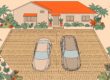
Use these practical budget tiers to plan a double car driveway measuring roughly 400 square feet:
| Project type | Approximate installed total |
|---|---|
| Basic concrete pavers | $4,000 to $8,000 |
| Standard Southwest Florida project | $4,000 to $10,000 |
| Premium stone or complex layout | $8,000 to $12,800+ |
| High-end custom installation | $12,000 to $20,000+ |
These figures are planning ranges. Your final installed estimate depends on the existing surface, access, driveway shape, drainage, material, and required base work.
Measuring the Driveway Before Pricing
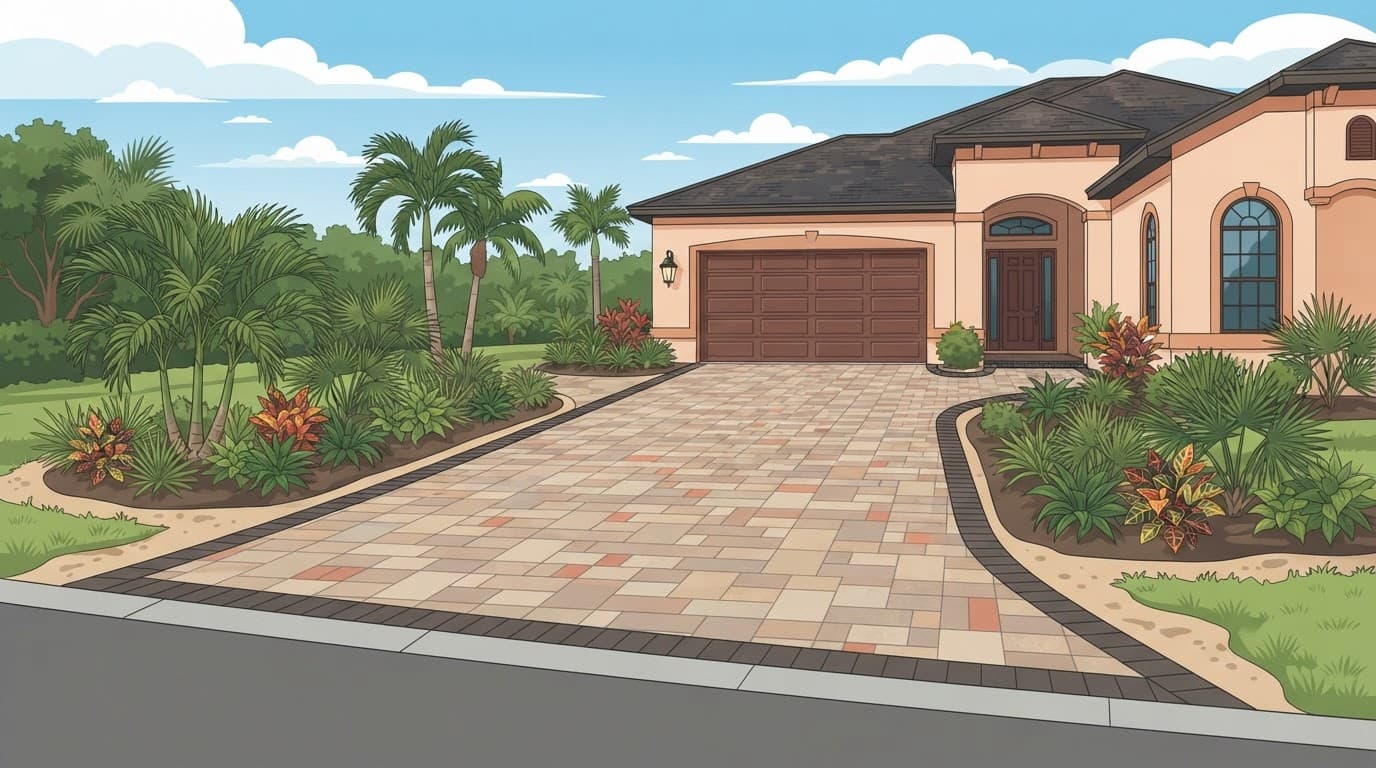
Square footage is the starting point for nearly every driveway estimate. It isn’t the complete price, but it establishes a preliminary paver driveway cost. Inaccurate measurements can throw the whole budget off.
Use each section of the driveway footprint
Measure the length and width of every rectangular area, then multiply length by width to calculate its square foot area. If the driveway includes a curved apron, side extension, parking pad, or walkway connection, measure those areas separately.
For a triangular section, multiply the base by the height and divide by two. Add every section together before multiplying by the installed price per square foot.
For example:
- Main driveway, 20 feet by 20 feet: 400 square feet
- Side parking area, 10 feet by 10 feet: 100 square feet
- Total estimated surface: 500 square feet
At $10 to $25 per square foot, that 500-square-foot project begins around $5,000 to $12,500 before unusual demolition, drainage, or access costs.
Account for cuts and material waste
A straight rectangle is faster to install than a driveway with tight curves, multiple corners, or several material borders. Custom cuts take more labor and create more material waste.
I usually allow additional material beyond the measured surface area for cuts, especially when the design uses a running bond, herringbone, circle kit, contrasting border, or multiple paver sizes. Pattern complexity increases cuts, layout time, and material waste.
Comparing Florida Paver Materials
The choice among driveway materials affects curb appeal, surface temperature, maintenance needs, and total paver driveway cost.
Material cost is only part of the installed price. Durability, vehicle suitability, pattern complexity, cutting, and installation labor can change the final figure.
| Material | Common installed planning range | Good fit |
|---|---|---|
| Concrete pavers | $10 to $20 per sq. ft. | Durable everyday driveways |
| Clay brick pavers | $10 to $18 per sq. ft. | Traditional brick appearance |
| Natural stone | $14 to $25 per sq. ft. | High-end custom designs |
| Travertine, shell stone, porcelain pavers | $16 to $25+ per sq. ft. | Premium finishes and upscale homes |
| Permeable pavers | Varies by system | Drainage-conscious applications, with vehicle-load and local requirements verified |
| Cobblestone pavers or complex custom work | $30 to $50+ per sq. ft. | Specialty designs and luxury projects |
Concrete pavers
This everyday option offers many colors, shapes, and patterns without reaching the cost of premium stone. Individual units can also be removed and replaced, making repairs practical.
This material still needs a proper base. A quality product on a weak foundation will settle, regardless of price. Installation quality matters as much as the product.
Travertine and natural stone
Travertine gives a softer, more natural appearance and is popular around Florida homes with pool areas and outdoor living spaces. Natural stone prices vary by grade, thickness, finish, availability, and the amount of cutting needed.
I recommend looking at actual samples of shell stone in direct Florida sun before choosing a surface. Color can change noticeably under Florida light, and some finishes feel different underfoot. For a driveway, travertine pavers also need to be rated for vehicle loads, not only attractive in a showroom.
Porcelain pavers and shell stone can also create a premium appearance, but each requires careful product selection and installation. Cobblestone is usually treated as an upper-end material because of its product price and slower installation.
Base Preparation and Drainage Matter Most
The pavers are the visible part of the driveway, but the base carries the load. In Florida, base preparation and drainage can materially change the total paver driveway cost. Sandy soil, summer rain, groundwater, and changing moisture conditions make that work especially important.
Excavation and compaction prevent settling
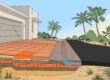
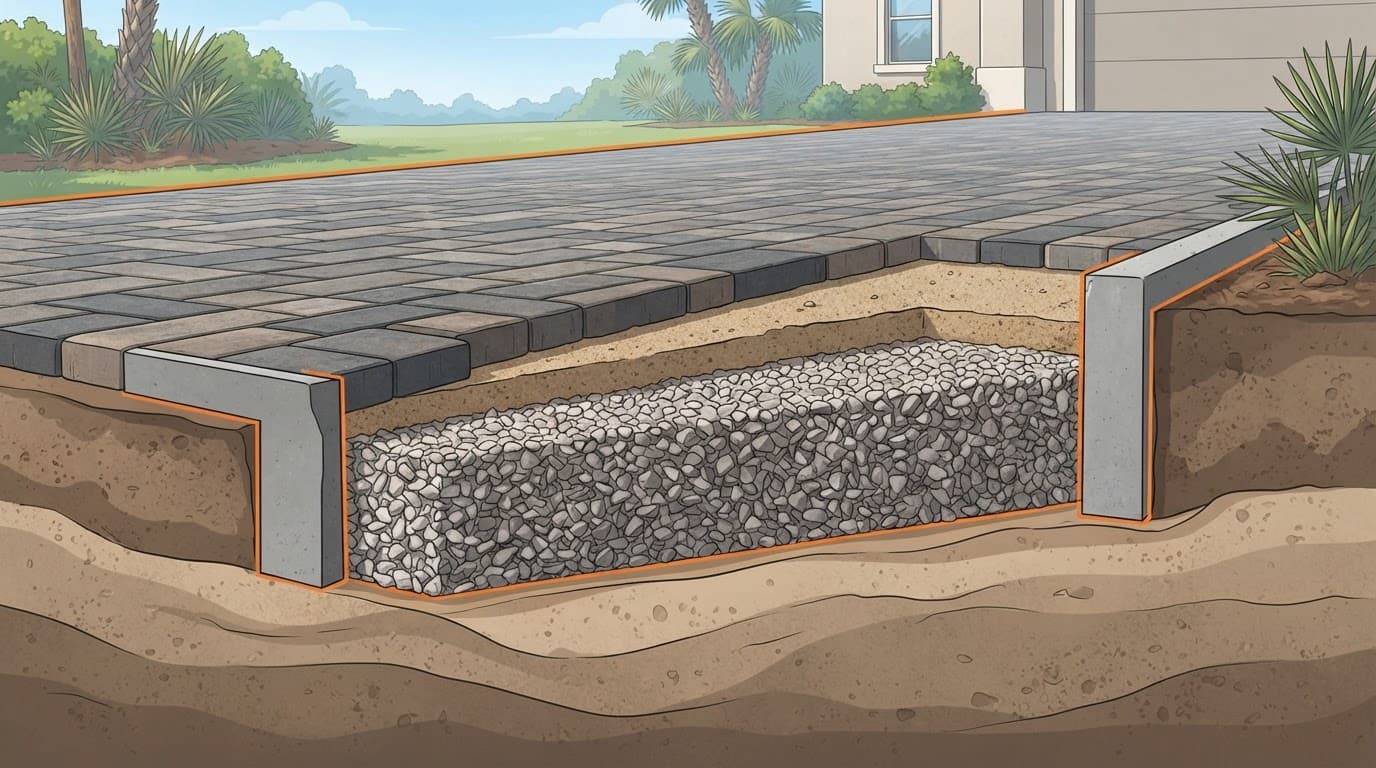
A proper driveway installation starts with site prep, including the removal of unstable soil and correction of the existing grade. Aggregate is placed in layers, with soil compaction completed before bedding sand and pavers are installed.
For heavy vehicle driveways, I often look for a substantial compacted aggregate base, commonly around six inches, though final depth depends on soil, drainage, traffic, load requirements, and local standards. Some local guidance lists a four-inch minimum lime rock layer beneath one inch of sand. Those numbers shouldn’t be compared without reviewing the entire installation specification.
Loose fill, wet soil, and rushed compaction can leave low spots beneath the driveway. Adding sand under a rocking paver is not a permanent fix when the base has failed.
Drainage and edge restraints protect the layout
Good drainage integration directs roof runoff, downspouts, irrigation, swales, and street drainage away from the home, garage, driveway edges, and nearby structures. A driveway with poor pitch can develop standing water, joint sand loss, and repeated settling even when the surface initially looks perfect.
Permeable pavers may support stormwater goals, but they don’t replace correct grading or a properly designed base.
Edge restraints or a concrete footer help stop the outside pavers from spreading under vehicle traffic.
Drainage problems are cheaper to correct before installation than after the pavers have settled and the surrounding soil has washed out.
What Increases the Installation Price?
Two driveways can have the same square footage and completely different prices. Paver driveway cost varies with site conditions, even when dimensions match. The difference is usually in the work underneath and around the pavers.
Existing driveway removal
Existing concrete or asphalt may need to be cut, broken, loaded, hauled away, and disposed of before new pavers can be installed. Thick slabs, reinforced concrete, narrow side access, and limited equipment access increase the labor.
I don’t attach a fake statewide removal price because the cost changes too much by slab thickness, reinforcement, haul distance, access, and disposal. Ask whether demolition and haul-away are included. A quote that excludes them may look cheaper while leaving you with a large added bill.
Layout, access, and site conditions
Curves, circles, borders, steps, slopes, tree roots, tight gates, and limited staging space all affect site prep. Pattern complexity can add labor, especially on a custom driveway with multiple corners or specialty borders.
A crew may need to move materials by hand when equipment can’t reach the driveway. That extra handling increases installation labor.
Drainage channels, catch basins, grading corrections, lighting, upgraded edging, and sealing can also move the project toward the upper end of the range. Ask that demolition, haul-away, and each of these items appear as separate line items, so you can decide what belongs in the first phase.
Permits, HOA Rules, and Local Florida Requirements
Permit rules vary by city, county, and unincorporated area. A driveway replacement may affect the right-of-way, curb, swale, drainage pattern, trees, or stormwater management.
Orlando’s residential permitting requirements include driveways and pavers among work that may require approval. Check the current requirements for your property’s jurisdiction before starting the project.
In Pinellas County, the building department FAQ explains that new, replacement, or extended driveways may involve zoning, environmental, and right-of-way permits. Charlotte County also provides permit requirement information, while Miami-Dade lists permit exemptions and updates. Verify each page for current rules before relying on an exemption.
An exemption for one type of improvement does not automatically cover driveway replacement or expansion. Requirements may also depend on the property’s specific location and conditions.
Your HOA may have separate rules about driveway color, borders, surface type, width, or approval timing. HOA approval is separate from government permitting, so check both before ordering materials.
Sealing, Cleaning, and Long-Term Maintenance
Paver sealing isn’t a substitute for proper installation, but it can protect the surface and improve its appearance. A suitable sealer may deepen the color, reduce staining, and help stabilize joint sand.
The right schedule depends on the material, exposure, traffic, and sealer product. Travertine and other porous stone may need evaluation every few years, while some homeowners prefer a more natural, unsealed appearance. I always want the pavers clean, dry, and structurally stable before applying the coating.
Pressure washing needs control
Heavy dust, algae, and surface buildup may require professional pressure washing. I don’t recommend using a narrow, high-pressure nozzle directly across the joints. It can chip the paver face and blow out the sand that locks the pavers together.
After cleaning, replace any missing joint sand. Mild soap and water can handle some routine dirt, but oil, rust, paint, efflorescence, and mineral buildup may require treatment suited to the exact paver or stone. Acidic cleaners can damage travertine and other calcium-based materials.
Repairs can extend the driveway’s useful life
A professionally installed paver driveway can last 25 to 30 years with proper care. Installation quality and ongoing maintenance determine whether it reaches that planning lifespan.
A well-installed surface is relatively low maintenance because damaged areas can usually be lifted, the base corrected, and matching pavers replaced. This approach is often preferable to replacing the entire driveway.
Rocking pavers, repeated puddles, spreading borders, and open joints usually point to a base or drainage problem. I inspect the full affected section before recommending a patch because new pavers over a weak base will fail again.
Comparing Contractor Quotes the Right Way
A reliable quote should explain what drives the total paver driveway cost, not just which paver color you selected. Before signing, ask for these details in writing:
- Confirm the measured square footage, added zones, and complete driveway installation scope.
- Ask whether demolition, excavation, disposal, sand, aggregate, compaction, edging, and cleanup are included.
- Check the proposed base depth and aggregate material.
- Ask how drainage, slopes, downspouts, and low areas will be handled.
- Confirm the paver manufacturer, thickness, pattern, border, and color.
- Request details about permit and inspection responsibilities.
- Review the paver sealing plan, warranty, maintenance expectations, payment schedule, and change-order process.
I also recommend checking the contractor’s qualifications for professional installation. Confirm licensing, insurance, local driveway references, and completed work in conditions similar to yours. The crew should explain why the price is what it is without avoiding questions.
For homeowners in Fort Myers, Cape Coral, Bonita Springs, Punta Gorda, Sarasota, and nearby communities, Get a Free Quote before choosing materials or accepting a low bid. I can review the existing surface, drainage, access, and layout so the estimate reflects the real work.
Frequently Asked Questions
How much does a paver driveway cost in Florida?
A professionally installed paver driveway usually costs about $10 to $25 per square foot in Florida. Premium materials, complex layouts, demolition, drainage, and difficult access can raise the total to $30 to $50 or more per square foot.
What is included in a Florida paver driveway installation?
A complete installation may include demolition, excavation, aggregate base, compaction, bedding sand, pavers, edge restraints, drainage work, cleanup, and sealing. Ask for each item in writing because a low quote may exclude site preparation or haul-away.
Are concrete pavers or travertine better for a driveway?
Concrete pavers are often the practical value choice because they are durable, available in many styles, and easier to replace individually. Travertine and other natural stones provide a premium appearance, but they cost more and must be rated and installed for vehicle loads.
How can I reduce paver driveway costs without creating future problems?
Choose a straightforward layout, compare complete written quotes, and select a durable material that fits the site and budget. Avoid cutting costs on excavation, base compaction, drainage, or edge support because those layers help prevent settling and spreading.
Do I need a permit for a paver driveway in Florida?
Permit requirements vary by city, county, right-of-way conditions, drainage, and whether the driveway is new, replaced, or expanded. Check with your local building or development department and your HOA before starting work.
Choosing a Budget That Holds Up
The lowest online price homeowners find is rarely the complete project price. A better budget includes pavers, excavation, compacted base, drainage, edge support, labor, permits, paver sealing, and finishing work.
Concrete pavers are often the practical value choice. Permeable pavers suit sites where stormwater management is a priority. Porcelain pavers, shell stone, and other premium materials create a higher-end finish when the site and budget support them. Whatever material you choose, don’t cut base preparation to save money.
A driveway should look good on installation day, but it also needs to handle Florida rain, sun, vehicle weight, and everyday use. Good preparation is what protects the investment.