


A walkway that feels too narrow at the front door becomes uncomfortable every day, while one that is too wide can clash with your home’s landscape design. The right paver walkway width should match the property’s shape and how water moves across the ground.
For most Florida homes, I recommend 48 inches for primary walkways and 24 to 36 inches for auxiliary walkways, based on expected foot traffic. Width is only part of the job, though. The paver thickness, base, slope, and joint sand must work together to keep pavers level through heavy rain and regular use.
Key Takeaways
- Use a clear width of 48 to 60 inches for primary entrances, pool connections, and other busy routes.
- Auxiliary garden and side-yard walkways can usually be 24 to 36 inches wide when they serve single-person traffic.
- A 4- to 6-inch compacted gravel base, stable edge restraints, filled joints, and proper paver thickness help prevent settling and movement.
- Plan drainage carefully in Florida, with a controlled slope near 2 percent and a clear route for rainwater away from the home.
- Choose concrete, brick, natural stone, or porcelain pavers based on the site’s use and follow the product-specific installation requirements.
Standard Paver Walkway Width Options for Florida Homes
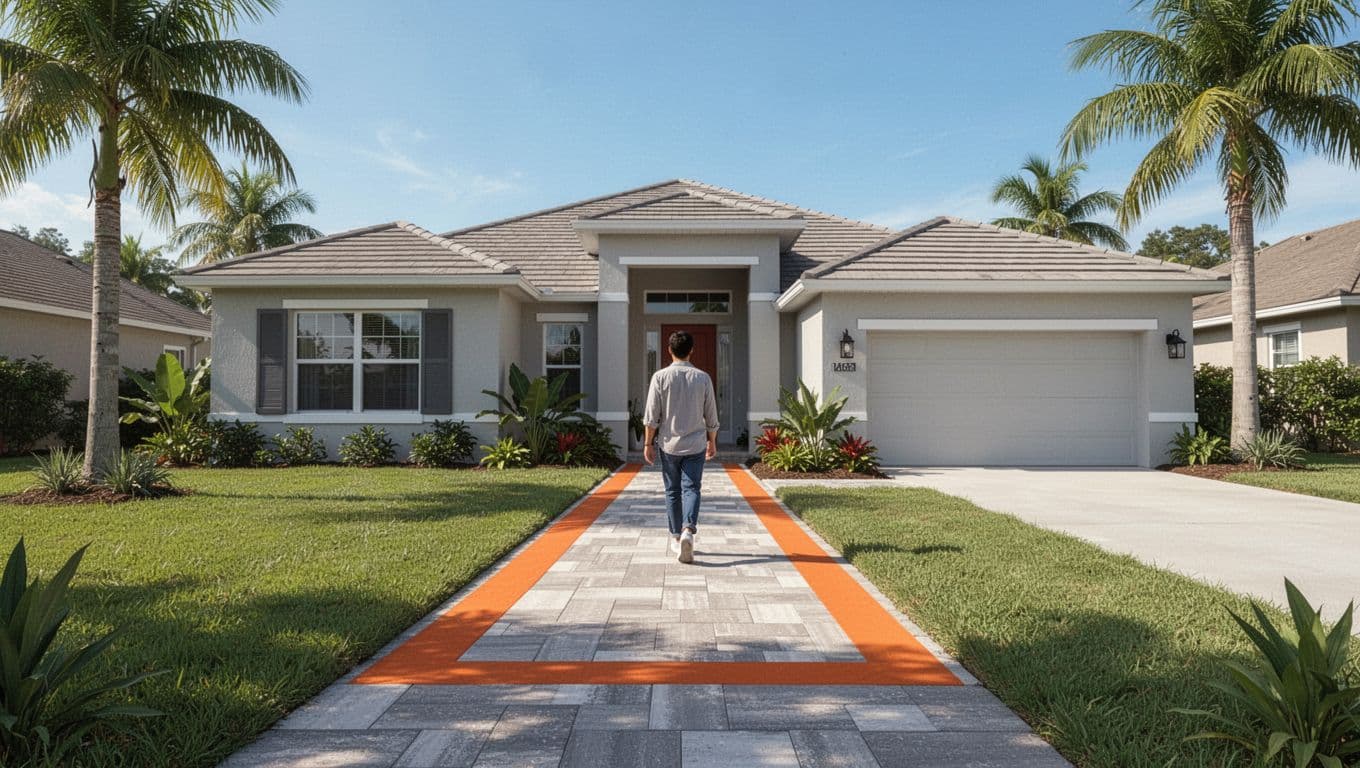
Primary walkways usually look and function best between 3 and 5 feet wide. A 48-inch minimum gives two people room to walk together and supports wheelchair access. If the entrance is large, the home has a wide porch, or the property sees high traffic, 60 inches can create better proportion and curb appeal. These are clear walking dimensions, not excavation widths, and they are separate from product selection, including paver thickness.
Here are the general residential measurements I use when planning a project:
| Walkway type | Recommended clear width | Best use |
|---|---|---|
| Primary front entrance | 48 to 60 inches | Daily entry, guests, two-person foot traffic |
| Accessible residential route | At least 48 inches | Wheelchair access and mobility-device use |
| Garden, side, or auxiliary walkways | 24 to 36 inches | Single-person traffic, garden paths, and light use |
| Pool or backyard connection | 48 to 60 inches | Wet feet, guests, furniture, and regular traffic |
| Curved or heavily landscaped path | 48 inches or wider | Better comfort around bends |
The table shows clear walking widths, not excavation widths. Common pedestrian paver thickness is often about 60 millimeters, but product dimensions can vary. These recommendations apply whether you choose natural stone pavers, concrete pavers, porcelain pavers, or interlocking concrete pavers. In a narrow route or large entrance, porcelain pavers and large format pavers may require closer attention to product dimensions. Joint layout can affect the finished proportion.
The Concrete Masonry and Hardscape Association’s base-depth guidance also separates pedestrian walkways from driveways because they carry different loads. Patio pavers and walkways serve pedestrian uses, while driveway pavers support vehicles and need a heavier structural section. A walkway doesn’t need to be built like a driveway, but careful base preparation and a properly compacted base still matter, usually with a compacted gravel base below the surface. Paver thickness alone doesn’t determine the required foundation depth.
Match Walkway Width to Traffic and Property Layout
The front entrance deserves the most attention because primary walkways handle daily foot traffic. A 36-inch walkway may work in a tight space, but it can feel crowded when two people meet, someone carries groceries, or a visitor uses a walker. A pedestrian route should not be sized or specified like driveway pavers. For high traffic entrances, 48 inches gives a better balance between comfort and material use. If the route will carry carts or furniture repeatedly, confirm the selected product’s paver thickness after choosing the width.
Side-yard paths serve a different purpose. Auxiliary walkways leading to a hose bib, gate, or air-conditioning equipment may need only 24 to 30 inches. Garden paths between planting beds can also be narrower, especially when one person uses them at a time. I still avoid making a main route too tight just to save a small amount of material.
Pool walkways deserve extra room. Barefoot users, towels, patio furniture, and guests create different patterns of foot traffic. A 48-inch path is a practical starting point, while 60 inches often feels better on high traffic pool decks. When selecting porcelain pavers for wet areas, consider slip resistance. Plan safe transitions where porcelain pavers meet the coping, lanai, steps, and doors.
Curves Need More Care Than Straight Paths
A curved walkway can look beautiful, but the inside edge shortens the usable walking line. If the path is only 30 or 36 inches wide, a tight curve may feel pinched even though the measurement looks acceptable on paper.
Before digging, I mark the curve with a hose or paint, then check natural stone pavers along its inside radius. Walk the proposed route from both directions, checking walls, landscaping, columns, and screen enclosures. A 48-inch clear band is easier to use on bends. Wider curves look more natural beside substantial planting or a large home and support the landscape design.
For wheelchair access, clear width is not the only concern. Keep the route firm, stable, and free of abrupt lips. Avoid placing drainage grates, raised edging, or decorative borders where they reduce the clear walking surface. Local accessibility and building requirements can vary, so a professional layout review is smart when mobility access is part of the project.
Base Depth and Drainage Matter More Than the Top Layer
A beautiful paver pattern cannot correct poor base preparation or an improperly compacted base. Paver thickness is separate from the supporting base depth. If the ground below settles, the pavers will settle with it. If water washes through the foundation, the surface can develop low spots, rocking stones, open joints, or a walkway that no longer drains correctly.
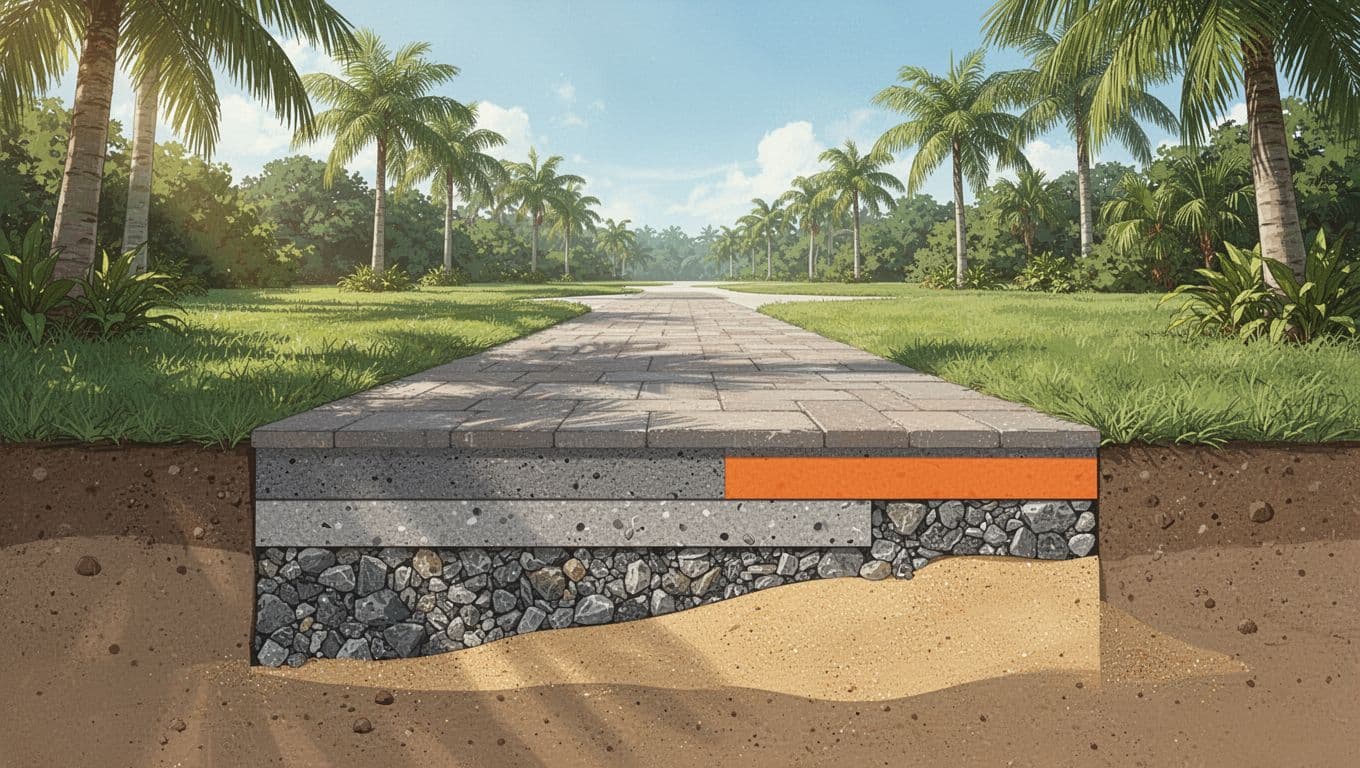
For a standard pedestrian walkway, the compacted gravel base is commonly 4 to 6 inches deep. Lowe’s describes 6 inches of compacted paver base for a residential patio or walkway in its walkway planning guide. Patio pavers and walkways may share some installation principles, but site-specific preparation still matters. The total excavation must also account for paver thickness and the layers beneath it.
Florida properties can have sandy soil, filled areas, roots, low spots, or sections that stay wet after storms. Southwest Florida homes also deal with intense rainfall and fast runoff during the wet season. Pedestrian products differ from driveway pavers, which carry vehicle loads and may require a different structure. Base depth, paver thickness, and excavation depth should reflect the actual soil conditions, not a copied specification.
A proper pedestrian paver system usually includes:
- Excavated and compacted subgrade.
- A graded aggregate base installed in compacted lifts, with a plate compactor used between lifts.
- An approximately 1-inch bedding layer of sand or approved bedding material.
- Selected pavers installed at a consistent elevation and according to manufacturer guidance.
- An edge restraint and joint sand that limit lateral movement and hold the surface together.
Natural stone pavers may have different thickness, absorption, and installation requirements, so those factors should guide the supporting layers. Porcelain pavers require a particularly flat, well-prepared supporting system and should be installed according to the manufacturer’s method.
Vehicle-rated driveway pavers may have different paver thickness requirements and structural specifications. Don’t copy those specifications onto a walkway without evaluating the site. Changing paver thickness changes excavation depth, but it can’t correct poor soil or drainage.
Drainage is just as important as depth. For a main pedestrian route, I generally target a drainage slope near 2 percent while giving rainwater a clear path away from the home. A 2 percent fall equals about 1/4 inch per foot. Across a 4-foot-wide walkway, that is about 1 inch of total cross slope.
That small amount is enough to move water without making the path uncomfortable or difficult to use. Too little slope allows puddles to remain. Too much slope can create a trip concern, make the path harder to use, and send runoff toward a foundation or neighboring area.
Florida Needs Drainage Planning, Not Cold-Climate Guesswork
Regions with freeze thaw cycles often need deeper bases because water trapped beneath pavers can freeze, expand, and lift the surface. That is not the same primary concern in Southwest Florida, where freezing is rare. Here, the bigger problems are heavy rain, poor grading, washout, wet fill, and settling around disturbed soil.
A Florida walkway doesn’t automatically need a cold-climate base depth. It does need a base that matches the soil and water conditions. If a downspout empties beside the path, water flows across it, or a low area stays saturated, adding more material to the bedding layer won’t solve washout or settling. Grading, the drainage route, and the base preparation have to be corrected first.
Choosing Between Concrete, Brick, Natural Stone, and Porcelain
Material choice changes the appearance, maintenance, installation details, and required paver thickness, but it doesn’t replace good base preparation. Each option also influences the home’s landscape design and curb appeal.
Concrete pavers are a dependable choice for most residential walkways. They come in many sizes, textures, and colors, and interlocking concrete pavers make repairs easier later. Paver thickness for many pedestrian systems is around 60 millimeters, but I follow the manufacturer’s specifications for the selected product and site.
Traditional clay brick pavers give a warmer, established appearance. They work well with older homes, coastal designs, and classic landscapes. Color variation can be attractive, but matching older brick pavers during a repair may take extra care.
Natural stone pavers offer unique color and texture. Required paver thickness for natural stone pavers depends on the specific product and installation. Natural stone pavers also differ in water absorption and sealing needs, so those details need checking before installation. Around pools, natural stone pavers need a comfortable, textured surface finish because smooth surfaces can become slippery when wet. For repairs, natural stone pavers may require careful color matching and product-specific resealing.
Porcelain pavers resist many common stains and can simplify routine maintenance. Porcelain pavers provide a clean, modern look. Porcelain pavers also have product-specific thickness requirements. Porcelain pavers require a very flat, well-prepared base, and their bedding layer may differ from a standard concrete-paver assembly. Porcelain pavers also require careful handling during cutting and installation. Around pools, porcelain pavers should be selected for texture and slip resistance when wet. I don’t recommend treating the material like a standard concrete paver because the installation system and product instructions can differ.
Paver thickness also needs to match the application. Patio pavers, walkway pavers, and driveway pavers may look similar, but their structural ratings differ. Concrete pavers suit many residential pedestrian applications, while driveway pavers are designed for vehicle loads. Choosing the right material and thickness at the start prevents problems later.
Edge Restraints, Joint Sand, and Long-Term Maintenance
A walkway’s edges take repeated stress from foot traffic, especially in high traffic areas. People step near the border, lawn equipment passes beside it, and rainwater can move along the outside edge. Without a strong edge restraint, pavers may spread and joints can open.
After the pavers are set, joint sand is swept into the spaces between them. Polymeric sand can help stabilize joints when the product is installed correctly and the surface is clean and dry. The joints should be filled properly, not left with visible voids.
I also caution homeowners about pressure washing. A thick crust of dust, algae, or grime may require professional cleaning. Excessive pressure can chip paver surfaces, including porcelain pavers, and blow sand out of the joints. Once that sand is gone, the pavers have less support and weeds can find open spaces.
Cleaning methods should also match the material. Natural stone pavers may require material-appropriate cleaning or sealing, while porcelain pavers still need compatible methods and joint care.
If cleaning removes joint sand, the walkway should be allowed to dry before compatible sand is swept back into the gaps. Match the original product and paver thickness when replacing units, especially with older brick pavers or concrete pavers. Before resetting a damaged section, verify the product specification, including paver thickness.
If pavers rock, low areas hold water, or borders are spreading, don’t keep adding loose sand to the top. Those signs often point to a base or drainage problem that requires lifting and resetting the affected section.
For homeowners in Fort Myers, Cape Coral, Bonita Springs, Punta Gorda, Sarasota, and nearby communities, I can inspect the walkway before you commit to a repair or replacement. Get a Free Quote and we can review the width, pavers, base, joints, and drainage together.
Frequently Asked Questions
What is the best width for a front-door paver walkway?
A clear width of 48 inches is a practical minimum for most primary entrances. Choose 60 inches when the entrance is large, the home receives frequent guests, or two people need to walk together comfortably.
How wide should a garden or side-yard walkway be?
A garden or auxiliary walkway can usually be 24 to 36 inches wide for single-person traffic. Avoid making a frequently used route too narrow just to reduce material costs.
Does a Florida paver walkway need a deep base?
Most pedestrian walkways commonly use a 4- to 6-inch compacted gravel base, but the exact depth depends on soil, fill, roots, drainage, and site conditions. Florida walkways need water management and proper compaction rather than a base depth copied from cold-climate construction.
What slope should a paver walkway have for drainage?
A drainage slope near 2 percent, or about 1/4 inch per foot, generally moves rainwater without making the walkway uncomfortable. The slope should direct water away from the home and neighboring problem areas.
Are porcelain pavers suitable for walkways and pool areas?
Porcelain pavers can work well for walkways and pool areas when the product has suitable texture and slip resistance. They require a very flat, well-prepared supporting system and must be installed according to the manufacturer’s instructions.
A Size That Works for the Whole Property
The best fit is the one that matches how your home is used. Choose 48 to 60 inches for primary entrances, pool connections, and busy routes. Use 24 to 36 inches for light-use garden paths where space is limited. Pedestrian routes don’t need the same scale as driveway pavers, while nearby patio pavers serve a different purpose.
Then look below the surface. A 4- to 6-inch compacted base, usually a gravel base, supports the system. Add a consistent setting layer, stable edges, filled joints with polymeric sand, and an edge restraint. In Florida, correct water movement, including a controlled drainage slope, often matters more than increasing base depth.
The path may start with a measurement, but a lasting result comes from the complete system. Coordinate natural stone pavers, concrete pavers, or porcelain pavers with the base, joints, edges, and drainage. Match the paver thickness to those details, and your pavers stay safer, cleaner, and better looking for years.