


Rain should make your outdoor surfaces look fresh, not feel like a hazard. When you notice slippery sealed pavers after a storm, the water is usually exposing a problem that was already there.
I see this most often on patios, driveways, and pool decks in Southwest Florida. Whether you have brick pavers or concrete pavers, the sealer may be too glossy, the surface may carry hidden dirt or algae, or the joints may have lost the sand that keeps everything locked together. Addressing these issues promptly is vital because preventing slip and fall liability should always be a top priority for any homeowner.
The fix starts with the cause, not the shine. That part matters more than most people think.
Key Takeaways
- Surface Film and Gloss: High-gloss or over-applied sealers create a thick, non-porous film that significantly reduces traction when wet, especially on pool decks and high-traffic areas.
- Hidden Residue: Rain often acts as a catalyst, softening accumulated pollen, grease, algae, and mildew into a slick, oily film that creates a dangerous slipping hazard.
- The Role of Drainage and Sand: Inadequate drainage causes standing water, while missing joint sand reduces paver stability, allowing debris to penetrate deeper and keeping the surface perpetually damp.
- Professional Solutions: Rather than using aggressive cleaning methods, the best approach involves identifying the root cause—such as stripping an improper sealant, correcting sub-base drainage, or adding an anti-slip additive during the resealing process.
Why the sealer can feel slick after rain
A quality sealer protects paver color and simplifies maintenance, but the type of product matters. Topical sealers sit on the surface to create a barrier, whereas a penetrating sealer soaks into the pores of the stone. If you have applied a wet look sealer that forms a heavy film, the surface can feel incredibly slick the moment it gets wet. Remember that a high gloss finish does not automatically equate to grip, especially when water is introduced.
I also keep a close eye on projects where the sealer was applied before the pavers were fully dry. When moisture gets trapped underneath during improper application, the finish can turn cloudy or soft, leaving you with a surface that looks sealed but feels unsafe underfoot.
Over-application is another common culprit. Repeated sealing builds up layers of material, and if the product is not suited for the surface, the natural texture is lost, causing the grip to drop with every coat. If you find that your high-shine surface has become a hazard, applying a non-slip coating or an anti-slip additive can help restore the necessary friction.
This is exactly why a pool deck featuring a high gloss finish might seem perfect on a dry day but becomes dangerous after a quick shower. Wet feet and an overly thick, slick coating are a dangerous combination.
Dirt and algae turn a wet surface into a film
Rain does not create the slickness by itself. It wakes up what is already sitting on the pavers. Dust, pollen, leaf stains, sunscreen, grill grease, and soap residue all soften into a film when water hits them. Proper surface preparation is the most effective way to prevent this hazardous layer from building up in the first place.
In our climate, algae, mold, and mildew make the situation much worse. Shade, humidity, and afternoon rain give these organic growths a head start. I frequently see the most hazardous conditions on brick pavers located around planters, hose bibs, pool steps, and the edges of a patio that never fully dries. Over time, UV damage can degrade the protective barrier of the sealer, making the surface more porous and significantly more prone to trapping this oily residue.
A light wash can help when the residue is still fresh. Soap and water often outperform harsh chemical cleaners. Once that film bonds to the sealer, however, the job becomes much more difficult. I do not rush to a wire brush or an aggressive tip on a pressure washer, as that usually creates more structural trouble than it solves.
Drainage and joint sand keep the problem alive
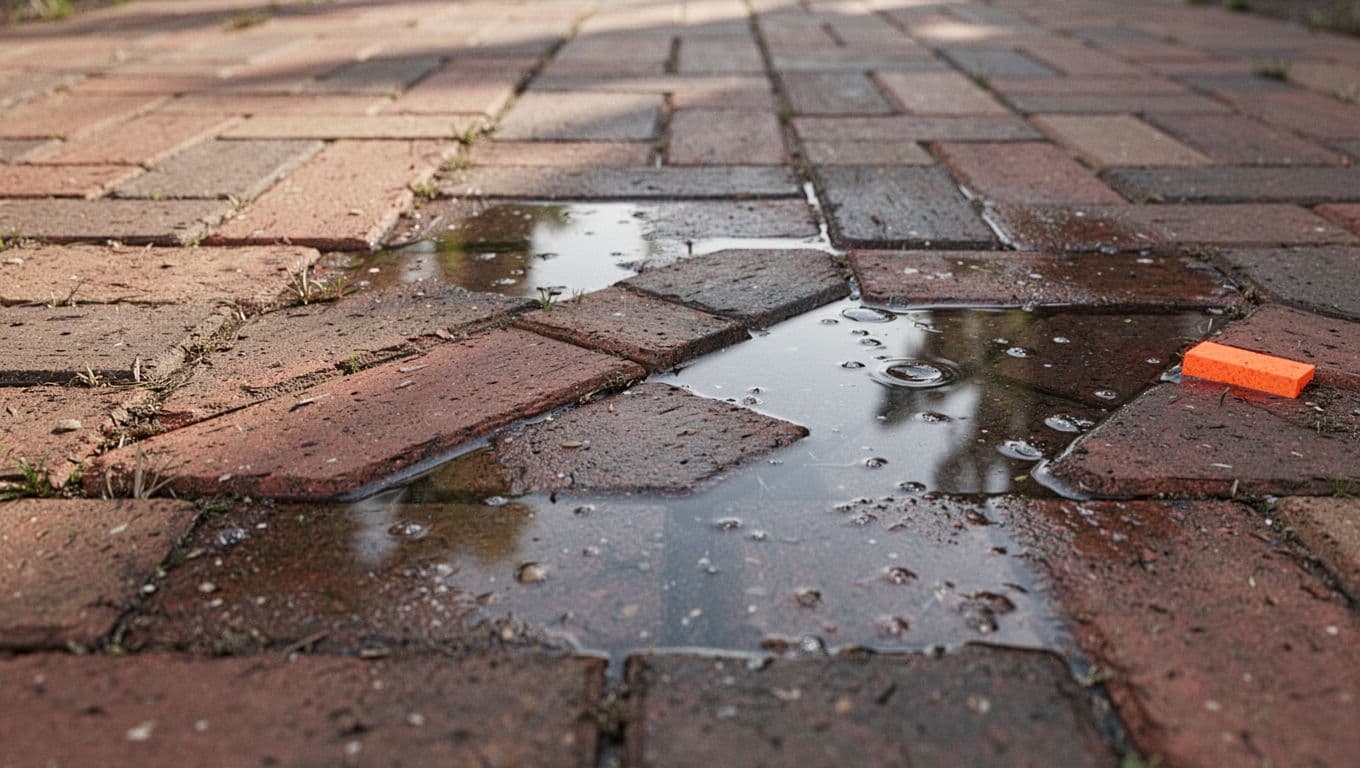
If water sits on your brick pavers or concrete pavers after rain, the slick feeling lasts much longer. Low spots, poor slope, and downspouts that dump runoff directly onto the hardscape all keep the surface wet for extended periods. While the sealer often takes the blame, the water path is frequently the real issue.
I always check for puddles first. If one corner stays damp while the rest dries out, there is a drainage problem somewhere. That might stem from a sinking section, a weak base, or runoff from the roof.
Joint sand matters just as much as drainage. Over-aggressive pressure wash sessions can inadvertently blow sand out of the gaps. Once those joints open up, the stones start moving more than they should. That instability is when grime gets deeper into the surface, water works around the edges, and your overall surface traction begins to suffer.
If the joints are low, the pavers lose their lock. Once that happens, rain has an easier time turning a clean patio into a slick one.
When the base is still sound, re-sanding with a high-quality polymeric sand can provide a much more stable, long-lasting solution than standard sand. If the area has shifted significantly, I do not just sweep in more sand and call it fixed. That is merely a patch, not a repair. The pavers need to be lifted, the base corrected, and the surface reset level before the new sand goes in to ensure the system is properly sealed and stable.
How I sort out the cause before fixing it
When a patio feels slick, I narrow it down with a few quick checks to determine the best approach for professional paver restoration.
| What I see | What it usually means | What I do next |
|---|---|---|
| Shiny film after sealing | Too much sealer or the wrong finish | Apply a stripper, then reseal with a matte finish to improve the coefficient of friction |
| Slick spot with standing water | Drainage issue or low spot | Regrade the surface or reset the pavers for proper water runoff |
| Slippery patch after washing | Sand blown out of the joints | Re-sand, compact the joints, and apply an anti-slip additive |
| Green or dark film in shaded areas | Algae, mildew, or residue | Perform a deep cleaning, then ensure the surface is fully dry before resealing |
Once I know what I am dealing with, I stop chasing the symptom. If it is simply buildup, thorough cleaning may be enough. If the base or drainage is off, the fix has to go deeper.
If you are not sure which side you are on, Get a Free Quote and have your surface checked before the next rain makes your slippery sealed pavers even worse.
Frequently Asked Questions
Can I add an anti-slip additive to any type of sealer?
Most anti-slip additives can be mixed into common acrylic or water-based sealers, but you must ensure compatibility with your specific product. It is essential to follow the manufacturer’s mixing ratios to ensure the texture is sufficient without ruining the appearance of the finish.
How often should I clean my pavers to prevent slipperiness?
For areas prone to moisture and shade, a light cleaning with soap and water every few months is usually sufficient to remove organic residue before it bonds. Regular maintenance prevents the buildup of mold and algae that become slippery during rainstorms.
Does applying more sealer make the surface more durable?
No, over-applying sealer actually creates a thicker, more brittle layer that is more likely to turn cloudy and slick. It is better to use a thin, consistent coat of a high-quality product to protect the stone while maintaining the natural texture and grip of the pavers.
What should I do if my pavers feel slippery even after cleaning?
If the pavers are clean but still feel hazardous, the problem is likely an excessive layer of old sealer or a lack of natural texture. In these cases, you may need to strip the existing coating and apply a fresh, matte-finish sealer combined with an anti-slip additive to restore the necessary friction.
The real fix starts below the shine
Slippery sealed pavers are rarely the result of a single issue. The finish, the debris on the surface, the joint sand, and the overall drainage all work together to create the conditions you are experiencing.
If the coating applied is too heavy, the surface will inevitably remain slick when wet. In many cases, opting for a sealer that provides a natural appearance can avoid the dangerous build-up of heavy, glossy films. If the joints are open or the base has shifted, water lingers in the gaps, ensuring the problem keeps returning after every rainfall.
I always look at the whole system first to ensure long-term success. My ultimate goal is to improve slip resistance, creating a patio that remains safe and functional throughout the year. By addressing the root causes of slippery sealed pavers, I can keep a wet patio from turning into a recurring headache after every summer storm.