


A downspout can dump a lot more water than most homeowners realize. When that runoff hits the same patch of your patio every storm, the stones start losing support, and pavers sinking becomes a real problem. Beyond the aesthetic issue of sinking pavers, these dips can collect water and create a genuine safety hazard for anyone walking nearby.
I see this all the time after heavy rain. The pavers usually do not fail on their own; the water does the damage first, then the base gives way, and the surface starts to dip, wobble, or hold puddles.
Key Takeaways
- Water is the primary culprit: Sinking pavers are rarely caused by the materials themselves, but rather by uncontrolled runoff from roof downspouts that erodes the bedding sand and weakens the base.
- The base is key: Structural failure begins beneath the surface where water washes out support layers; restoring a firm, compacted base is essential for a permanent repair.
- Joint integrity matters: Keeping joint sand, especially polymeric sand, topped off is crucial to prevent water infiltration that leads to further shifting and settling.
- Redirect the source: No repair will last if the downspout continues to discharge water directly onto the patio; installing extensions or splash blocks is necessary to prevent recurring damage.
Why Roof Downspouts Put Pavers Under Stress
A roof downspout is basically a controlled water cannon. It sends runoff to one point, and if that point sits right beside a patio, walkway, or driveway, the pavers take the hit again and again. The only way to stop this is by ensuring proper drainage to redirect the water away from the hardscape.
The damage starts below the surface. Water works into the joints and leads to soil erosion, which washes out sand, softens the bedding sand layer, and weakens the compacted base underneath. Once that support is compromised, the pavers do what any loose surface would do, they settle over time due to ground movement and sink into the void.
I have seen homeowners blame age or bad pavers when the real issue is much simpler. The stone is usually fine. The drainage is the problem.
A few common triggers show up over and over:
- A short downspout extension that drops water too close to the patio.
- A lack of proper drainage that sends runoff back toward the hardscape.
- Sand already missing from the joints.
- A base that was never compacted well enough in the first place.
If the pavers are sinking in a neat line under the downspout, I stop looking at the stone first and start looking at the water.
The Hidden Base Problems I Check First
When I inspect a sunken area near a downspout, I start with the obvious visual cues before digging into what is happening beneath the surface. That is where the real answer usually lives.
I look for uneven spots that you can feel underfoot. I check for joints that have lost joint sand and look for soil that stays damp long after the rain stops. If the surface feels spongy, it is a clear sign that the paver base has been washed out or weakened. I also keep an eye out for tree roots, which can occasionally push against the foundation from below, mimicking the signs of water-related failure.
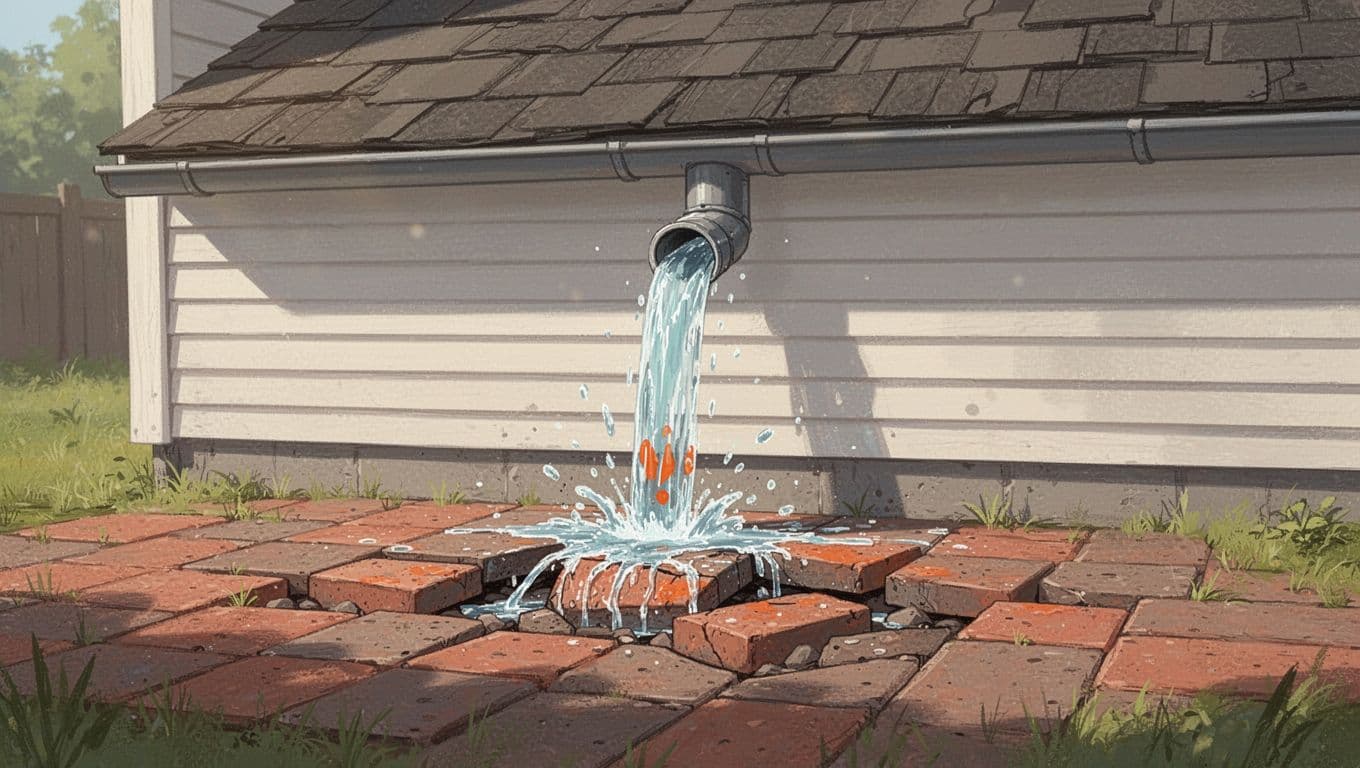
The pattern of the damage matters, too. When sinking happens right where the downspout lands, I know water is doing repeated damage to the paver base in one specific spot. Whether the surface is made of concrete bricks or natural stone pavers, the material is equally susceptible to these issues. When the settling spreads outward, I begin to evaluate drainage across the entire section rather than just focusing on one bad patch.
I also watch for signs that routine maintenance might have contributed to the problem. Excessive pressure washing can strip joint sand out of a soft area very quickly. This does not mean you should never clean your patio, but it does mean you should avoid blasting a weak section with high pressure if you expect it to hold together afterward.
How I Repair Sunken Pavers at a Downspout
To effectively fix sunken pavers, I begin by removing the affected units along with a surrounding border to assess the underlying structural integrity. Proper base preparation is essential because I need to identify the extent of the soil erosion before I can rebuild the foundation.
If the bedding sand has been washed away by water runoff, I clear it out entirely. If the sub-base and soil below have softened or shifted, I excavate the compromised base material and replace it with fresh, crushed gravel. I then focus on compaction, using a plate compactor or a hand tamper to ensure the new gravel base is dense and stable.
Once the foundation is solid, I spread new bedding sand and re-level the stones to match the surrounding surface. If any units are cracked or worn, I replace them rather than trying to salvage damaged pieces. After the stones are set, I sweep polymeric sand into the joints. Unlike standard sand, polymeric sand hardens to lock the surface together, which prevents water infiltration and keeps the pavers from shifting.
This attention to detail is critical for longevity. When the joints are properly sealed, the entire field stays tight. If the joints remain empty, the pavers can move, and the settling problem will inevitably return.
I also evaluate the downspout discharge to ensure the repair lasts. If water continues to dump directly onto the edge of the patio, the repair is only half finished. The water must be directed away from the paver installation to protect your investment.
If you want a professional evaluation of your landscape, Get a Free Quote and I will inspect your downspouts before the next heavy rain causes further damage.
How I Keep the Damage from Coming Back
Once the pavers are repaired, my priority is to ensure proper drainage by moving water away from the area. That part is plain and simple. A longer downspout extension, a splash block, or a better runoff path can make a huge difference in protecting your patio.
I also check the grade around the area to ensure the slope is correct. Water should move away from the house and away from the pavers. If water continues to run back toward the same corner, the paver base will stay wet, and a saturated base inevitably leads to more settling.
A few prevention steps go a long way:
- Extend the downspout so water lands farther from the hardscape
- Rebuild low spots that trap runoff to encourage better flow
- Refill the joints with polymeric sand after cleaning or repairs to lock them in place
- Use high-quality joint sand for regular maintenance
- Keep an eye on soft areas after long storms
While fresh joint sand helps with aesthetics, it is not a cure for poor drainage. Applying a sealer can help the surface look better, but it does not stop water from washing out the base material underneath. If the runoff problem remains, the sinking usually comes back.
That is why I treat the water source and the patio itself as one complete project. Fixing only one side of the equation leaves the other side vulnerable to failure in the future.
Frequently Asked Questions
Can I just add more sand to level the sunken pavers?
Simply adding sand on top or underneath individual stones is only a temporary cosmetic fix. If you do not address the drainage issue and the eroded base, the pavers will inevitably sink again the next time it rains.
Why is polymeric sand better than regular sand for joints?
Polymeric sand contains additives that harden when activated, creating a rigid, water-resistant seal between the pavers. This lock prevents water from penetrating into the base, which is the main cause of soil erosion and foundation instability.
How far should I extend my downspouts away from my patio?
You should aim to discharge water at least several feet away from any hardscape installation. The goal is to move the runoff to a lower point in your yard where it can soak into the ground without affecting your patio’s structural foundation.
Are some types of pavers more resistant to sinking?
Regardless of whether you use concrete bricks or natural stone, all pavers rely on a properly compacted base and stable sand layer. If the drainage isn’t corrected, any type of paver will eventually sink once the foundation underneath them is compromised.
Conclusion
A roof downspout can wear down your hardscape faster than most people expect because it keeps hitting the same spot with the same force. That steady runoff washes out sand, weakens the foundation, and eventually leads to pavers sinking into the ground.
If you notice sunken pavers near a downspout, I would not ignore the problem. A small dip can turn into a soft, uneven section quite fast, especially after another round of heavy rain. Addressing the issue early ensures that the damage does not spread to the surrounding area. To fix the problem for good, your repair process must start by managing the water flow, then restoring the base, and finally resetting the sinking pavers to a level position.