


When tree roots lift pavers, the path usually tells the story before the tree does. One corner starts to rise and a joint opens up, eventually creating a significant tripping hazard that makes the whole run look uneven.
I see this most often near older trees, where the roots have had years to spread and thicken underneath the surface. The walkway usually does not fail all at once; instead, it shifts a little at a time until the change is hard to miss.
Key Takeaways
- Tree roots cause gradual, upward pressure on pavers as they grow, creating tripping hazards and uneven surfaces over time.
- Distinguishing between root-induced lifting and standard ground settling is essential, as roots consistently push material upward while settling causes it to sink.
- Simple resets that only address surface stones will likely fail; a lasting repair requires excavating the base and addressing the root environment beneath.
- Maintaining full joint sand and proper drainage is critical for structural integrity, as these elements prevent the loose gaps that allow pavers to shift more easily.
- Proactive measures like installing vertical root barriers can help direct root growth away from walkways, protecting both the tree health and the hardscape surface.
What tree roots do under a walkway
Roots do not sit still. They keep growing, expanding, and searching for water, and the biological pressure from constant root growth has to go somewhere. Under a paver walkway, the easiest path for that energy is upward, causing noticeable pavement lifting. Certain tree species with shallow roots are often the primary cause of these surface disruptions, as their root systems naturally stay closer to the topsoil.
That is why I think of roots like a slow wedge. They push against the soil and bedding layer, then the pavers start to follow the movement. Once the joint sand loosens, the whole area loses some of its lock.
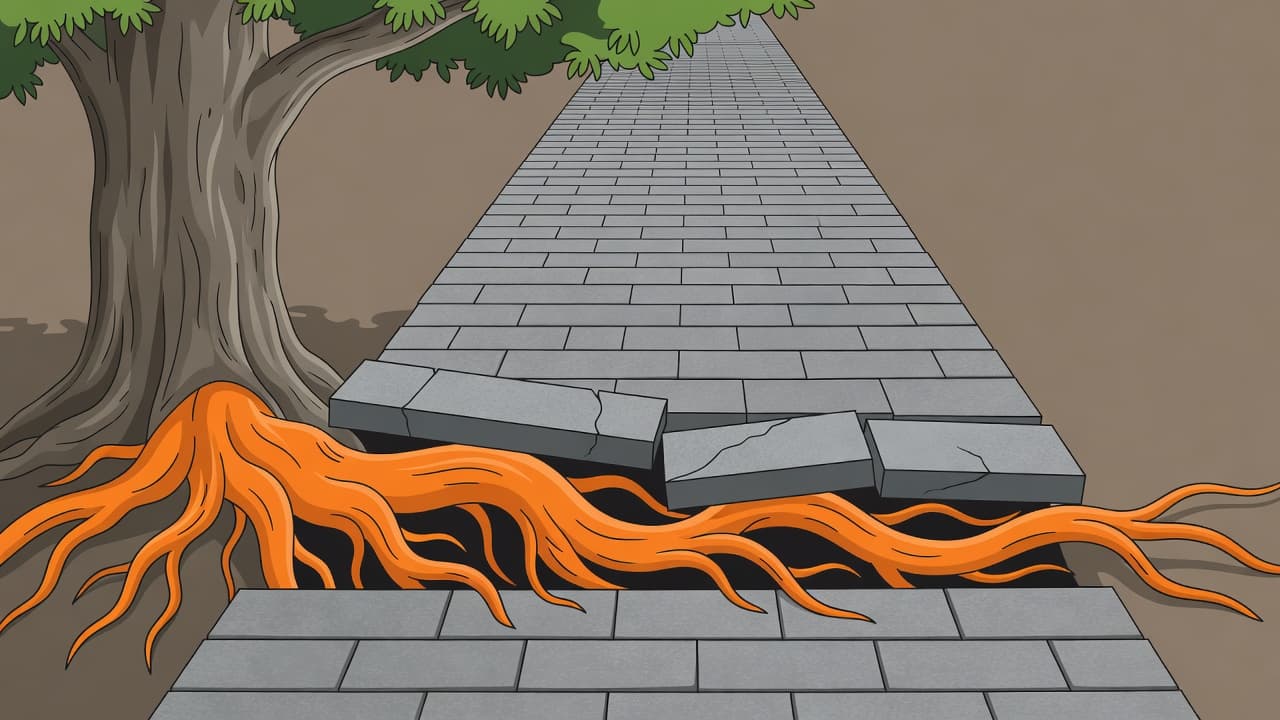
Roots do not need to crack every paver to make a mess. A small lift in one section can change the slope, open gaps, and send water into places it should not go. In a wet climate, that kind of movement tends to show up faster.
The more mature the tree, the more likely the pressure keeps building. A path that looks fine in one season can start waving the next if nobody resets it the right way.
The signs I look for first
The first clue is usually the shape of the lift. Root damage tends to run in a line near the tree, or across the side where the roots are traveling. Settling is different. Settling drops down, but roots push up.
I also look for the early signs of sidewalk damage that homeowners notice after the initial movement is ignored:
- A raised strip that follows the tree side of the walkway
- Pavers that rock instead of sitting flat, leading to pavement cracking as the stones lose their structural lock
- Gaps that keep opening after fresh sand is added
- Edges that tilt, twist, or sit higher than the rest of the run, a clear indicator of sidewalk lifting
If a section feels soft underfoot, I pay attention. That soft feeling usually means the base has moved, not just the top layer.
If the lift keeps coming back in the same strip, I stop blaming the stone and start looking below it.
Rain and irrigation can make it worse. When the soil stays damp, the base gets easier to move, and the pavers keep riding up on the same weak spot. That is why I do not treat this like a surface stain or a simple cosmetic problem.
Why a quick reset usually fails
Many homeowners are tempted to pry up uneven stones, level the base, and call the job finished. I understand the appeal because it seems like a fast and inexpensive solution.
The problem is that you are only addressing the symptoms, not the cause. If the tree root overgrowth remains active beneath the surface, your pavers will continue to sit on top of a shifting foundation. Simply smoothing the top does nothing to neutralize the force waiting underneath. This type of infrastructure damage requires a structural approach rather than a cosmetic touch-up. If the roots are significant enough to displace heavy pavers, you might even consider consulting an arborist to ensure the tree remains healthy and to discuss safe options for root management that do not compromise the tree.
This is also why I advise against aggressive cleaning on a damaged section. High pressure can easily chip paver edges and blow sand out of the joints. That joint sand is vital because it helps the walkway function as a cohesive surface instead of a pile of loose pieces.
If I pressure wash a paver path, I keep the process controlled. Too much force does more harm than good, especially when the joints are already loose or compromised. A path suffering from root lift requires a structural repair first, with cleaning performed only after the foundation is stable.
Sometimes the right move is not forcing the walkway back into its original position. You have to consider the health of the tree, the site drainage, and the space available before deciding how the repair should be built.
How I repair lifted walkway pavers
I start by lifting the affected pavers and the stones surrounding them. You have to see what the base is doing before you can fix it. Guessing does not help here.
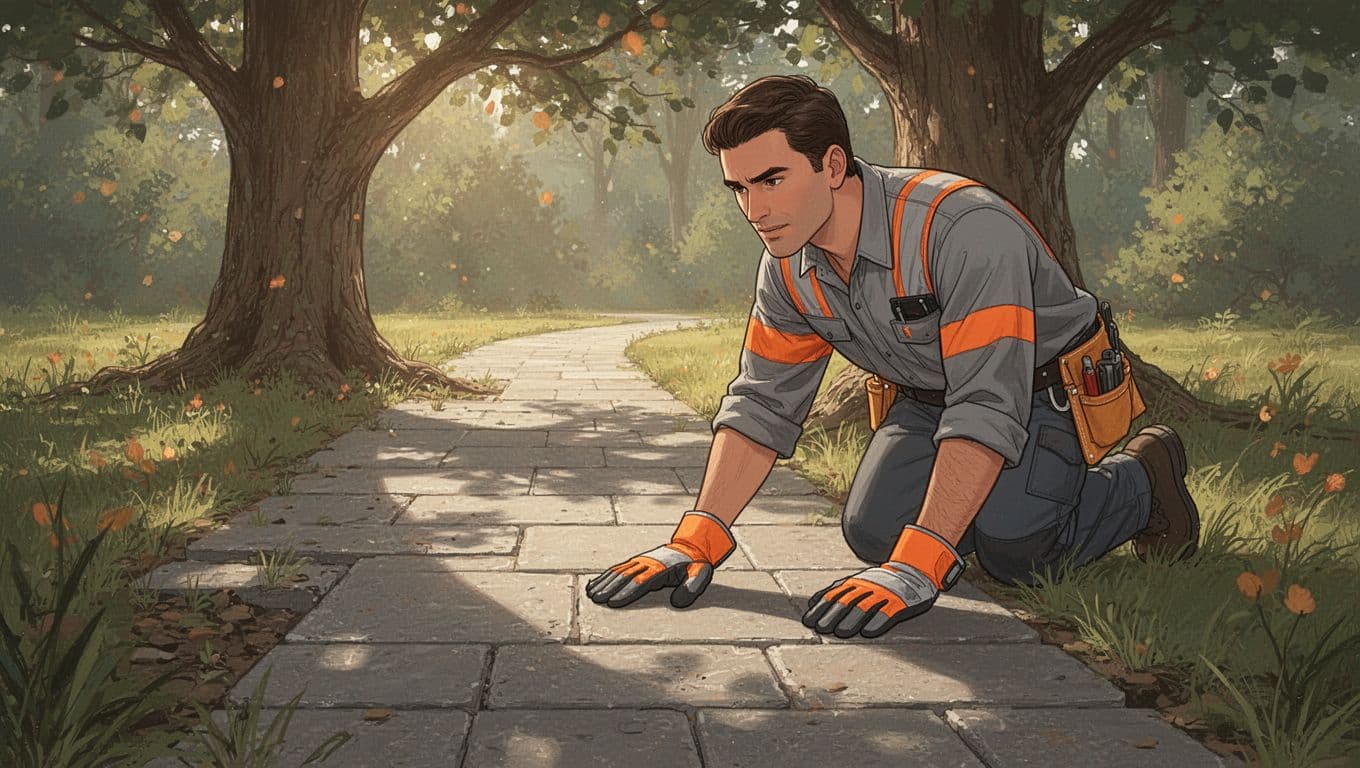
Then I check the bedding layer and the compacted base. Proper base preparation is essential for a long-lasting result. If the soil has shifted, I excavate the area and install a fresh layer of crushed gravel to ensure excellent drainage. In some cases, I incorporate paver base panels or additional paving slabs to add rigidity and provide a more stable surface for the walkway to sit on. If the old pieces are chipped or worn, I replace them instead of trying to hide the damage.
The reset itself has to be level and tight. If the line is off, the problem will show up again. Once the stones are back in place, I sweep in fresh joint sand so the surface locks together again. That is the part many people skip, and it is usually the step that holds everything in place.
After that, I clean the area carefully. If the walkway needs pressure washing, I use the right nozzle and a moderate setting, not a harsh blast. The goal is to clean the surface without stripping out the joints I just rebuilt.
Keeping the walkway stable after the fix
A repaired walkway still needs consistent attention. I always advise homeowners to monitor the area closely after heavy rain, as that is when minor movement often becomes visible. If the tree continues to grow and drainage remains poor, the pressure on your pavers can quickly return.
To prevent future problems, I often recommend installing root barriers. Solutions like DeepRoot barriers or other vertical barriers are highly effective at guiding roots downward and away from your foundation. This approach protects tree health while ensuring your walkway stays flat and stable. Incorporating these barriers into your overall landscape design is a proactive way to avoid recurring maintenance issues.
Fresh joint sand also plays a critical role in long-term stability. When joints remain full, the pavers stay tighter, allowing the walkway to better handle small shifts. If the sand washes away, the path inevitably begins to loosen. I also carefully evaluate the surrounding grade and the way water moves across the property. Standing water is never a good sign, as it softens the base and encourages roots to continue pushing toward the surface.
If your walkway is starting to rise near a tree, I can provide a professional assessment to determine if it requires a simple reset, a deeper repair, or a more permanent landscape design strategy. Get a Free Quote and get ahead of the damage before the lift spreads.
Frequently Asked Questions
Can I just pry up the pavers and push the dirt down to fix the lift?
Simply leveling the soil is usually a temporary fix because it ignores the biological pressure of the growing roots. Unless you address the root system or install a barrier, the tree will continue to push the base back up, causing the pavers to shift again.
Will root barriers harm the tree?
When installed correctly, root barriers guide root growth downward or away from the walkway without compromising the overall health of the tree. It is often wise to consult with an arborist before installing these barriers to ensure the specific tree species can handle the modification without becoming unstable.
Why is joint sand so important for preventing root damage?
Joint sand acts as a locking mechanism that keeps individual pavers bound together into a cohesive, structural unit. When the sand washes away or loosens, the pavers can move independently, making the walkway much more susceptible to the localized lifting caused by roots.
Is it safe to pressure wash a walkway that has been lifted by roots?
You should avoid aggressive pressure washing on compromised walkways, as the high force can easily chip edges and blow out the essential joint sand. Always perform structural repairs first to stabilize the foundation before using a low-pressure setting to clean the surface.
Conclusion
Tree roots do not attack pavers all at once. They grow, press, and shift the ground until the walkway shows the strain. That is why the fix must deal with the movement under the surface, rather than just adjusting the pavers on top.
When I see a lifted path near a tree, I look at the pattern, the base, and the joint sand first, as that is where the real problem usually lives. By incorporating structural soil into the repair area, you can provide a long term foundation that supports the tree while maintaining a level surface. Ultimately, pavement lifting can be solved permanently if you take the time to address the root environment correctly.