


I get this question a lot: can you install pavers over concrete, or does the whole thing need to come out? The short answer is yes, sometimes you can. The longer answer is that the existing concrete slab has to be solid, drained, and worth building on.
Using a paver overlay can be an efficient way to renovate your patio, but only if the foundation is sound. If the concrete is cracked, heaving, or holding water, I do not treat it like a shortcut. I treat it like a warning sign. A good slab can save time and mess, but a bad one will inevitably show through the pavers, compromising the quality of your outdoor living space.
Here is how I decide when the answer is yes, and when I walk away from it.
Key Takeaways
- Installing pavers over concrete is a viable project, but only if your existing slab is structurally sound and drains water away from your home.
- A stable foundation is non-negotiable; if your concrete is shifting, heaving, or has major cracks, it must be repaired or removed rather than covered up.
- Height clearance is a critical consideration, as adding a layer of pavers will raise the surface level and could interfere with door thresholds or stairs.
- Proper jointing using polymeric sand and secure perimeter edging are essential steps to keep your pavers locked in place and prevent future shifting.
When pavers over concrete make sense
I often recommend installing pavers over concrete when the existing slab is still doing its job. If the concrete is stable, not moving, and pitched the right way, it acts as a reliable base for a new surface.
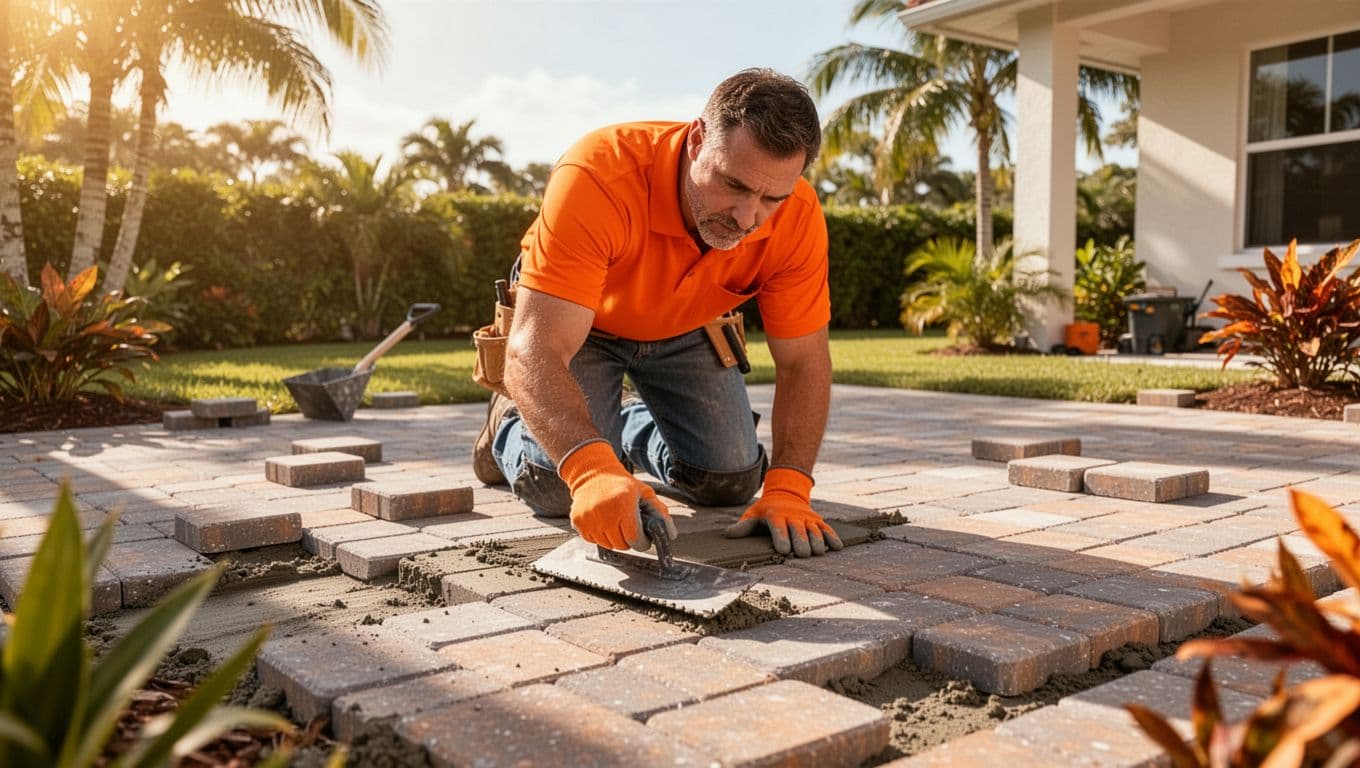
This process, often called a paver overlay, is a fantastic solution for many outdoor spaces. Whether I am working on a backyard pool deck or renovating a cracked concrete walkway, the slab provides a pre-existing hard foundation. Because I am not starting from bare soil, this approach significantly simplifies the entire patio installation process.
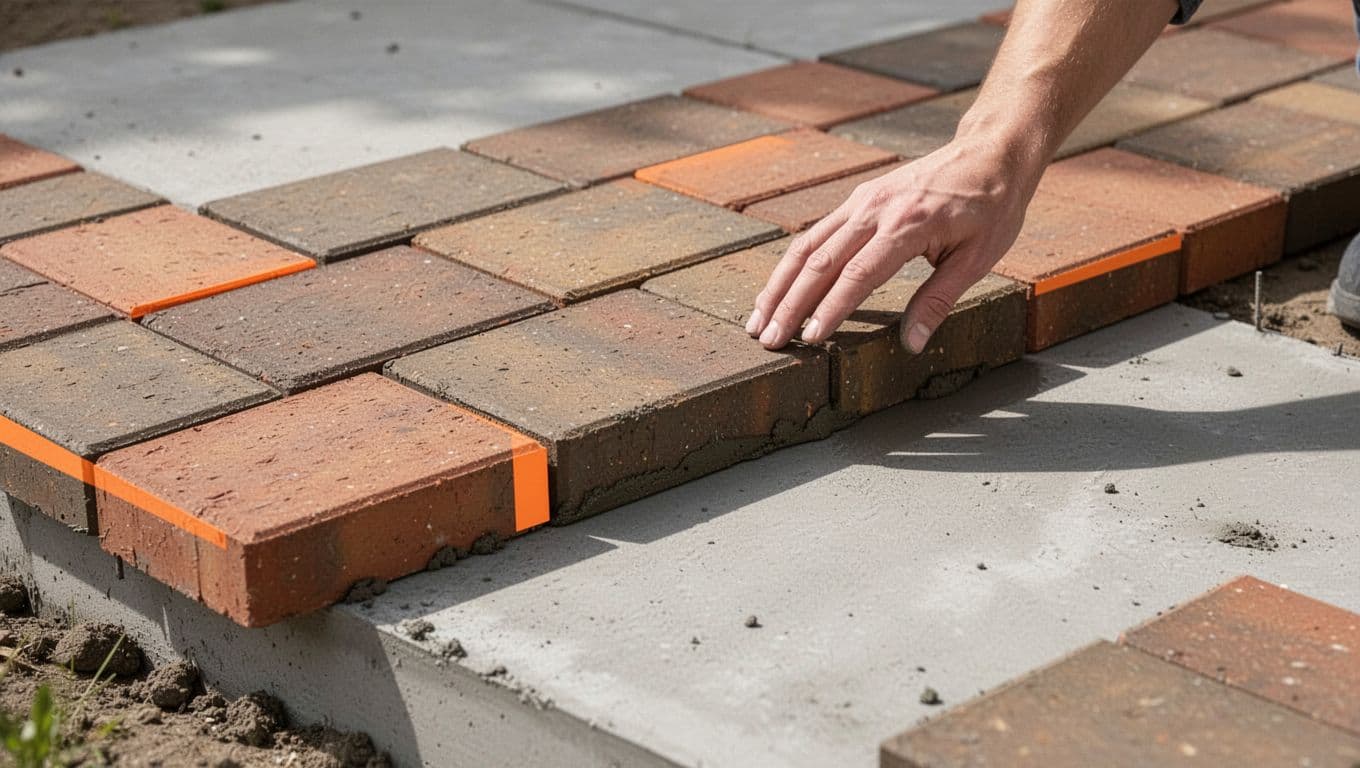
What I want to see is simple. The slab should be solid underfoot, free of major movement, and shaped so water does not sit on top of it. If the base passes that test, I can usually move forward with a plan that looks clean and lasts for years to come.
What I check before I start
Before I say yes, I look at the existing concrete slab like it owes me answers. I check the surface, the surface slope, the cracks, and the edges. I also want to know what has already been put on the concrete.
A few things matter right away:
- The slab should drain away from the house or pool area.
- Major cracks should be stable, not wide open or lifting, as they can compromise the structural integrity of the entire project.
- Soft spots and hollow areas are a bad sign.
- Old paint, glue, or failing sealer can make prep harder.
If the slab is coated in grime, I clean it first. A pressure wash can help, but I keep it controlled. Too much pressure can chip the surface or blast material out of the joints later on. I want the base clean, not chewed up.
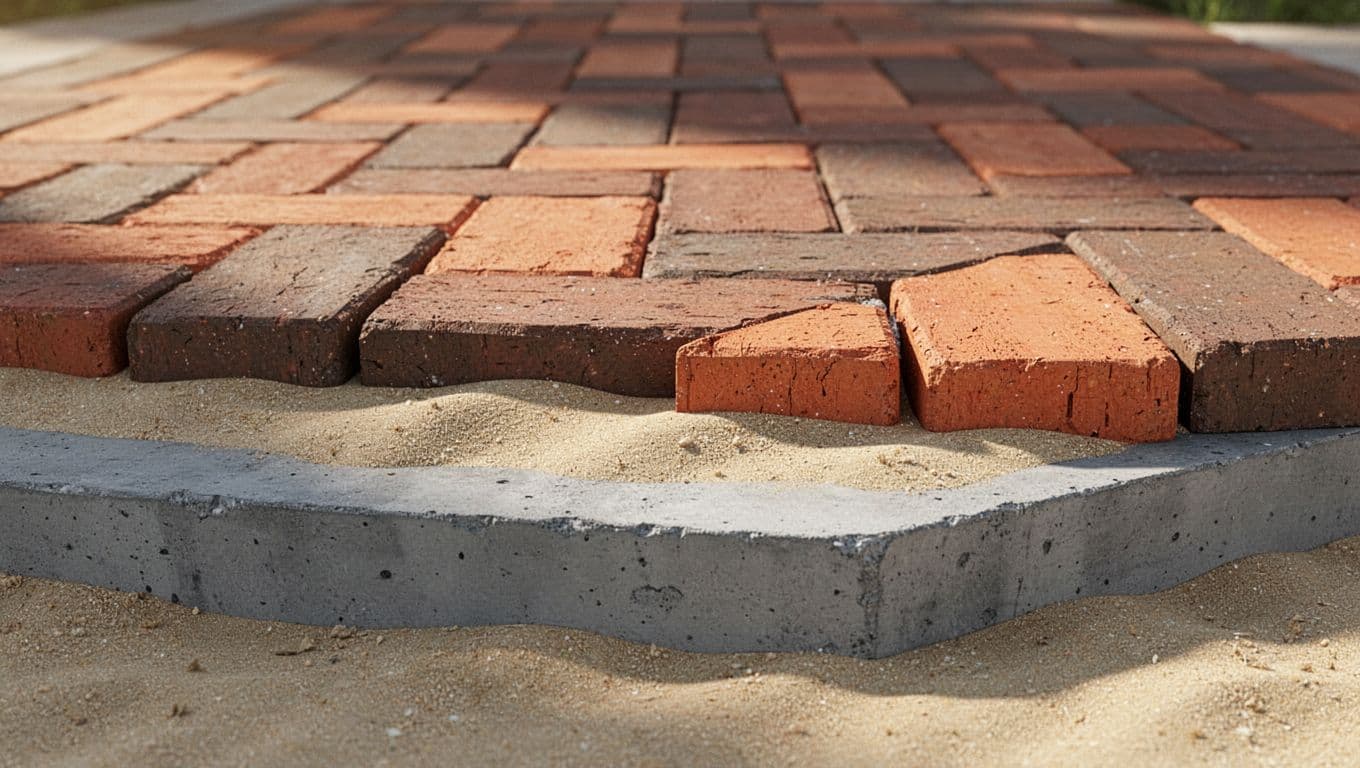
On a sound slab, I can work with a thin bedding layer of leveling sand and proper paver edging to secure the perimeter. While a traditional stone base is usually preferred for ground-level patios, using thin pavers is often a smart solution when working over a hard foundation. This approach helps the pavers sit evenly and keeps the finished surface from feeling loose. If the slab is already uneven, though, I am not going to pretend a layer of pavers will hide it.
The problems that change my answer
Some slabs are not good candidates, no matter how nice the top layer might look. If the concrete is settling, displaying major cracks, or showing an incorrect surface slope, I stop and rethink the whole project.
If the concrete is moving, the pavers will follow it.
That is the part people often miss. Pavers are forgiving, but they are not magic. They do not fix a foundation that is already failing, especially when subjected to the stress of seasonal freeze-thaw cycles.
I also pay close attention to height. Sometimes the new paver build-up will interfere with door clearance or force you to adjust your stair risers to maintain code compliance. That sounds minor until you open the door and it scrapes against the stones, or until you realize the finish prevents proper water runoff.
Moisture management matters too. If the slab traps water and you fail to address potential drainage issues, the whole system can turn into a headache. You can end up with shifting pavers, soft joints, or a cloudy finish if sealer is applied before the moisture has escaped through the weep holes. If the concrete base is fundamentally unstable, I would much rather recommend removing the slab and installing a proper stone base than covering it and hoping for the best.
How I keep the finished surface in good shape
Once the pavers are in place, I still treat the surface with care. The job is not finished just because the last paver is set. The joints matter, the edges matter, and the drainage still matters.
I like to fill the joints well so the pavers lock together. Using polymeric sand is my preferred choice for jointing materials, as it helps create a rigid, long-lasting bond. If the project ever gets cleaned with pressure, I keep the nozzle moving and the pressure modest. High pressure can pull the sand out of the joints, and once that happens, the surface starts to loosen.
If I need to re-sand later, I choose the right polymeric sand for the job and sweep it in fully. This practice keeps the pavers tighter and cuts down on movement. Installing reliable paver edging is also essential to ensure the perimeter remains secure and the entire installation stays locked in place.
Regarding installation techniques, the sand set method, mortar set, and dry mudset are all valid ways to address specific site conditions. When considering your design, opting for low-profile pavers can significantly enhance your home’s curb appeal while keeping the overall height manageable.
Sealing can help too, but only after the surface is dry. A good sealer can protect against stains and make cleaning easier. A bad one, or a sealer applied too soon, can trap moisture and turn cloudy. I have seen that more than once, and it usually means more work later.
If your slab has cracks, drainage issues, or old coatings that need a closer look, I would rather talk through it first than guess. You can Get a Free Quote and have the surface checked before the wrong fix becomes a bigger one.
Frequently Asked Questions
Can I install pavers over a cracked concrete patio?
If the cracks are minor and the slab is not moving or heaving, you can often proceed after repairing the surface. However, if the cracks indicate that the slab is settling or structurally compromised, you should address the base issues rather than covering them up.
How do I prevent the new pavers from shifting?
Using high-quality polymeric sand to fill the joints creates a rigid, long-lasting bond between the stones. Combined with reliable paver edging around the perimeter, this keeps the entire system locked securely in place.
Will installing pavers over concrete cause drainage problems?
It can if the existing slab does not have a proper slope to shed water away from your foundation. You must ensure your concrete base is pitched correctly before starting, as trapping moisture can lead to loose pavers and cloudy sealer finishes.
Conclusion
Can you install pavers over concrete? Yes, when the slab is solid and the drainage makes sense. That is the part I never skip.
If your existing concrete slab is cracked, moving, or holding water, I would rather fix the underlying problem than simply cover it up. A stable base makes the final pavers over concrete easier to live with, simpler to clean, and much less likely to cause trouble later.
That is the whole game when deciding to use pavers over concrete. A sound foundation gives you a clean start, while a damaged one often leads to future repairs. By following these steps, you ensure your patio installation remains durable and beautiful, allowing you to get the most enjoyment out of your outdoor living space for years to come.