

Pool decks rarely shift all at once. Problems typically begin at the perimeter, where the coping meets the decking. A small gap often transforms into a significant issue after a few storms or a couple of seasons of heavy use.
The pool edge acts as the defining boundary for your swimming pool design, yet it takes more abuse than most homeowners realize. Water, extreme heat, constant foot traffic, and heavy patio furniture all concentrate in this area. Because this zone is vital to the aesthetic and safety of your outdoor living space, the pool coping pavers are usually the first to show signs of stress. When these stones shift, the cause is rarely random; it almost always indicates that the foundation beneath the surface is beginning to fail.
Key Takeaways
- Coping as a Warning Sign: Shifting pavers at the pool edge are rarely random; they typically indicate underlying drainage failures or instability in the foundation.
- Water Management is Critical: Poor drainage, ineffective gutter placement, and excessive sprinkler runoff are the primary culprits for undermining the bedding layer beneath your pool deck.
- Joint Sand Acts as Structure: Beyond preventing weeds, high-quality joint sand is essential for locking pavers together and providing the necessary lateral support for the pool surround.
- The Limitations of Surface Repairs: Simply replacing sand or using sealants will not fix a failing base; if pavers continue to rock or shift, the foundation itself requires inspection and resetting.
The pool edge takes more abuse than the rest of the deck
I look at the pool surround a little differently than I look at the middle of a standard patio. The coping is the hard line that frames the water, and the pavers next to it have to stay locked in place while the area is constantly exposed to moisture, drying cycles, cleaning, and foot traffic.
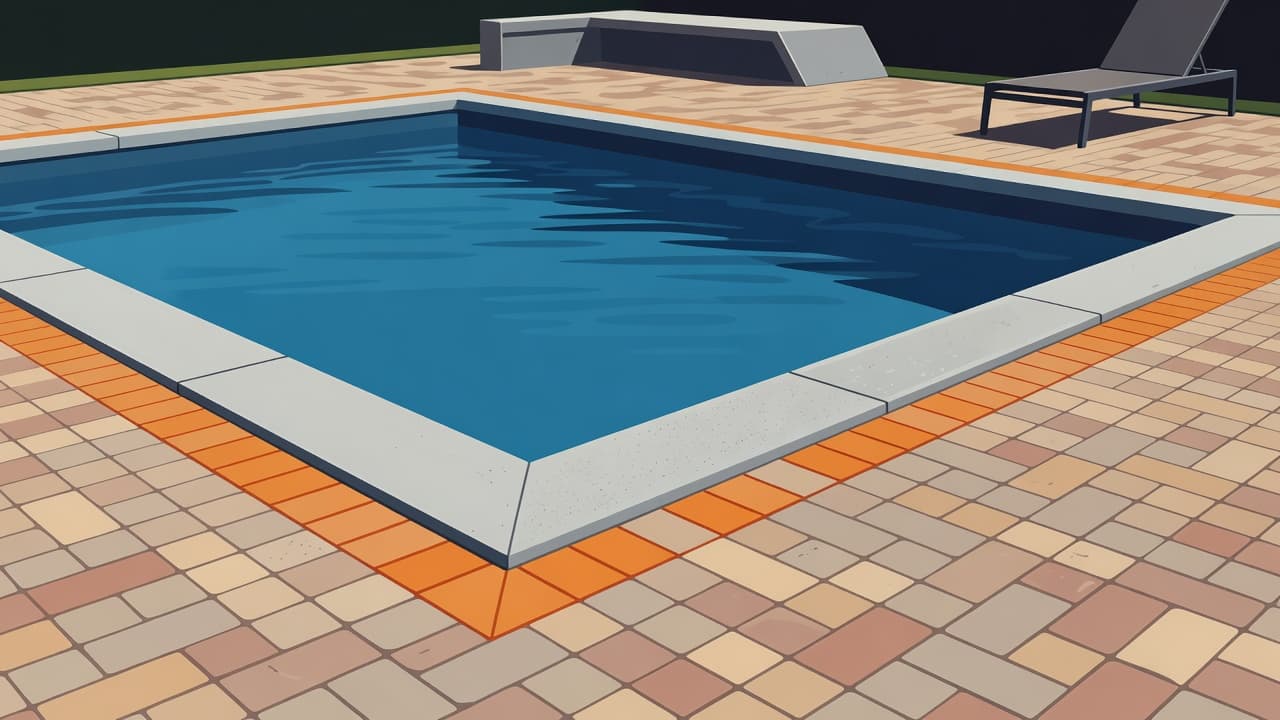
That corner of the pool deck also sustains more stress than most homeowners realize. Pool water splashes onto it, sprinklers hit it, and heavy furniture legs press into the stone. The sun bakes the surface daily, and then a heavy rain saturates the entire area once again. Whether your coping features a traditional bullnose edge that provides a rounded, smooth finish or a modern eased edge that creates a clean, crisp profile, these components are the first to experience physical wear.
The trouble starts when the border and the interior field stop acting like one unified system. The coping is often more rigid than the surrounding pavers, which are supposed to hold tight against it. If the joint between these elements opens up, the pavers can start to rock, sink, or spread away from the water.
I have seen plenty of decks where the middle of the patio looks fine, but the line next to the water is pulling apart. That indicates the failure started right at the coping, rather than across the entire pool surround.
Water is usually the first thing I check
When pavers shift next to pool coping, water is high on my list of concerns. Rain runoff can wash out the bedding layer if the site drainage is poor, while sprinklers often keep the surrounding area damp. Furthermore, regular pool splash can soak the joints repeatedly. If the grade around the deck directs water toward the pool instead of away from it, the problem inevitably gets worse.
Moisture does not need much help to cause damage. It finds the soft spot, settles there, and begins moving the sand and bedding material. Once that happens, the pavers no longer sit on a stable base. Whether I am inspecting concrete pools or fiberglass pools, the result is the same: the pavers start to settle unevenly, and the coping edge begins to move.
I also examine downspouts and nearby runoff paths. A gutter that dumps water near the deck can cause the same kind of trouble. So can a low spot that traps water after every storm. If water keeps pooling beside the coping, any repair will keep failing until the drainage issues are addressed.
If the area feels soft after rain, I stop blaming the top layer and start looking at the base.
That soft feeling matters. A deck should feel solid underfoot. If it feels spongy, hollow, or uneven, the issue usually goes deeper than a few loose joints. In both concrete pools and fiberglass pools, addressing the underlying drainage is the only way to ensure the pavers remain stable and level for the long term.
Joint sand holds more weight than people think
A lot of people treat joint sand like simple filler, but I do not. It acts as the structural glue that locks your pavers together. Whether you have natural stone like travertine or limestone, the sand helps these materials resist side to side movement. It also keeps weeds, ants, and debris out of the joints. Most importantly, properly filled joints are essential for maintaining the slip resistance of your pool deck. When the sand washes out, the whole surface gets weaker, and your non-slip surfaces can become uneven or loose.
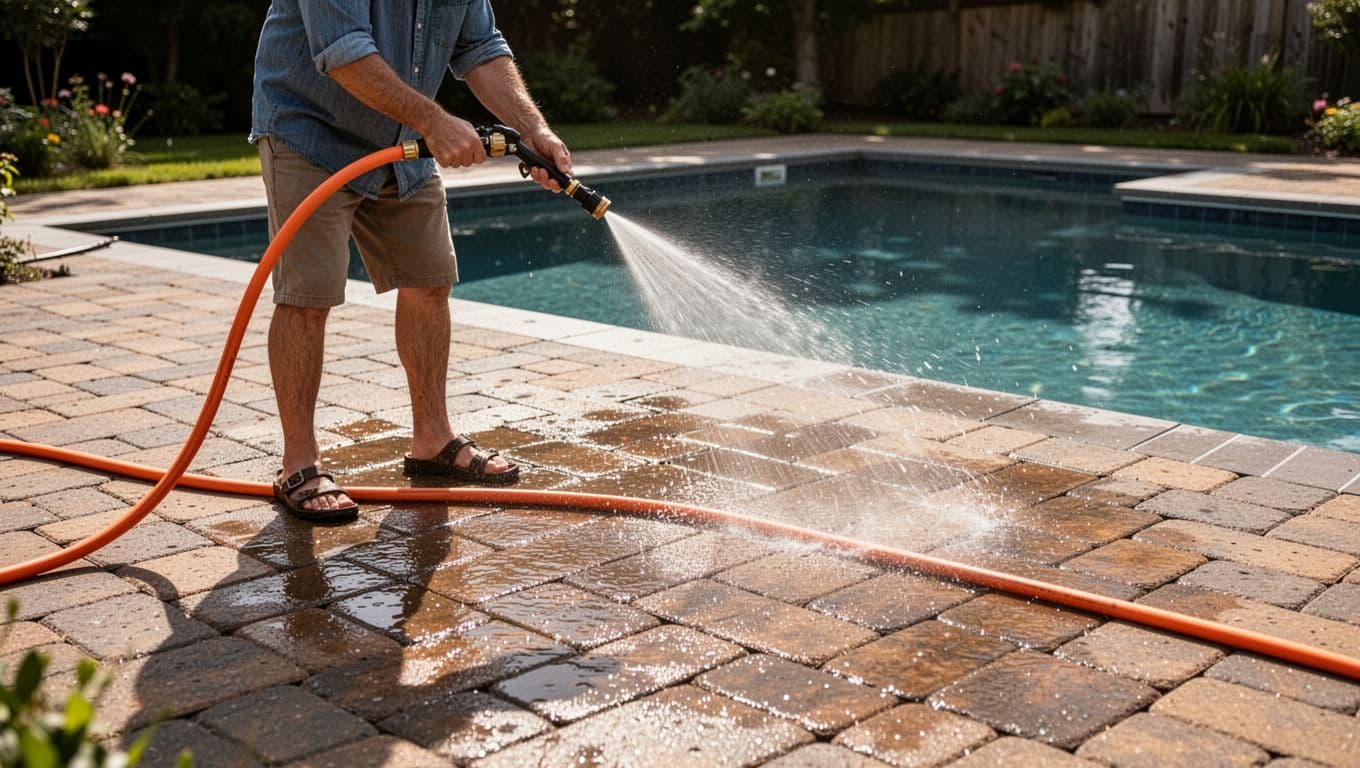
This is where pressure washing can cause problems. It cleans pavers well, but aggressive washing can blow sand right out of the joints. Once that happens, the stones lose some of the grip that keeps them tight beside the coping. If the area already had weak drainage or movement, the washout makes the problem show up fast.
Here is a quick way I think about it:
| What I see | What it usually points to | First thing I check |
|---|---|---|
| Sand keeps disappearing from one spot | Water flow or washout | Drainage and slope |
| Pavers rock when I step on them | Base or bedding failure | Sub-base stability |
| Gaps reopen after rain | Movement under the surface | Settlement and runoff |
| Joints look empty after cleaning | Sand loss from pressure washing | Re-sanding and cleaning method |
That is why I do not just dump new sand into loose joints and call it done. If the pavers are moving, the base has to be checked first. If the deck is stable, re-sanding can help a lot. If it is not stable, sand alone is just a short term patch.
Polymeric sand can help when it is installed the right way. It tightens the joints and helps keep the surface locked together, which is crucial for maintaining the integrity of natural stone installations. It still needs a sound base, clean joints, and proper curing. It does not fix a failing foundation.
When the base starts failing, the coping edge shows it first
If the pavers next to the pool are sinking, the bedding layer or the base underneath may be failing. This is a common issue where water keeps saturating the soil below the deck. It also occurs when the original compaction was weak or when the edge restraint is not holding securely. Unlike cantilevered concrete that acts as a single rigid unit, paver coping is composed of individual pieces. If the base shifts, this paver coping or wall cap will begin to move independently, creating visible gaps and uneven surfaces.
I usually know the base is the real problem when I see one or more of these signs:
- The pavers rock when I step on them.
- The same low spot keeps returning.
- Water sits in the same area after rain.
- The border is spreading away from the coping.
- The joints keep opening in the same place.
Those signs mean the pavers are moving as a group, not just losing a little sand. At that point, I want to lift the affected section, check the bedding, inspect the compaction, and reset it the right way.
Sometimes the damage stays small, but often it does not. If the movement is starting to spread along the pool edge, I would rather inspect it early than wait for a bigger repair. Addressing these foundational issues promptly is the most effective way to minimize the total installation cost of your pool deck restoration. That is where a professional site visit matters. If you are seeing the same spot fail again, Get a Free Quote and let me look at the slope, drainage, and base before the next heavy rain.
How I keep the repair from coming back
Once the edge is fixed, I want to keep it fixed. That means I look past the pavers and pay attention to water control. I make it a point to inspect the coping every linear foot to ensure there is no hidden movement or shifting.
I start with the basics. I move runoff away from the pool deck. I check gutters and downspouts. I look at the grade around the area. If water is being sent straight toward the coping, which acts as a vital protective cap for the pool structure, I fix that first.
I also keep up with cleaning the right way. A gentle rinse, soap and water when needed, and careful pressure washing are usually enough. High pressure can strip out the joints fast. If the surface needs re-sanding afterward, I do that before I worry about sealing. A sealant can help protect the pavers and make cleanup easier, but it does not replace a solid base or proper drainage.
When dealing with a classic brick coping design, consistent maintenance is essential to prevent long-term water damage. If your pool deck features transitions, I also pay close attention to the step tread stability to make sure those areas remain secure under foot.
I also keep an eye on the joint sand after storms. If I see it washing out again, I know the deck is telling me something. The fix is not always more sand. Sometimes it is better drainage. Sometimes it is a reset at the edge. Sometimes it is both.
A small habit goes a long way here. Keep furniture from dragging. Watch for sprinkler spray. Check the joints after a big storm. If the edge starts to shift again, catch it early.
Frequently Asked Questions
Why do my pool pavers shift only near the water line?
The pool edge is a high-stress zone exposed to constant moisture, temperature fluctuations, and heavy traffic. When the boundary between the rigid pool coping and the field pavers fails, it indicates that water is likely washing out the underlying base or that the area lacks proper drainage away from the pool.
Should I use polymeric sand to stop my pavers from moving?
Polymeric sand is an excellent tool for locking pavers together and preventing weed growth, but it is not a structural fix for a failing foundation. If your base is uneven or the ground is shifting, no amount of sand will prevent the stones from moving again in the future.
Can pressure washing damage my pool deck?
Yes, aggressive pressure washing can easily blow the stabilizing sand out of your joints, which weakens the entire interlocking system. Once this sand is gone, your pavers lose their lateral grip and become much more prone to rocking and shifting during the next rainstorm.
How can I tell if my issue is just surface-level or a foundation problem?
If your pavers feel spongy, hollow, or rock when you step on them, you are likely dealing with a base failure rather than just loose joints. A stable deck should feel completely solid underfoot, and any persistent return of low spots or gaps after a storm is a clear sign that you need to inspect the sub-base.
Conclusion
When pavers shift next to pool coping, I do not treat it like a surface problem first. I treat it like a warning. The edge is usually showing me where water, sand loss, or base movement has started to break the system.
That is why pool coping pavers need more than a quick top-off of sand. They serve as a critical safety feature for swimmers, and when they are properly installed, they act as a stable seal that protects the underlying pool wall from long-term structural damage. These pavers need the drainage checked, the joints protected, and the base inspected whenever the movement keeps coming back. If the deck stays tight, the repair lasts longer. If it does not, the same spot will keep opening up after every hard rain.