


When dealing with sinking pavers near a buried utility line, the stones are usually telling on the ground underneath them. I see this as a support problem first and a surface problem second. Understanding this distinction is vital for long term hardscaping maintenance because a quick fix that only looks level can fail again the next time the soil shifts.
If the dip sits over water, sewer, irrigation, cable, or electrical conduit, I want to know what moved below the surface before I start lifting anything. The good news is this kind of damage has a pattern. Once I know what to look for, I can usually tell whether the issue is a settled trench, a leak, or a weak base that never got compacted right.
Key Takeaways
- Surface issues stem from the sub-base: Sinking pavers near utility lines are rarely a problem with the stones themselves; they indicate that the soil, bedding, or trench backfill below has shifted or settled.
- Look for patterns: Utility-related subsidence often appears in straight lines or specific tracks that mirror the path of buried pipes, distinguishing them from random or localized sinking.
- Identify the cause before repairing: Simply adding more sand to level the surface is a temporary fix. You must first determine if the issue is caused by improper soil compaction, washout from a leak, or the natural settling of a utility trench.
- Rebuild the foundation: A long-term repair requires removing the pavers, excavating the failing sub-base, installing a properly compacted gravel foundation, and resetting the stones with fresh joint material.
The hidden culprit below your feet
Buried utility lines cut through the soil that supports the pavers. That trench gets dug, filled back in, and covered before anyone sees it again. If that backfill settles later, the pavers above it lose support and start to dip.
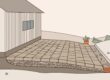
That is why sinking pavers near utilities often show up in a strip or a straight run. The surface may look fine for months before the slow settling begins and a section starts to drop. This issue frequently appears on a driveway, a patio, a walkway, or even around a pool deck where plumbing runs under the edge.
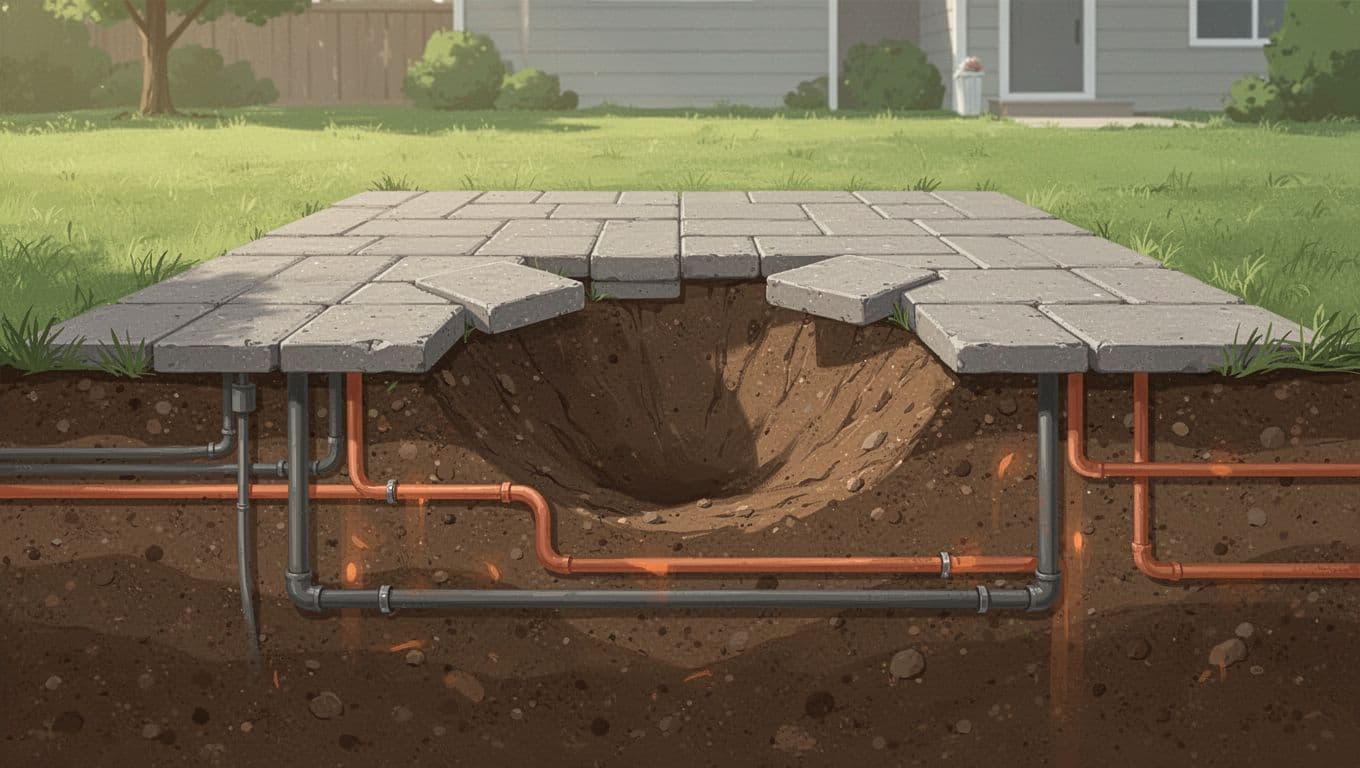
I also look for washout. A slow leak from a water line, irrigation line, or drain can lead to soil erosion little by little. The pavers do not fall because they are weak. They fall because the base turns hollow.
Heavy traffic makes it worse. So does poor compaction during the original install. If the trench was backfilled too fast, or the bedding sand sat over loose fill, the movement can keep going long after the job is done. That is why I do not blame the brick right away. The brick is just the messenger.
Why dirt moves and pavers follow
A paver system works like a stack on top of a bed. The pavers, bedding layer, joint sand, subbase, and the compacted subgrade all depend on stable soil underneath. When a utility line cuts through that soil, the whole stack loses its structural integrity.
I see three common reasons this happens on a paver patio. First, the trench fill experiences settling over time. Second, water escapes from a line or improper water runoff softens and removes the soil. Third, the original base was never rebuilt with proper drainage to ensure long-term stability after utility work.
Around older homes, I also check for repeated repairs in the same area. If one crew opened the ground for plumbing and another came later for irrigation or cable, the layers can end up uneven. Each repair leaves a mark below the surface, even if the top looks clean.
Here is the part homeowners usually miss: the dip may not start right over the pipe. It can start beside it, where the support ends and the soil begins to shift.
If the same strip keeps sinking, I stop looking at the pavers and start looking for what moved under them.
I also pay attention after cleaning. A hard pressure wash can strip joint sand and weaken the surface, especially if the area was already soft. That does not create the utility problem, but it can make an existing one show up faster.
Signs the sinking is tied to utility work
A bad base can sink anywhere. However, utility-related sinking usually leaves specific clues.
- The low spot runs in a straight line rather than a random circle, often appearing as uneven pavers that track across a walkway.
- A repair works for a while, but the same spot drops again shortly after.
- Water pools in one narrow area after a rainstorm.
- The pavers feel soft or rock back and forth when I step on them.
- A nearby utility lid, cleanout, valve box, or faint trench mark sits close to the dip.
I also look for gaps that keep opening at the same edge. Border separation, loose joints, and a hollow sound underfoot often accompany a settling trench. Whether you have concrete bricks or natural stone pavers, they may not look broken, but they no longer sit on solid support.
If the problem is near a pool deck, I am extra careful. Plumbing lines, local drainage systems, and deck movement all play a role in this environment. A sunken patch next to the coping can be a sign that water or fill has shifted below the deck surface.
The pattern matters more than the size of the dip. A small drop that keeps returning is a much bigger clue than a wide area that settled once and stopped.
How I repair sinking pavers near buried utility lines
When I approach a paver repair near utility lines, I avoid the mistake of simply lifting the stones to add more sand. That is only a short-term patch, and it almost always fails.
I start by identifying the utility line under the area and confirming its status. If there is an active leak, it must be addressed first. Covering a leak and hoping for the best is a guaranteed way to see the same problem return.
Then I work in this order:
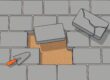
- I remove the pavers in the affected area and keep them carefully sorted.
- I inspect the base, the bedding layer, and the excavation depth of the trench fill to identify where the soil failure originated.
- I rebuild the support by installing a fresh gravel base, followed by proper compaction to ensure the foundation is solid and set at the right elevation.
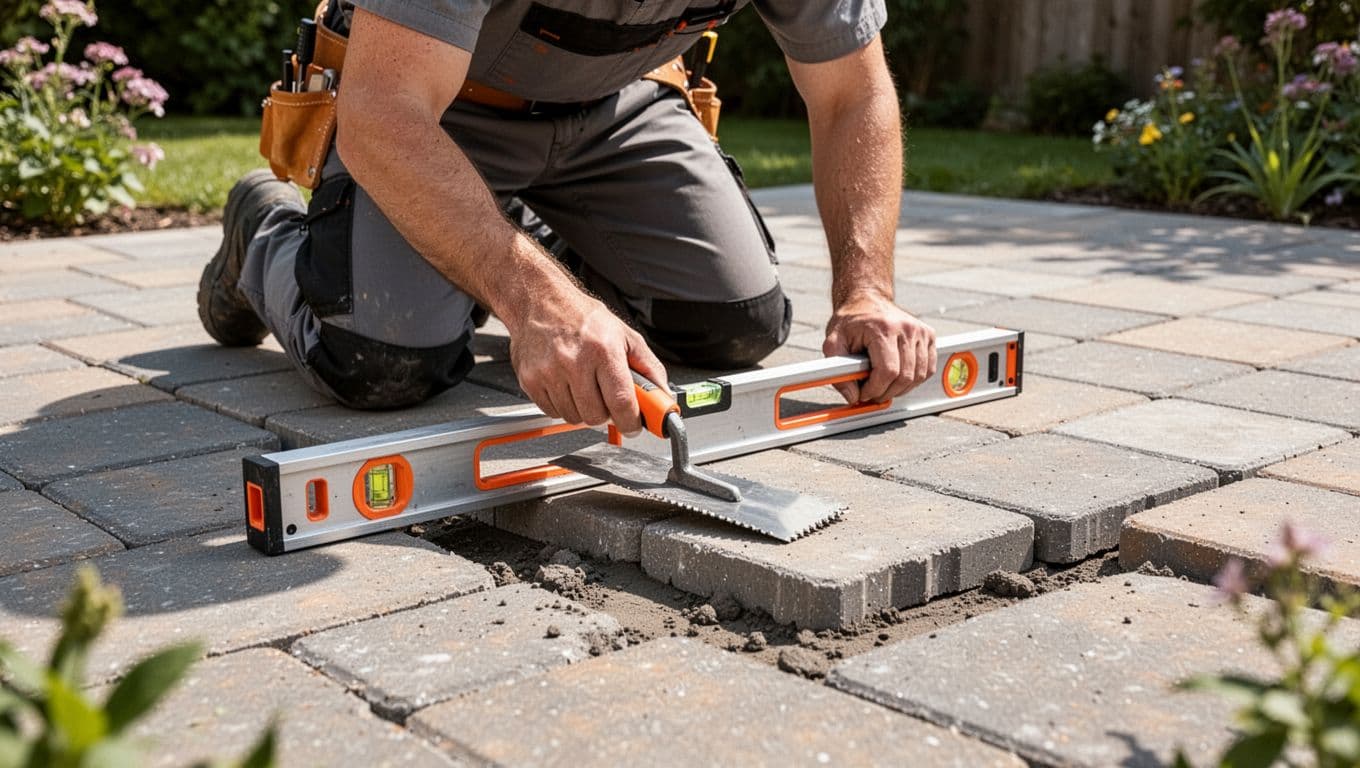
- I reset the pavers, sweep in high-quality polymeric sand to lock them into place, and use a plate compactor to achieve the final density required for long-term stability.
If the edge restraint is weak, I fix that as well. If the surrounding pavers have shifted, I focus on releveling the transition so the repair blends seamlessly into the rest of the surface. Matching the height is one thing, but matching the finished look is equally important.
On some jobs, I also recommend sealing after the repair, but only after the pavers are clean and dry. Sealer can help protect the surface, but it does not solve settlement on its own. The ground beneath must be stable first.
If you are staring at a soft spot that keeps coming back, Get a Free Quote. I would rather check the base once than let the same hole turn into a bigger, more costly repair later.
How I keep the same spot from settling again
A good repair should not need a second visit for the same problem. That starts with the soil, not the surface.
I want the area around the line to drain well, stay compacted, and maintain proper drainage through careful grading so that it stays dry when possible. If water is getting into the trench, the pavers will keep telling the truth no matter how nice the top looks.
Regular upkeep helps too. I keep an eye on the joint sand, because missing sand can let the surface loosen faster. I often recommend applying polymeric sand to lock the units in place. If I clean the pavers, I use care. A gentle wash and a stiff broom are safer than blasting the joints with too much pressure. Once the sand is gone, the pavers have less to lock against.
I also tell homeowners to pay attention after utility work. If someone digs near the patio, driveway, or walkway, the area should be checked for settling before it turns into a dip. Catching these small issues early is the only way to avoid a full overhaul of the area later.
The trick is simple. Support the base, protect the joints, and watch the line where the ground was disturbed. That is where the next problem usually starts.
Frequently Asked Questions
Can I just pull up the pavers and add more sand to fix the sink?
While adding sand might make the surface level for a short time, it does not fix the underlying structural issue. If the base or trench fill is loose or washing away, the new sand will eventually settle or shift as well, causing the pavers to sink again.
How do I know if the sink is caused by a utility line or just natural settling?
Utility-related sinking typically follows the straight path of a trench or appears near utility access points like valve boxes and cleanouts. If you notice a consistent, straight line of sunken stones or a spot that keeps dropping after previous repairs, it is likely tied to the utility work beneath the surface.
Why does the area around my pool deck sink specifically?
Pool decks are high-traffic areas surrounded by complex networks of plumbing, electrical conduits, and drainage systems. If any of these lines leak or if the backfill was not properly compacted during the pool’s construction, it can lead to hollow voids that cause the pavers above to lose their foundation.
How can I prevent the same area from sinking again after a repair?
The key is ensuring the repair is built on a solid, properly compacted gravel base rather than loose soil. Additionally, maintaining the integrity of the polymeric sand in your joints will prevent water from penetrating the surface and washing out the bedding layer over time.
The real fix starts below the surface
When pavers sink near a buried utility line, the visible damage is only part of the story. The real issue is the soil that gave out under the system.
I look for the line, the leak, the settlement, and the weak spot in the base. Once I address the cause below ground by installing a stable gravel base, the surface has a chance to stay level again. Focusing on thorough base preparation is the only way to ensure the ground remains solid. If you ignore the subsurface conditions or fail to establish proper drainage, the pavers will inevitably keep sinking in the same place.