

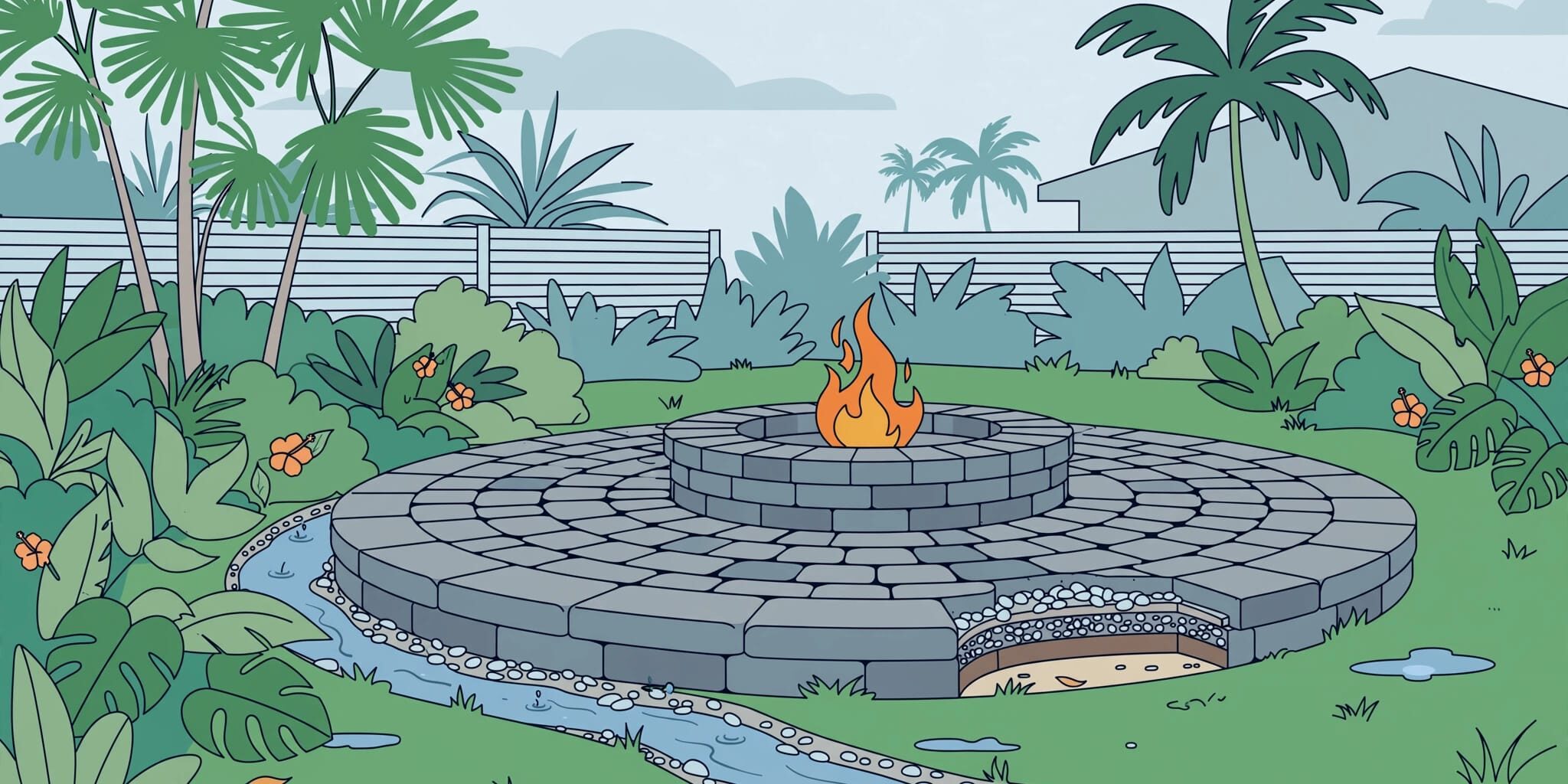
A beautiful fire pit can make your backyard a comfortable outdoor living space, but Florida rain will quickly expose poor base work. When I plan this project, I start with drainage and solid support before choosing colors or patterns.
You also need safe clearances, suitable materials, and approval for any utility work. Here’s how I approach the project so your patio looks good and stays dependable.
Key Takeaways
- Confirm local fire rules, permits, and manufacturer clearances before choosing the location.
- Build on stable soil with crushed aggregate compacted in layers, consistent bedding sand, and firm edge restraints.
- Keep direct fire heat away from ordinary patio pavers, and correct drainage problems before installing or repairing the surface.
Plan a Safe Paver Patio Fire Pit Layout
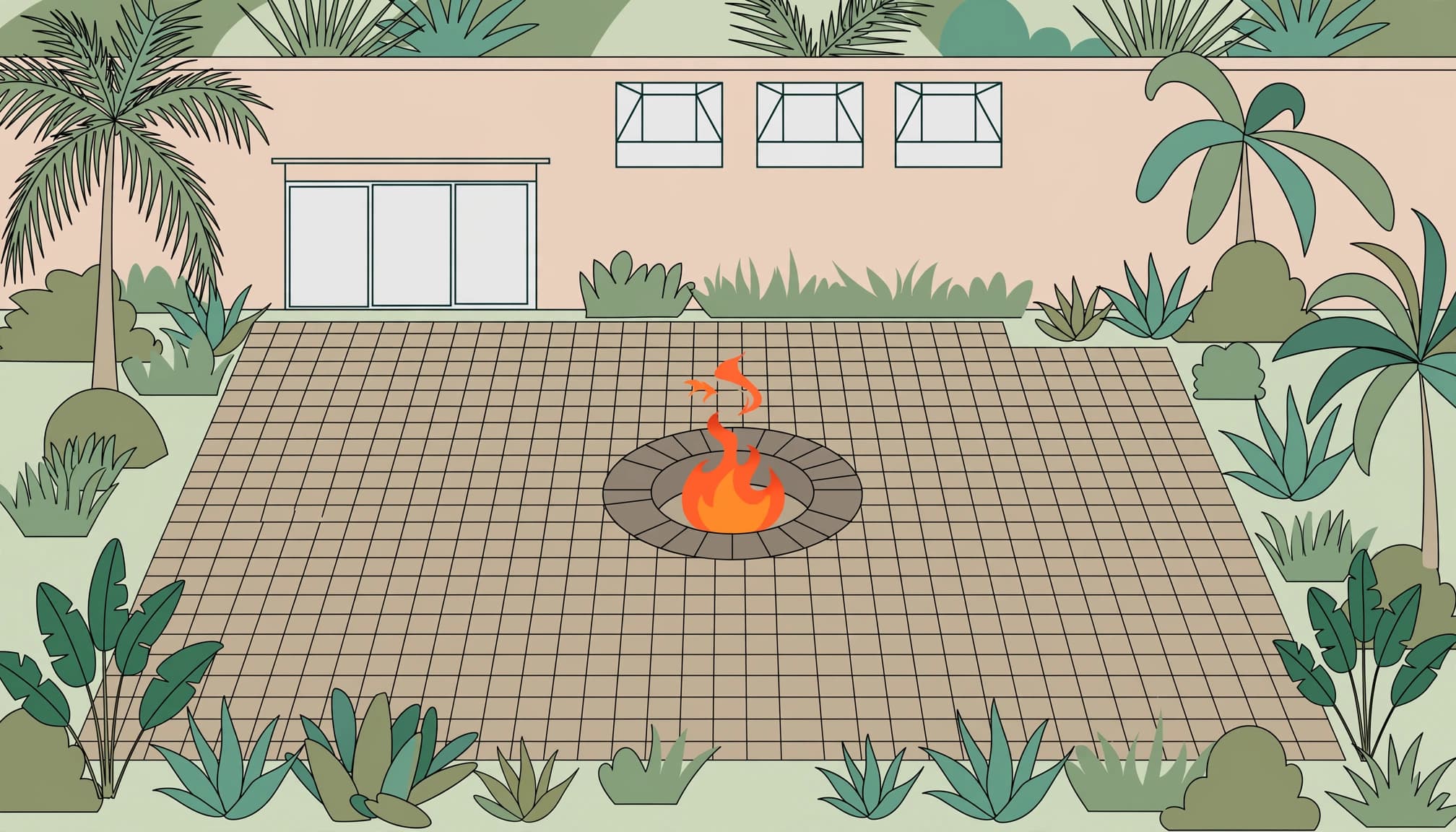
I recommend marking the entire patio and fire pit footprint before ordering materials. Plan the fire pit design and outdoor fire pit location around chairs, built-in seating, walking space, nearby doors, and the route for carrying firewood or reaching the gas shutoff. Consider how the layout supports your backyard design and outdoor entertaining.
CHECK LOCAL RULES BEFORE DIGGING
The Florida Fire Prevention Code is enforced by local fire officials. Ask the department serving your address how your proposed fire feature is classified and which safety regulations, local regulations, and clearances apply.
Don’t assume a setback quoted online applies to every wood-burning pit, portable appliance, or gas installation. Confirm clearances from structures and combustible materials, along with setback requirements from property lines. Check HOA restrictions and current burn bans.
Building approval may also depend on drainage changes, easements, and utility connections. Call 811 before excavation, and arrange separate locating for private irrigation, pool lines, or other utilities the public marking service doesn’t cover.
LEAVE ROOM FOR PEOPLE AND AIRFLOW
Keep the fire feature away from branches, fences, stored cushions, and other combustible items. I don’t place an open wood fire beneath a screen enclosure or covered lanai.
Use the appliance’s clearance instructions when arranging seating. Leave a clear walking route behind occupied chairs. Check prevailing breezes too, so smoke isn’t directed toward doors, windows, or your neighbor’s sitting area.
Choose the Fuel and Fire Pit Materials
Your fuel type affects the layout, maintenance, installation work, and everyday use. I settle this decision early because utility routes and foundation requirements can change the whole project.
WOOD-BURNING FIRE PITS
A wood burning fire pit gives you a traditional fire, but it also brings smoke, sparks, ash, and cleanup. Use a purpose-built assembly with the heat protection its manufacturer requires.
Standard concrete patio pavers and ordinary retaining wall blocks aren’t automatically suitable for direct flame exposure. Fire pit kits may include fire pit blocks, a steel insert, and caps, but check the component list. Fire bricks, drainage provisions, or a separate foundation may also be required. Use heat-resistant mortar or construction adhesive only when the manufacturer specifies it.
Burn clean, dry firewood. Keep trash, painted lumber, and treated wood out of the fire, consistent with Florida DEP’s open-burning restrictions.
NATURAL GAS AND PROPANE
A gas fire pit gives you controlled ignition without handling firewood. Natural gas needs an approved supply connection; a propane fire pit needs safe cylinder placement or an approved tank installation.
Use qualified professionals for fixed gas piping and required permits. Follow the appliance instructions for ventilation, burner media, access panels, clearances, and drainage. An enclosed gas fire pit needs more planning than stacking blocks around a burner.
Build a Base That Drains and Stays Level
After more than 20 years working with Florida pavers, I’ve seen attractive surfaces settle because the preparation was rushed. Sandy soil, disturbed fill, and heavy runoff all deserve attention before the stone goes down.
EXCAVATE TO STABLE GROUND
Remove sod, roots, organic material, and unstable fill. Establish finished elevations before excavation so the completed patio meets doors and adjoining surfaces without creating a trip hazard.
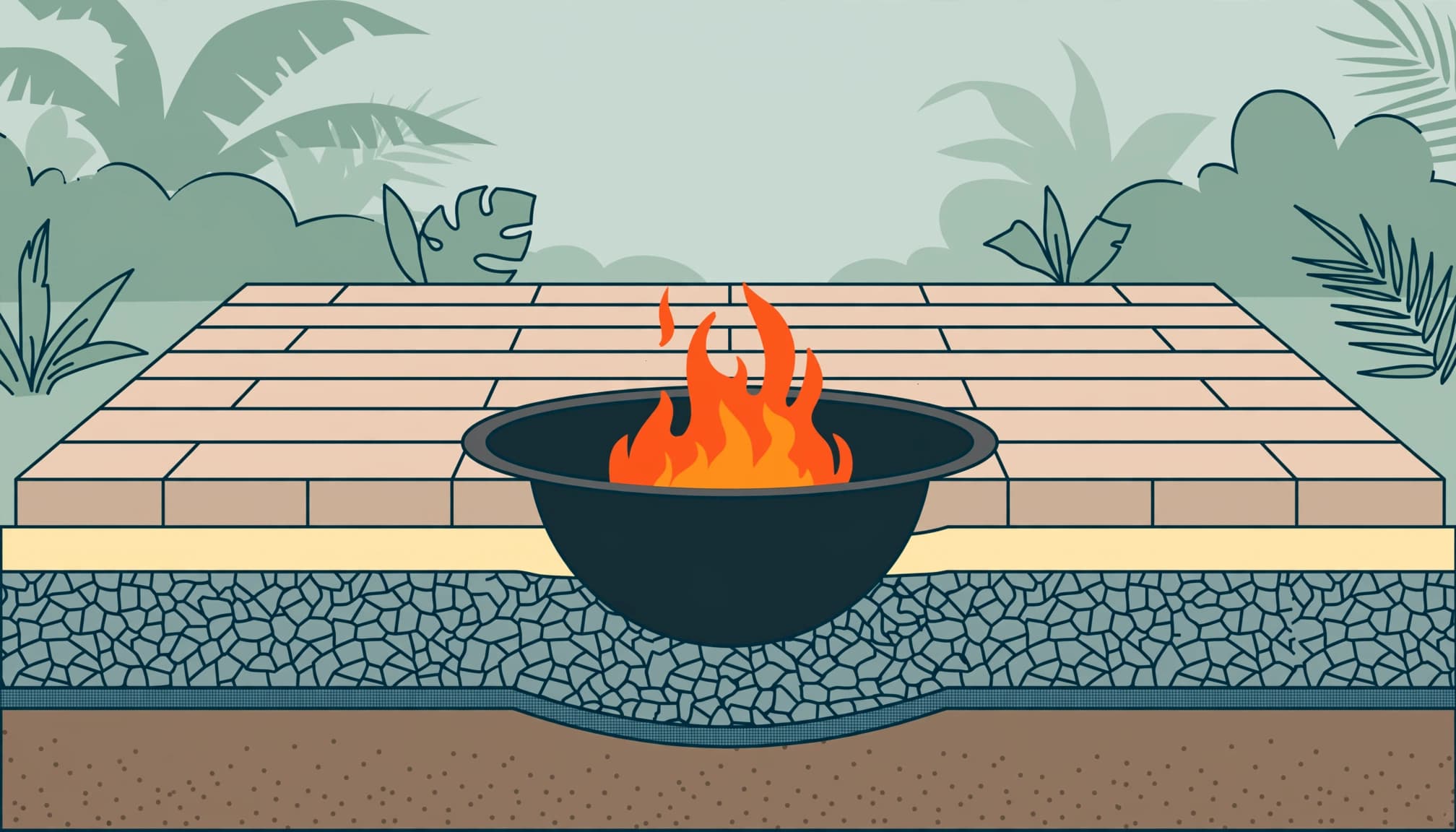
For many pedestrian patios, start with 4 to 6 inches of compacted, well-graded crushed aggregate. This gravel base is followed by roughly 1 inch of bedding sand and the paver thickness. Poor soil, heavier masonry features, or drainage problems can require a different design.
Shape and compact the subgrade. If it ruts, leaves deep footprints, or pumps water under pressure, stop and correct the condition. Use geotextile fabric where soil could migrate into the aggregate. Fabric doesn’t replace stable ground.
COMPACT THE AGGREGATE IN LAYERS
Use crushed aggregate intended for a compacted paving base. Rounded pea gravel doesn’t lock together as well.
Place manageable lifts, often about 2 to 3 inches with residential equipment, and compact each lift before adding another. Match lift thickness to the equipment and material specification.
Build drainage into the subgrade and aggregate. A common recommendation is a 2% slope away from the house, roughly 1/4 inch per foot, with the final grade matched to the property. Direct runoff toward a suitable drainage area, not enclosure footings or an already-wet corner.
Install Bedding Sand, Pavers, and Edge Restraints
Once the compacted base is firm and correctly graded, I check elevations again before laying patio pavers. A thin, specified layer of leveling sand belongs beneath them, but loose sand should never hide a deep dip or weak foundation.
Our Florida paver installation timeline covers the preparation, placement, and cleanup stages homeowners should expect.
- Screed a consistent bedding layer using sand approved for the paver system, commonly concrete sand. Keep it thin and even.
- Lay the pavers to your marked pattern while preserving the planned slope and consistent joints.
- Make the perimeter and fire pit opening cuts, then install firm edge restraints along exposed boundaries.
- Compact the surface with equipment and protective accessories suited to the pavers. Fill and consolidate the joints following the joint-material instructions.
Check door access, transitions, drains, and walking paths before considering the surface finished. Keep a small reserve of matching pavers for future repairs.
I also check the materials as a complete system. Fine bedding sand can migrate into large voids in unsuitable base stone. A conventional sand-set patio needs compatible base and bedding materials. Open-graded or permeable systems require their own specified bedding and joint aggregate.
For cutting, use appropriate dust control and protective equipment. Concrete dust shouldn’t be blowing across your backyard.
Protect the Patio From Direct Fire Heat
The fire feature needs a heat-safe assembly, even when the surrounding paving is noncombustible. An outdoor fire pit can expose nearby materials to direct heat, and appearance alone doesn’t establish suitability. Concrete, clay, and natural stone products vary. A concrete fire pit must use materials suited to its intended heat exposure, and ordinary patio pavers aren’t automatically fire-rated.
Follow the kit or appliance instructions for its foundation, liner, wall construction, and clearances. Some assemblies require refractory materials or an air gap. Others require a separate footing or support pad.
A steel liner around the fire’s sides doesn’t establish that the pavers beneath it are protected from heat.
I keep the fire feature’s support requirements separate from the patio’s drainage slope. A custom masonry pit may need its own foundation, while an appliance may need level support. The surrounding patio still needs to shed water.
Provide drainage only as allowed by the assembly design. Don’t drill random openings through a finished gas enclosure or change required ventilation.
During use, keep the fire attended and an appropriate extinguishing method nearby. Avoid operation during strong winds or when current restrictions prohibit it.
Fix Settlement and Washout Before Adding a Fire Pit
Before adding an outdoor fire pit, I inspect the existing patio for extra weight and heat. Look for rocking pavers, open joints, spreading borders, puddles, and low areas.
Sunken pavers usually call for lifting the affected area and checking the bedding, aggregate, and soil below. Pouring more sand beneath a loose paver won’t repair a failed base.
If joints repeatedly empty after rain, inspect roof runoff, downspouts, irrigation, slope, and edge support. Stop the water problem before replacing the missing material.
For an integrated masonry pit, removing pavers and building the specified support may be necessary. Don’t build directly over an unknown foundation because the surface looks level.
If pavers crack, discolor, or break down near the fire, stop using it until the heat exposure and assembly are reviewed. Replacing damaged pieces without correcting the cause can lead to another repair.
Budget for the Complete Installation
I want homeowners to compare the whole scope, not the paver price alone. Excavation, disposal, access, drainage, base preparation, cuts, fuel type, and utility work all affect the final quote.
For early planning, professional Southwest Florida patio installation commonly falls around $8 to $24 per square foot. A 400-square-foot patio would therefore be approximately $3,200 to $9,600, before unusual site work or premium features.
Treat that as a planning range, not a fire pit package price. The fire feature, gas connections, permits, and additional foundation work need separate consideration.
Ask for an itemized proposal and written warranty terms. These questions to ask a paver contractor help you check the scope before approving the work.
Frequently Asked Questions
CAN A LINED FIRE PIT SIT ON EXISTING PAVERS?
Only when the complete assembly is approved for that surface and the patio can support it. A liner alone doesn’t confirm safe bottom temperatures or adequate structural support. I check the manufacturer’s instructions and existing base before recommending placement. Portable appliances may have different requirements than built-in masonry pits.
DOES EVERY FLORIDA FIRE PIT NEED THE SAME SETBACK?
No. The applicable requirements depend on the fire classification, local enforcement, zoning, and appliance instructions. Ask your local fire official about your exact design before buying it. General safety advice online isn’t a substitute for the clearance required at your property, and HOA approval may be needed separately.
Build It Right Below the Surface
A dependable fire pit patio starts with proper preparation. I focus on stable support, controlled drainage, and a fire feature installed to its approved requirements.
My team serves Fort Myers, Cape Coral, Bonita Springs, Punta Gorda, Sarasota, and nearby communities. For help planning your layout and installation, Get a Free Quote for a consultation and project estimate.