Rain is supposed to make outdoor surfaces look richer, not chalky. So when a patio or driveway dries and a pale film shows up, I know why homeowners get concerned. This white haze on pavers is a common issue that affects both concrete pavers and brick pavers, and it is often most striking when it appears on dark colored pavers.
Most of the time, this discoloration is not a sign of structural damage. It is usually moisture moving minerals to the surface, though sealer trouble and hard water deposits can mimic the same look. I always want to identify the specific cause first, because applying the wrong cleaning method can make the surface condition worse.
Here is how I evaluate that cloudy, dusty look after a storm.
Key Takeaways
- Efflorescence is the primary culprit: Most white haze on pavers is caused by efflorescence, a natural process where mineral salts rise to the surface, react with carbon dioxide, and leave behind a chalky white film.
- The “Wet Test” is your best diagnostic tool: If the white haze disappears when the pavers are wet and reappears as they dry, it is almost certainly efflorescence rather than a permanent stain or product failure.
- Distinguish between causes before cleaning: Not all white haze is the same; while efflorescence can often be brushed away or weathered out, sealer blush, hard water deposits, and polymeric haze require different removal techniques.
- Avoid jumping to harsh chemicals: Always identify the root cause first, as using acid-based cleaners on the wrong surface or on trapped sealer moisture can cause permanent damage to your pavers.
The most common cause is efflorescence
When I see pavers turn white after rain, efflorescence is the first thing I suspect. This natural process occurs because concrete pavers contain water soluble salts. Materials like the bedding sand, base layer, mortar, and the soil beneath the surface can also harbor these minerals.
The process begins when rainwater migrates through the base materials, dissolving mineral deposits like calcium hydroxide and calcium oxide, also known as free lime. These dissolved minerals travel upward toward the surface through microscopic capillaries within the concrete. As the water evaporates, it leaves these minerals behind. Once they reach the surface, they react with carbon dioxide in the air to create a stubborn, chalky white film of calcium carbonate.
That is why the haze often seems to appear only after the rain has stopped. While the stones are wet, the color looks darker and more uniform. As they dry, the white residue becomes much easier to see. If you have ever noticed the haze vanish when the stones are wet, only to reappear as the sun hits them, that is a strong indicator of efflorescence.
In Southwest Florida, this cycle is especially pronounced. The combination of intense rain, high heat, and humidity creates a constant cycle of soaking and drying, which makes these mineral deposits appear far more frequently.
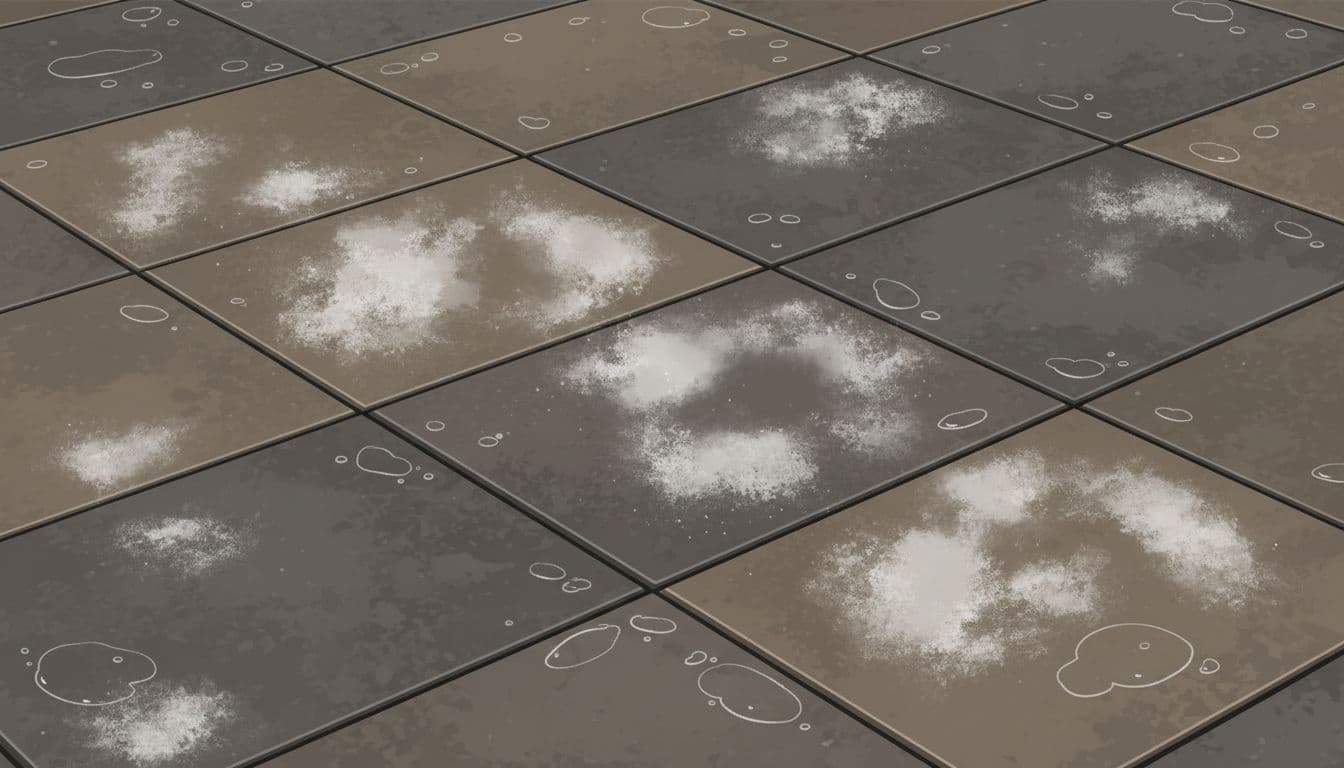
If the white film disappears when the pavers are wet and returns as they dry, I start with minerals before anything else.
Newer installations tend to show this more often. Fresh concrete products release more of these calcium-based materials early on, so the bloom can come and go for a while. The good news is that efflorescence is usually a surface issue and not a sign that your pavers are failing.
Other reasons pavers can look cloudy after a storm
Efflorescence is common, but it is not the only answer. I also see cloudy pavers caused by sealer whitening, sprinkler residue, polymeric haze from installation, and leftover dust sitting on the surface.
This quick side-by-side check helps me separate one problem from another:
| Cause | What it looks like | Common clue |
|---|---|---|
| Efflorescence | Powdery, chalky film | Hides when wet, returns while drying |
| Sealer blushing | Milky or cloudy patches under the finish | Started after sealing or after rain hit too soon |
| Hard water residue | White spots or streaks | Strongest near sprinklers or runoff |
| Polymeric haze | Film or residue on paver surface | Usually appears after polymeric sand installation |
| Sand or dust residue | Loose, dusty film on top | Rubs off more easily than mineral bloom |
Sealer blushing is one that fools a lot of people. If a paver sealer was applied before the stones were fully dry, or if humidity was high during application, trapped moisture can get locked beneath the coating. Then, when rain comes along, the surface turns milky and cloudy. That is a different issue than efflorescence sitting on top of the stone.
Hard water leaves a different pattern. I usually find it near sprinkler spray, downspouts, or edges where water runs and evaporates repeatedly. It looks more like spotting or thin crusty lines than a full dusty veil.
Then there is the issue of polymeric haze. If the polymeric sand was not rinsed off properly during the installation process, the fine binders can leave a cloudy residue. Similarly, simple jobsite dust can linger on the surface after a project is finished. Rain can redistribute these particles and make the pavers look pale for a short time. That kind of film usually brushes away much easier than true mineral haze.
The important part is this: not every white stain needs the same cleaner. Acid will not solve every cloudy patch, and on the wrong surface, it can do more harm than good.
How I tell the difference and what usually fixes it
I never start with the harshest product. I always begin with a few simple checks to identify the root cause of the white haze.
First, I wet a small area. If the haze vanishes when wet and returns as it dries, efflorescence moves higher on my list. Next, I rub the dry surface with a dark cloth. If powder transfers, I know the residue is on top of the paver. If the haze seems trapped under a glossy coat, I suspect a failed sealer. For new installations, keep in mind that some mineral deposits simply weather away over time with regular surface wetting from rain.
For light efflorescence, I start with dry brushing and a good rinse. If that is not enough, try a gentle vinegar dilution before moving to a stronger cleaning product specifically formulated for pavers. If you decide to use an acid-based cleaner, such as muriatic acid, always perform a test patch in an inconspicuous area first. This step is critical because not every paver reacts the same way, especially if the surface has already been sealed. Always follow manufacturer instructions closely to avoid damaging the joint sand or discoloring the stones.
I stay cautious with pressure washing. Used incorrectly, it can blast out joint sand and leave the surface looking pitted or rough.
Sealer haze is a different job. If moisture is trapped in or under the sealer, basic washing will not fix it. In these cases, you may need to apply a professional sealer stripper, allow the pavers to dry out fully, and then re-seal the area under the correct environmental conditions.
If sprinklers are feeding the problem, I adjust the spray pattern or reduce overspray. Otherwise, the white marks keep coming back like a coffee ring that gets redrawn every week.
When the haze covers a large area, returns after every storm, or showed up soon after sealing, I do not like guessing. That is the point where it makes sense to Get a Free Quote and have the surface checked by a professional before trying stronger chemicals.
Frequently Asked Questions
Is white haze on my pavers a sign that they are failing?
No, in most cases, a white haze is not a sign of structural damage or failure. It is usually a surface-level cosmetic issue caused by natural mineral deposits or external residue that can be cleaned or will naturally fade over time.
Can I just power wash the white haze away?
While power washing might temporarily remove the haze, it is often unnecessary and can be risky if done incorrectly. Using too much pressure can blast away the joint sand, leading to shifting pavers or creating pitted surfaces on the stones themselves.
How long will it take for efflorescence to stop appearing?
For new installations, efflorescence is most common during the initial curing phase. The mineral deposits will typically appear less frequently over time and often stop appearing entirely once the internal mineral content of the concrete and base materials stabilizes.
Should I apply a sealer to cover up the white haze?
It is never a good idea to seal over existing haze or moisture. If you apply a sealer over efflorescence or trapped moisture, you will lock the white film or “blushing” beneath the coating, making it much harder to clean and potentially ruining the finish of the pavers.
Final thoughts
That white film you notice after a rainstorm usually comes down to simple moisture and mineral movement rather than a ruined patio. In most cases, efflorescence is the primary culprit, and while the hazy appearance can be startling, it is rarely a sign of permanent damage.
It is helpful to keep the curing window of your project in mind, as new pavers are most likely to develop this cloudy haze during those first few months. Often, this mineral deposit will naturally fade or disappear on its own as the installation settles. My best advice remains the same: diagnose the source first, then clean second. When you can accurately distinguish between efflorescence, sealer blush, or hard water buildup, the fix becomes much simpler and the risk of damaging your stone drops significantly.