


You pull them, spray them, and pull them again, but a week later they return. Dealing with weeds between pavers can make a pristine driveway or patio look neglected very quickly.
I have seen homeowners blame the quality of the paving stones, the original installer, or even the local weather patterns. While those factors can play a role, the answer is usually much simpler. The weeds are not actually beating the structure of your hardscape; they are simply taking advantage of the joints. That is where the real story starts.
Key Takeaways
- Joints are the primary culprit: Weeds don’t sprout from beneath your pavers; they grow because seeds and organic debris accumulate in open, damp, or dirty joints.
- Surface-level maintenance is essential: Simply pulling weeds or using herbicides provides only temporary relief, as these methods fail to fill the gaps where new seeds land and germinate.
- The role of jointing sand: High-quality polymeric sand is vital for creating a hardened, erosion-resistant barrier that seals joints and prevents invasive growth.
- Look beyond the surface: Surrounding landscape factors, such as improper drainage, overhanging shade, or migrating mulch and soil, often provide the conditions that allow weed cycles to continue.
The problem usually starts in the joints, not under the pavers
When I look at a paver surface with weeds popping up everywhere, I don’t assume plants are pushing up from deep below. Most of the time, that is not what is happening. Seeds blow in, dust settles, and tiny bits of leaves break down, turning the paver joints into narrow little planting beds.
That buildup does not need much to support life. A little moisture, some sunlight, and enough organic debris provide the perfect environment for weeds to germinate. Once a seed finds a foothold in the paver joints, the resulting seedlings trap even more dirt. Then, the next generation of weeds has an even easier time taking root.
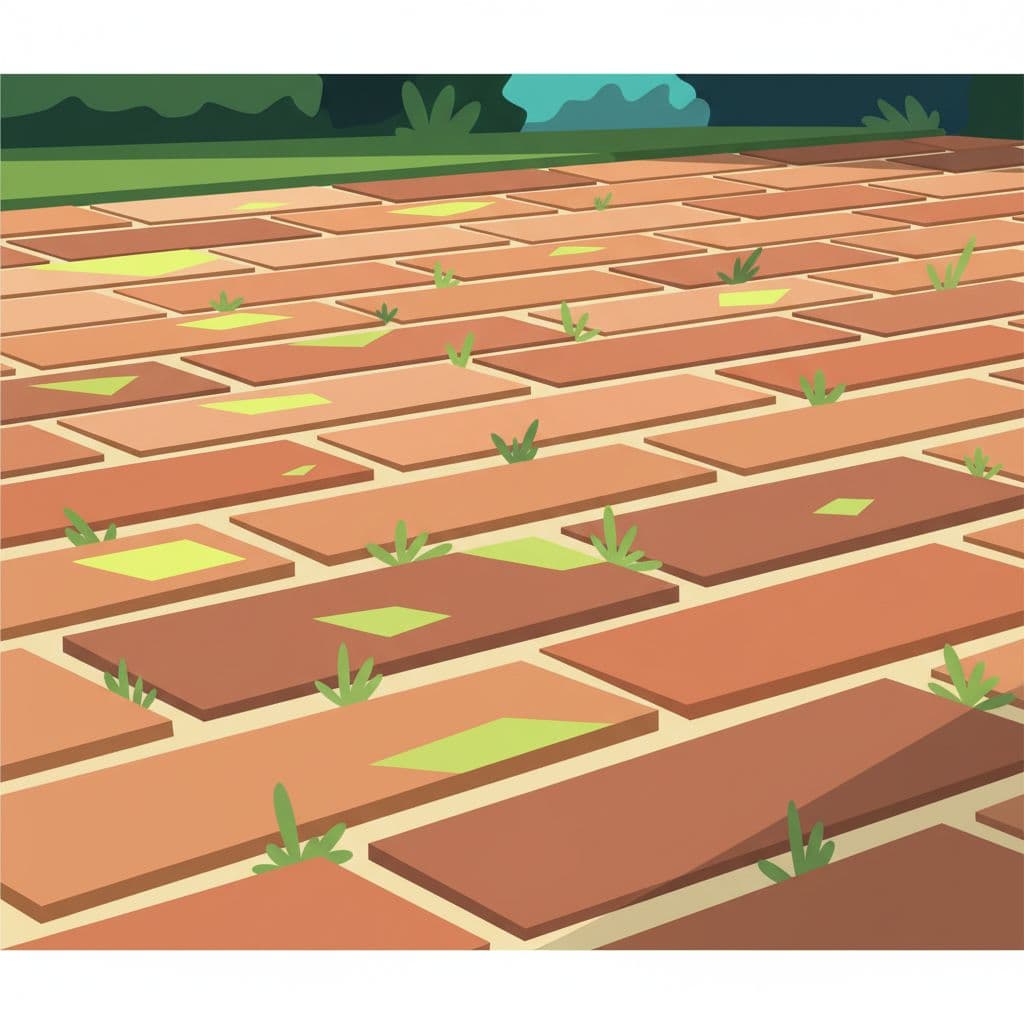
This is why a paver patio can look solid and still grow weeds. The brick itself is not the issue, and even if a professional installation included a layer of geotextile fabric beneath the base, it would not stop this surface-level growth. The weak spot is the gap between each unit.
I tell homeowners to think of those seams like the cracks in a sidewalk. If the seams stay tight, clean, and filled, weeds struggle to get a start. If the seams collect grime and stay damp, nature moves in.
Most weeds between pavers do not rise through the base. They sprout in debris sitting right in the joints.
That is also why the problem can show up even on a newer installation. It does not always take years for debris to accumulate. If nearby trees drop organic matter, mulch washes over, or irrigation keeps the surface wet, those gaps can start feeding weed growth sooner than you might expect.
Warm, humid areas make this worse. In Southwest Florida, for example, you do not get much of a true break from growth. Rain, heat, and constant sunlight keep the cycle going, allowing weeds to thrive in the spaces where they find moisture and nutrients.
Why pulling them out rarely fixes anything
Pulling weeds feels satisfying, and hand pulling is often the first instinct when you spot growth between your pavers. You grab a clump, the root comes out, and the patio looks better for a day. The trouble is, you usually remove the symptom rather than the setup that allowed it. If the joint still has loose debris, weed seeds land there again. If the sand is low, the seed settles deeper, and if the surface stays damp, it sprouts faster. You are resetting the clock, not solving the problem.
Effective weed removal is difficult because many weeds break off above the root, leaving part of the plant behind. A few days later, you see fresh green growth and wonder how it came back so fast. It did not travel; it never fully left.
Many homeowners turn to various methods to manage this cycle. A weed torch can be effective for quick surface clearing, but it does not address the root cause. You might also see suggestions for boiling water, which can kill surface growth but leaves the root system intact. While DIY mixtures featuring white vinegar, salt, baking soda, and dish soap act as a natural weed killer, they offer only temporary relief. Using vinegar alone is also common, but these solutions do not replace missing joint sand or stop more seeds from blowing in next week.
I have also seen well-meaning homeowners make the problem worse by using a pressure washer. It cleans the surface, sure, but it can blast out too much joint material. Then, the gaps are cleaner for a moment and more vulnerable to new growth right after.
Here is the pattern I see all the time:
| What you notice | What’s usually going on |
|---|---|
| Weeds return after hand-pulling | Roots stayed behind, or new seeds landed in the same open joint |
| Growth is worst in a few areas | Those spots hold more water, debris, or shade |
| Weeds show up after pressure washing | Joint sand washed out and left more room for seeds |
| One edge is always messy | Mulch, soil, or lawn clippings keep feeding the joints |
The takeaway is simple. If the conditions stay the same, the weeds do too.
Joint sand is doing more work than most people realize
Many homeowners assume that jointing sand is merely a filler used to occupy space between stones. In reality, it plays a critical role in the structural integrity of your hardscape. It locks the pavers together to limit shifting and creates a barrier that prevents seeds from settling deep into the gaps. Beneath these joints, the bedding sand serves as a stable base, but the material between the pavers is your first line of defense.
When this material disappears, the paver joints become vulnerable. This decline is often subtle; the surface may appear uniform from a distance, but the joints are actually low, uneven, or partially empty.
Loss of material happens for several reasons. Heavy rain can wash it away, ants can displace it, and routine traffic or aggressive pressure washing can strip it out quickly. Once the level of the material drops, organic matter accumulates. What should be a solid seam turns into a shallow trough that traps dust and weed seeds.
This is where polymeric sand provides a significant advantage. When applied during a professional installation, polymeric sand hardens to resist erosion much better than standard loose options. While it does not make weeds impossible, it makes the gaps far less inviting to invasive growth.
The effectiveness of this barrier depends entirely on proper technique. If the paver joints are not thoroughly cleaned before you apply the new material, or if the wrong type of jointing sand is used, the results will be short-lived. I often see patios where someone simply topped off dirty joints and hoped for the best, but that approach rarely lasts.
A high-quality polymeric sand works much like caulk in a window frame. If the seal remains intact, debris and moisture stay out. If that seal breaks, the gap becomes an open invitation for weeds to take root.
The area around the pavers can feed the problem
Sometimes the paver surface is not the main culprit. The area around it is.
If a flower bed sits higher than the patio, soil can wash into the joints during rain. If mulch drifts over the edge, it breaks down and adds organic matter. If your sprinklers hit the same section every morning, that spot stays damp enough for seeds to thrive.
Shade matters too. A fully shaded walkway does not dry as fast. Add a few overhanging branches, and you have moisture plus leaf litter. That is basically a welcome mat for unwanted plants.
I also pay attention to drainage. If water puddles on part of the driveway or along a pool deck, that section usually grows more than the rest. Pavers do not need standing water to look bad. They only need repeated moisture in the same joints. When you prioritize proper drainage, you help to prevent weed growth in these vulnerable spots.
Lawn care habits can add to it as well. Grass clippings, blown leaves, and edging debris all end up somewhere. Too often, that somewhere is between your paving stones. Consistent maintenance of the surrounding landscape is essential to keep this debris from settling into the gaps.
This is why one section of your patio stones looks clean while another turns green every month. The surface tells you what is happening around it. The weeds are often pointing to a pattern, not a random nuisance.
What actually keeps weeds between pavers under control
If I want the fix to last, I do not start by spraying an herbicide. I start with the joints.
First, you must remove weeds and clean out the organic buildup. That means getting rid of loose debris, old roots, and anything sitting in the gaps. If the surface is pressure washed, use a fan nozzle and proceed carefully so more joint material is not stripped away than necessary. For those looking for natural weed removal alternatives, you can scrub the gaps with white vinegar or a mixture of salt and water, though salt is highly effective for long-term prevention.
Next, refill the joints properly. If the pavers are stable and the joints are in good shape, re-sanding may be enough. However, if the surface has recurring washout, polymeric sand is often the better move because it hardens to resist erosion. This re-sanding process is vital, as high-quality polymeric sand locks the stones together. Once the re-sanding is complete, the surface is much more resilient.
After that, look at the surrounding conditions. Redirect downspouts if they are dumping onto the pavers. Adjust irrigation heads that overspray, as excess moisture will only encourage new growth. Keep mulch and soil from migrating onto the edge. Trim back plants that trap shade and debris. You can also sprinkle a little salt around the perimeter edges to discourage regrowth.
Applying a paver sealer can help too, but only after the surface is clean and the joints are right. A high-quality paver sealer reduces water penetration and slows down staining. While it is not a magic shield, a paver sealer supports the work underneath by helping hold the joint material in place.
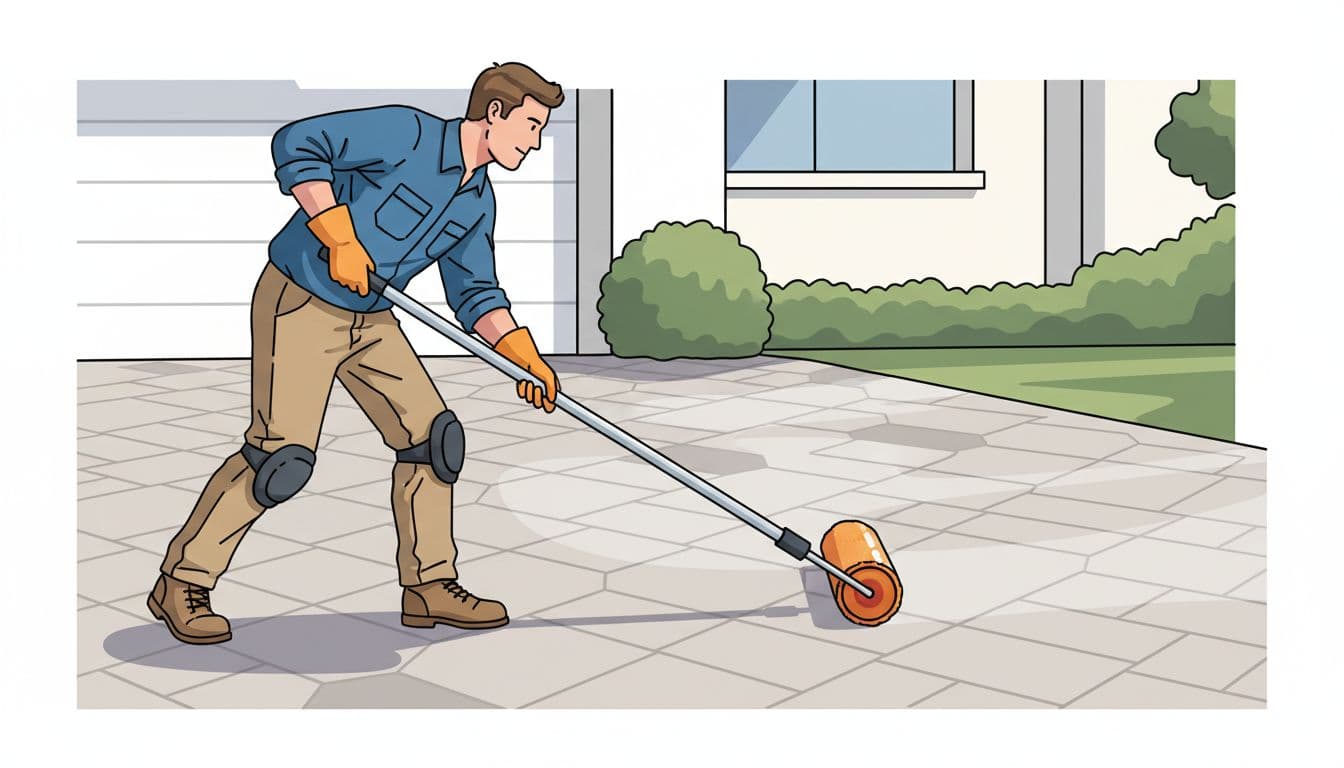
Maintenance still matters. Even a well-installed paver surface benefits from routine sweeping and occasional inspection. Let debris sit long enough, and the cycle starts again. Adding a touch of baking soda or a light dusting of salt in the crevices can sometimes disrupt the pH level enough to stop seeds from germinating between your regular maintenance visits.
When I stop treating weeds and start looking for repair issues
If weeds keep returning in the same places after cleanup, I start checking for something bigger. If you find yourself relying on herbicide too often, loose pavers, low joints, standing water, and edge failure may be turning a weed problem into a structural repair problem.
That is when patch fixes get expensive. You spend money on cleaning, but the surface still invites regrowth because the structural integrity is compromised.
If you are seeing repeat growth along with shifting, sinking, or washout, it is smart to have the surface evaluated. That is a good time to Get a Free Quote and find out whether the issue is simple maintenance or a deeper paver repair.
Frequently Asked Questions
Can I use household items like vinegar or salt to kill weeds between pavers?
Yes, these can effectively kill existing surface growth, but they are only temporary solutions. They do not address the underlying issue of hollow joints that continue to collect debris and trap new seeds.
Why does pressure washing sometimes make the weed problem worse?
While pressure washing cleans the surface, aggressive use often strips away the existing jointing sand. This leaves the gaps deeper and more vulnerable, creating an ideal environment for new weeds to take root immediately after the cleaning.
How often should I re-sand my paver joints?
There is no set schedule, but you should inspect your joints annually or whenever you notice sand levels dropping. If you see visible gaps or loose stones, it is time to clean the joints and refresh them with polymeric sand to maintain a protective seal.
Does geotextile fabric beneath the pavers stop weeds?
No, geotextile fabric is designed to stabilize the base and prevent soil migration, but it cannot stop seeds from blowing into the surface joints from above. Weed growth between pavers is almost exclusively a surface-level issue rather than a structural one originating from below the base.
Conclusion
Weeds do not keep coming back because brick pavers somehow attract them. They return because the gaps between your stones provide exactly what they need: open space, trapped organic debris, and moisture.
Once you address the root cause rather than just trimming the green tops, the pattern changes. By prioritizing the health of your paver joints, you can finally put an end to the cycle. Using high-quality polymeric sand to stabilize the area and committing to a consistent maintenance routine will do far more for your curb appeal than another exhausting round of pulling. That is how managing weeds between pavers stops feeling like a never-ending chore and starts feeling like a permanent win for your landscape.