


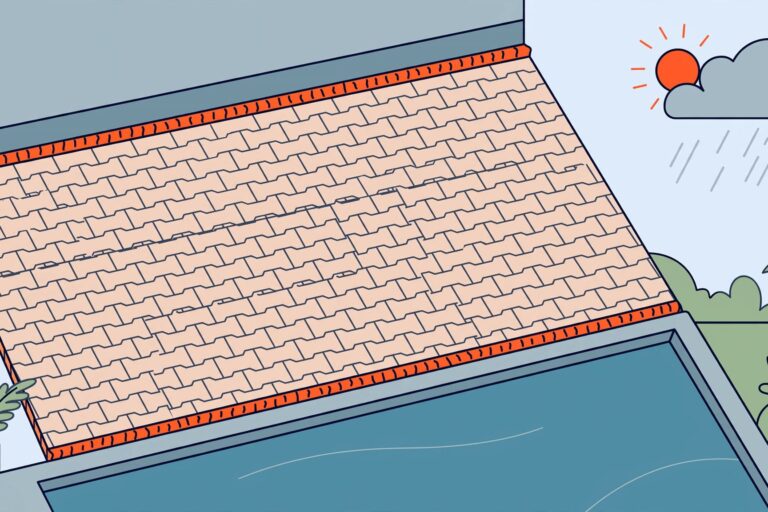
Paver patio expansion joints: Florida placement guide
An opening beside your pool deck doesn’t always mean the patio needs repair. When a homeowner spots one, I first check how the surface was installed and what sits beside it.
After more than 20 years working with Florida pavers, I’ve seen heat, heavy rain, and weak perimeter support cause problems that look alike. The right repair starts with the whole installation, so let’s distinguish ordinary paver joints from areas that need independent movement.
Key Takeaways
- Sand-set pavers form an interlocking system, so ordinary joints between pavers are not the same as concrete expansion or isolation joints.
- The right movement detail depends on how the patio was installed and what it meets, including foundations, pool coping, steps, and equipment pads.
- In Florida, spreading borders, rocking pavers, and low spots often point to weak edge restraints, washed-out support, or drainage problems—not thermal expansion alone.
- Match joint material to its purpose: use compatible sand between pavers and specified compressible filler or sealant where a designed concrete separation joint requires it.
- Before approving repairs, ask how the contractor will address the base, drainage, edge restraints, and any existing concrete joints.
Does every patio need concrete-style movement joints?
A patio made of individual pavers behaves differently than concrete pavement or a slab on grade. That difference should guide the installation and any repair.
Sand-set pavers work as an interlocking system
Most conventional interlocking concrete patios have individual pavers over bedding sand, a compacted aggregate base, and prepared soil. Joint sand and perimeter restraints help hold that surface together.
The Concrete Masonry & Hardscapes Association’s interlocking pavement application guide describes this pavement system and its installation details.
I don’t apply a concrete slab joint layout to a sand-set patio. Ordinary joints already divide the surface into separate units. Their width and fill material must match the paver manufacturer’s requirements, rather than an arbitrary joint spacing rule borrowed from concrete work.
Pavers installed over concrete need another approach
Pavers bonded with mortar over a concrete slab need different detailing. Movement in concrete slabs can affect the finished surface above them, particularly where the finish bridges an existing movement joint.
Before recommending work, I ask whether the pavers are sand-set, mortar-set, or installed over another base. That answer changes the job.
A bonded installation needs expansion joints coordinated with the supporting slab and the setting-material requirements. Natural stone and porcelain may also have different bedding, thickness, and joint specifications. A detail that works for concrete brick pavers isn’t automatically right for every patio material.
Understand the different jobs these joints perform
Homeowners often use “expansion joint” for every visible line in an outdoor surface. I understand the confusion, but the materials and repair methods aren’t interchangeable.
Here are the main differences.
| Joint type | Where it belongs | Main purpose |
|---|---|---|
| Paver joint | Between individual pavers | Holds sand or other joint-fill material and supports interlock |
| Contraction or control joints | Within a concrete slab | Creates a planned location for shrinkage cracking |
| Isolation joints | Between concrete and adjoining elements, as detailed | Separates elements so they can move independently |
The National Ready Mixed Concrete Association’s guide to concrete slab joints explains how contraction joints create weakened planes that help control where cracks occur.
Concrete changes dimensions as it dries and with moisture and temperature changes. Drying shrinkage can cause cracking, and control joints provide a planned location for that cracking.
Guidance from the American Concrete Institute addresses concrete construction, not a prescribed layout for every paver patio. For a sidewalk slab, joint spacing and load transfer depend on the design, so joints aren’t automatically placed at regular intervals.
A sawcut in a concrete patio and a sand-filled gap between pavers have different jobs. People may call separation joints expansion joints, but their location and details depend on the adjoining elements.
I want you to know which joint you’re looking at before buying sand, grout, or sealant.
Where separation matters around Florida homes
Transitions deserve close attention. They’re where an interlocking patio meets a structure that doesn’t move with it.
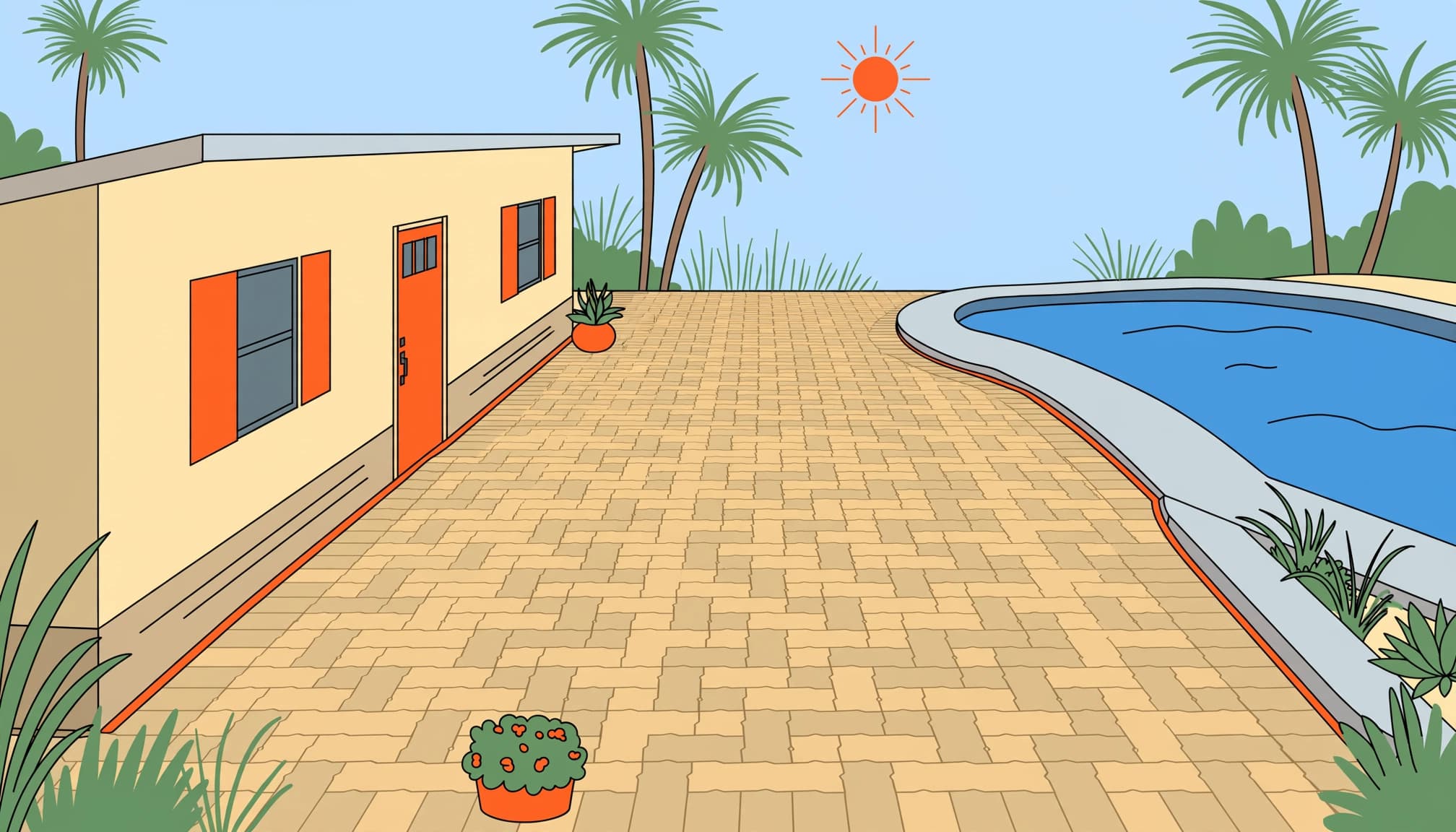
House foundations, columns, and equipment pads
I check patio edges beside foundations, steps, columns, and concrete equipment pads. The adjoining construction, support conditions, and installation method determine the right separation detail.
Don’t assume every perimeter gap should be packed with mortar. A rigid connection can restrict movement where the design calls for separation.
Pool equipment pads deserve attention because disturbed backfill can settle independently of the surrounding patio. I check whether the pad is level and nearby pavers are rocking. Resetting the pavers won’t solve a pad that keeps settling.
Pool coping, deck transitions, and screen enclosures
Pool coping and the surrounding deck can have different support conditions. Where concrete deck sections meet coping or another fixed element, preserve any designed isolation joints and use the specified expansion material.
For sand-set pavers beside coping, follow the specified edge and joint detail. Don’t replace an intentional separation with hard grout just because it looks cleaner.
Screen-enclosure footings, drainage channels, and steps also create transitions that need planning. I inspect their support and drainage before changing the surrounding surface.
If movement appears around your pool, our pool deck paver repair services address uneven units and joint condition. Repairs still need to account for coping, footings, and nearby concrete movement joints.
Joint sand and edge restraints work together
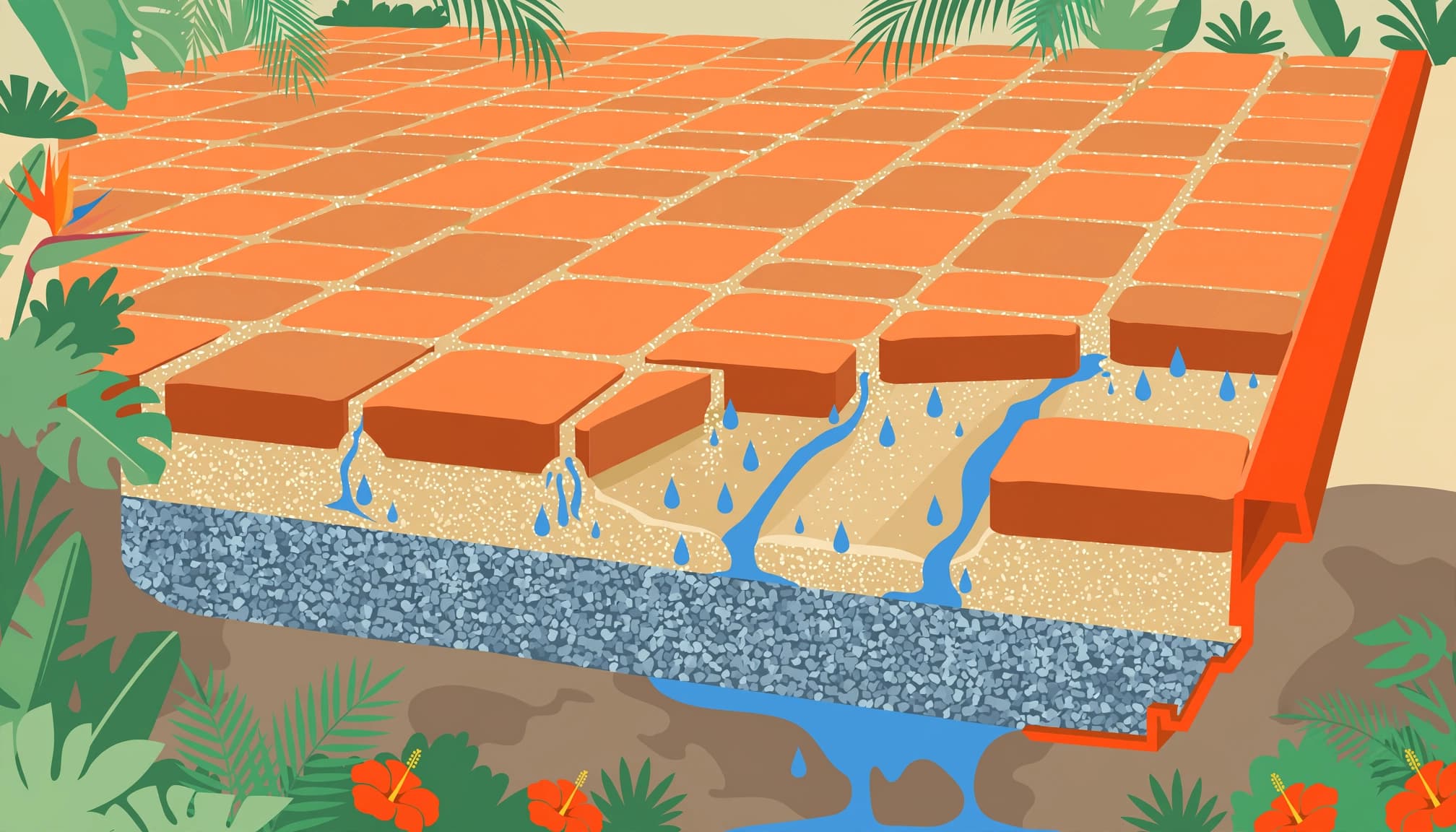
A durable patio needs support underneath, between the pavers, and around the outside. Leaving out one part puts more pressure on the others.
Polymeric sand stabilizes ordinary paver joints
I often recommend polymeric sand for structurally sound Florida patios when the product suits the installation. It helps resist washout and limits spaces where weeds and ants can become a nuisance.
But polymeric sand isn’t expansion-joint filler. It’s made for compatible joints between paving units, not for replacing a designed isolation joint.
Joint width, depth, surface dryness, and activation all matter. Dust left on the paver faces can create haze after watering.
Our comparison of polymeric sand versus regular sand explains the maintenance differences. Before choosing either, I check that the pavers are stable. Fresh sand can’t hold up a failed base.
Edge restraints prevent outward spreading
The outside row needs reliable lateral support. A decorative border alone doesn’t necessarily provide it.
CMHA’s guidance on paver edge restraints explains how restraints keep pavers together and maintain interlock. The restraint must have firm support and anchoring appropriate to the base system.
Plastic systems can suit curves, while aluminum systems often suit straight borders. Neither works properly when installed against loose soil or unsupported bedding sand.
I also check the base type. Conventional and permeable pavements need compatible restraint details, and natural stone may require a different approach. Quality workmanship means matching these parts to the actual project.
Florida rain can look like expansion damage
Southwest Florida homeowners usually face heavy rain, runoff, saturated soil, and settlement more often than repeated freeze-thaw movement. Heat matters, but I don’t blame every widening gap on thermal expansion.
An outside row that spreads after storms often points toward weak restraint or washed-out support. A low spot beside a downspout suggests drainage needs attention. Pavers that rock underfoot need an inspection below the surface.
A tidy-looking border can hide missing support underneath. Check the restraint and base before assuming gaps need expansion joints; the issue may be washed-out support or poor drainage.
I look at where water enters, where it collects, and where it leaves the patio. Roof runoff, irrigation, and pool splash-out can repeatedly soak the same edge.
Standard pavers aren’t automatically a permeable pavement. A true permeable system needs compatible joints, aggregate layers, and a planned drainage arrangement.
For a lasting repair, I may need to lift the affected pavers, correct drainage, rebuild and compact the support layers, and reset the border. CMHA’s paver construction guidance covers the coordinated installation process.
Sealing can protect the finished surface. It won’t restore missing base material or correct a sinking corner.
Choose joint materials for the actual installation
I choose joint material by its job, not simply by appearance. Sand, compressible filler, and flexible sealant serve different purposes.
For ordinary sand-set paver joints, use compatible jointing sand and follow its installation instructions. Some products require dry pavers and dry joints, so Florida’s afternoon storms can affect scheduling.
Where a concrete isolation-joint detail calls for compressible filler, use the specified expansion material, such as flexible foam, and follow its dimensions. If the detail also requires sealant, check the compatibility of joint sealants, along with surface preparation and installation depth.
Don’t assume a particular filler thickness suits every patio. The joint should match the expected movement and the surrounding construction.
I also avoid bridging a designed movement joint with mortar, adhesive, or a rigid patch. That can prevent the separate elements from moving as intended.
The Florida paver installation process includes base preparation, joint filling, and weather-sensitive finishing work. Those details deserve attention before the crew starts.
Afterward, keep cleaning controlled. Excessive pressure can remove joint sand or damage the surface. If cleaning empties the joints, the stable patio needs compatible replacement material before finishing or sealing.
What should a patio estimate explain?
When you’re comparing proposals, ask how the contractor will handle movement and support. “We’ll add expansion joints” isn’t enough detail for a paver project.
I recommend asking these questions:
- Will the pavers be sand-set or bonded, and how will existing concrete joints be handled?
- What restraint and separation details will be used beside the house, coping, steps, and equipment pads?
- How will the base, drainage, and joint-fill material work together?
A professional should be able to explain those choices in plain language. You should also know whether the quote includes lifting settled areas, repairing the base, and correcting runoff.
I don’t recommend cutting extra lines across a sand-set patio simply because someone suggests regular expansion-joint spacing. First establish whether there’s a concrete slab underneath and whether its joints affect the installation.
For repairs, ask what caused the movement and what the work will change. Repeatedly topping up sand costs money without addressing a spreading border or washed-out base.
That explanation helps you compare workmanship, not only the price at the bottom of the estimate.
Frequently Asked Questions
Do sand-set paver patios need expansion joints?
Not in the same way a concrete slab does: the individual pavers and their joints form an interlocking system. Separation may still be needed where the patio meets a rigid structure, depending on the installation and specified detail.
Can I fill a gap beside my pool coping with polymeric sand?
Polymeric sand is intended for compatible joints between paving units, not as filler for a designed isolation joint. Check the detail for the coping and deck before choosing a material.
Why are gaps opening along the edge of my patio?
A spreading outside row can indicate a weak or unsupported edge restraint, while washout and poor drainage can undermine the base. Inspect the support and water flow before adding sand or cutting new joints.
Should a contractor cut expansion joints across my sand-set patio?
Not just because concrete slabs use planned joints; first confirm whether there is a slab beneath the pavers and how its joints affect the installation. A repair should address the actual movement and support conditions.
Protect the patio by fixing the right joint
Paver patio expansion joints matter where an installation needs independent movement, especially beside rigid structures. Ordinary paver joints, edge restraints, and drainage still have their own jobs.
I want your patio to stay attractive and dependable, with repairs that address the cause rather than cover the symptoms.
If you’re seeing open borders, loose pavers, or movement near your pool coping, Get a Free Quote for a consultation and project estimate. A proper inspection can identify whether you need joint maintenance, a separation detail, or support rebuilt underneath.