



Few things make a clean driveway look tired faster than black streaks on pavers. You wash the car, tidy the yard, step back, and there they are.
I don’t panic when I see them because most tire marks on driveway pavers are simply surface stains rather than permanent damage. These marks are often caused by hot tires transferring rubber residue onto concrete pavers, which is a common occurrence after a long drive or on a particularly sunny day. The trick is not brute force. It is using the right cleaner, the right brush, and a little patience.
Here is how I handle it without making the driveway look worse.
Key Takeaways
- Identify the stain: Before cleaning, verify the mark is rubber by rubbing with soap; if it smears, it is likely tire residue rather than oil or rust.
- Start with a gentle approach: Avoid aggressive methods initially by using a stiff nylon brush and a mild degreaser to lift surface rubber without damaging the stone.
- Protect your joints: When using a pressure washer, keep the nozzle at a distance and avoid high-pressure, direct streams to prevent stripping away the vital joint sand.
- Avoid harsh chemicals: Skip wire brushes and strong acids, which can dull your paver color, alter the finish, or damage the protective sealer.
- Apply a quality sealer: Maintaining a high-quality paver sealer helps prevent rubber from penetrating deep into the stone, making future tire marks much easier to remove.
I start by making sure it’s really a tire mark
Not every dark spot on interlocking pavers comes from tires. Some stains are oil, some are mildew, and some are plain old dirt that settled into the surface texture.
Rubber marks usually look like black or gray scuffs on the surface. I see them most often where a car turns, brakes, or backs out with the wheel cranked. This is often caused by hot tire pickup, where the heat from the rubber causes plasticizer migration from the tire into the stone. Hot weather makes these marks show up faster, because warm rubber softens and sticks more easily to the surface.
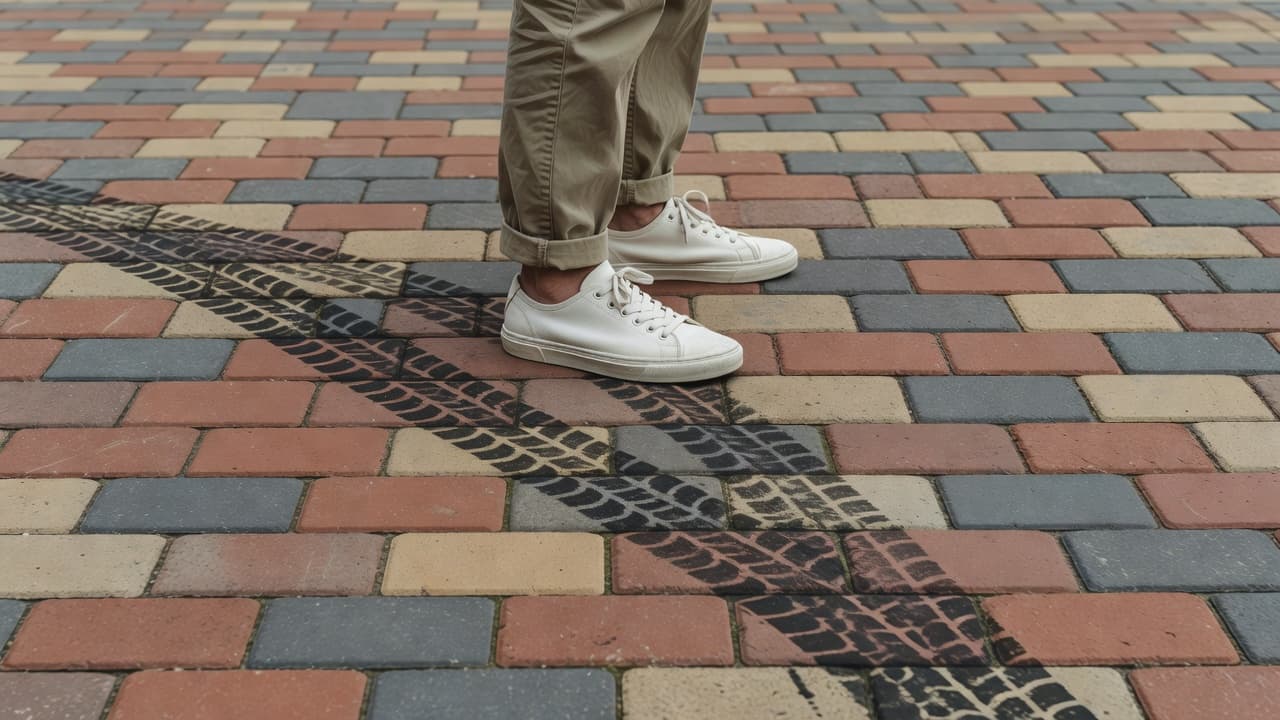
If I am not sure what I am looking at, I do a quick test. I wet the area and rub it with a little dish soap on a rag. If the mark smears slightly or lightens, it is usually rubber. If it stays greasy, rusty, or green, I know I am dealing with something else.
I also look at the paver sealer, if the stones have been treated. High quality paver sealer usually helps release tire scuffs more easily. Conversely, old or faded sealer can act like a sponge, allowing the rubber to penetrate deeper into the material.
That matters, because my cleaning plan depends on the surface. I want to lift the rubber without roughing up the pavers or stripping away the protective coating.
My step-by-step way to clean driveway pavers
I always start with the gentlest method that has a real shot at working. That is slower up front, but it saves me from fixing damage later.
Here is the routine I use:
- I sweep the area first, so grit does not scratch the pavers while I work.
- I wet the stain with plain water and let it sit for a minute.
- I mix warm water with a small amount of dish soap, a dedicated degreaser, or other specialized cleaning solutions designed for masonry.
- I begin scrubbing with a stiff nylon brush, as a wire brush can damage the surface.
- I rinse well and check the mark after the pavers dry a bit.
- If the stain is still there, I repeat the scrubbing process before I move to pressure washing.
That first round handles a lot more than people expect. Rubber often sits on the top layer, so it does not need anything dramatic. It needs friction, cleaner, and time. Because friction is the key to lifting the rubber, I work in small circles and stay focused on the mark. I do not flood the whole driveway with strong chemicals and hope for the best, as that approach wastes product and can leave patchy spots.
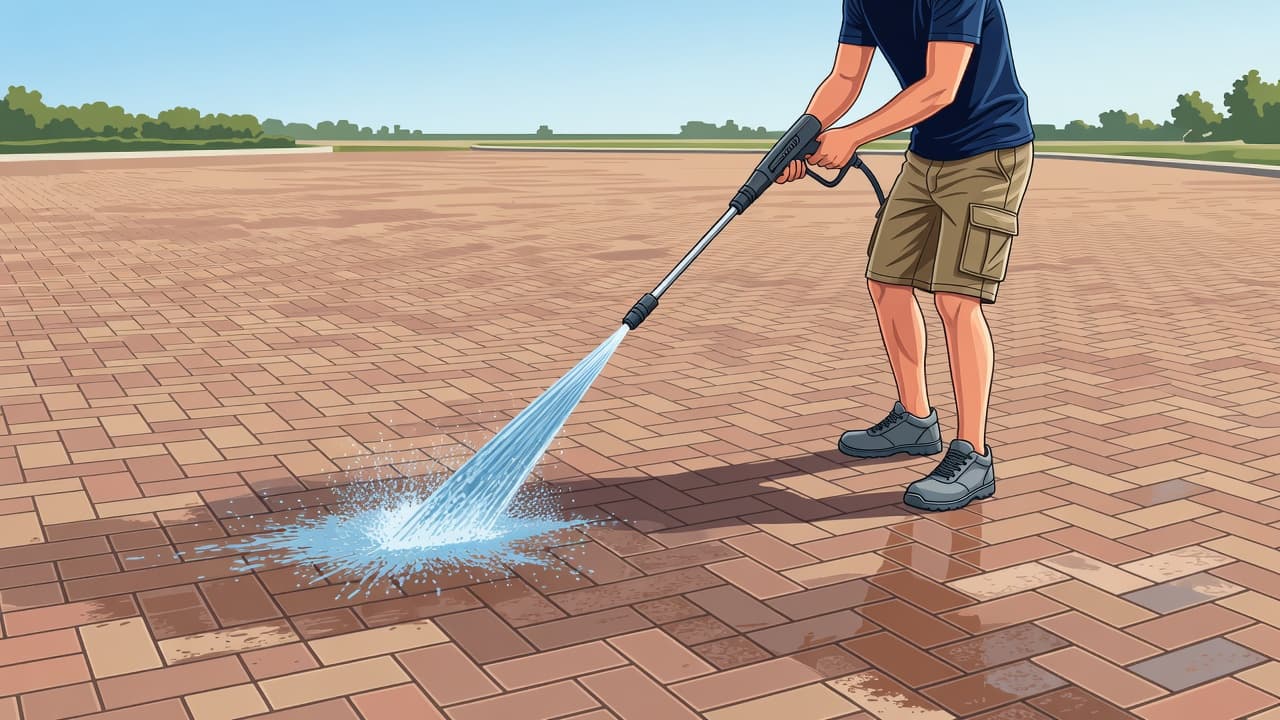
If scrubbing does not get it done, I bring in a pressure washer, but I treat it like a scalpel rather than a sledgehammer. Tire tracks are much easier to remove when the surface is cool, so I prefer working in the shade. I use a fan tip, keep the wand moving, and hold it far enough back that I am not carving lines into the stone. I also avoid blasting straight down into the joints. Note that high moisture levels or high humidity can slow down the drying time during your inspection, so keep an eye on the weather.
My goal is to remove the rubber, not wash out the joint sand.
That is the part people skip. You can clean the mark and still create a new problem if you strip out sand between the pavers. Once that happens, the surface can loosen up, weeds can move in, and the repair bill gets bigger.
I never use a metal brush on brick pavers. I also stay away from harsh acid for rubber marks. Acid has its place on some stains, but tire scuffs usually do not need it. Too much chemical strength can dull the color or mess with the finish.
If the stain is stubborn, I let the cleaner dwell a little longer and try again. Slow and steady wins this one. Tire marks on driveway pavers can be annoying, but they usually give up before the pavers do.
What I avoid, and when I stop DIY
There are a few mistakes I avoid now. I do not scrub with steel, I do not use random cleaners from the garage shelf, and I do not put the pressure washer nozzle two inches from the paver face. That is how a simple stain turns into permanent damage.
I also avoid cleaning during the hottest part of the day. Soap and cleaner dry too fast on hot pavers, leaving me to fight residue along with the tire marks.
If the driveway looks dull, blotchy, or hard to clean, the surface may need more than spot treatment. When that happens, I consider a full restoration and applying a high-quality paver sealer. Proper surface preparation is the most vital step before applying any protection, whether you choose a water-based acrylic sealer, an epoxy coating, or a penetrating sealer. Always respect the curing process and the total cure time of these products, as this is essential to prevent future damage from hot tires on concrete pavers. A professional finish makes future maintenance much easier.
If you would rather skip the trial and error, this is the point where I suggest bringing in a pro. A skilled contractor can tell the difference between a simple rubber mark and a surface that needs professional restoration. If you want another set of eyes on it, you can Get a Free Quote and have the driveway inspected before the marks settle in deeper.
The biggest thing I keep in mind is that not every stain needs maximum force. Most of the time, a careful method beats an aggressive one.
Frequently Asked Questions
Why do hot tires leave marks on my pavers?
Hot tires leave marks because the heat causes the rubber to soften and release plasticizers, which then stick to the surface of the pavers. This is especially common during warm weather or after a long drive when the tires are at their highest temperature.
Can I use a wire brush to scrub off stubborn tire marks?
No, you should never use a wire or metal brush on paver surfaces. These tools can scratch and permanently scar the texture of the stones, creating more damage than the rubber mark itself; always stick to a stiff nylon brush.
Is it necessary to reseal my driveway after cleaning it?
If your sealer is old, faded, or was stripped away during the cleaning process, applying a fresh coat is highly recommended. A good sealer acts as a protective barrier that prevents rubber from penetrating the stone, making subsequent cleanings much simpler and faster.
Should I use a pressure washer for every tire mark?
You should reserve the pressure washer for marks that do not respond to manual scrubbing with a degreaser. When you do use one, it is important to treat it like a precise tool rather than a sledgehammer to avoid damaging the joint sand or the surface of the pavers.
Conclusion
Those black streaks look worse than they are. When I remove tire marks from driveway pavers, I start gentle, clean in small sections, and only step up to pressure washing when the stain asks for it. Using a quality degreaser early in the process often removes these stubborn marks without the need for harsh chemicals.
Remember that respecting the curing process of your pavers and sealers is the best long-term defense against future stains. That careful approach protects the pavers, the joint sand, and the finish. A clean driveway should not come at the cost of a damaged one, and following these steps will keep your tire marks driveway pavers maintenance simple and effective for years to come.