


Water is honest. It goes straight to the lowest point, every time.
If your paver driveway drainage seems fine until a storm rolls through, the puddles are telling you where the system is failing. In most cases, the problem comes down to slope, settling, or water arriving from somewhere it should not. Effective water management is essential for preventing structural damage and ensuring the longevity of your driveway over time.
Once I know which one I am looking at, the repair stops being guesswork. That is where it makes sense to start.
Key Takeaways
- Puddles indicate underlying issues: Standing water consistently appearing in the same spot after rain is a clear sign of poor driveway slope, a settled base, or external runoff rather than a problem with the pavers themselves.
- Structure is primary: A paver driveway functions as a system where the base layer must be well-compacted and correctly graded to guide water away; surface pavers simply mirror the health of the base beneath them.
- Identify the source: Effective repair starts by determining if the water is caused by gravity (incorrect pitch), structural failure (base settlement), or intrusion (downspouts or yard runoff), as each requires a different remedy.
- Permanent fixes vs. patches: Adding extra sand or cleaning the surface is ineffective for deep-rooted drainage issues; true resolution often requires lifting the pavers to rebuild the gravel base to the correct grade.
What a puddle on pavers usually means
A paver driveway shouldn’t hold water for long. A damp surface right after rain is normal, but a shallow puddle that sticks around hour after hour is not.
When I see water pooling on the surface, I don’t assume the pavers themselves are the issue. Even the highest quality concrete pavers will fail to shed water if the pitch of the driveway is incorrect. I always look at the shape of the driveway first. A driveway should guide water away with a gentle pitch. If it has a dip, even a small one, water will collect there like it found a bowl.
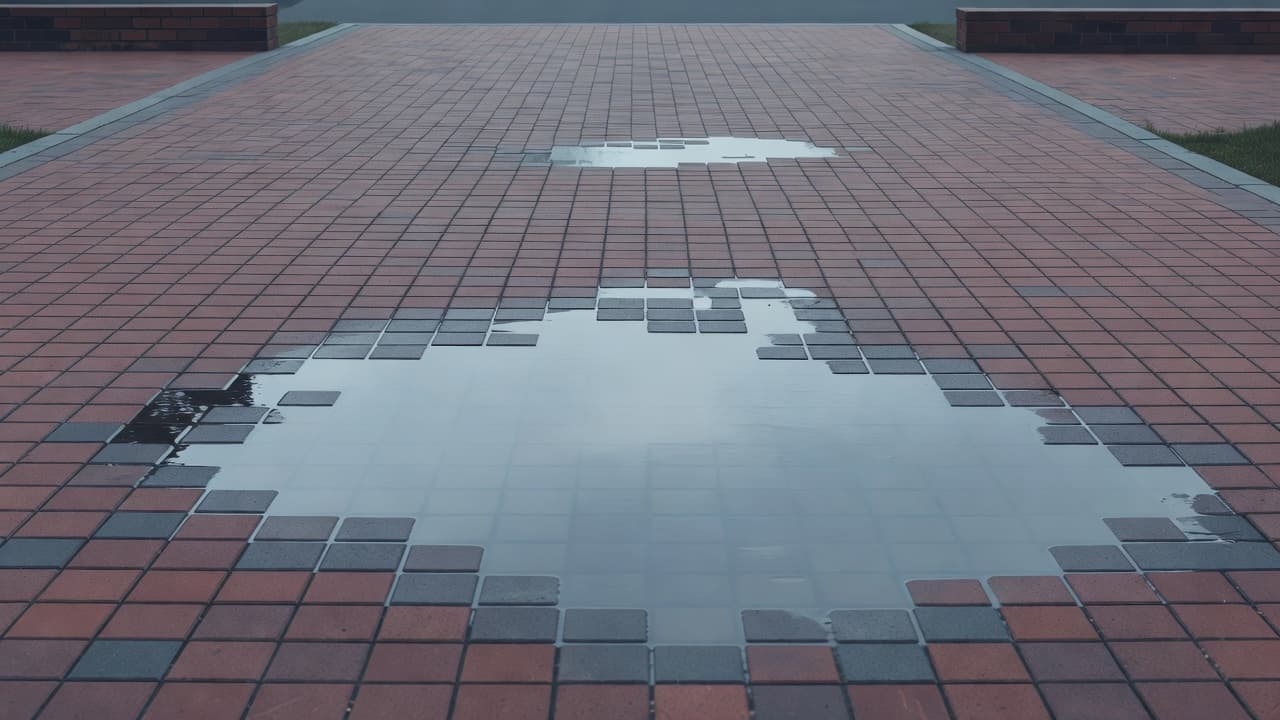
Sometimes the problem is obvious. You can see a low spot in the middle of the drive, near the garage, or where cars usually turn. Other times, the surface looks fine until rain hits it. That is common with settled bases. The drop may be slight, but water does not need much room to accumulate.
Another detail matters here. Not all water on pavers means bad installation. If a heavy storm dumps rain fast, you may see temporary pooling caused by excessive stormwater runoff that simply exceeds the drainage capacity of the area. That is one thing. Water that lingers after the rest of the driveway dries out is entirely different.
If the same spot holds water after every storm, the driveway has a drainage problem, not bad luck.
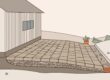
I also pay attention to where the puddle forms. Water near the garage can point to poor pitch away from the house. Water in the tire path often means base settlement. Water along one edge can mean runoff from the lawn, roof, or a failing border.
The puddle is the symptom. The shape under it is the cause.
How a paver driveway should shed water
A good paver driveway works like a system, not just a pile of brick on dirt. The pavers are only the top layer, and what matters most is the structural composition beneath them and the overall grade of the installation.
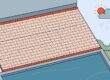
Water management typically relies on two specific processes: surface drainage, which directs runoff away from the driveway, and subsurface drainage, which manages percolation through the joints and into the ground below. While traditional systems rely on a sloped installation to shed water, modern permeable pavers are designed to allow water to pass directly through the joints into the layers beneath, reducing standing water issues significantly.
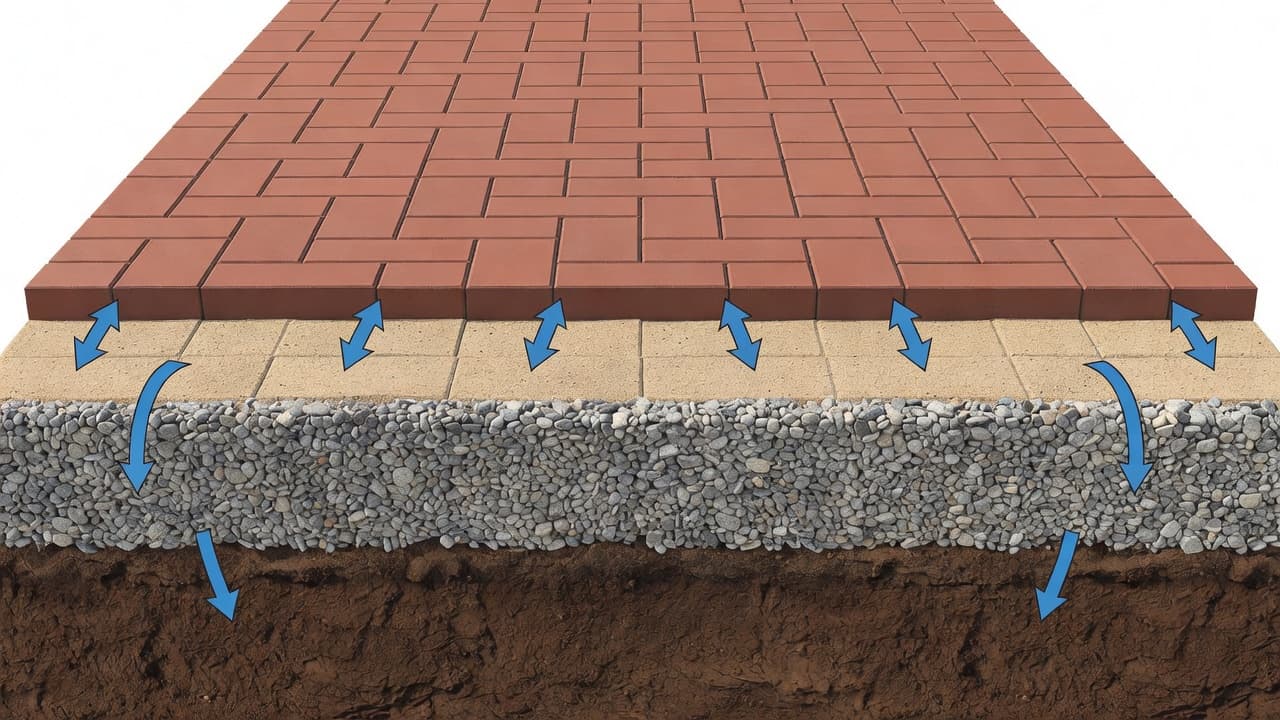
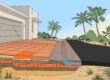
Under the pavers, there is usually a bedding layer of sand resting on a compacted gravel base. To maintain long-term stability, professionals often install a layer of geotextile fabric between the subgrade soil and this gravel base to prevent the layers from mixing. That base must be stable, well-compacted, and shaped to direct water effectively. If the base is uneven, the pavers above will mirror that problem. Even if the surface looks clean and well-laid, an improperly shaped base will still trap water.
This is where many homeowners get tripped up. Pavers are not a magic drain on their own. If the installer did not create the correct fall in both the base and the surface, the joints cannot compensate for the lack of gravity. Water will always seek the lowest point.
Sealer can confuse the picture as well. A sealed driveway often makes water bead more on top, which can make puddles easier to notice. However, sealer does not create a drainage issue by itself. If water is sitting in one area, there is almost always a low spot or an underlying path problem preventing proper flow.
I think of it like a shallow tray. If the tray is flat and slightly dipped, the water stays put. If the tray is tilted correctly, the water moves. A paver driveway is no different, as successful drainage is entirely dependent on a proper slope and the integrity of the layers beneath.
The common drainage problems hiding under the surface
Most driveway puddles trace back to a short list of causes. The trick is knowing which one you have, because the repair for each is different.
A surface that is too flat is one of the most common issues I see. It does not take much. A driveway can look level to the eye and still be wrong for drainage. If the pitch is too slight, or pitched the wrong direction, water slows down and stops.
Settlement is another big one. Over time, the base below the pavers can sink in spots. This often happens due to poor compaction, weak subsoil, heavy vehicle traffic, or age. In areas with high clay soil content, this base instability is especially common, as the soil expands and contracts, leading to uneven settling. Once the base drops, the pavers drop with it.
Then there is water coming from elsewhere. A downspout dumping onto the driveway, a yard that slopes toward it, or a neighboring slab sending runoff across the pavers can overload the surface. This excess water often accelerates soil erosion around the driveway edges, weakening the foundation. In those cases, the driveway may not be the only thing that needs attention.
This quick comparison shows how I separate one problem from another:
| Problem | What I usually see | Drainage solutions |
|---|---|---|
| Poor slope | Wide, shallow puddles after most storms | Regrade and relay affected area |
| Settled base | A dip in one section, often in tire paths | Lift pavers, rebuild base, reinstall |
| Runoff from roof or yard | Water enters from edge or near downspout | Redirect water with channel drains or grading |
| Edge failure | Pavers shift outward, water gathers along edge restraints | Reset edge restraint and affected pavers |
| Surface buildup or heavy sealer | Water beads longer but only in slight low spots | Clean surface, check grade, reseal correctly if needed |
The takeaway is simple. Standing water usually points to shape, support, or runoff, not the paver material itself.
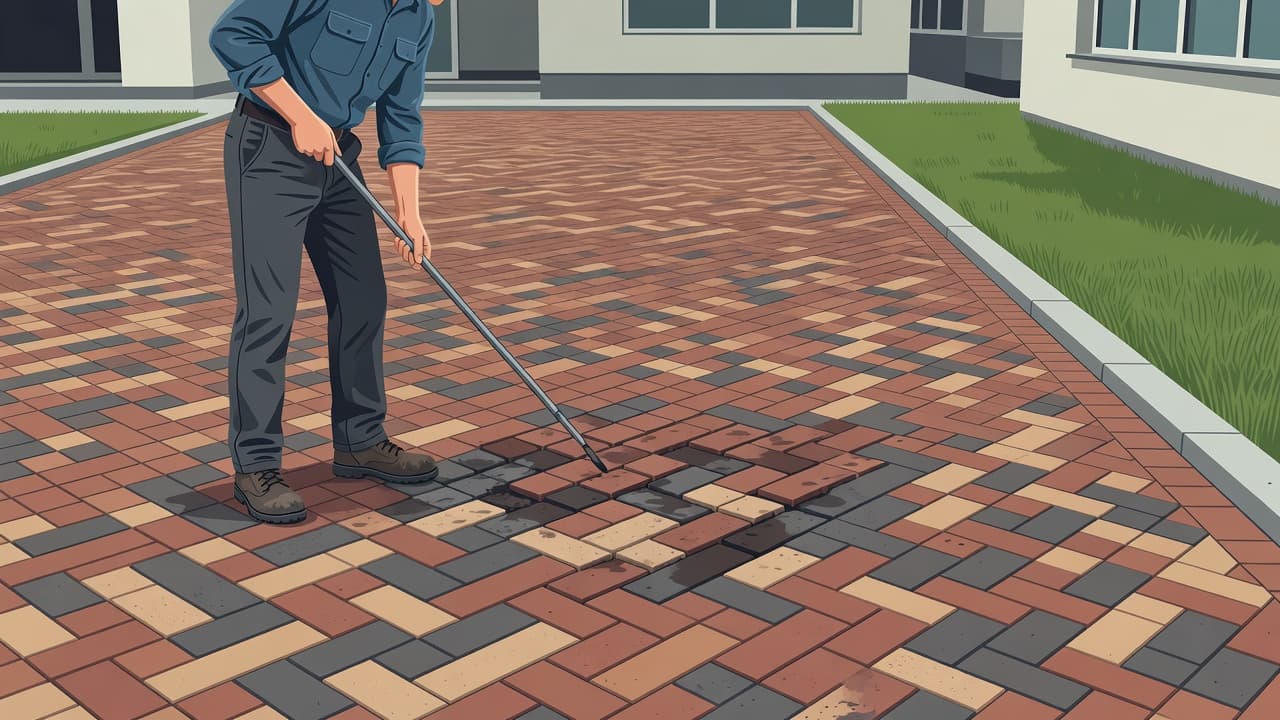
I have also seen clogged joints and neglected surfaces make drainage worse. Dirt, algae, and old sand can slow how water moves through the joints. That is rarely the root cause of a deep puddle, but it can add to the problem.
When the fix is simple, and when it isn’t
Some drainage issues are small enough to handle without major reconstruction. Others need pavers lifted and the base rebuilt. The hard part is telling the difference before money gets wasted.
If the problem is minor surface buildup, a proper cleaning may help. If the issue is water dumping from a downspout, rerouting that downspout or installing catch basins or a French drain system can make a big difference. If a film-heavy sealer is trapping water visually, stripping and resealing the right way may improve how the driveway behaves.
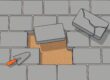
But if the puddle sits in the same depression every time it rains, cleaning won’t solve it. Neither will adding more joint sand. That is when I start thinking about lifting that area, correcting the base, and relaying the pavers to the right grade.
Low spots near the garage deserve extra attention. Water against the house is a bigger concern than a puddle near the street. The same goes for any area where runoff crosses a walkway or reaches a pool deck.
A proper repair might include regrading, rebuilding part of the base, or implementing advanced drainage solutions. For heavy runoff, we may install a channel drain, a robust trench drain system featuring HDPE channel drainage, or dry well solutions for water that cannot be sloped toward the street. The right fix depends on where the water starts, not only where it ends up.
If you are tired of guessing, it is smart to Get a Free Quote and have the driveway checked before the settled area spreads. Small dips tend to grow, not heal.
What I do not recommend is topping a low area with extra joint sand under a few loose pavers and calling it done. That almost never lasts. If the support below failed, the support has to be rebuilt.
How I inspect a wet driveway before I talk repair
I like to inspect drainage as close to a rain event as possible. That tells me more than a dry driveway ever will. Fresh water marks show where flow starts, where it slows, and where it stops.
First, I look at the puddle itself. Is it isolated, or part of a larger drainage path? Is it in a tire lane, near an edge, or at a transition point? Then I check the surrounding grades, especially the lawn, curb, downspouts, and any nearby hard surfaces.
After that, I check for movement. Loose pavers, widening joints, leaning edges, and sunken bands often tell me the base shifted. A straightedge or level helps confirm what the eye misses. When these sunken areas appear, it is a clear sign that the structural integrity of the driveway has been compromised. In a standard installation, the compacted gravel foundation should remain rigid. However, if I am inspecting permeable pavers, I have to look closer at the jointing material, as the criteria change significantly if the joints become clogged and prevent water from reaching the permeable base system beneath.
Here are the signs that usually point to a base problem instead of a simple surface issue:
- The same dip appears after every storm.
- The pavers feel uneven when I walk or drive over them.
- Water collects where the surface has also started to sink or shift.
I also ask one practical question: how long has this been happening? A new puddle matters more than an old one that has been unchanged for years. A sudden change can mean washout, erosion, or a developing failure under the surface.
That kind of inspection is what keeps a repair targeted. No guesswork, no patching the symptom while the real problem stays put.
Frequently Asked Questions
Can I fix a puddle by just adding more sand under the pavers?
No, that is only a temporary cosmetic fix that will fail quickly. If the base below has settled or the slope is incorrect, you must lift the pavers, properly re-compact the underlying base, and relay them to restore the correct grade.
Will sealing my driveway cause water to puddle?
Sealer does not cause drainage issues, but it can make existing puddles more noticeable by preventing water from soaking into the joints. If your driveway beads water and holds a puddle, the issue is a low spot or incorrect pitch, not the sealer itself.
Is it normal to see water on my pavers after a heavy storm?
A thin film of water that dries quickly is normal, but water that lingers for hours or days indicates a design or installation flaw. If the same area remains wet while the rest of the driveway is dry, you have a specific drainage problem that needs inspection.
How do I know if my driveway base has settled?
You can usually identify base settlement if you notice a consistent dip in a specific area, especially in the tire paths, or if the pavers feel loose and uneven underfoot. If these depressions appear alongside standing water, it is a strong indicator that the structural foundation has failed.
Conclusion
When a paver driveway holds water after rain, the surface usually points to a deeper issue. It may be a low spot, a settled base, or runoff coming from outside the driveway. Addressing these concerns is essential for effective stormwater management, as proper drainage protects your home foundation from moisture damage and erosion.
The strongest clue is consistency. If water keeps returning to the same place, the shape of the driveway needs attention. By resolving these drainage problems, you restore the curb appeal of your property and ensure the longevity of your investment.
A good-looking paver surface can still hide a drainage flaw. Once the grade and base are corrected, the puddles disappear. For those considering upgrades, installing permeable pavers offers an eco-friendly solution that encourages natural groundwater recharge and prevents future drainage headaches.