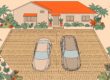


Backing into a busy Florida street is not a small inconvenience. For many narrow lots, a paver driveway turnaround is the practical answer, giving you a safe place to exit forward without paving the entire front yard.
I have worked on Southwest Florida paver projects for more than 20 years. A practical driveway design should address traffic flow, vehicle clearance, grading, and drainage first. If you’re connecting to an existing asphalt driveway approach, that tie-in also needs careful planning before selecting pavers or colors.
Key Takeaways
- A compact turnaround can make it safer to leave a narrow driveway facing forward.
- The right shape depends on your vehicle, garage location, property lines, and street access.
- Driveway pavers need proper excavation, compacted aggregate, solid edge restraints, and controlled drainage.
- Permeable pavers can help with ordinary rainfall, but they do not fix poor grading or high groundwater by themselves.
- Herringbone patterns and strong borders handle turning tires better than a decorative layout with weak edges.
Why a Turnaround Makes Sense on a Narrow Lot
A paver turnaround does not need to be a huge circle in the middle of your lawn. Unlike a full circular driveway, a compact extension beside the driveway can preserve usable yard space.
On many Florida properties, this layout gives you enough room to pull in, turn, and leave facing the road. That matters more when your home sits on a busy street, a curve, or a road with limited visibility.
It also helps if you have a long garage approach where backing out feels awkward every day.
A teardrop layout saves valuable yard space
A teardrop-shaped paver area can widen the driveway where the vehicle needs it most, then taper back toward the garage or street. This keeps the front yard from looking like one oversized parking lot and helps protect curb appeal.
I like this option when space is limited on both sides. A planted border can support the landscape design, but shrubs should stay clear of the vehicle path and sight lines.
A natural stone border can define the edge, provided it doesn’t create a sharp obstruction or block drainage.
Hammerhead turnarounds work for straight driveways
A hammerhead adds a cross-shaped section at the end or side of a long driveway. You pull in, back once, and leave forward.
This can work well when a circular turnaround won’t fit. Allow enough room for your vehicle’s turning radius, garage alignment, and property-line constraints.
The important part is planning for your actual vehicle, not the smallest car that might use the driveway.

Compact paver turnaround design for a narrow Florida home.
Start With Your Vehicle and Daily Traffic
The first question I ask is simple: what needs to turn here? A compact sedan, full-size pickup, SUV, work van, or boat trailer all need different space.
Your driveway design should follow vehicle dimensions, turning radius, mirror clearance, trailer tongue length, and nearby obstructions.
A small turnaround that looks good on paper can become frustrating if you have to climb a curb or cut across landscaping every time you leave.
Leave room for a real turning movement
A single-car turnaround pad may begin around 10 by 20 feet, but that is not a universal design rule. Many midsize vehicles need more width, especially near walls, hedges, mailbox posts, or parked cars.
Measure from the tire path to each obstruction, not just to the visible paver edge. Fixed features, including natural stone borders and landscape walls, can narrow the usable turning path.
Turning tires put heavy side pressure on pavers and edges. Choose the driveway material only after confirming the maneuvering envelope, expected load, and drainage conditions.
Think about guests, deliveries, and garage doors
Your everyday vehicle is only part of the picture. Delivery trucks may not use the turnaround, but their wheels can damage a tight apron if they cross it often.
Look at garage-door swing space, trash collection, guest parking, and future vehicle changes. A quality driveway design should work now and still make sense years later.
For a site visit, measurements, and a clear plan for your property, Get a Free Quote before you order materials or start excavation.
Build the Base for Vehicle Loads
Driveway pavers are only the visible top surface. Most driveway failures begin below them, where the soil was not prepared, the base was too shallow, or water moved through loose material.
The base layer carries much of the load and must handle turning, braking, parked vehicles, Florida rain, and site soil conditions. A paver driveway turnaround is tougher than a walkway.
Excavation and compaction cannot be skipped
Organic soil, roots, loose fill, and wet pockets need to come out before the aggregate base goes in. The finished depth depends on soil support, groundwater, drainage needs, paver thickness, and vehicle loads.
For a conventional concrete paver driveway, a compacted crushed stone base often falls in the 6 to 12-inch range. The paver and bedding layers add to that depth. Some homeowners call this compacted gravel, but the specified aggregate, lift thickness, and compaction method matter more than the label. A heavier vehicle, weak soil, wet area, or local requirement may call for more.
The base should be installed in controlled lifts and compacted as work continues. Proper paver installation includes excavation, lift-by-lift compaction, grade checks, and drainage planning. It isn’t simply placing pavers over loose soil.
Edge restraints lock the field together
Strong edge restraints keep outside pavers from moving outward when tires turn. Perimeter support is especially important where turning tires push outward, because joints can widen, pavers can spread, and the center of the turnaround can shift.
Bedding sand helps set the pavers to grade. It isn’t there to hide an uneven base. The same is true for joint sand, which helps interlock the surface but cannot repair failed soil below.

The strength of a paver turnaround comes from the full pavement system below.
Choose a Stable Paver Pattern
A narrow-lot driveway design must account for turning forces, vehicle clearance, and the shape of the available area. The laying pattern shouldn’t be based on color preference alone.
For a paver driveway turnaround, I usually recommend a laying pattern that interlocks in several directions and a border that frames the whole area.
A herringbone pattern handles turning tires well
A 45-degree or 90-degree herringbone pattern is a dependable choice for interlocking pavers. The layout helps distribute traffic forces across the field instead of letting rows shift in one direction.
Running bond can look clean on a narrow drive, but it needs solid edge support and careful placement. I wouldn’t use a simple pattern only because it costs less if the turnaround will see daily vehicle traffic.
Borders add definition and support
A contrasting soldier-course border can improve curb appeal and create a deliberate transition between the turnaround, house, and planting beds. A natural stone accent can also add texture, though its irregular edges and color variation may require more precise layout planning.
Border width and planting placement should support the landscape design without narrowing the turning envelope. Products such as unilock pavers and techo-bloc pavers offer different appearances, but the selected product must be rated for driveways. Brick pavers provide another material comparison, while natural stone may need extra attention around vehicle clearance.

Pattern direction, borders, and planting can make a narrow driveway feel more balanced.
Plan Drainage Before Picking Colors
Florida rain exposes weak driveway planning fast. Surface drainage should move water away from the house, garage, screen enclosure, neighboring property, and public drainage features through an approved path.
A low spot at the turnaround can hold water, soften the base, and eventually create rocking pavers or settlement.
Permeable pavers can help manage runoff
Permeable pavers have wider joints filled with washed angular aggregate instead of ordinary fine sand. Rain passes through the joints into open-graded stone below, where it can temporarily store and release water.
The UF/IFAS guidance on permeable pavement explains that these systems can reduce runoff while supporting vehicle and pedestrian traffic. The EPA’s overview of permeable pavements also describes how stormwater moves through the pavement into the ground below.
This system isn’t a cure for poor grading, saturated soil, or a high seasonal water table.
A proper design may need an underdrain, overflow route, or drainage improvement. Ordinary pavers with open-looking joints are not automatically a permeable pavement system.
Check local permits and right-of-way rules
Driveway expansions can require local review, especially near a swale, sidewalk, culvert, road apron, or public right-of-way. Check setbacks, lot coverage limits, roadside swales, sidewalk crossings, culvert requirements, and any HOA approval before expanding the turnaround.
A natural stone border, raised edge, or landscape feature must not dam runoff or redirect water onto a neighboring lot. Lee County, for example, requires residential driveways to maintain existing roadside drainage conveyance.
Call 811 before excavation. Irrigation, water, electric, cable, and drainage lines are often closer to the driveway than homeowners expect.
Why Pavers Beat a Solid Slab in Many Cases
Poured concrete and asphalt can provide a usable driveway, but pavers offer more flexibility when small sections settle or need repair. Individual units can often be lifted, the base corrected, and the same pavers reset. An asphalt driveway can be harder to reshape later, while heat and appearance may affect comfort and curb appeal.
Concrete pavers give you more control over color, texture, borders, and shape than a stamped concrete surface that can’t be lifted and reset after localized settlement. Brick pavers offer another comparison, while natural stone can create a higher-end look that coordinates with a patio, pool deck, or landscape feature. That coordination can improve curb appeal, though irregular natural stone pieces are less predictable for tight turning geometry.
A properly built paver driveway does cost more than simply laying pavers over loose ground. A concrete driveway may have a lower surface price, but comparing any driveway material alone can be misleading. Excavation, base preparation, drainage, and edge support matter more than surface costs, and none should be skipped.
For homeowners planning a full replacement or extension, paver driveway installation services can serve as a reference for design, installation, and repair questions across Southwest Florida.
Keep Florida Pavers Clean and Secure
Paver maintenance is simple when it is handled before small issues grow. Sweep debris, watch for missing joint material, and inspect the turnout after heavy rain.
Leaves, mulch, sand, and grass clippings can collect in joints. Natural stone borders can weather, stain, or hold organic debris differently from concrete pavers, so they may need a separate cleaning approach.
Seal only when the surface needs it
Sealing is optional, not a substitute for good installation. A compatible sealer can help protect against stains and weathering, but sealant application is product-specific and won’t correct failed joints, poor drainage, or a weak base.
Some driveways may need attention around every two years, while others can go longer. I recommend inspecting the surface instead of using one fixed schedule for every home.
Watch for signs below the surface
Loose pavers, widening joints, low areas, and water that stays after a normal storm are warnings. Resetting one paver may help the appearance, but recurring movement usually points to a base or drainage issue.
Our paver sealing and maintenance tips can help you protect joint sand, manage stains, and keep your driveway looking professional.
Frequently Asked Questions
Can concrete pavers create a safe turnaround by a busy road?
Yes, concrete pavers can create a durable turnaround when the area fits your vehicle, has a properly prepared base, and includes strong edge restraints. The design should let you exit facing forward without moving vehicles too close to the road.
How deep should a paver driveway base be?
There is no single depth for every property. Many residential driveways use about 6 to 12 inches of compacted aggregate beneath the bedding layer. An asphalt driveway specification shouldn’t replace a paver base design, since paver thickness, bedding, jointing, and edge support work together differently. Soil conditions, groundwater, vehicle weight, drainage, and local requirements can also change the design.
Do permeable driveway pavers prevent flooding?
They can reduce runoff and puddling during ordinary rainfall when permeable pavers use a properly designed open-graded base, grading, and overflow plan. They can’t correct severe grading problems, saturated soil, roof runoff, or water flowing in from a neighboring lot.
A Turnaround Should Feel Easy Every Day
The right paver driveway turnaround gives you more than curb appeal. It gives you safer daily access, a clean traffic path, and a surface built for Florida weather.
A narrow lot can still have a beautiful driveway when the pavers, drainage, base, and turning space all work together.