


Dealing with rust stains travertine can make a clean patio look neglected fast. While the stain is certainly an eyesore, the bigger problem is that travertine does not forgive harsh cleaners. Because outdoor travertine is a porous natural stone, it requires a careful touch to restore its original appearance.
I have learned to treat rust on these surfaces like a delicate stain on natural stone rather than a mark on bare concrete. By using the right product, the right brush, and a little patience, I can usually lift the discoloration without scarring the stone surface.
Key Takeaways
- Protect the stone: Travertine is a calcium-based natural stone that is highly sensitive to acid; avoid common cleaners like vinegar, lemon juice, or muriatic acid, as these will etch and permanently dull the surface.
- Address the source: Before cleaning, you must identify and remove the metal object or water source causing the oxidation, or the rust stains will inevitably return.
- Use gentle, pH-neutral products: Only use cleaning agents explicitly labeled safe for travertine, limestone, or marble, and always perform a spot test in an inconspicuous area before applying them to the entire stain.
- Practice patience: Rather than relying on aggressive scrubbing or pressure washing, which can damage the stone, apply the cleaner and allow it sufficient dwell time to pull the rust out of the stone’s porous structure.
Why rust shows up on outdoor travertine
When I see orange or brown marks on a patio, pool deck, or walkway, I start by asking one simple question: where did the metal come from?
Most rust stains on travertine pavers trace back to a few usual suspects. Metal furniture feet are a big one. So are planters with steel bottoms, old tools left outside, fertilizer spreaders, grill parts, and sprinkler water containing high iron deposits. In wet climates, the stain can build slowly and then seem to appear overnight as mineral deposits oxidize.
Rust can also come from below. I have seen stains form where a buried metal edge, screw, or other hidden piece starts bleeding upward. That is why some spots keep returning no matter how much you scrub them.
Rust stains on travertine do not always stay on the surface, either. Because of the porous nature of this stone, it has tiny holes and channels that let moisture in. Once rusty water gets into those pores, the stain can sink deeper than it looks.
Rust stains travertine in a way that is easy to underestimate. What looks like a light orange smudge may already be sitting inside the stone.
Here is the kind of stain I am talking about:
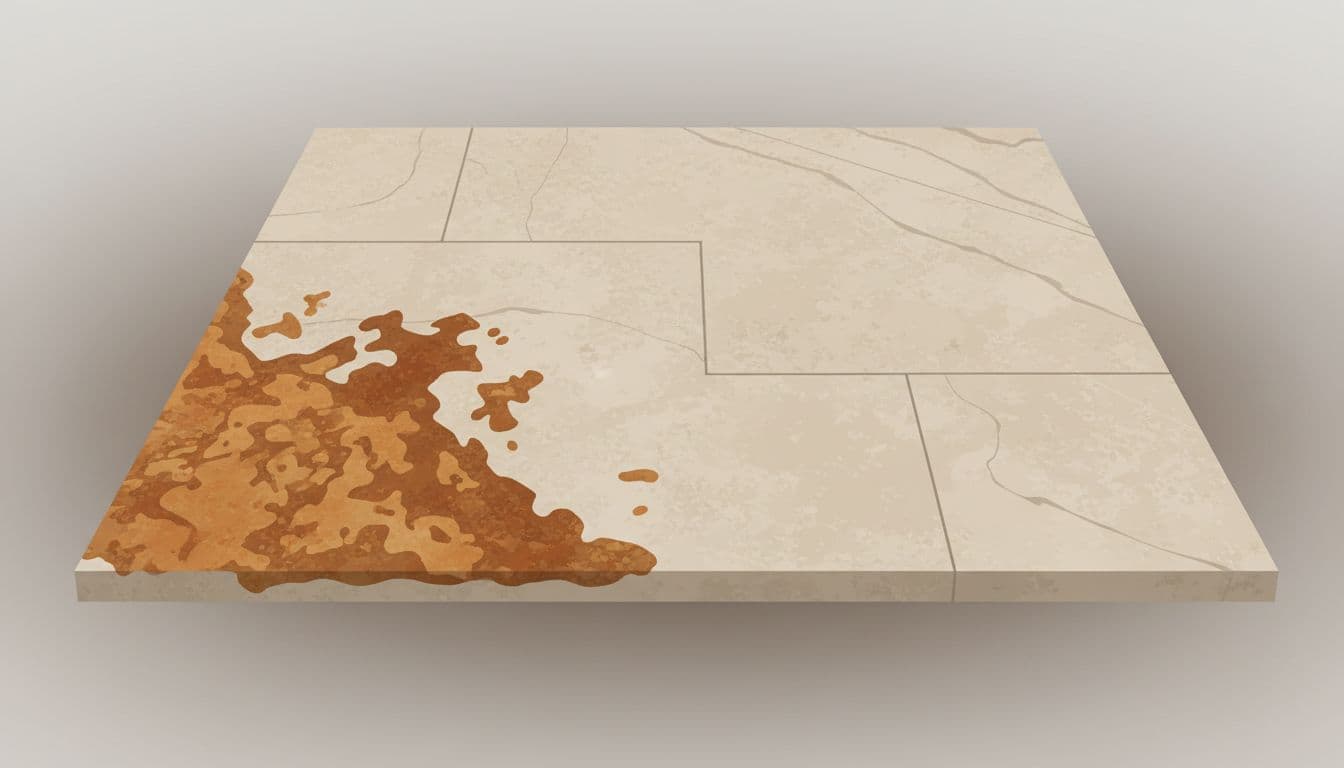
The good news is that most outdoor rust marks can be improved. The bad news is that using the wrong cleaner can leave an etched, dull patch that is worse than the stain itself. That is why I slow down before I start.
What I never use on travertine
My rule is simple: if the cleaner is not clearly labeled safe for calcium-based stone, I keep it away from travertine.
Travertine is a natural stone made mostly of calcium carbonate, which means it reacts poorly to acidic cleaners. Using common household items like vinegar or lemon juice can strip the finish, lighten the color, or leave noticeable etching marks on the surface. Muriatic acid is a hard no, and even some standard bathroom cleaners are far too aggressive for this material.
If a product can etch marble or limestone, it can etch travertine too.
Before I begin cleaning, I gather a few basic tools and focus on being gentle.
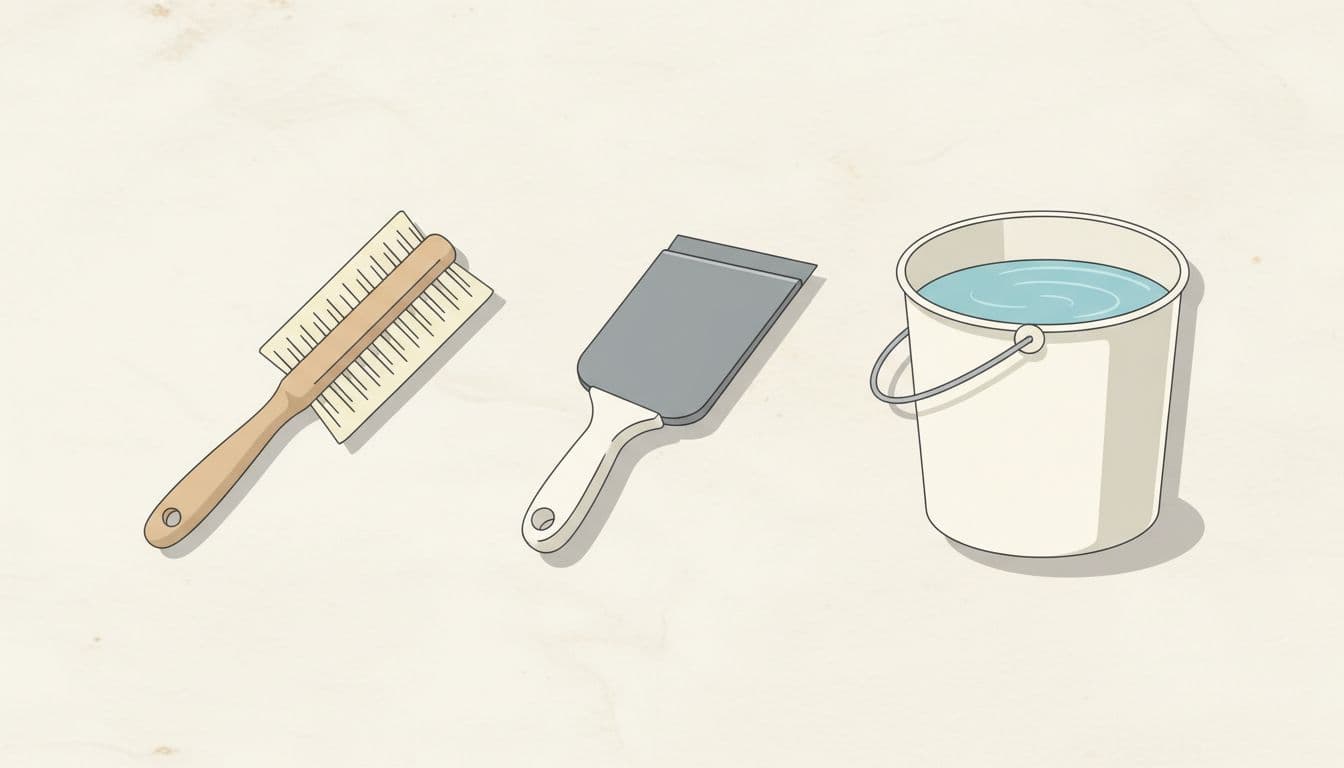
This is the quick version of what I use and what I skip:
| Safe for outdoor travertine | I avoid on travertine |
|---|---|
| Soft nylon brush | Wire brush |
| Plastic scraper | Metal scraper |
| pH-neutral stone cleaner | Vinegar or lemon juice |
| Stone-safe rust remover | Acidic rust removers |
| Clean water and a sponge | Bleach-heavy mixes for mildew and mold |
That table saves a lot of grief. The “stronger is better” mindset does not work here.
I also test any cleaner in an inconspicuous area first. This could be behind a planter, under furniture, or near the edge of the patio. If the stone dulls, lightens, or feels rough after drying, I stop immediately.
One more thing: I do not start with a pressure washer when the goal is rust removal. While a pressure washer is great for rinsing away loose dirt, it does not dissolve iron staining. In some cases, high pressure can drive dirty water across the stone and make the area look even more uneven.
My step-by-step method for removing rust stains from travertine
When I clean rust from outdoor travertine, I work in small sections and I do not rush the dwell time. That is usually where people lose patience and start scrubbing too hard.
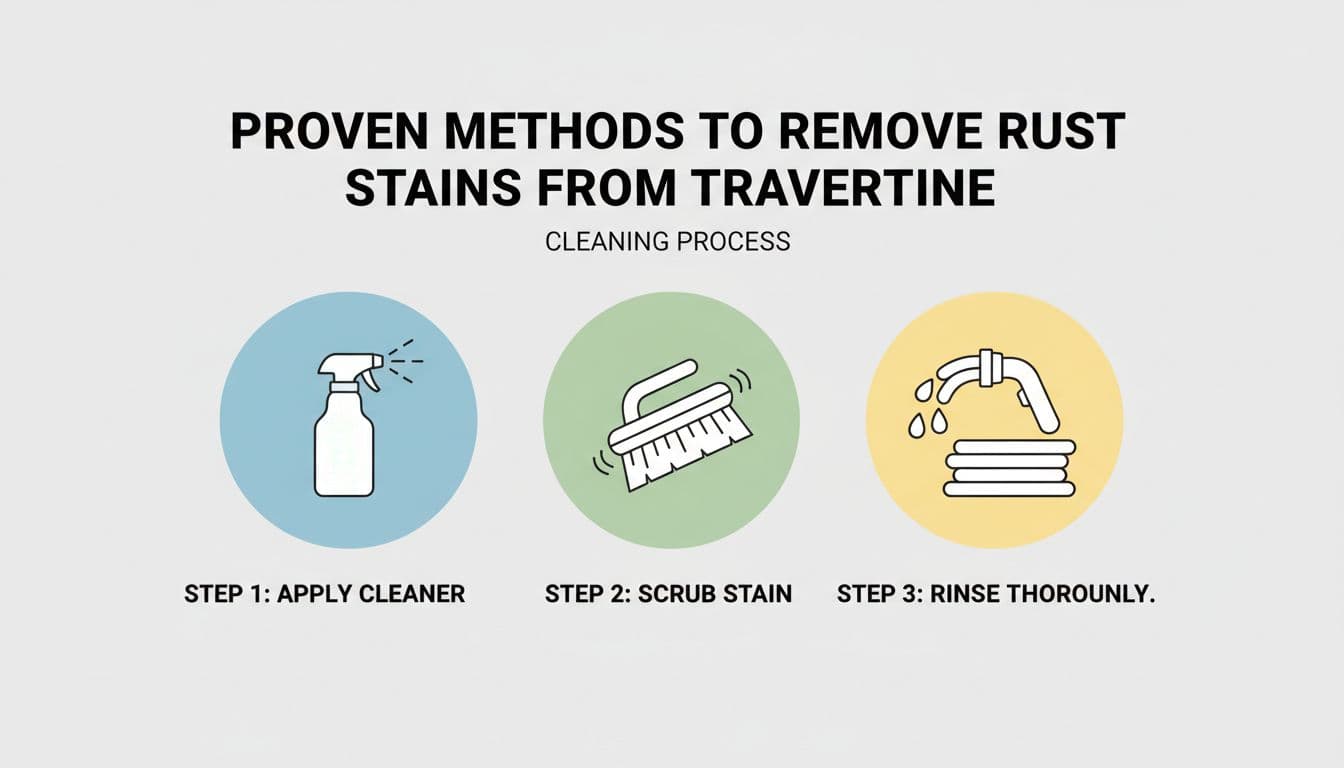
Here is the method I trust most:
- Clear the area first. I sweep away grit, leaves, and sand. If I scrub over loose debris, I can scratch the stone and grind dirt into the pores.
- Find and remove the source. If a metal chair foot, planter stand, or grill wheel caused the stain, I move it before cleaning. Otherwise, the rust comes right back.
- Wash the surface lightly. I use clean water and a pH-neutral stone cleaner to remove surface dirt. Using clean water and a pH-neutral stone cleaner helps me see the actual stain, not a mix of rust and grime.
- Apply a stone-safe rust remover. I use a non-acidic rust remover labeled for natural stone, especially travertine, marble, or limestone. I follow the label exactly. No improvising.
- Let it sit, then agitate gently. After the cleaner has time to work, I use a soft-bristled brush in small circular motions. I do not bear down, as travertine responds better to patience than force.
- Rinse well and let it dry. A wet surface can hide leftover color. I rinse thoroughly, then wait for the area to dry before judging the result. Once finished, I rinse thoroughly again to ensure no residue remains.
- Repeat if needed. One application may lift a fresh stain. Older stains often take two or three rounds to clear, and I make sure to clean the grout lines as well to ensure an even look across the entire surface.
If the stain is deep, I move to a poultice-style approach. That means using a paste designed to draw the rust out of the stone’s pores as it dries. While I prefer professional products, you can create a poultice using hydrogen peroxide and baking soda for organic stains, whereas acetone might be needed for oil-based stains. I only do this with materials made for natural stone, as homemade mixes are a gamble on travertine.
A few details matter more than people think. I do not clean in blazing afternoon sun because products dry too fast. I do not flood the whole patio if the stain is local, and I do not mix products. That is how a stain-removal job turns into a stone-repair job.
Sometimes the stain lightens but does not disappear fully on day one. That does not mean the cleaner failed. It often means the rust had time to settle in. I let the stone dry, reassess, and do another careful pass.
If the area looks clean afterward, I wait until the stone is fully dry before thinking about sealer. Sealing damp travertine is like trapping yesterday’s weather under a lid. It never ends well.
When a rust stain on travertine won’t stay gone
This is the part people skip. If the same spot keeps reappearing, the stain is not the only problem.
I look for irrigation overspray first. Water with iron in it can leave fresh staining again and again. Then I check metal furniture, planters, grill parts, umbrella stands, and decorative pieces. Anything that sits wet on stone can start the cycle over.
If nothing obvious sits on top, I start thinking below the surface. Hidden metal edging, fasteners, or nearby structural steel can bleed into the travertine pavers. At that point, cleaning helps, but it will not solve the root cause.
That is usually when I stop treating it like a Saturday chore and start treating it like a repair issue. On larger patios, walkways, and pool decks, professional cleaning can often identify the source faster to keep the stain from returning. If the stain is deep or the stone has been damaged by previous attempts to remove it, a specialist might suggest honing and polishing to fully restore the surface. If that is where you are, Get a Free Quote and have the whole area looked at in one visit.
How I prevent new rust stains outside
Once I have cleaned my travertine, I try to make sure I do not have to do the same job again next month.
I keep bare metal off the stone whenever I can. Rubber or plastic caps under patio furniture help. So do saucers under planters, as long as they do not trap dirty water. If I store tools or a grill nearby, I check the contact points before the rainy season kicks in.
I also stay on top of basic cleaning for these natural stone surfaces. Leaves, dirt, and standing moisture create the kind of environment where stains settle in deeper. A gentle wash with clean water now and then does more than people think. Just be sure to rinse thoroughly after cleaning to keep the area clear of residue.
Applying a high quality stone sealer can help too, as long as the travertine is clean and fully dry first. A good penetrating stone sealer creates a protective layer that won’t make the stone rust-proof, but it can buy me some time by slowing absorption. That is often enough to turn a permanent-looking mark into an easier cleanup.
Frequently Asked Questions
Can I use a pressure washer to remove rust from my travertine patio?
I strongly advise against using a pressure washer for rust removal. High pressure cannot dissolve mineral-based iron stains and risks forcing dirty water deeper into the stone’s pores or even etching the delicate surface.
Is it normal for the rust stain to come back after I clean it?
If a stain reappears shortly after cleaning, it means the root cause—such as a hidden metal fastener, a corroding furniture leg, or iron-rich irrigation water—is still active. You must remove or isolate the source of the metal contact to stop the cycle of oxidation.
What should I do if a store-bought cleaner doesn’t remove the stain?
If a standard stone-safe rust remover doesn’t work, the stain may have penetrated deeper into the stone. You might need to use a poultice-style treatment to draw the pigment out, or consider contacting a professional to discuss professional-grade honing and polishing.
Final thoughts
Rust does not have to ruin outdoor travertine, but harsh cleaning often leads to permanent surface damage. I get better results when I treat the stain early, use a stone-specific remover, and track down the source instead of only scrubbing away the color.
If the mark keeps coming back, I do not assume I missed a spot. I assume something is still feeding the oxidation. That is usually the difference between a quick cleanup and a fix that lasts. By choosing the right products and addressing the root cause, you can keep your natural stone looking pristine for years to come.