


Yes, a paver installation rainy season project can succeed in Florida. The calendar isn’t the only deciding factor, since firm soil, stable aggregate, clear drainage, and drying time matter before the next layer goes in. Spring installation may offer a drier planning window, but it still needs a site check.
A downpour can change the plan fast. I inspect the ground, drainage, and materials before continuing, because a paver patio over unstable ground may settle after the next storm. The right answer isn’t “never install in rain.” It’s knowing when to pause.
Key Takeaways
- Paver installation during Florida’s rainy season can succeed when the soil and aggregate are firm, drainage is clear, and enough drying time is available.
- Stop work during heavy rain or when the base is saturated, spongy, rippling, pumping water, or holding deep footprints.
- Build the system in properly compacted aggregate lifts, use the correct bedding material, and keep the bedding layer undisturbed before placing pavers.
- Plan finished slopes, edge support, geotextile separation where needed, and stormwater flow before installation, especially near pools and lanais.
- Spring may offer a simpler planning window, but any season can work when the forecast, site conditions, and joint-sand requirements are managed carefully.
Can paver installation rainy season work in Florida?
Yes, installation can move forward between storms, but not through standing water or saturated soil. Light drizzle may slow rough grading and material handling without ruining the project. Heavy rain is different. It can fill the excavation beneath patio pavers, soften the soil, wash out joint sand, and leave leveling sand uneven.
At Platinum Pavers of SWFL, I would rather pause a day than cover a weak base with beautiful pavers. A patio that looks finished today can settle, rock, or hold puddles after the next storm if the foundation wasn’t ready.
Light rain can be manageable
Light rain may be workable when machinery doesn’t leave ruts and water isn’t pooling or moving across the work area. I can often continue with limited grading or aggregate placement during a short drizzle, but the prepared surface must remain firm and free of puddles before the next layer goes down.
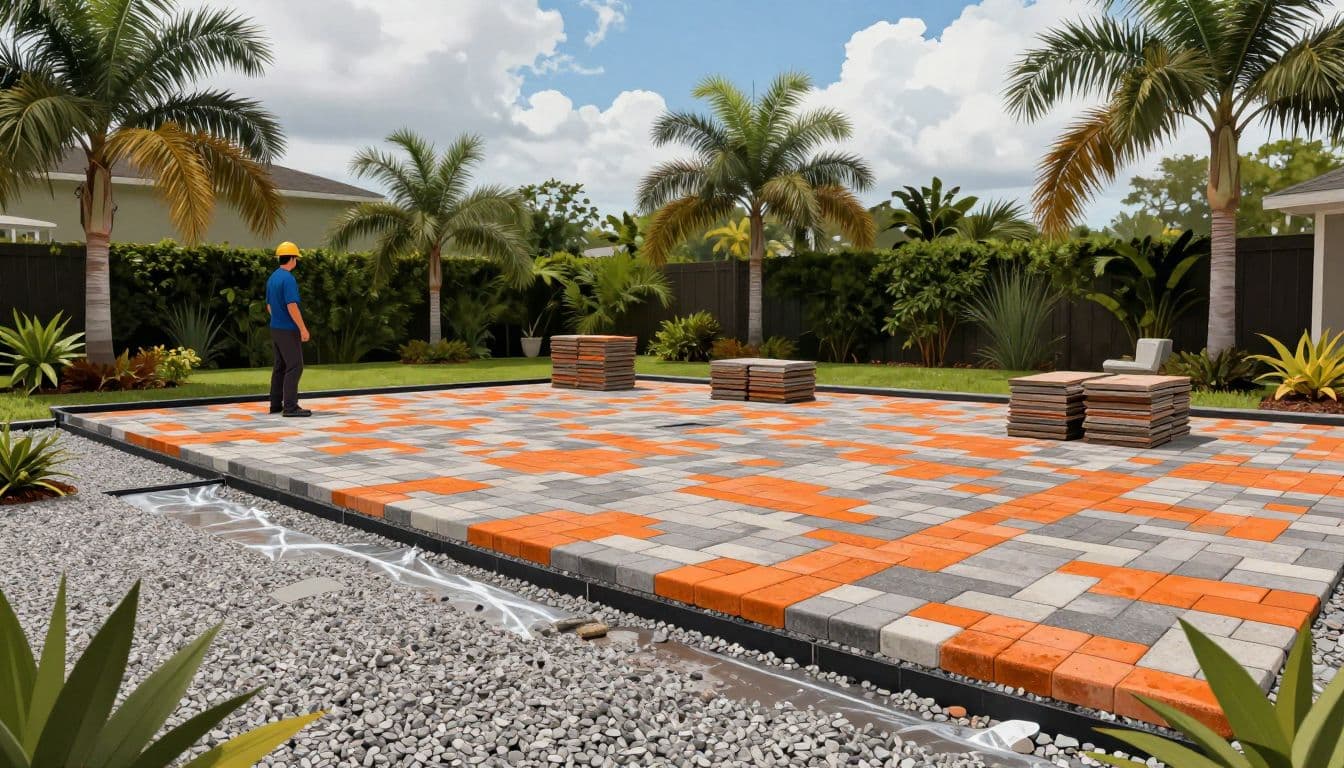
Heavy rain means stop
A hard downpour can disturb the subgrade and move fine material into low spots. If the aggregate feels spongy, holds clear boot prints, ripples under a plate compactor, or pumps water to the surface, I stop the work. The area needs time to drain, and any loose or washed-out material may need removal before rebuilding.
If the plate compactor makes the base ripple or pushes water to the surface, the base is too wet for compaction.
Base preparation decides the result
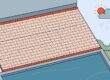
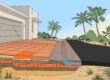
Rain exposes weak base preparation quickly. The CMHA application guide for interlocking concrete pavements lays out the pavement as a complete system. The subgrade supports a clean, well-graded granular material as the sub-base material. I follow that same order, with the bedding layer, pavers, joints, and edge restraint working together above it.
Test wet aggregate before compaction
Before I compact a wet-looking area, I use a simple field check:
- Walk across the aggregate and look for deep footprints, rutting, or soft spots.
- Squeeze a handful of material. If water appears or the material smears like mud, wait.
- Test a small area with the plate compactor. If the stone shoves, ripples, or pumps, stop.
There isn’t one moisture percentage that fits every soil and aggregate. Engineered work can use laboratory moisture-density testing, but these field signs give homeowners a practical answer during a residential patio project.
Use the right base and bedding material
Granular base should be placed in 3- to 4-inch lifts, with each lift compacted before another is added. Pedestrian walkways and patios commonly need about 4 to 6 inches of compacted base. Driveways often need 6 to 8 inches or more. The correct sub-base depends on soil strength, drainage design, and anticipated loads.
A standard paver system normally uses specified paver sand as the loose bedding material beneath the pavers, not as a substitute for joint products. Stone dust and limestone screenings can hold water instead of letting it move through the base. Permeable or open-graded systems may call for materials such as ASTM #9 stone or HPB, but those materials should be part of a designed system, not a last-minute substitute.
After the bedding layer is screeded, I keep it undisturbed. I don’t compact the loose bedding layer before laying pavers because that can create waves and low spots. For unusual loads or drainage designs, the CMHA construction specification guide provides useful technical details to review with the contractor.
Florida soil and drainage need a plan
Good pavers cannot correct poor drainage, so drainage installation must be planned before the paving system is built. Rainwater that sits beside a patio, driveway, pool deck, or screen enclosure can soften the soil and slowly move the base below the surface.
Clay soil needs separation
Clay soil holds water longer than clean, well-draining aggregate. Mixed fill and disturbed soil can create similar problems, especially where an old patio, lanai, or pool area was removed.
When site conditions call for it, geotextile fabric helps separate the native soil from the gravel base. I don’t recommend placing plastic sheeting under the paving system as a weed barrier. Plastic can trap water and create a slippery separation layer, while geotextile fabric is designed for soil separation and filtration.
Slope, edges, and pool areas matter
A 1% to 2% finished slope should direct water drainage away from the paved area where the property allows it. Local soil conditions guide slope, edge support, and base choices. Downspouts and roof drains shouldn’t discharge directly beside a paver edge or screen enclosure footer.
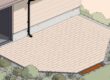
Near a pool or lanai, the concrete enclosure footing and the paver system can move at different rates. Heavy rain, disturbed soil, weak edge support, or poor drainage can lead to cracks and gaps in the area. I inspect the footing, edge restraint, base, joints, drainage, and patio pavers together instead of resetting only the visible paver.
Choosing the right window for installation
Spring installation is often a good time to plan hardscaping in Southwest Florida. The drier planning window can simplify scheduling, material selection, and site preparation. Local weather conditions are typically less storm-prone during this period, although forecasts can change quickly.
Unlike northern projects, Florida timing depends on rainfall and drying time, not freeze-thaw disruptions. Summer installation can still proceed when the forecast allows enough drying time and the site remains stable.
A rainy-season schedule should include extra time for drying and reworking disturbed areas. Paver sand beneath the units serves a different purpose than the joint product. Polymeric sand needs dry pavers and dry joints before installation and activation, so it shouldn’t be rushed between showers.
Before work starts, ask the contractor:
- What base depth is planned for a patio, walkway, or driveway?
- What happens if a storm arrives after excavation?
- How will wet aggregate and saturated soil be tested?
- Where will stormwater flow during and after installation?
- Will the joints remain protected until sand can be installed correctly?
Homeowners in Fort Myers, Cape Coral, Bonita Springs, Punta Gorda, Sarasota, and nearby communities can Get a Free Quote from professional paver installers for a site review and estimate.
Frequently Asked Questions
Can pavers be installed during Florida’s rainy season?
Yes, pavers can be installed between storms when the soil and base are firm and free of standing water. Heavy rain and saturated conditions require the work to pause until the area drains and the base is stable.
How do I know if the paver base is too wet to compact?
Deep footprints, rutting, soft spots, smearing material, rippling aggregate, or water pumping to the surface are warning signs. If the plate compactor disturbs the base instead of tightening it, the material needs more drying time or reworking.
What happens if rain falls after the paver area is excavated?
The excavation and aggregate should be inspected for soft or washed-out areas before installation continues. Unstable material may need to be removed, rebuilt in compacted lifts, and allowed to dry before the next layer is added.
Is spring the best time to install pavers in Florida?
Spring often provides a more convenient planning window because conditions may be less storm-prone. However, successful installation depends more on the forecast, drainage, soil stability, and drying time than on the calendar alone.
Can polymeric sand be installed between rain showers?
No, polymeric sand requires dry pavers and dry joints before installation and activation. The joints should remain protected until there is enough reliable dry weather to complete the process correctly.
Conclusion
Florida’s rainy season doesn’t automatically cancel a paver project. It does require better timing, proper drainage, careful base preparation, and the discipline to stop when the ground is saturated.
The strongest installation starts below the pavers, with stable soil, properly placed aggregate, and correctly compacted layers. With a clear path for water, your patio, driveway, or pool deck has a much better chance to stay level and beautiful through the next storm.