A slick pool deck can turn a relaxing backyard into a wipeout waiting to happen. When I see that green film creeping across my pool deck pavers, I do not think of it as just a cosmetic problem. I view it as a serious slip hazard.
Algae loves pool areas for obvious reasons, including water, shade, heat, and debris. The good news is that I can remove algae from pool deck pavers without tearing up the surface, provided I use the right method and a little patience.
Key Takeaways
- Prioritize Safety: View algae on pool deck pavers as a significant slip-and-fall hazard rather than just a cosmetic eyesore.
- Start Gentle: Always use the least aggressive cleaning method first, opting for mild detergents and nylon brushes over high-pressure washing to prevent surface damage.
- Protect Structural Integrity: Avoid using high-pressure settings directly on joints, as removing the sand can cause pavers to shift and lose stability over time.
- Maintain to Prevent: Regularly sweep away organic debris and ensure proper drainage to eliminate the moisture and food sources that allow algae to thrive.
Why algae keeps showing up on pool deck pavers
Algae does not need much to get comfortable. Give it moisture, a little shade, and some organic debris, and it moves in fast. Around pools, those conditions are common. Splash out keeps the surface damp, furniture creates shadows, and leaves break down in the joints.
I have noticed algae usually starts in the same spots. Corners that do not get much sun, areas near planters, or the strip along the waterline side of the deck are common trouble spots. On a natural stone or travertine pool deck, water can easily pool in these areas, creating the perfect environment for growth. Once it forms, the surface can feel slimy even when it does not look terrible.
That is what makes it tricky. Some homeowners wait because the pavers do not look that bad yet. But algae is not only a stain; it is a traction problem. Wet feet, sunscreen, and a smooth green algae film are a dangerous mix.
If my pool deck feels slippery under bare feet, I treat it like a safety issue first and a cleaning job second.
I also find it helpful to distinguish green algae from other common stains. Algae is usually green, dark green, or blackish in damp areas. Mold and mildew can look similar, but efflorescence is different; that chalky white residue is not biological growth. Rust and leaf stains also need their own specific treatments. If I do not identify the mess first, I can waste time using the wrong cleaner.
What I gather before I start cleaning
Before I try to remove algae from pool deck pavers, I get my supplies together. That keeps me from rushing, guessing, or grabbing a harsh product I do not need.
Here is what I like to have nearby:
- A stiff-bristle brush, not a wire brush
- A garden hose with a spray nozzle
- A bucket for mixing cleaner
- Rubber gloves and eye protection
- A pH-neutral stone cleaner or a mild detergent
- A pressure washer, only if I can use it gently
- Plastic sheeting or extra water to protect nearby plants
I start by moving furniture, toys, and planters off the deck. Then I sweep up loose dirt and leaves. That step matters more than people think. If I scrub cleaner over grit and debris, I am grinding dirt into the surface instead of lifting algae off it.
If I am using any cleaner at all, I wet nearby landscaping with my garden hose first. That simple step helps protect roots and leaves from splash. I also read the product label before mixing. With pool decks, I do not take chances with random chemical combinations. Bleach and acidic cleaners should never meet, and stronger is not always better.
One more thing, I test a small hidden area first. Concrete pavers can react differently depending on age, color, and whether they have been sealed before. A quick test patch can save me from a much uglier problem.
How I clean pavers to remove algae without damaging them
When I set out to clean pavers on a pool deck, I do not go straight for maximum pressure. That is the fastest way to scar the surface, strip sand from joints, and turn a simple cleaning project into a costly repair bill. I always use the least aggressive method that gets the job done safely.
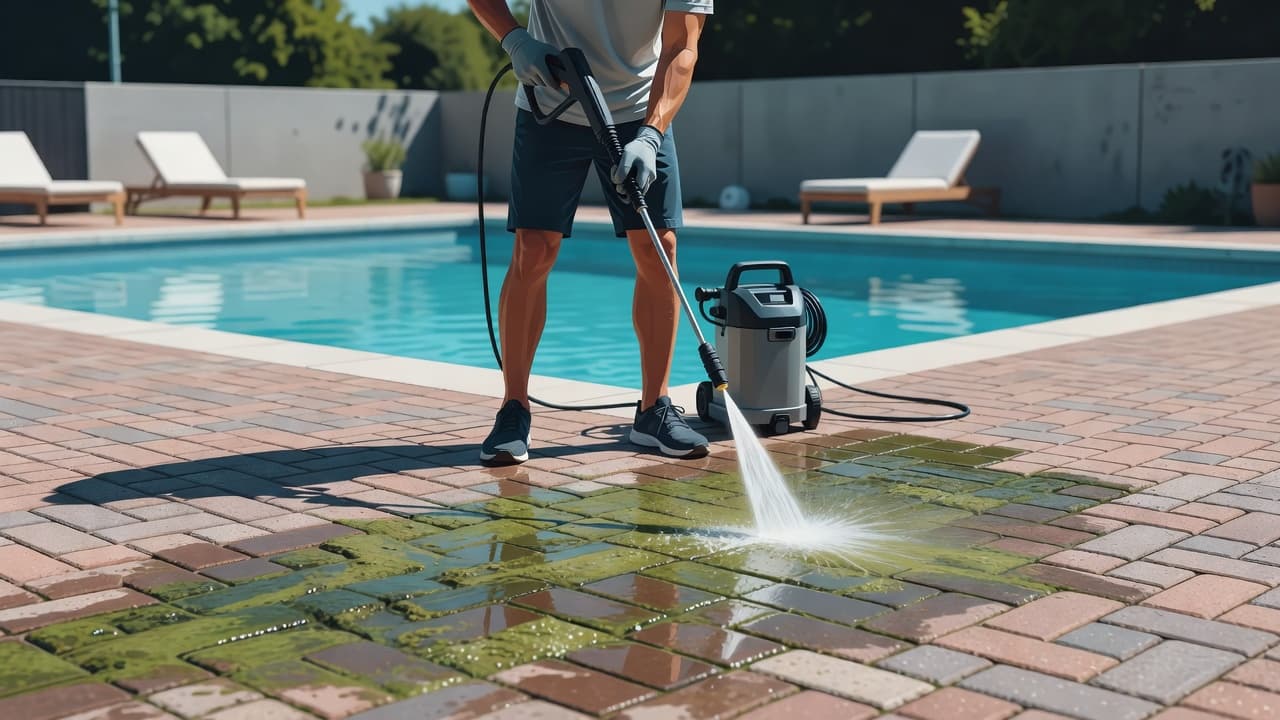
This is the order I follow to clean pavers effectively:
- I wet the surface first. A damp surface helps the cleaner spread more evenly and keeps it from drying too fast in the sun.
- I apply the cleaner based on the manufacturer label. If I am using oxygen bleach, I mix it with water as directed. If I use a store-bought algae cleaner made for masonry or pavers, I stick to those specific instructions.
- I let the solution sit for a short time. Usually, a few minutes is enough to break down the growth. I never let the cleaner bake dry on the deck.
- I begin scrubbing with a nylon brush. This scrubbing step is essential for porous stone surfaces like a travertine pool deck, as the texture often hides deep-seated organic growth. I put extra effort into the joints and textured spots where algae likes to hang on.
- I rinse the area thoroughly. A garden hose is often enough after scrubbing. If I use a pressure washer, I keep the tip moving, use a wide fan spray, and stay at a safe distance from the stone.
- I let the surface dry and check my work. Some stubborn patches may require a second round of treatment.
The biggest thing I watch with pressure washing is the joint sand. Interlocking pavers need that joint sand to stay stable. If you blast it out, the deck can loosen up over time. I always avoid pointing high pressure directly into the joints or holding the wand too close to one spot to protect the structural integrity of the patio.
For light algae, a brush and cleaner often do the job without power washing at all. For thicker buildup, gentle pressure can help after the cleaner has loosened the growth. That order matters. Cleaner first, pressure second, not the other way around.
If the surface was sealed in the past, I check it after cleaning. A failing sealer can trap dirt and create patchiness. If water soaks into some spots and beads on others, the old finish may be uneven. That does not always mean the pavers are ruined. It often means the deck needs a proper professional clean and a fresh coat of sealer after it fully dries.
Mistakes I avoid when algae is on brick pavers
I have seen pool decks get damaged by quick fixes more often than by the algae itself. The surface usually gives plenty of warning, but by then, the mistakes are already made. When you set out to remove algae from your pool area, your primary goal should be to clean the surface without compromising its structural integrity.
The first mistake is using too much pressure. While a pressure washer can help, it can also etch the pavers, rough up the face, or wash out joint sand if the setting is too high. Once that happens, the deck can start shifting or looking patchy.
The second mistake is grabbing the harshest chemical on the shelf. Straight chlorine bleach can lighten some pavers, harm nearby plants, and leave a stubborn chlorine residue that affects the color and safety of the stones near the pool. Acid based cleaners can be even worse if they are not specifically made for your material. I do not use any cleaning agent unless I know it is safe for the paver type and the surrounding landscape.
Another bad move is sealing over a dirty deck. Sealer locks in what sits underneath. If algae spores, moisture, or stains are still there, the problem does not disappear. It simply gets trapped.
I also skip wire brushes and metal scraping tools. They can scratch the face of brick or concrete pavers, which gives algae more surface texture to cling to later.
If I see sunken pavers, standing water, or joints that keep washing out, I know cleaning alone will not fix the whole issue. Keep in mind that mineral deposits can sometimes be mistaken for other stains and should be handled with specific products rather than the methods used for organic growth. Algae may often be the symptom, not the root cause.
How I keep the green film from coming back
Getting rid of algae is one job, but keeping it gone is the better one. I do not expect a spotless deck forever, especially in humid climates, but I can certainly slow down the rate of regrowth.
The simplest habit is regular sweeping. Leaves, dirt, and pollen hold moisture, and once they sit, they feed the problem. I also rinse off sunscreen spills, mulch, and anything else that builds up in shaded corners. Keeping the surface clean helps ensure it remains slip-resistant and safe for everyone walking around the pool.
Drainage matters too. If water puddles in the same area after rain or pool use, algae will likely return there first. Sometimes the fix is simple, such as clearing a drain, adjusting irrigation, or trimming plants to allow more sunlight. If you have gaps between stones, applying polymeric sand in the joints can prevent future growth and maintain the structural stability of the deck.
To provide a long-term defense, I seal the pavers once they are thoroughly clean and dry. Using a quality paver sealant reduces the absorption of water and organic debris, which makes routine washing much easier. When you choose to seal the pavers, you create a barrier that protects the stone and keeps the area looking its best. On older pool decks, professional cleaning and sealing often make a bigger difference than another round of DIY scrubbing.
I also stay ahead of the issue. When I spot the first green haze, I clean it immediately. Waiting for a thick, slick layer to form never pays off.
When I stop scrubbing and call a paver pro
Some pool decks need more than a simple cleaner and elbow grease. If you continue to struggle to remove green algae because it keeps returning in the same spots, I start looking for a deeper issue. That could be poor drainage, worn-out joint sand, broken edging, or pavers that have shifted enough to hold water.
I also call for help when the deck has stubborn staining, old sealer problems, or large sections that feel unsafe. A professional expert knows exactly how to clean pavers and restore surfaces without causing structural damage, which is a much smarter move than constantly chasing the same symptoms.
If I want the deck repaired or professionally treated, I go straight to a specialist and Get a Free Quote. A solid paver contractor can tell the difference between a simple algae cleanup and a deck that needs professional restoration.
Frequently Asked Questions
Can I use a pressure washer to clean my pool deck?
Yes, but you must use it with extreme caution and a wide-angle nozzle. Keep the pressure low and keep the wand moving constantly to avoid etching the stone or blowing out the joint sand.
Is it safe to use bleach to kill pool deck algae?
Avoid using straight chlorine bleach, as it can be harsh on surrounding landscaping, discolor certain paver materials, and leave behind stubborn chemical residues. Oxygen-based cleaners are generally a much safer and effective alternative for biological growth.
Why does the algae keep coming back after I clean it?
Persistent regrowth usually suggests a deeper issue like poor drainage, low sunlight, or failing joint sand that allows moisture to pool. Addressing the root cause, such as by applying fresh polymeric sand or trimming back vegetation, is key to long-term prevention.
Should I seal my pool deck pavers?
Sealing your pavers is an excellent way to create a barrier against moisture and debris, making future cleanings much easier. Just ensure the deck is completely clean and dry before applying any sealer, as trapping dirt or algae underneath will only make the problem worse.
Conclusion
A green pool deck is not something I ignore, even if the growth starts small. When I remove algae from my outdoor space using the proper techniques, I ensure the surface stays both clean and safe.
My rule is simple: start with gentle methods, clean the surface thoroughly, and do not hide bigger problems under sealer or wishful thinking. A backyard oasis should feel comfortable under bare feet, not slick, stained, or one step away from a dangerous fall. Taking the time to consistently remove algae will keep your home looking its best and protect the longevity of your pool deck pavers.