


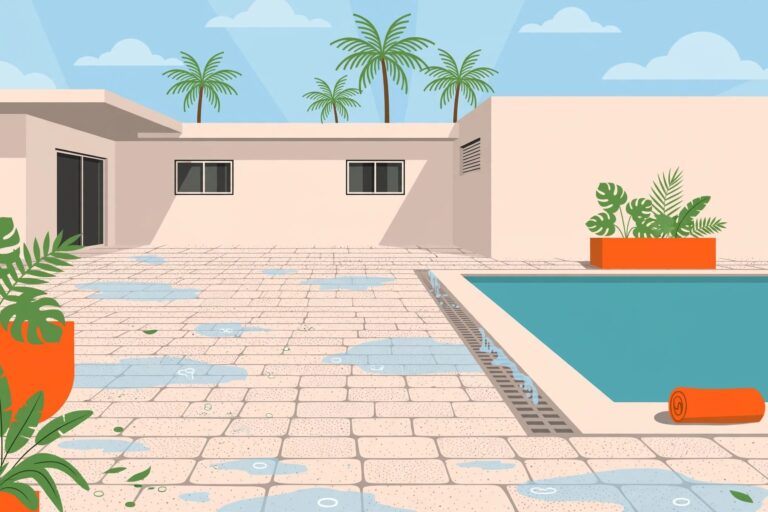
Porcelain Pavers in Florida: Where They Work Best
A beautiful pool deck won’t stay beautiful if Florida rain washes out the support beneath it. When homeowners ask me about porcelain pavers in Florida, I start with the location, drainage, and surface traction, then look at color. Heat, humidity, heavy rain, and coastal salt exposure also matter when choosing a product and planning the site.
Porcelain can be a quality choice for patios, walkways, and carefully planned pool decks, but the product and installation system must suit the job and the outdoor space. Here’s where I’d consider it, what I’d check before ordering, and where professional workmanship makes the difference.
KEY TAKEAWAYS BEFORE YOU CHOOSE
I want you to understand the material before committing to a sample or a price.
- Choose exterior-rated porcelain with published performance data for the intended use, especially around swimming pools.
- Match the supporting system to the property, because porcelain won’t correct settlement or drainage problems.
- Compare complete installation quotes, including preparation, cuts, drainage, joints, and replacement pieces.
The right selection can give you an attractive outdoor space with manageable upkeep. The foundation still deserves as much attention as the finish.
Where Porcelain Pavers Work Best in Florida
Pool decks need texture and wet-use approval
Around a swimming pool, I put traction ahead of appearance. Choose outdoor porcelain pavers labeled slip resistant, then confirm the particular product’s published wet-use data and suitability for the intended poolside application.
Finish labels such as matte, honed, textured, and polished describe appearance, not verified performance.
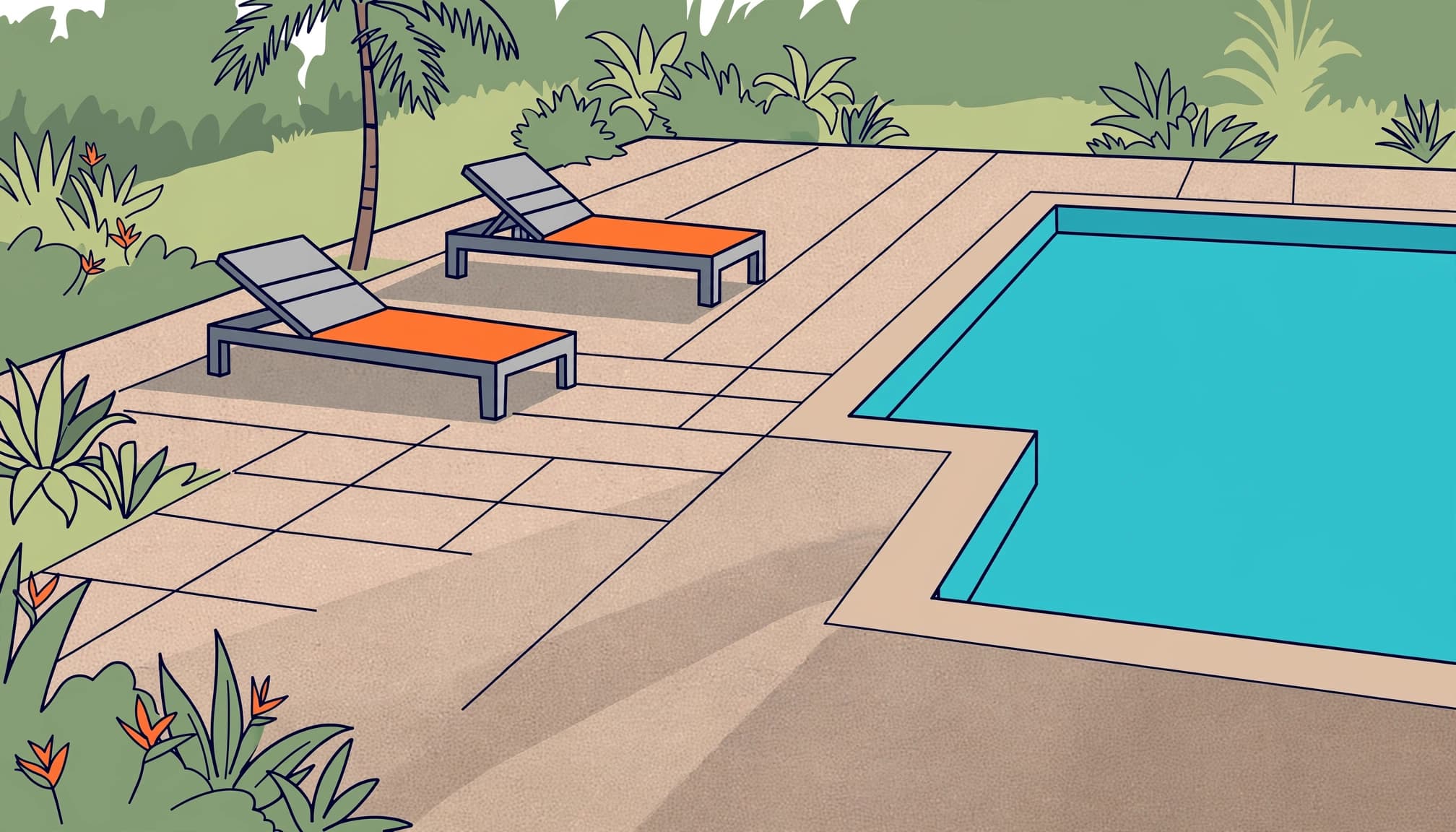
Textured porcelain pavers beside a Florida swimming pool.
I also check coping, drains, screen enclosure tracks, and door heights. These details affect the finished elevation and the amount of preparation needed.
If an existing brick-paver deck is sinking, assess and correct any unresolved base problem before replacing the surface. Covering it won’t give you a dependable result.
Patios and walkways offer more design flexibility
A covered lanai or outdoor dining area gives you more design flexibility with porcelain patio pavers than an exposed pool deck. Their stone-look, concrete-look, and wood-look designs can coordinate with your home’s hardscape design without changing the overall layout.
Still, covered doesn’t mean permanently dry. Wind-driven rain, irrigation, and wet feet all matter.
Cavastone’s indoor-outdoor flooring guidance discusses coordinated finishes. I like a coordinated appearance, but the exterior product needs its own suitability check.
On walkways, I look closely at steps, slopes, roots, and transitions. Large-format pieces need dependable support so corners don’t rock under foot traffic.
Florida Weather Makes Drainage and Color Important
Will porcelain stay comfortable in the sun?
Don’t choose a pool deck from an indoor sample board alone. I recommend viewing samples outside under similar sun and humidity conditions.
Lighter colors generally absorb less sunlight than darker colors, but shade, exposure, and the specific surface affect comfort. No material stays comfortable under every Florida condition.
Bright white can also create glare around a pool. Beige, soft gray, and light mixed tones may give you a calmer appearance while helping disguise everyday dirt. Some products are described as fade resistant, but verify that claim in the technical information.
I want the finish to look good beside your house and feel suitable for the way your family uses the space.
Heavy rain tests the whole installation
In Southwest Florida, saturated soil, runoff, and settlement deserve more attention than cold-climate frost claims. Heavy rain makes drainage planning essential, and water needs a route away from the house without creating trouble elsewhere.
Low water absorption doesn’t make a surface installation waterproof. Rain can reach joints, edges, and the supporting layers.
Open joints can let water pass through, but the base still needs a designed drainage path.
I check downspouts, irrigation, existing low spots, and the finished grade before choosing the installation method. The Florida paver installation process also puts access, elevations, and site preparation ahead of the decorative layout.
How Porcelain Compares With Concrete and Natural Stone
I don’t recommend one material for every property. Each option has strengths, and maintenance expectations should be part of the decision.
Here’s how I approach the comparison.
| Material | Why homeowners consider it | What needs checking |
|---|---|---|
| Exterior porcelain | Consistent designs and potentially simpler surface care | Wet-use suitability, support, handling, and installation approval |
| Concrete brick pavers | Many patterns and practical replacement options | Base quality, joints, staining, and product-specific sealing |
| Travertine or shellstone | Natural variation and a coastal appearance | Finish, absorption, cleaning, and sealing requirements |
Some porcelain products are described as stain resistant or fade resistant, but check the exact product’s published information. Claims of high durability should also be supported for the intended use.
If you prefer natural variation over a manufactured pattern, compare shellstone and travertine pool decks. I also recommend asking about replacement availability before buying any material. For example, check the published specifications for the specific Belgard collection you’re considering.
For driveways, driveway porcelain pavers need written manufacturer approval for both the product and installation system. A patio rating doesn’t establish suitability for vehicles, turning pressure, or concentrated loads.
Choose the Right Porcelain Installation Method
The installation method affects height, drainage, repairs, and cost, so porcelain pavers need a system suited to the selected product. I follow the manufacturer’s instructions rather than carrying over a concrete-paver assembly without checking compatibility.
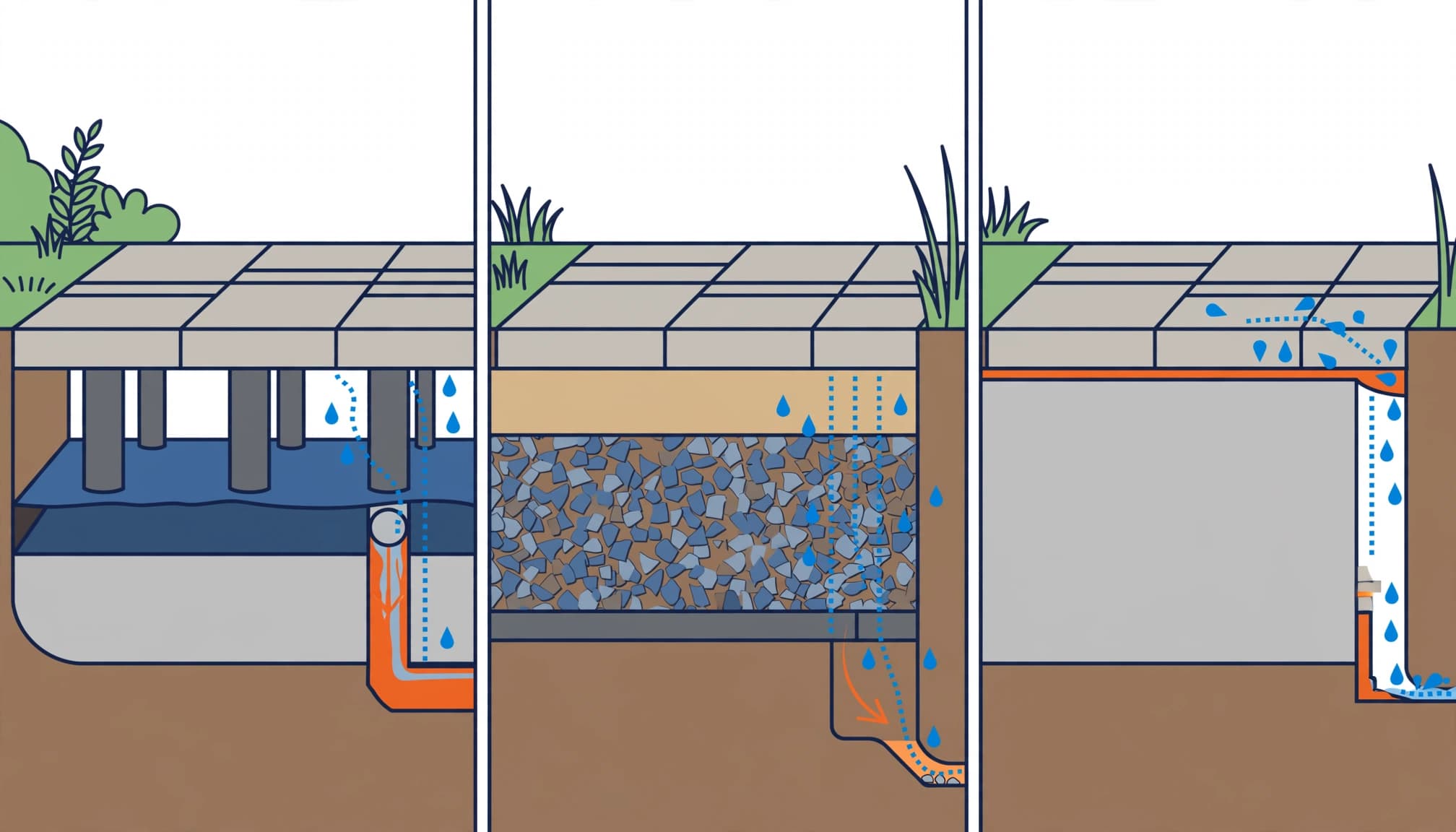
Dry-laid over a prepared base
Dry-laid systems use an approved aggregate base and bedding assembly. Preparation includes excavation, drainage planning, compaction, accurate grading, and edge support.
The bedding material, joint treatment, and compaction procedure must suit porcelain. Don’t assume ordinary concrete-paver equipment or polymeric sand is suitable.
A flat supporting surface matters. Small irregularities beneath large units can leave edges unsupported.
Bonded over existing concrete
An overlay starts with checking the slab for movement, contamination, drainage, and structural condition. Existing cracks need evaluation before anything is bonded over them.
For the approved system, a notched trowel distributes mortar, while back-buttering helps achieve proper contact beneath the paver. Installers lift pieces during placement to inspect coverage.
Follow the selected system’s written requirements for exterior and wet-area installations.
Supported on adjustable pedestals
Pedestals can support porcelain above a slab while leaving drainage space below. They require attention to perimeter restraint, loading, waterproofing, and access.
Specceramics’ porcelain pedestal guidance identifies 2 cm, or 20 mm, products for these applications. Thickness alone isn’t approval for every elevated installation.
In coastal Florida, the design also needs to address applicable wind requirements. I wouldn’t treat an elevated terrace as an ordinary ground-level patio.
When Professional Evaluation Is Worthwhile
Quality porcelain work involves more than placing straight rows. I recommend professional evaluation when a project includes slab cracks, poor drainage, steps, pool coping, elevated surfaces, or vehicle traffic.
If you’re considering DIY dry-laying, compare the manufacturer’s complete instructions with your equipment and experience. Include preparation, cutting, lifting, edge restraint, and safe handling in that review.
Porcelain requires suitable cutting equipment. A wet saw or bridge saw may be appropriate, depending on the product and cut, but the blade and machine must meet the manufacturer’s requirements.
I want an installer who follows applicable paver-system requirements and the product instructions.
Ask about movement joints, coverage checks, and protection during construction. A professional should explain these details plainly, and the written scope should match the work you’re expecting.
Compare Complete Quotes and Check Local Supply
What should the price include?
A material-only square-foot price won’t tell you the finished project cost. Removal, access, base preparation, drainage corrections, cutting, and installation ease can all affect the total.
I recommend requesting an itemized quote that separates materials, preparation, installation, and any allowance for unexpected conditions. Ask whether delivery, disposal, coping work, joint materials, and cleanup are included.
Have porcelain patio pavers, concrete, and natural-stone alternatives priced against the same footprint and scope. Otherwise, the cheaper number may simply leave out necessary work.
Don’t count on maintenance savings to recover a higher purchase price without comparing the actual care instructions.
Where can you see products in Florida?
Ask local material suppliers about exterior porcelain lines, including brands such as Belgard, then confirm whether the specific collection is available and suitable for your project.
For homeowners in Cape Coral, Fort Myers, Bonita Springs, and nearby areas, I suggest calling before traveling to a showroom. Request full-size samples, technical sheets, stock information, and lead times. For any specific collection marketed as fade resistant, verify the claim in its technical data or warranty.
Also ask about matching coping and spare pieces. Ordering replacements later can become difficult if a collection changes.
Platinum Pavers of SWFL brings more than 20 years of experience to outdoor-surface projects. My advice is to review the property and complete installation scope before making the final material purchase.
Keep the Surface Clean Without Over-Treating It
Low maintenance still means routine cleaning and inspection. Follow the product’s cleaning and sealing instructions, including any requirements for joints or adjacent materials.
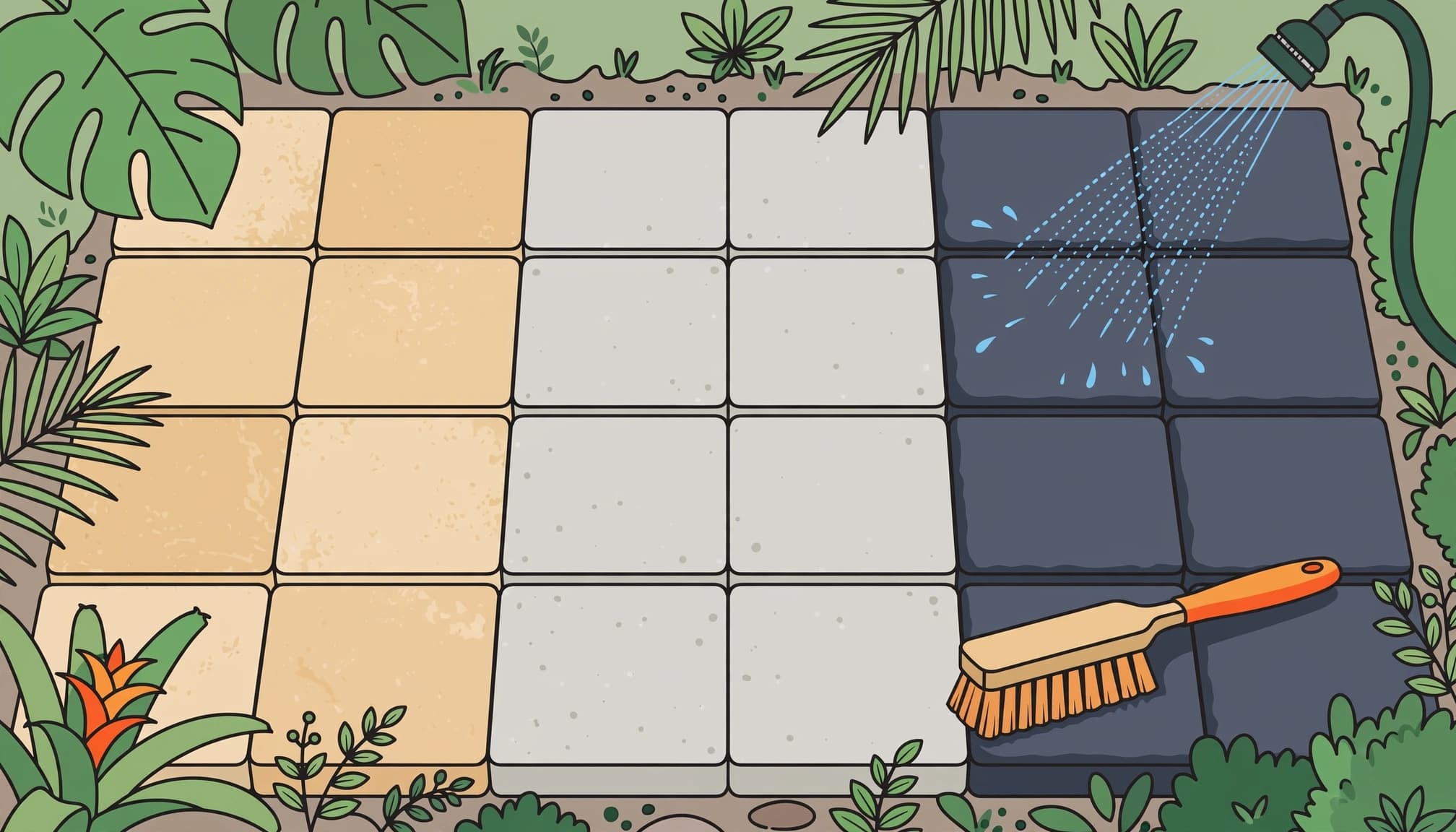
Remove leaves, rinse loose dirt, and clean spills promptly with a compatible cleaner. Around pools, pay attention to sunscreen residue and algae, which can affect traction.
Florida humidity and coastal salt exposure make regular checks worthwhile. After severe weather, inspect joints, edges, drains, loose pieces, and nearby metal components. Repair the cause of movement rather than repeatedly resetting the same corner.
I don’t automatically apply the sealing routine used for concrete brick pavers to porcelain. Some products have different treatment requirements, and an incompatible coating can change appearance or wet traction.
Pressure washing also requires care. Excessive pressure can damage edges or remove joint material.
If you’re comparing materials partly to reduce upkeep, ask for the care instructions before ordering. A finish that’s difficult to clean in your setting won’t be a satisfying choice.
Frequently Asked Questions
Are porcelain pavers suitable for Florida pool decks?
They can work well when the specific product is approved for the intended poolside use and has published wet-use performance data. I also check drainage, coping, and the supporting base before recommending them.
Do porcelain pavers get hot in direct sunlight?
They can become uncomfortable in strong sun, and the surface, color, shade, and exposure all affect how they feel. Compare samples outdoors in similar conditions rather than relying on an indoor display.
Do porcelain pavers need to be sealed?
Not necessarily; care and sealing requirements vary by product and installation system. Check the manufacturer’s instructions before applying a sealer, since an incompatible coating can affect appearance or traction.
Can porcelain pavers be installed over an existing concrete slab?
They may be bonded over concrete when the slab is suitable and the selected system is approved for the application. Have cracks, movement, drainage, and surface condition evaluated before installation.
Choose the Surface and Foundation Together
Porcelain pavers in Florida work best when the product, finish, support, and drainage plan suit the space. My strongest recommendation is to give the installation system the same attention as the appearance.
For your patio, walkway, or pool deck, Get a Free Quote, or call Platinum Pavers of SWFL at (239) 316-4630 for a consultation and estimate.
A quality outdoor surface starts with honest advice and careful preparation. That’s the workmanship your property deserves.