


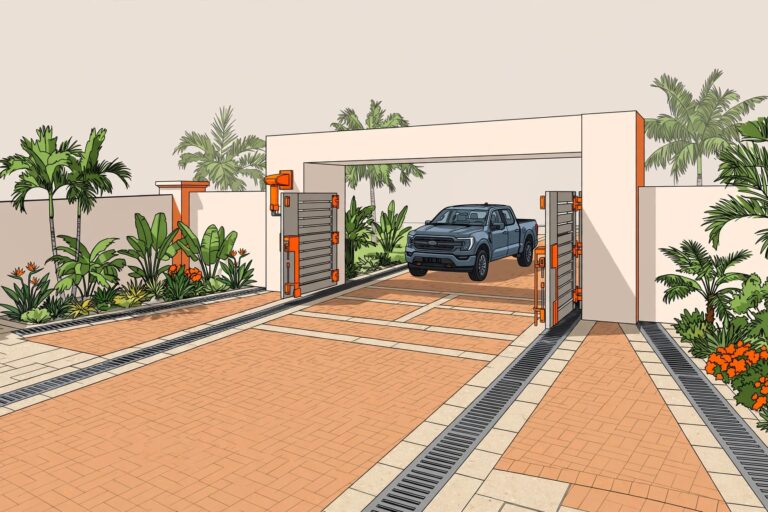
Paver Driveway Gate Entrances: Plan Clearance First
A beautiful entrance can boost curb appeal, but its appearance shouldn’t reduce usable clearance. A paver driveway gate has to look good, while the layout must accommodate vehicles and finishes such as brick pavers, natural stone, or large-format pavers.
After more than 20 years working on Southwest Florida paver projects, I start with traffic flow, drainage, and finished elevations. I coordinate them as a hardscape driveway plan before choosing colors or decorative borders. Get the layout right first, and the entrance looks better and lasts longer.
Start With Vehicle Movement
The gate is only one part of the entrance. The real question is, what needs to enter, turn, back up, and leave through it?
Measure the vehicles that actually use the driveway
A compact sedan, full-size pickup, SUV, work van, boat trailer, and delivery vehicle all use space differently. Don’t plan around the smallest car in the household if your truck or trailer is the vehicle that causes the problem.
I like to walk the proposed approach with the homeowner and map the tire path across the driveway pavers. We measure to every fixed obstruction, including mirrors, doors, the garage, mailbox, walls, landscape beds, and gate posts.
A gate opening can look wide when it is empty but still feel tight once a vehicle turns through it at an angle. Your paver driveway gate entrance needs a clear approach on both sides of the opening.
Give the turn enough room
A long straight driveway may need a turnaround area, a side parking bay, or a hammerhead layout. A hammerhead is a cross-shaped area where you pull in, back once, and leave facing forward. It can be a practical answer when a circular turnaround takes up too much front yard.
A herringbone pattern can help a hardscape driveway handle braking and turning forces when the base and edge restraints are correct. Don’t let a pretty natural stone border, raised planter, or landscape wall steal usable turning room.
Turning tires put side pressure on pavers and edges. Tight corners are where weak edge restraints and poor base work show up first.
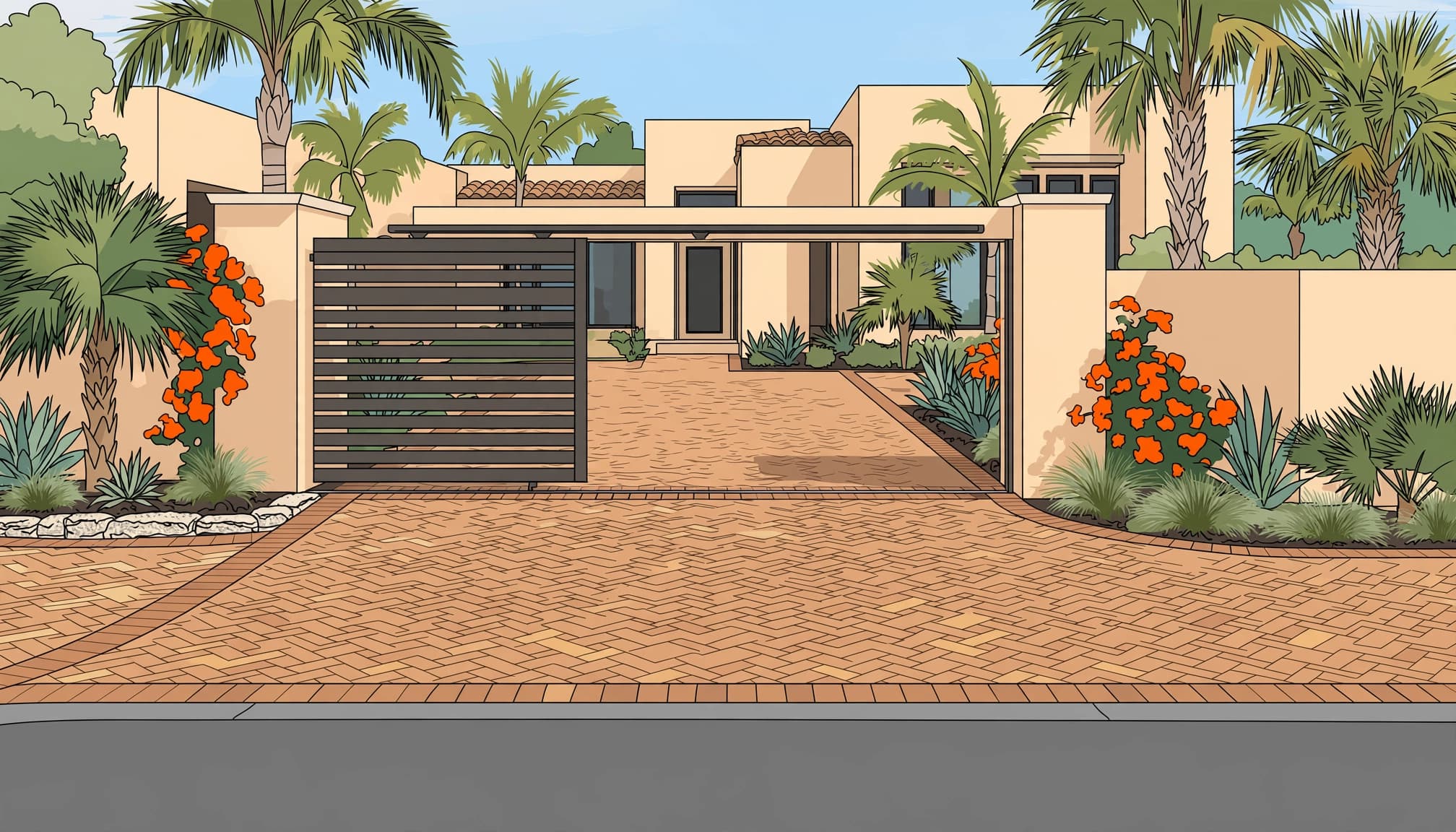
Choose Gate Motion Before Selecting the Paver Pattern
Sliding driveway gates and swing gates both work well on the right property. They are not interchangeable, so choose the motion before final gate installation and paver layout are locked in.
When a sliding gate fits the property
A sliding gate moves parallel to the fence line, and some property owners refer to this style as rolling gates. It can be a strong choice where there is limited room inside the driveway for a gate leaf to swing. It also keeps the driveway entrance clear after the gate opens.
The tradeoff is space along the fence. The gate needs room to travel, and that full travel area must stay clear of trees, columns, utility equipment, and thick landscaping. The paver layout must also avoid drainage problems around any track or ground hardware.
When swing gates make more sense
Swing gates open inward or outward based on the property layout and local requirements. They can give a traditional look and work well when the driveway has a level holding area behind the entrance.
The swing path matters as much as the clear opening. A vehicle should not need to stop in the street while the gate moves, and the leaves should not swing over a high paver edge, steep grade, loose gravel, or standing water.
A gate that opens properly on installation day can still become a problem if the driveway settles, the grade changes, or drainage washes out the area beside the hinges.
Build Clearance Into the Pavers and Grade
A hardscape driveway, including pavers, posts, borders, and drainage, needs to be planned as one system. Installing each part separately often creates a finished entrance that looks pieced together.
Frame the entrance without narrowing it
A border can make a paver driveway gate entrance feel finished and tie it into the home’s colors. Brick pavers can define that edge, but the material and layout shouldn’t narrow the usable tire path.
Keep the center field open. Too many stripes, small color changes, or oversized borders can make a driveway feel tighter than it is. Herringbone pattern is often a good fit for driveways because the interlocking layout handles braking and turning traffic well when the base, joints, and perimeter restraints are done correctly.
Large-format pavers can create a clean layout, but their module and joint alignment must coordinate with gate posts, drainage inlets, and transitions. Otherwise, larger units may require awkward cuts or create clearance problems.
Natural stone can add texture at columns, planters, or a landscape edge, but landscaping integration requires careful placement around turning areas and drainage paths. Irregular material should never become a sharp obstacle where tires turn or where water needs to move.
Set finished heights before installation starts
Finished elevation affects the gate threshold, garage door, sidewalk, street connection, and drainage direction. A paver overlay can add height, which may create a trip edge or send water toward the garage if nobody checks the transition first.
Water should move away from the home, garage, screen enclosure, and neighboring property through an approved drainage path. Downspouts shouldn’t dump roof water beside the entrance, where fast runoff can erode sand and soften the base.
For a closer look at sequencing, dry conditions, and protecting nearby surfaces, review our Florida paver installation timeline. Polymeric sand needs dry pavers and dry joints, and it can’t correct a weak base underneath.
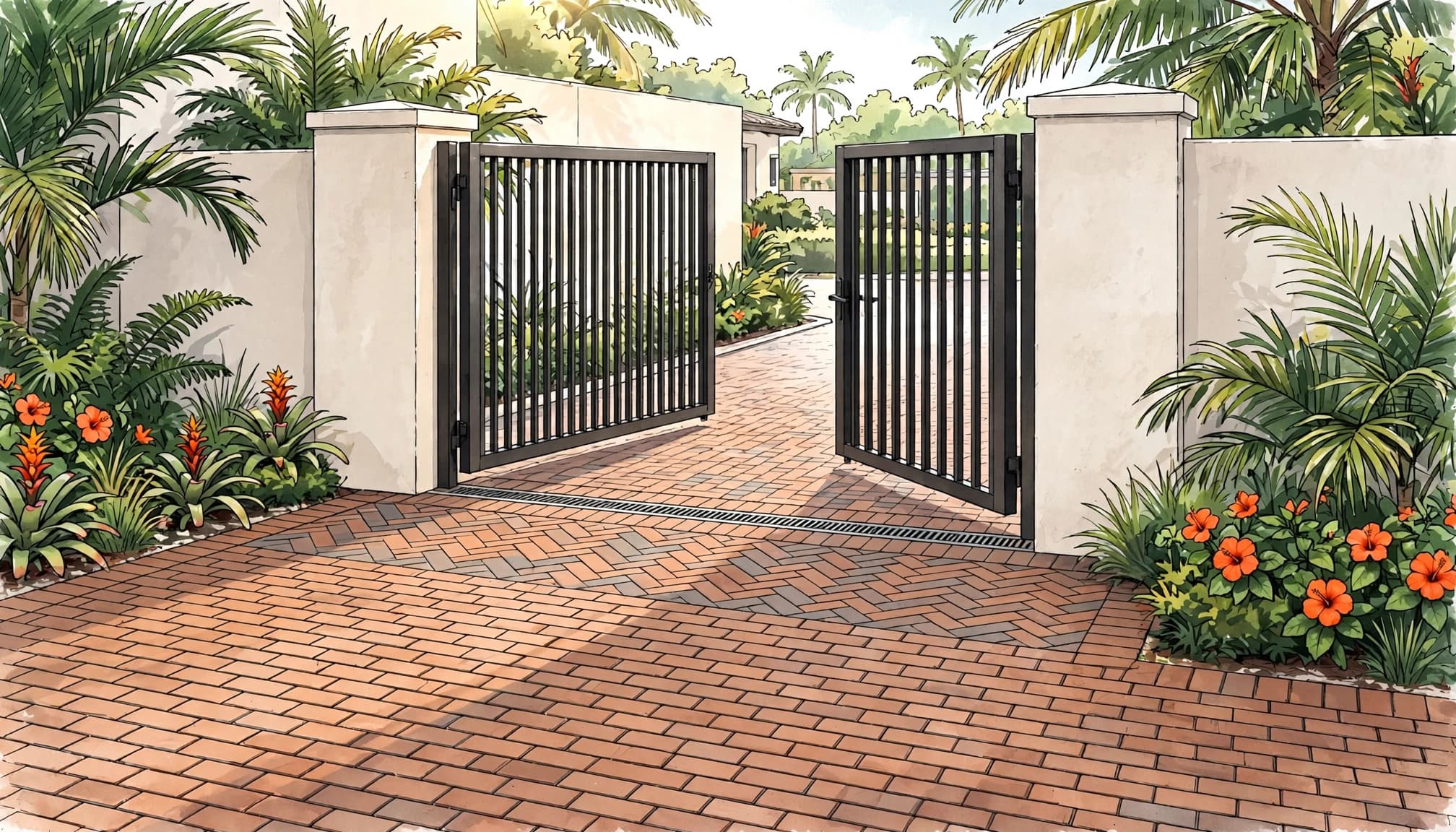
Plan Automation, Safety, and Structural Integrity Together
An automatic driveway gate needs more than an opener and a remote. An automatic gate operator is only one part of a safe automated system. It also needs power, safe controls, stable posts, service access, and a manual release if the power is out. Its structural integrity depends on the gate load, grade, drainage, and manufacturer requirements. Depending on site conditions, the installer may specify galvanized steel posts, reinforcement, or hardware.
Plan power and access before pavers go down
I recommend deciding where the electrical connection, control box, keypad, photo eyes, intercom, and manual release will go before the base is installed. For sliding driveway gates, plan the track hardware, wiring routes, service access, and clear travel area early.
PVC sleeves beneath the entrance can prevent future cutting for lighting, irrigation, internet, or gate controls. Install them before the hardscape driveway is built.
Remote access control is convenient, but it shouldn’t replace proper safety hardware or address all security needs. Every automatic gate should be reviewed by a qualified gate professional who understands the system, site conditions, and current requirements. This UL 325 automatic-gate discussion explains why automated gate safety isn’t something to guess at.
Confirm local rules before ordering materials
Permit rules, easements, setbacks, HOA requirements, drainage districts, and right-of-way rules can change between communities. A driveway expansion near the street may need review before excavation starts.
The Florida Building Code guidance makes one thing clear, rules can vary by state, county, city, and town. Confirm the current requirements with your local authority and gate installer.
For a code example related to gate construction, the ICC sliding-gate force provision addresses a 75-pound horizontal force on certain horizontal sliding car doors and gates. That isn’t a full design guide for every residential entrance, but it shows why structural details matter.
Match Materials and Contractors to the Work
A long-lasting entrance needs the right materials, but it also needs the right people handling their part of the project.
Choose pavers for traffic, heat, and repairs
Concrete driveway pavers are practical for many Florida homes because individual units can often be lifted, the base repaired, and the surface reset. Brick pavers bring a traditional appearance. Natural stone can be beautiful, but it needs a layout that works with vehicle traffic and drainage.
Large-format pavers reduce the number of joints, but their module size must suit traffic, turning pressure, and future repair access. Natural stone may also require careful coordination at irregular edges or interfaces with the paver field. Those transitions shouldn’t obstruct tires or drainage.
I don’t choose the paver pattern or a herringbone pattern only from a showroom sample. I consider expected loads, turning pressure, the driveway base, edge restraints, sun exposure, and how the material connects to the gate posts.
Durable pavers must handle heat, heavy rain, traffic loads, and occasional repairs. Heavy rain can wash out joint sand or expose settling around the entrance. If pavers rock, adding more sand isn’t the repair. The base, restraint, slope, or drainage issue must be fixed first. Our paver sealing and maintenance tips can help you spot trouble after storms.
Divide the work clearly
A paver contractor should handle excavation, compaction, drainage planning, paver installation, restraints, and transitions around the posts. A fence contractor should coordinate posts and fence structure with a specialized gate contractor, who handles the gate structure, footing requirements, automation, safety devices, controls, and final adjustment. Suitable hardware, including galvanized steel, should follow the gate manufacturer’s specifications and site conditions.
Both contractors need the same site plan for the entire hardscape driveway system. The fence contractor must place posts according to the final paver elevation and gate hardware plan. If that information isn’t available, somebody ends up redoing work.
For budgeting, one Florida gate company reports that professionally installed automatic driveway gates often fall between $4,000 and $15,000 in 2026, with higher costs possible for more complex jobs. Treat that automatic gate cost range as a planning reference, not a quote for your property.
Key Takeaways
- Plan for your real vehicle, guests, deliveries, trailers, garage doors, and daily turning movement before choosing a gate style.
- Choose between sliding driveway gates and swing gates based on available travel space, grade, drainage, and the approach from the street.
- Keep decorative borders, columns, and landscaping outside the usable tire path.
- Set final paver height before gate posts, automation equipment, and threshold details are installed.
- Fix drainage and base problems before replacing sand or resetting pavers.
- Use a paver contractor and gate specialist who coordinate their work from one layout plan.
Frequently Asked Questions
How wide should a driveway gate opening be?
There is no single opening width that works for every home. The right clear opening depends on vehicle size, driveway angle, turning room, nearby walls or landscaping, emergency access needs, and local requirements. I recommend measuring the actual vehicle path and reviewing it with a qualified gate installer before ordering the gate.
Can sliding driveway gates or rolling gates be automated for remote access?
Yes. Sliding gate openers can use remotes, keypads, intercoms, phone-based controls, and safety devices. Your security needs will help determine access permissions, safety controls, photo eyes, and the right remote access method. The equipment needs a planned electrical route, service access, proper structural support, and a manual release for power outages. Don’t add automation as an afterthought once the pavers are complete.
Are natural stone or brick pavers better for a gate entrance?
Neither is automatically better. The better choice is the material rated and installed for the traffic, drainage, base system, and visual style of your property. At a busy entrance, durability and edge support matter as much as color.
A Gate Entrance Should Work Every Day
The best gated entrance feels easy to use. You pull in without fighting the turn, the gate has room to move, water stays under control, and the pavers frame the home without becoming an obstacle.
If you are planning a gated driveway in Southwest Florida, Get a Free Quote for a free consultation and estimate. A clear layout, solid base, proper drainage, and coordinated installation help a hardscape driveway support property curb appeal and daily use. Brick pavers or large-format pavers should preserve turning space, drainage, and gate movement, protecting the quality of the whole entrance.