


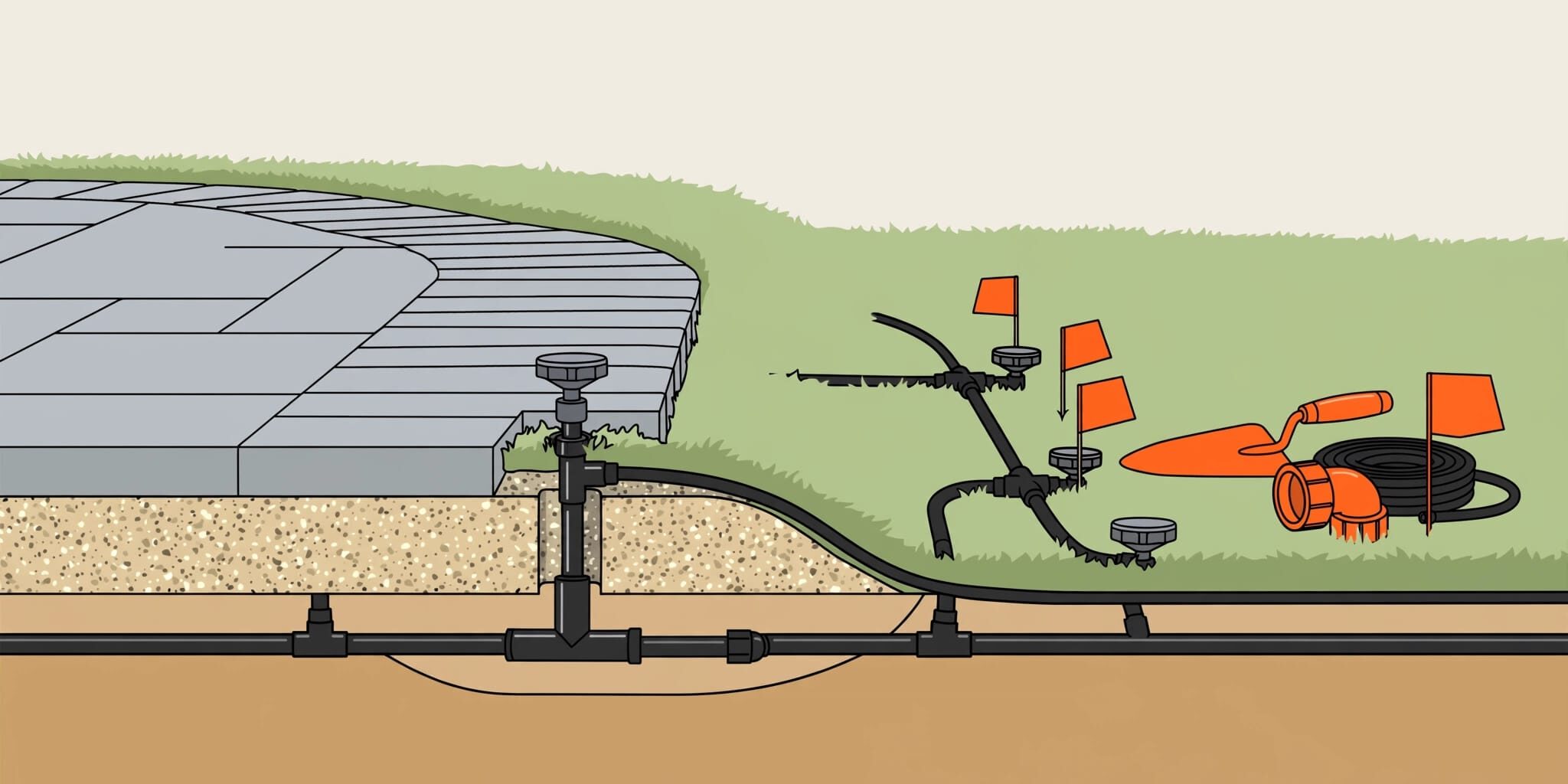
A new patio or walkway can look beautiful, but buried sprinkler lines can turn excavation into a costly repair without proper planning. Finished elevation matters as much as paver color, because hardscape edges must align with lawn boundaries and leave each head at the right height. A low, high, or trapped head can disrupt lawn irrigation and spray across the new surface.
I have seen homeowners install pavers around sprinkler heads, then find dry grass, broken heads, or water spraying across the new surface. It can be avoided when the paver layout and irrigation system are planned together before excavation starts.
Start With the Irrigation Layout, Not the First Paver
Before I remove grass or bring in base material, I map the irrigation system and locate all sprinkler heads. A head can be several feet from the proposed hardscape edges and still be part of the problem if its spray reaches the patio, driveway, or walkway.
Mark Heads, Valves, and Irrigation Lines
Run every zone of the sprinkler system and watch where the water goes. Mark sprinkler heads, valve boxes, drip irrigation, and exposed pipe routes with flags or marking paint. Take photos of exposed routes and document lawn boundaries. They help later when grass, soil, and old borders are gone. Trace sprinkler lines where possible, and check lawn irrigation coverage before excavation while keeping future lawn access in mind.
I also look for heads that already lean, sink below the sod, or spray into planting beds. Don’t let new landscaping or hardscape edges hide those issues. Fixing them before the project starts is easier and less expensive.
Before planning a new patio, review the Florida paver installation process and think about finished height, access, drainage, lighting, and irrigation as one complete project.
Call 811 Before Excavation
I always recommend calling 811 before digging. Irrigation lines aren’t always the only thing under your yard. Electrical wiring, pool plumbing, drainage pipe, and other utilities may be close to the work area. If lines or zones remain uncertain, contact a sprinkler company before excavation.
A small walkway trench can still cause irrigation damage if it cuts into a line feeding pool equipment or a sprinkler zone. The goal is to know what is there before excavation begins, not after water starts coming out of the ground.
Decide Which Sprinkler Heads Stay or Move
Not every sprinkler head should remain beside hardscape. Some can stay outside hardscape edges with proper spacing and adjustments. Others need to move so the lawn gets full coverage without spraying the pavers every morning.
Keep Heads Outside the Paver Edge When Possible
The cleanest layout is usually a sprinkler head set in the grass, outside the paver border, where it remains easy to adjust and service. This position helps lawn irrigation reach the turf without crowding the hardscape. I don’t like trapping sprinkler heads tightly between pavers and turf. They need room for future repairs or replacement.
If a sprinkler is close to a patio edge, I check whether its spray arc can be adjusted away from the surface. Constant overspray can create spray reflection when a hard edge redirects water. That leaves wet areas, encourages algae, and can wash soil or mulch toward the paver joints.
Move Heads That Fall Inside the New Paver Area
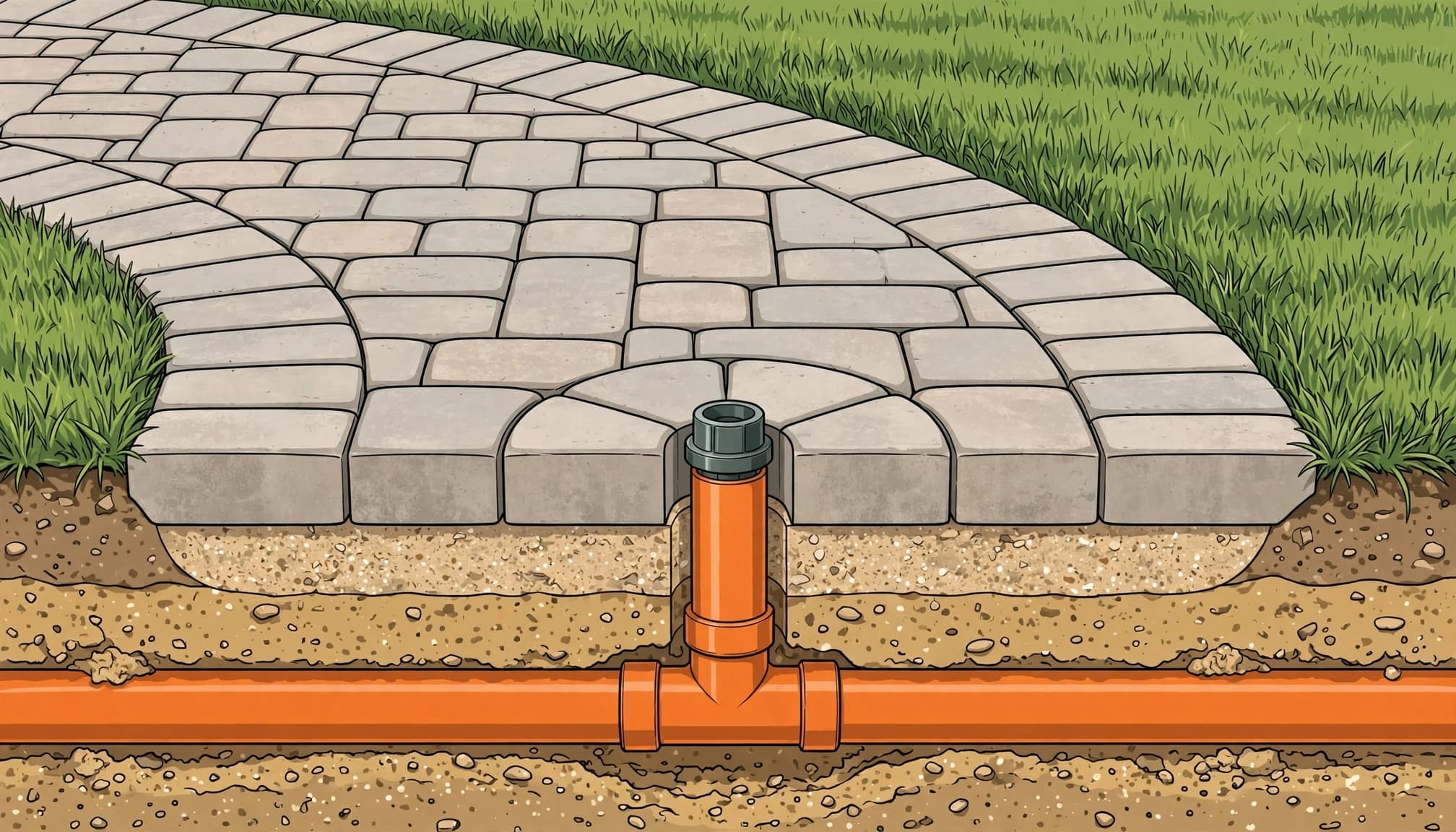
If a new paver patio covers an existing sprinkler head, don’t bury it below the pavers and hope for the best. I first check whether the irrigation system still needs that zone. The head should be removed, capped only after the zone is evaluated, or relocated to protect lawn coverage.
Moving the head often means rerouting a short section of sprinkler lines. This is common around expanded patios, pool decks, and walkways. Relocated sprinkler heads must be positioned carefully, then tested. Test the sprinkler system to confirm spray coverage reaches the lawn boundaries. A head can look fine but still leave a dry strip of grass along the new edge.
A sprinkler head that clears the pavers today can still become too low after new sod, mulch, or soil settles around it.
Protect Irrigation Lines Beneath a Paver Walkway
Sometimes sprinkler lines must cross below a narrow walkway or patio connection to serve nearby sprinkler heads. I don’t treat that decision casually. Once pavers, bedding sand, base material, and edge restraints are installed, access becomes more difficult. Unprotected routes can also suffer irrigation damage during excavation or compaction, leaving lawn irrigation difficult to service.
Use PVC Sleeves When a Line Must Cross Hardscape
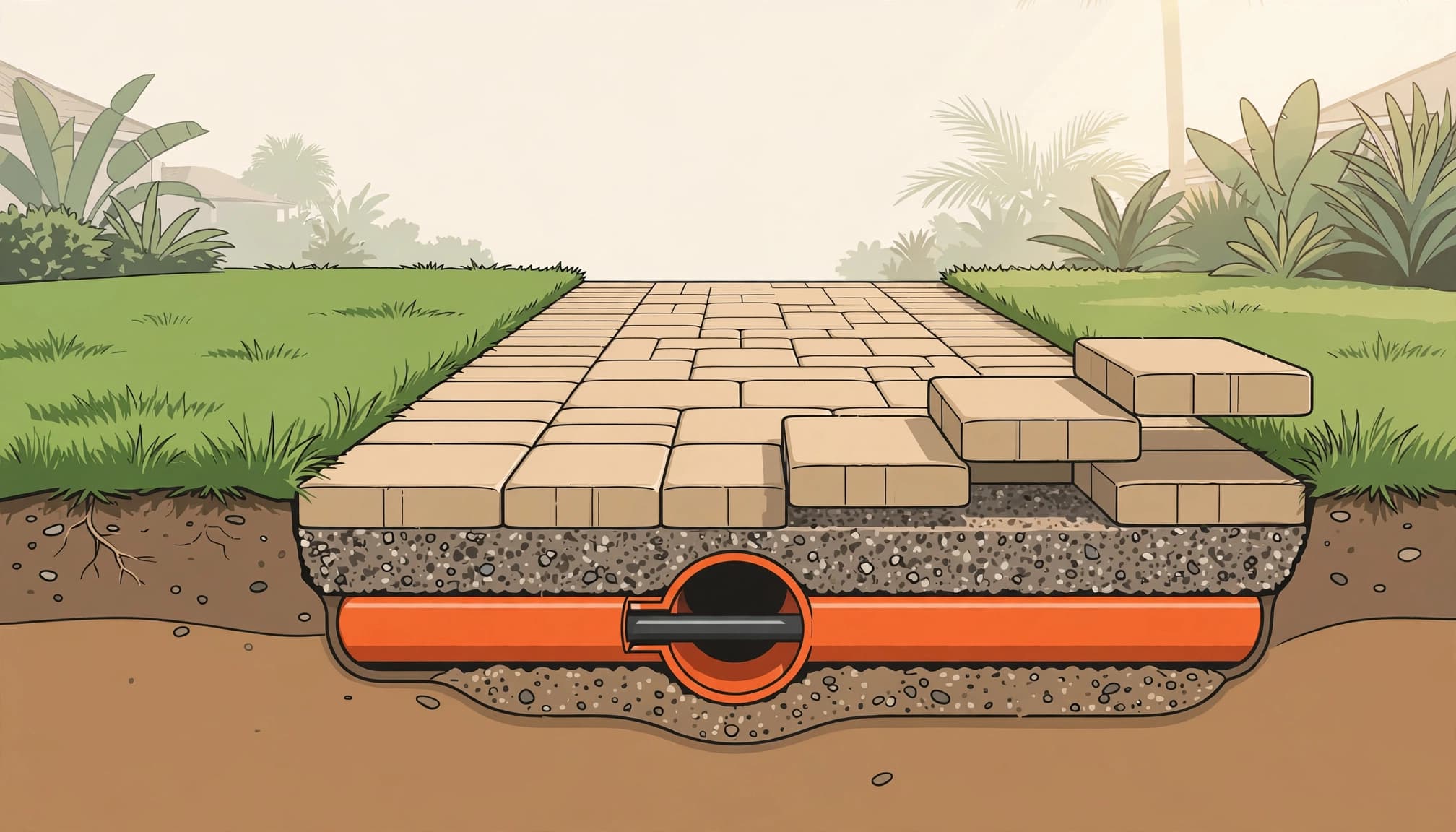
PVC sleeves provide a protected path where irrigation lines pass beneath paved areas. The Medford Water homeowner irrigation guide recommends including sleeves when pipe needs to pass beneath or through hardscape such as a patio or driveway.
Plan the sleeve before excavation, base installation, and compaction. Account for hardscape edges at the crossing point, and size the sleeve to protect the pipe without restricting future replacement. Stable paver installation should never crush or damage the protected route.
Keep both sleeve ends reachable outside the paved section. They should remain visible or accessible beyond hardscape edges, rather than buried beneath a border where no one can reach them.
Reroute Lines When Future Access Matters
For a larger patio, driveway, or pool project, rerouting the irrigation line around the paved area may be the better choice. A longer route can be easier to inspect and repair than irrigation lines hidden below a large hardscape section. In some narrow connections, drip irrigation may also provide a practical alternative route.
This is where a sprinkler company can be a big help. They can coordinate the irrigation system, identify zone pressure issues, and confirm valve locations before work begins. Bigger landscaping projects need coordination, not guesswork.
Install Pavers Around Sprinkler Heads With Service Access
When a head remains beside a paver patio, I build the border so it looks finished and still works properly. The hardscape edges, pipe connection, sprinkler head, and lawn height must work together.
Match the Head Height to the Finished Surface
The top of the sprinkler should match the proper lawn height for reliable lawn irrigation. At lawn boundaries, it shouldn’t sit awkwardly below or above the new paver surface.
If the pavers sit higher than the grass, a short head may become buried by turf and fail to pop up correctly. Taller sprinkler bodies or risers may be needed where new sod, thick grass, or a raised lawn edge blocks the spray. I check the height with the system running, not just while the water is off.
Cut Pavers Carefully Around the Head
A neat paver cut should leave a clean service space around retained sprinkler heads. Keep the hardscape edges clear of bedding sand and joint sand, especially around the cap. The head needs room to rise, turn, and be removed for later adjustment or replacement.
After setting pavers around the head, I check that it remains upright. A head leaning toward the patio can throw water onto the pavers instead of the grass. I run the irrigation system to verify spray coverage and confirm proper water distribution across the lawn.
For homeowners planning a new walkway, our paver walkway installation services can help create a clean border without sacrificing irrigation access.
Hardscape Edges Can Cause Hidden Irrigation Problems
The line where lawn meets pavers may look simple, but hardscape edges move differently over time. Grass, soil, edging, paver base, and compacted aggregate do not settle at the same rate.
Soil Compression Can Tilt Sprinkler Heads
Paver installation requires excavation and compaction for a stable base. Soil compression near the pavers may differ from nearby lawn settlement, shifting grades around the irrigation system and leaving sprinkler heads leaning or sinking.
The Cape Coral guide on sinking sprinkler heads also advises confirming that sleeves protect sprinkler lines before pavers are set. Protecting irrigation lines during this work helps prevent irrigation damage after the base is compacted.
I inspect these areas after strong Florida storms. If water pools beside the paver edge, the grass edge drops along the lawn boundaries, or sprinkler heads sink or lean, lawn irrigation may be changing. These signs can indicate movement below the surface and signal a need to check alignment.
Driveways and Sidewalks Need Extra Attention
Irrigation fixtures beside driveways and sidewalks have less room for error. A small shift can send water onto the pavement, toward a garage, or into a walkway where algae can become a slip concern. Spray reflection can also redirect water across these surfaces.
I also watch roof downspouts and irrigation overspray near these borders. In planting beds, drip irrigation can provide controlled watering without adding overspray near pavement. Water should not dump in one small section and wash soil toward the paver system. Pavers need proper drainage, stable edges, and joints that stay filled.
Consider Drip Irrigation for New Flower Beds
A patio project often includes new flower beds, palms, shrubs, or decorative borders. This is a good time to separate lawn irrigation from bed watering and coordinate the irrigation system at the lawn boundaries.
Drip Keeps Water Off Pavers and Walls
Drip irrigation delivers water near the plant root area. It can reduce overspray onto pavers, screen enclosures, windows, and walls. It also helps avoid the daily wet border that can bring algae, weeds, and mulch washout.
For beds beside a pool deck or patio, keep tubing accessible from the landscape side, especially near hardscape edges. I prefer drip irrigation with repair points kept outside paved areas. Don’t bury a repair point below pavers if it can be avoided.
Adjust Coverage After Every Change
New landscaping changes water needs. A shrub may block sprinkler heads that once covered open lawn. Taller grass may hide a low head. New mulch can raise the bed edge and redirect runoff. A sprinkler company may need to rebalance the zone instead of simply adding watering time.
Run each zone after the project is complete and retest the sprinkler system after planting. Watch for dry turf, overspray, puddles, and water hitting the pavers. Make adjustments early while the area is still clean and easy to access.
Key Takeaways Before Installation Begins
- Map the irrigation system, mark sprinkler heads, and run every zone before excavation.
- Keep retained heads on the lawn side of the paver edge whenever possible.
- Install PVC sleeves before the paver base if an irrigation line must cross beneath hardscape.
- Preserve service access, then check head height and alignment near hardscape edges.
- Correct drainage and overspray before they wash soil or joint material toward the pavers.
- Consider drip irrigation for new planting beds when spray coverage isn’t practical.
- Test lawn irrigation in every zone after compaction, confirming sprinkler heads still provide even coverage.
A good proposal should also explain how irrigation, drainage, landscaping, and existing surfaces will be protected. These are important questions to ask a paver contractor before the work starts.
Frequently Asked Questions
Can sprinkler heads be installed in the middle of pavers?
I don’t recommend placing active sprinkler heads in the middle of a paver patio or walkway. They’re harder to service, may overspray the surface, and can create a weak point in the finished layout. Keep them outside the paved area when possible, with enough room around hardscape edges for adjustments and repairs.
Do sprinkler heads need to be taller after paver installation?
Sometimes they do. If new sod, thicker grass, or a raised lawn edge blocks the spray, a taller body or riser may be needed. Run the zone and inspect the actual lawn irrigation coverage before deciding. For nearby planting areas, drip irrigation may work better than raising a spray head.
Should a sprinkler company be involved in a large patio project?
Yes, when the work covers multiple sprinkler zones, crosses several irrigation lines, or includes a pool, new planting beds, or major grading. I’d rather coordinate the work before installation than open finished pavers later to repair a hidden line.
Build the Paver Layout and Irrigation System Together
Pavers around sprinkler heads can look clean and work properly when the irrigation system and paver layout are planned together. Protect sprinkler heads, mark or reroute sprinkler lines, and account for hardscape edges before excavation begins. Protect sprinkler lines during excavation and compaction to prevent irrigation damage, uneven soil compression, and later movement. Leave access for future service, then inspect the finished outdoor space after every lawn irrigation zone is tested.
This coordinated approach helps keep hardscape edges stable on a new patio and supports future landscaping projects. Retest the system after new landscaping or other changes, then confirm each zone covers the intended area.
At Platinum Pavers of SWFL, I bring more than 29 years of experience to patios, driveways, walkways, and outdoor surfaces throughout Southwest Florida. If your project needs careful planning around irrigation lines and hardscape edges, Get a Free Quote for a consultation and estimate.