


Florida patio pavers must handle rain, pool water, hot sun, and bare feet in the same week. When homeowners ask me to compare these finishes, I start with how the space will be used, not just how the sample looks.
My short answer is clear: tumbled pavers or properly textured surfaces are usually safer for an exposed Florida patio. Smooth pavers can look sharp and work well in the right location, but a glossy surface and wet feet are a poor combination. Any finish also needs a solid base, good drainage, and proper joint maintenance.
What These Paver Finishes Mean Underfoot
These names describe surface treatment, not always the paver material. You can find these finishes in concrete, brick, travertine, porcelain, and natural stone pavers such as limestone pavers.
I always ask for the exact product and paver finish because smooth, honed, matte, and polished are not interchangeable descriptions. Those surfaces do not perform the same way when rain or pool water is present.
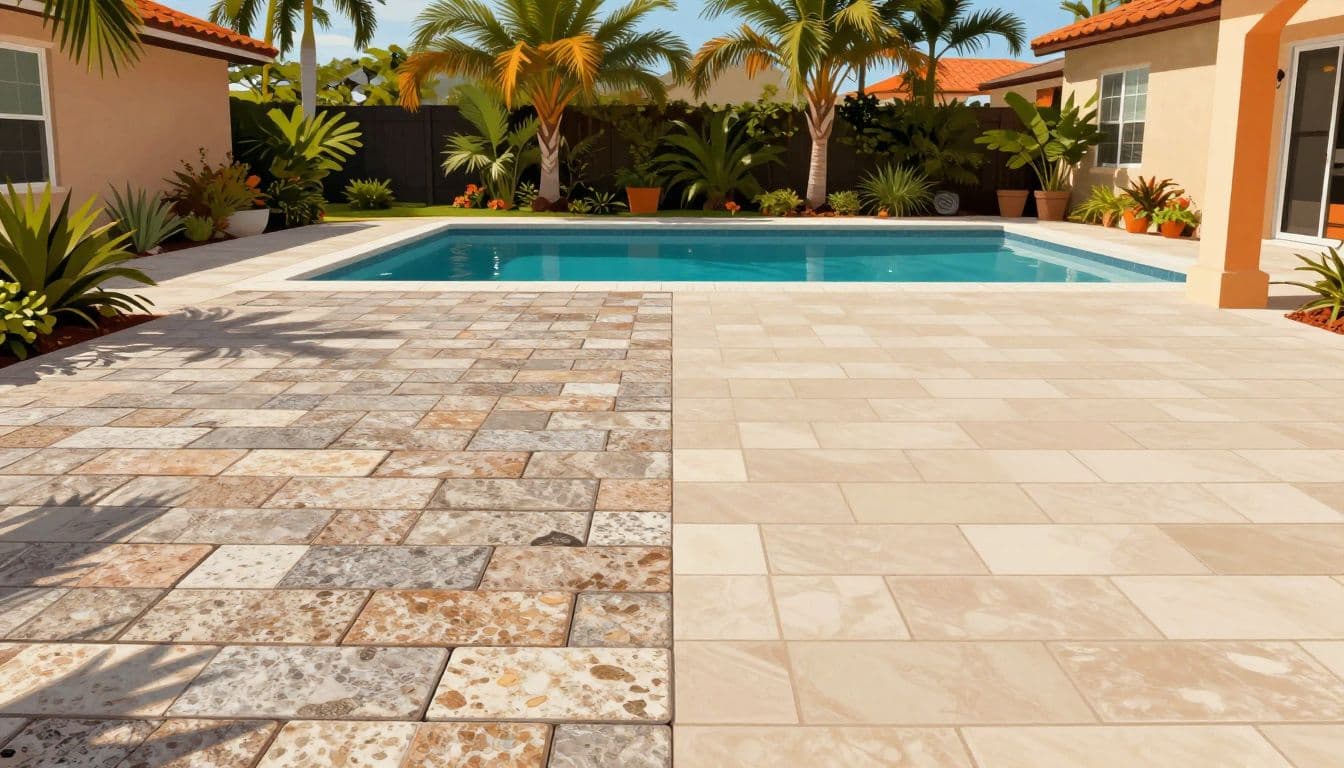
Tumbled pavers create a softer, older look
Tumbled pavers go through a rotating barrel with water and abrasive material. This knocks down sharp corners, rounds the edges, and creates a time-worn appearance.
The process can open small pores and add irregular surface texture, which helps your feet find traction when the surface is wet. This rustic finish hides small color changes, edge wear, and minor marks better than a perfectly uniform surface.
Tumbled does not mean poorly made. A quality paver should still have consistent thickness, sound edges, and a properly manufactured surface.
Smooth Finishes Keep Lines Clean and Modern
Smooth units have flatter faces and cleaner, more defined edges. They fit a contemporary home, large-format layout, or covered patio where you want a neat, simple appearance.
They are often easier to sweep because the face has fewer pits and irregular spots. Still, the safety question depends on how smooth the surface really is.
A matte-faced, exterior-rated paver is different from a polished surface. I don’t recommend a glossy finish for an area that stays wet, even if it looks beautiful in the showroom.
Which finish works best around Florida water?
A pool deck is where the difference becomes most important. Water, sunscreen, body oils, algae, and afternoon rain can turn a marginal surface into a risky walking area.
Florida pool wet-deck guidance calls for a smooth, slip resistant finish. That wording is important because smooth and slippery aren’t the same thing. A sample’s showroom appearance matters less than the exact product’s texture and wet-use rating. You can review the Florida pool wet-deck guidance before making a final decision.
Pool decks need wet-foot traction
For a pool area, I usually recommend tumbled pavers, brushed finishes, or other textured pavers. Travertine, concrete pavers, and exterior porcelain can provide better wet-foot grip when the product is properly rated. Light travertine and light concrete blends stay more comfortable under strong Florida sun than many dark surfaces.
Travertine pavers are also popular because they tend to feel cooler under bare feet. Their natural pits and pores can help with traction, but they can collect leaves, dirt, and algae if the surface is ignored.
Porcelain pavers can be a good low-maintenance choice, but they must be exterior-rated outdoor pavers, not indoor tile. Ask the supplier for published wet slip data, such as DCOF, and follow the manufacturer’s installation system. Polished porcelain tile has no place beside a residential pool simply because it’s labeled porcelain.
Patios and walkways allow more flexibility
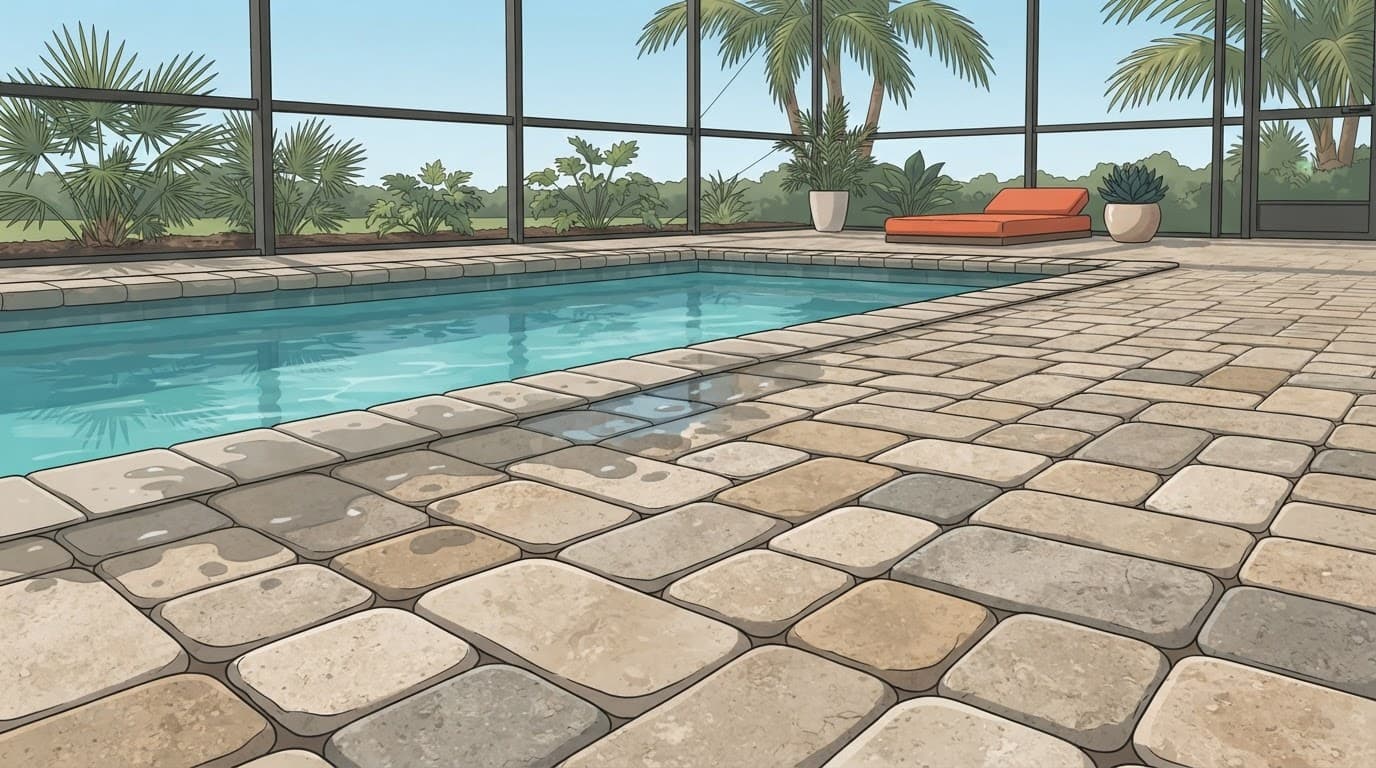
For a covered patio, outdoor kitchen area, or garden walkways in a dry setting, patio pavers with a smooth matte finish may be a good fit. They give outdoor furniture a clean setting and support a simple outdoor design, while usually making sweeping easy.
Covered areas allow more flexibility, but steps and sloped paths still need traction. Rain exposure and direct connections to a pool area call for a more textured choice.
You can combine both finishes in one backyard. A smooth finish can define a seating area or border, while textured units cover the pool edge and main walking paths. Keep the color family, thickness, and installation pattern close so the combination looks planned.
Material choice matters as much as the finish
The finish is only one part of the decision. The material affects heat, stains, upkeep, and how forgiving the surface will be after years of rain and foot traffic.
| Material | Heat and porosity | Wet grip | Sealing and maintenance |
|---|---|---|---|
| Travertine | Usually cool and porous | Texture helps improve grip | Use a penetrating sealer and monitor algae |
| Concrete | Heat varies by color and exposure | Texture supports traction | Confirm the product is suitable for wet use |
| Brick | Moderately porous with textured joints | Joint texture adds grip | Replenish joint sand and watch surface wear |
| Porcelain | Dense and generally cooler | Matte surfaces provide reliable grip | Exterior-rated products usually don’t need sealing |
The best patio pavers depend on the location, material, and intended use, not the appearance of a sample or the lowest starting price.
Travertine pavers and concrete pavers
Tumbled pavers made from travertine provide a natural appearance, cooler surface temperatures, and useful texture. They still need care. A penetrating natural-stone sealer can help protect the material, but a glossy film-forming sealer may make a wet surface slick.
Concrete pavers offer more color and pattern choices, while textured surfaces can provide dependable traction. For technical information on paver installation and interlocking concrete pavement applications, the CMHA application guide covers patios, driveways, and slip and skid considerations.
Porcelain pavers and brick pavers
Exterior porcelain pavers are dense, stain resistant, and generally don’t need sealing. This durable material still requires an exterior rating. Thin indoor tile or polished porcelain isn’t a substitute for a properly rated outdoor paver system.
Brick pavers bring a familiar Florida look and can work well on patios and walkways when the surface has enough texture. The joints matter too. Missing sand allows movement, weeds, and water intrusion to increase over time.
Maintenance keeps the finish safe
Florida humidity makes regular cleaning important, especially in shaded areas and around pools. Organic buildup can make both textured and smoother surfaces slippery, so maintenance remains part of the safety plan.
Cleaning should protect the joints
Start with a broom, clean water, and a mild cleaner approved for the material. Remove leaves, soil, sunscreen residue, and standing debris before they build up.
Pressure washing can help when pavers develop a heavy crust of dirt or algae, but too much pressure can chip the surface and blow sand out of the joints. I use controlled pressure, a wider fan tip, and the correct working distance instead of holding a narrow nozzle in one spot.
After cleaning, inspect the joints because missing material can let pavers rock or shift; follow the system and manufacturer’s specifications. Use polymeric sand only when specified, then replenish missing material with polymeric sand or another approved product and settle it properly.
Sealing depends on the material
Travertine may benefit from a penetrating sealer every two to three years in a pool setting. Traffic, water exposure, and the product determine the schedule.
Some concrete and brick surfaces may also benefit from sealing, but I avoid glossy, film-forming products that can create a slick wet surface. Porcelain usually does not need sealing because it is non-porous as manufactured.
Seal pavers only after the base, drainage, and surface are already performing correctly. A sealer won’t repair a weak base or stop water from collecting, but it can protect a properly functioning surface.
The base and drainage matter more than the surface
A beautiful paver can still fail when the ground below it is unstable. Water, disturbed soil, weak edge support, and poor compaction can cause rocking units, open joints, and uneven areas.
Drainage protects the entire patio
I look at the slope, low spots, edge restraints, joint condition, and base preparation before recommending a repair or replacement. Runoff from retaining walls can wash soil toward a patio or paver edge. Water should move away from the house and should not sit beside the pool deck or lanai after a storm.
Southwest Florida homeowners usually deal with heavy rain, heat, humidity, and settlement rather than repeated freeze-thaw cycles. In colder climates, freezing water can expand inside pores and joints. Here, water washing through a weak base is often the larger concern.
Adding a new paver on top of a failed base only hides the problem for a short time. A lasting repair may require lifting the affected section, rebuilding the base, compacting it in layers, and correcting the drainage.
Screen enclosures require extra care
Cracked pavers beside a screen enclosure often show that the footing and paver system have moved at different rates. Excavation, heavy rain, disturbed soil, or a poor rebuild around the footing can create gaps and settlement.
I inspect the enclosure posts, footing edge, paver joints, base, and water flow together. Don’t drill into the footing, move screen posts, or alter the anchors without qualified guidance. Screen enclosures are designed for high wind loads, and the foundation connections are part of that system.
Minor paver resetting often does not require a permit, but projects involving structural footings, screen enclosures, or retaining walls may require additional review. Local rules vary, so check with the building department before starting. If digging is needed, use Sunshine 811 to locate underground utilities.
Choosing the right finish for each project
For a Florida pool deck or exposed patio, my first choice is light-colored textured pavers over a properly prepared base. Tumbled pavers can suit an exposed wet area, while a matte smooth finish may work in a covered seating area. Confirm the product is slip resistant and rated for outdoor, wet-use conditions.
Driveway pavers need a different specification from pedestrian areas. Pedestrian units are commonly around 60 mm thick, while vehicle areas often use 80 mm, or approximately 2-3/8-inch, concrete pavers. Paver thickness alone doesn’t guarantee strength, so follow the manufacturer’s specifications and confirm the units are vehicle-rated and installed over the correct compacted base.
If you are comparing patio pavers for a new pool area, outdoor living space, walkway, or driveway in Fort Myers, Cape Coral, Bonita Springs, Punta Gorda, Sarasota, or nearby communities, my team can inspect the site and explain the practical difference. Contact Platinum Pavers of SWFL for a Get a Free Quote before choosing the finish.
Frequently Asked Questions
Are tumbled pavers safer around a Florida pool?
Tumbled pavers usually provide useful texture and wet-foot traction around an exposed pool deck. The exact product still needs to be exterior-rated and suitable for wet use because tumbled does not automatically mean slip resistant.
Can smooth pavers work on a Florida patio?
A smooth matte finish can work well on a covered patio, outdoor kitchen area, or other location with limited water exposure. Avoid polished or glossy surfaces beside pools, on steps, and along sloped walkways where wet feet can create a slipping risk.
Do tumbled pavers need to be sealed?
Travertine and some concrete or brick pavers may benefit from a penetrating sealer, depending on the material and exposure. Avoid glossy film-forming sealers because they can make a wet surface slick, and remember that sealing will not correct poor drainage or a weak base.
How do I keep patio pavers from becoming slippery?
Sweep away leaves and debris, remove algae and sunscreen residue, and clean the surface with a material-approved mild cleaner. Inspect the joints, correct standing water, and use controlled pressure washing so the surface and joint sand are not damaged.
Conclusion
The textured option usually provides better wet traction, a forgiving rustic appearance, and comfortable footing around pools and open patios. The matte option can still suit covered or dry areas when it’s exterior-rated and unpolished.
The surface is only part of the result. Drainage, base preparation, edge support, joint sand, and regular maintenance help keep the patio safe and level. Choose based on water exposure, traffic, and Florida weather.