

When budgeting for patio pavers repair, plan on $1,200 to $2,800 for a smaller project. Larger patio overhauls can reach $3,500 to $8,000. Replacing a few individual pavers may cost only $200 to $500 when the surrounding base is sound.
The final price depends on what has failed underneath the surface, not just how many stones look damaged. I recommend checking the base, drainage, joints, and edge support so you pay for work that addresses the problem.
Here is how I would plan the budget before approving the work.
Key Takeaways
- Allow $1,200 to $2,800 for smaller repair projects and $3,500 to $8,000 for extensive patio work.
- Base stabilization, drainage correction, difficult access, and matching replacement materials can increase the price.
- Compare written scopes that explain what gets removed, rebuilt, reset, and finished, rather than choosing by the lowest total alone.
Typical Paver Repair Cost by Project Type
Use these figures as a planning estimate, not a property-specific quote or a measured Southwest Florida average.
| Project type | Estimated cost range |
|---|---|
| Replacing individual damaged pavers | $200 to $500 |
| Smaller-scope repair project | $1,200 to $2,800 |
| Crack-related repair work | $1,000 to $3,000 |
| Crack filling, where appropriate | $1,500 to $3,000 |
| Leveling with base stabilization | $1,200 to $3,500 |
| Sealant application | $500 to $1,500 |
| Larger or full patio overhaul | $3,500 to $8,000 |
Project size and the work required affect the total. A small repair that replaces one broken paver over a firm base costs less than fixing a settled section with washed-out material underneath. These broad figures also don’t replace a site-specific assessment for driveway pavers repair.
These categories overlap. A leveling quote may already include lifting, base preparation, resetting, and joint sand. Don’t add every table row together unless those are separate services.
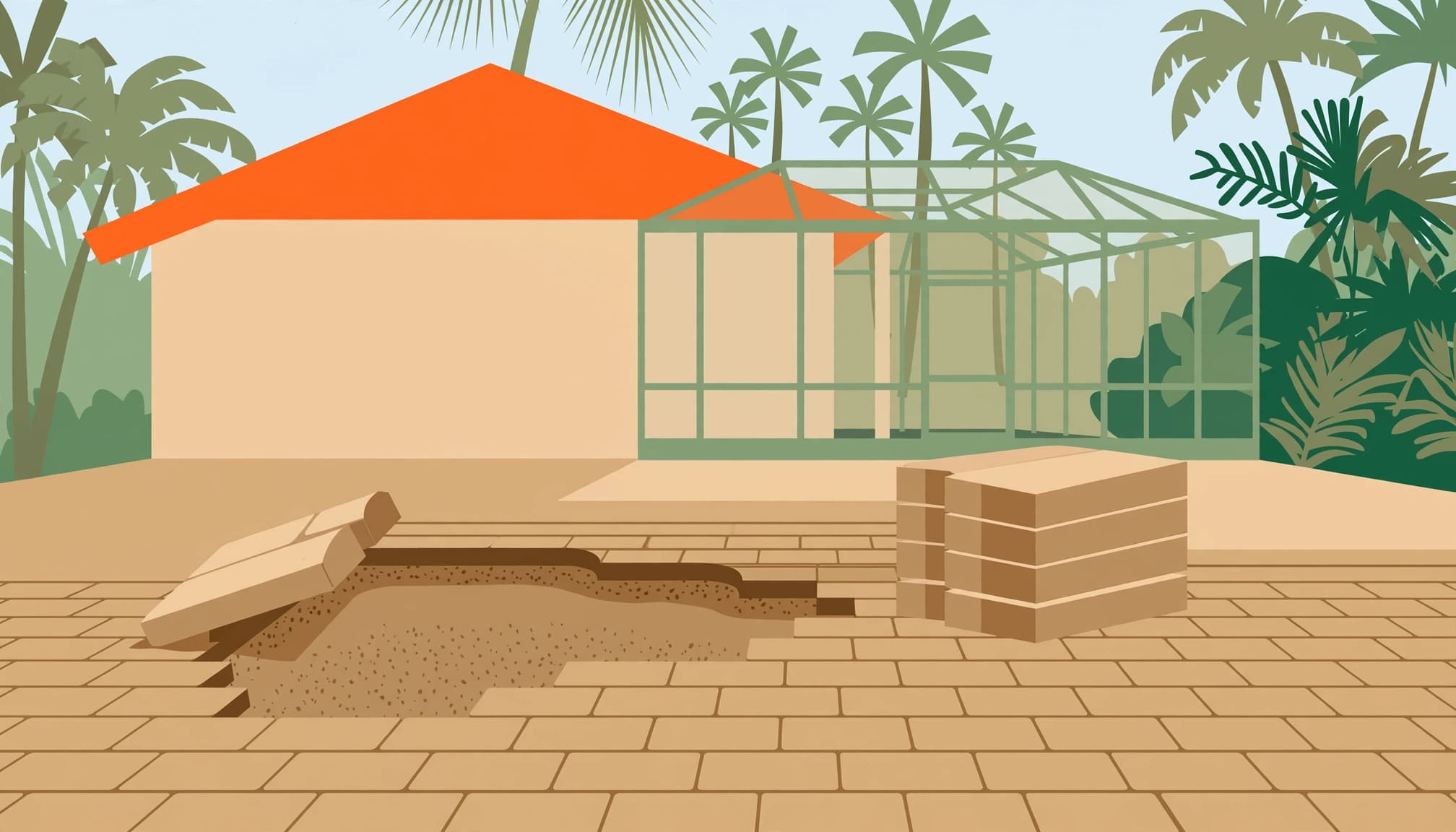
Crack filling deserves a closer look. For individual concrete or brick pavers, replacing the damaged unit is usually more appropriate than treating it like a cracked poured-concrete slab.
Permit charges are separate when required. Lee County’s residential driveway fee schedule lists $95 for a single driveway permit. That isn’t an automatic charge for every patio repair.
What Makes One Repair More Expensive?
Base condition, drainage, materials, access, and labor are the main cost factors. These site conditions can make two similar-looking damaged areas need different work. I want the estimate to explain why before the project starts.
Base condition and drainage
Southwest Florida’s sandy ground and heavy rain make the support below your pavers important. Loose fill, missing aggregate, downspout runoff, and poor grading can leave a surface without reliable support.
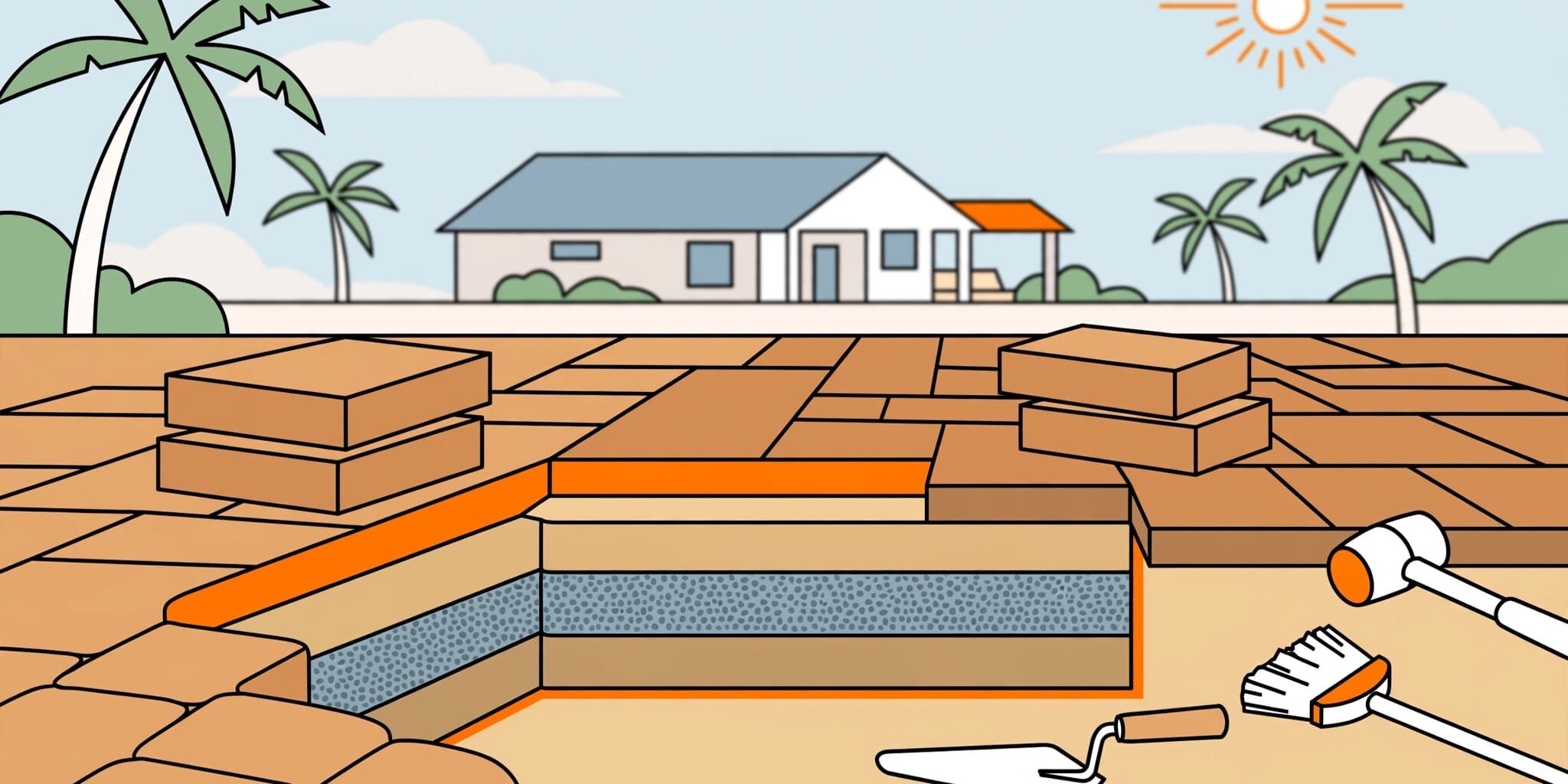
A proper assessment includes the bedding layer, aggregate, surrounding soil, joints, and edge restraint. Soft material or a void can require excavation and rebuilding beyond the visibly low spot.
My guidance on paver bases in sandy soil explains why surface leveling alone may leave the original problem in place. Water needs a safe path away from the repaired section.
Materials, access, and labor
Materials affect replacement cost: concrete pavers, clay brick, and natural stone don’t carry the same price. Matching an older size, thickness, color blend, or discontinued product can also add work.
Access affects labor complexity. Moving aggregate through a narrow pool enclosure takes more handling than working beside an open driveway. Curves, edging, borders, tight cuts, and transitions around coping or garage slabs increase labor.
I also separate necessary repairs from optional improvements. Sealing, decorative borders, and wider replacement areas should be clearly identified so you know what each service adds to final pricing.
Per-Square-Foot Prices Need a Defined Scope
Square-foot pricing is useful only when both estimates describe the same work.
| Work category | Broad planning rate |
|---|---|
| Minor crack-related surface repair | $2 to $4 per square foot |
| Resurfacing or surface-restoration work | $4 to $8 per square foot |
| Basic full replacement | $8 to $15 per square foot |
| Edge repair | $10 to $20 per linear foot |
These rates don’t replace a complete project estimate. Small jobs still require travel, setup, equipment, material handling, and cleanup, so their effective square-foot price can be higher.
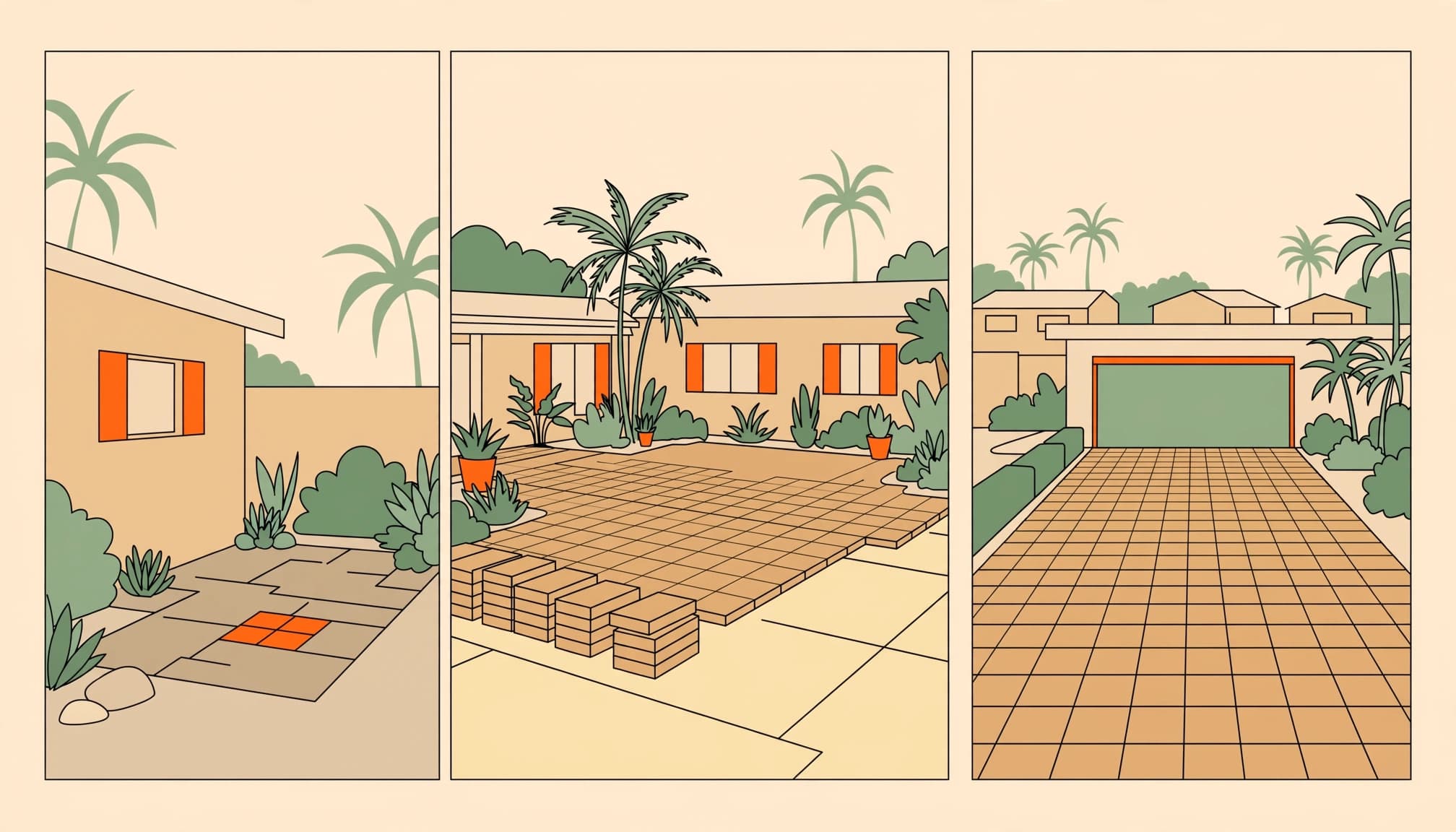
For a complete patio installation, my Southwest Florida patio pricing guide uses a broader allowance of $8 to $24 per square foot. Demolition, drainage, premium materials, and difficult site conditions can move replacement beyond a basic allowance.
Also ask what “resurfacing” includes. Cleaning, restoring joints, applying a coating, and replacing worn pavers are different services. A finish applied over moving pavers won’t rebuild their support.
What Repair Does the Damage Need?
The condition of the surrounding area helps determine whether a targeted repair is reasonable or a larger section needs attention.
Sunken or collapsed pavers
Sunken pavers can often be lifted and reused without relaying the entire patio. Badly damaged units may need paver replacement instead. When planning patio pavers repair, assess how far the unstable material extends.
I look for washout, wet aggregate, loose fill, spreading edges, and changes in drainage. If the base has failed, the affected material needs removal before suitable aggregate is compacted in layers.
The pavers are then reset to match the surrounding height and drainage slope. My explanation of repairing sunken brick pavers shows why enough surrounding material must be opened to reach stable support. The same base and support checks apply to paver porch repair, especially where water drains toward the house.
A sudden collapse or deep opening deserves professional assessment before you walk or drive over it.
Cracked pavers and moving borders
An isolated cracked unit with firm surroundings may need only crack repair and joint restoration. Several cracked units, rocking stones, or a separating border suggest a larger support problem.
Edge restraints matter because they keep the outer rows from spreading. Replacing pavers without restoring a failed edge leaves the repaired area vulnerable to movement.
A small damaged spot can require a larger repair footprint when the surrounding base has lost support.
How Much Should Sealing Add?
Allow approximately $500 to $1,500 as a broad planning range for sealant application. Area, cleaning requirements, joint preparation, product coverage, and the condition of an existing coating affect the final price.
I recommend completing structural repairs first. The pavers should be stable, properly prepared, and ready for the selected product before sealer is applied.
Ask whether the sealing price includes cleaning, stain treatment, joint-sand replacement, or removal of failed sealer. Those services can change the total considerably.
My approach to brick paver restoration treats repair, cleaning, joint work, and sealing as related services. Each needs a defined purpose. Sealer can protect the finished surface, but it cannot correct settlement or replace missing base material.
Do Paver Repairs Require a Permit?
There isn’t one permit rule for every paver repair throughout Southwest Florida. Project location, right-of-way work, structural changes, drainage changes, and the extent of construction affect the requirements.
Lee County states that a residential driveway permit is required for new driveways or improvements within the right-of-way at existing single-family homes or duplexes. Its driveway permitting requirements distinguish that work from a simple private patio repair.
Replacing individual units in an existing patio is a different scope from widening an entrance, changing a driveway apron, or rebuilding an area that affects drainage.
I want permit responsibility identified in the proposal whenever it applies. The written scope should name who handles the application, fees, and required inspections, rather than leaving those costs outside the agreement.
What Should a Professional Repair Estimate Include?
A useful written price breakdown gives you more than a total. It explains the project scope, what the contractor will do, and how unexpected conditions will be handled.
The repair boundary and rebuilding work
The proposal should identify the area being lifted, which pavers will be reused, which units need replacement, and the materials specified. It should also describe excavation, unsuitable-material removal, base aggregate, compaction, bedding material, and edge support.
Joint sand belongs in the scope too. Polymeric sand is a joint filler, not a substitute for the structural base or bedding layer.
I recommend comparing these details side by side. A lower quote may cover resetting the surface while another includes rebuilding the failed support underneath.
Exclusions, changes, and warranty terms
Drainage work, disposal, equipment access, cleaning, and sealing should be included or clearly excluded. If hidden washout increases the repair area, the agreement should explain how additional work gets priced and approved.
Written warranty terms should describe workmanship coverage and the process for addressing settlement, opening joints, or moving edges. Clear expectations protect your budget and give the contractor a defined standard to deliver.
Frequently Asked Questions
Can spare pavers help lower the repair cost?
Yes. Suitable spare pavers can reduce replacement-material costs and make matching easier, but they won’t eliminate labor or base work.
I compare dimensions, thickness, surface texture, and wear before recommending reuse. Even the correct original color can look different beside pavers exposed to years of sun, traffic, and sealer. Sometimes a weathered paver from a less noticeable area provides a better visible match.
Is a small paver repair a reasonable DIY project?
An isolated damaged unit over a firm base can be a reasonable homeowner project. My advice on replacing a broken paver explains how to protect the surrounding pattern.
Budget for replacement units, joint material, tools, and any equipment rental. DIY savings become less attractive when the job involves deep settlement, recurring washout, driveway loading, or uncertain drainage. Those conditions need more than a surface adjustment.
Pay for the Repair That Solves the Problem
A realistic paver repair budget starts with the condition below the surface. Reusing sound pavers can save money, but proper base preparation, drainage, and edge support shouldn’t be removed from the scope to lower the price.
I want your patio, driveway, or walkway to look good and remain dependable. A clear written price breakdown makes it easier to understand what you’re paying for.
Contact Platinum Pavers of SWFL and Get a Free Quote for a free consultation and project-specific pricing.