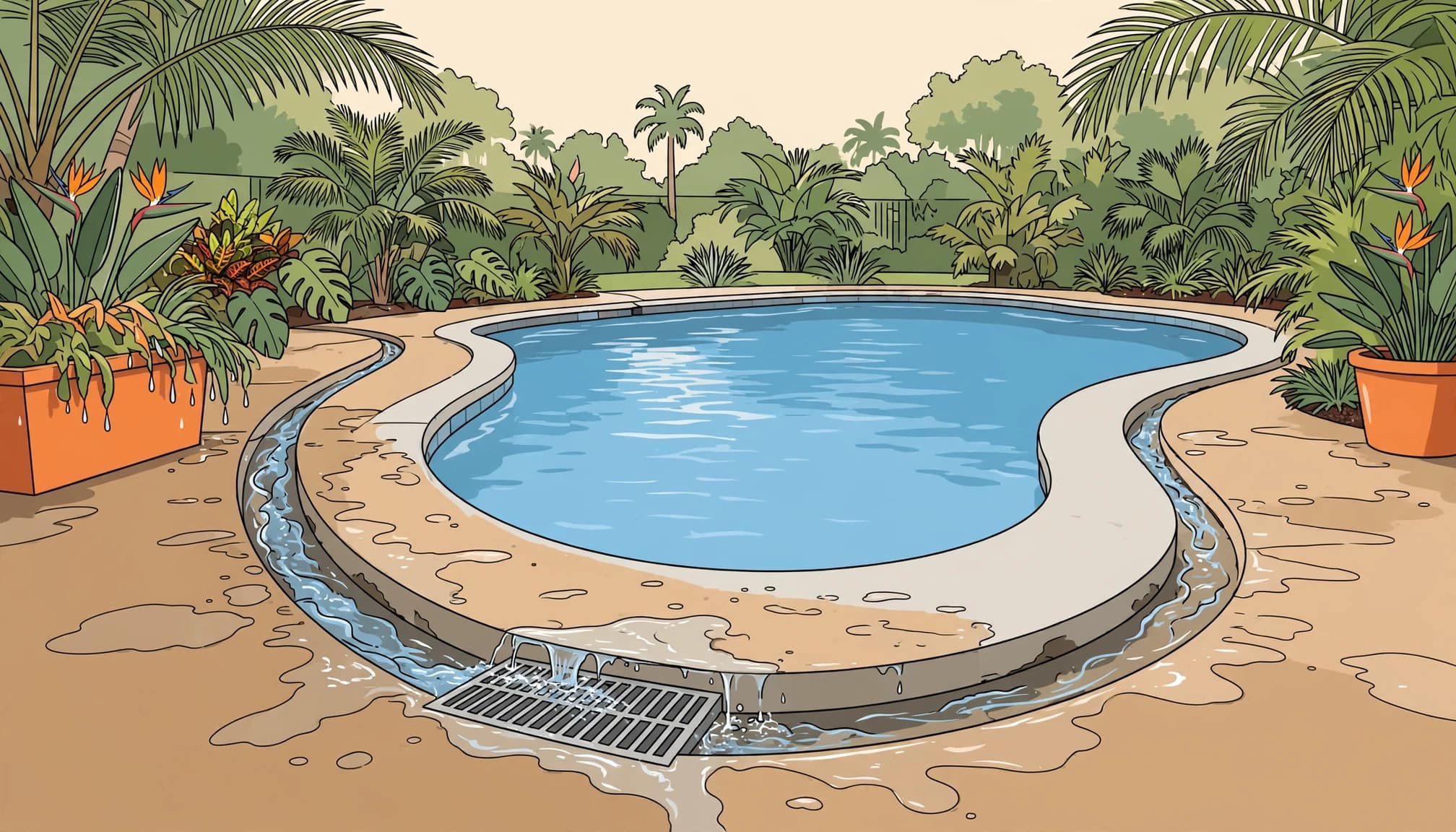
A pool deck can look clean and level, then one hard Florida storm shows where the real problem is. Pool deck drainage channels catch surface water before it can sit against coping, wash out paver bedding, or create slick walking areas around the pool perimeter. Finished decking should generally direct water away from coping and walking areas toward the collection channel, with the exact slope verified against the drain manufacturer’s instructions and applicable local building codes.
I have seen small gaps near a pool edge become loose pavers, standing water, and expensive repairs when ignored. The right drain is not only about moving water. A deck drain system works when the channel, slope, coping joint, waterproofing, and outlet work together. Surface drainage moves runoff, while waterproofing protects the coping and deck transition. A qualified pool or drainage professional should review unusual grading, structural movement, or code-sensitive work.
Why Water Around Pool Coping Causes Damage
The pool edge takes more punishment than almost any other part of the backyard. It gets pool splash, rain, heat, wet feet, furniture, cleaning chemicals, and irrigation runoff every day.
Water finds the weak spot
When the deck slopes toward the coping instead of away from it, water can collect beside the pool. A properly graded surface sends water runoff toward the channel before it reaches the coping joints.
Moisture can then work beneath the deck surface. On a paver deck, it may move joint sand and soften the bedding layer below.
The pavers may begin to settle while the coping stays in place. That is when you see a gap beside the pool, a rocking paver, or a low section that holds water after the rest of the deck dries.
Waterproofing and properly sealed coping transitions also help keep moisture out of vulnerable joints. Every transition should stay sealed as the deck and pool structure move slightly over time.
A drain grate only collects water. It can’t fix a failed base, blocked outlet, or poor grade beneath the deck.
A channel drain is different from a point drain
A point drain collects water at one location. It can work in the right spot, but a pool deck usually has long edges and several low points.
A deck drain system with linear collection catches water along a longer run. A trench drain can intercept runoff before it spreads across the deck, while a point drain depends on water reaching one opening.
That is why a linear channel drain beside coping, at a screen enclosure, or between a deck and landscaping can make sense. The layout may require an angle fitting at a corner or change in direction.
The drainage system must still direct water to a suitable outlet. Confirm that the outlet connection works with the selected schedule 40 pipe rather than assuming compatibility. Water can’t disappear because a grate is installed.
Choosing Pool Deck Drainage Channels That Fit the Deck
The best drain is not always the biggest or most expensive one. I look at the deck material, rainfall exposure, outlet location, pool shape, and whether the project is new construction or a repair.
Concrete decks need a formed-in system
For a newly poured concrete pool deck, a purpose-built PVC deck drain is a common channel drain choice. The drain body should also be sized for the expected flow rate.
The DECK-O-DRAIN PVC system is a practical deck drain system for concrete pool decks, with durable PVC construction. If the outlet changes direction, an angle fitting can simplify the connection.
The drain body has to be set at the correct elevation before the concrete pour. Before placement, confirm the outlet slope, down adapter, and compatibility with schedule 40 pipe. Once concrete hardens, correcting a low drain, high grate, or poor outlet connection becomes much harder.
Paver decks need stable edges and removable access
Pavers move differently than a concrete slab. They sit over a compacted base and bedding layer, so the drain frame and surrounding pavers need firm support. A low profile drain or channel drain can look great around a modern pool, but it cannot float over washed-out sand.
For a paver deck, I want a removable top, a drain detail that can be serviced, and clean transitions at coping and corners. At the coping, an angle fitting should preserve the slope and waterproofing at the deck edge.
If the deck already has low spots, consult a qualified local professional before installing new drainage pieces. Check the outlet path too, since a second angle fitting may be needed before the schedule 40 pipe connection.
PVC or stainless steel?
PVC is practical, proven, and often a good fit for concrete deck drainage. Stainless steel can give a more refined look, especially with stone, porcelain, or modern pool finishes.
Vodaland describes its pool and patio slot drains as low-maintenance drainage solutions for residential applications. Its 304 stainless steel products are described as corrosion resistant, but material alone does not make any drain maintenance-free. Salt air, debris, water chemistry, installation quality, and the placement of any third angle fitting still matter.
Flow Rate Is More Than a Number
Homeowners often ask about the maximum flow rate of a deck drain. That number matters, but I wouldn’t choose a system from one number alone. The channel size, outlet size, pipe run, slope, number of turns, and debris load all affect performance. The required flow rate also depends on rainfall intensity and the area draining toward the channel.
Match the drain to the water load
A narrow channel drain may be fine for a protected pool patio with light water runoff. A larger channel may be needed where roof runoff, long deck runs, or heavy storms send more water across the surface. Channel length and outlet capacity also determine the practical flow rate.
NDS channel and trench drains are listed for light-flow residential applications, including pools, spas, and patios. NDS also describes its Spee-D Channel Drains for moderate water flows around pool areas, concrete patios, paver patios, and walkways. A trench drain made for residential applications isn’t automatically suitable for commercial water drainage or heavier loading.
The outlet controls the real result
A high-rated channel can still fail when the outlet, down adapter, pipe sizing, or grade is inadequate. Before installation, identify where the collected water will go and confirm the underground pipe route. The outlet’s flow rate must match the pipe run, turns, and slope required to move water away.
Don’t assume every drain connects to standard schedule 40 pipe the same way. Some systems use a specific outlet adapter, down adapter, or angle fitting. Confirm whether the selected outlet accepts schedule 40 pipe and whether another angle fitting is required for the planned route.
Follow the manufacturer’s instructions for the drain body, outlet connection, schedule 40 pipe, down adapter, and approved fittings. Verify schedule 40 pipe sizing, the required slope, and local code with a qualified professional before installation.
Installing a Drain in a New Concrete Pool Deck
New pool construction is the easiest time to plan drainage correctly. The pool builder, concrete contractor, and drainage installer can coordinate the channel drain, deck elevation, and outlet before the finished surface is placed. Review local code and permit requirements where required.
Set the finished height before pouring
The channel top should finish flush with the deck surface or at the elevation required by the manufacturer. A grate set too high becomes a trip hazard. A grate set too low collects sediment and creates a narrow puddle beside the opening.
I check the coping line, continuous deck slope, drain outlet, and final surface height before concrete is placed. The pre-pour checklist includes the outlet connection, schedule 40 pipe, and down adapter. At corners, I dry-fit an angle fitting and confirm the layout before securing each section.
The channel needs a firm base and straight alignment. Use a second angle fitting where the run changes direction, and connect the outlet to schedule 40 pipe as specified. Installation brackets may help, but use them only when the manufacturer specifies them.
Seal and waterproof the coping and deck interface before the pour. A third angle fitting may be needed to keep corner transitions aligned and prevent water from bypassing the deck drain system.
Protect the channel during concrete placement
Concrete can push lightweight channel sections out of alignment if they aren’t braced correctly. Secure bracing keeps the grate flush while the deck is poured. Wet material can also enter the channel and block the interior if the opening is left exposed.
Protective tape or a manufacturer-approved cover keeps concrete out of the drain during placement. A removable top also protects the channel edge from scratches and splatter. Remove the protection carefully after the concrete has cured enough, then inspect the grate and channel for debris.
Corners, End Caps, and Coping Transitions Matter
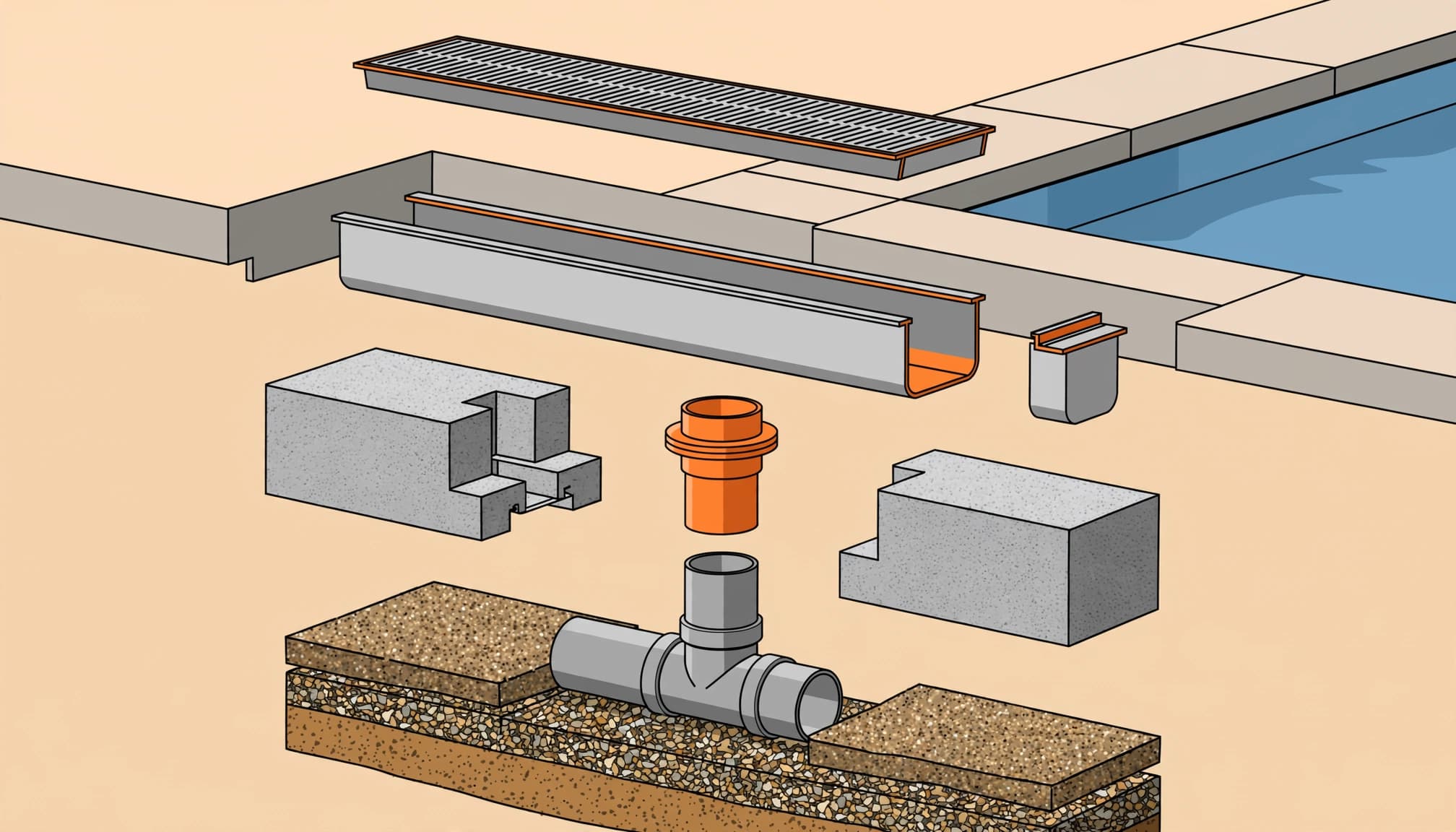
Drain channels usually fail at the details, not the long straight runs. A pool channel drain must work around curves, steps, skimmer areas, and enclosure posts. Plan those areas before cutting any pieces.
Use the fittings made for the system
An end cap closes a channel where the run stops. A second end cap may be needed at another termination point. Angle fittings, tees, crosses, and outlet pieces direct water through the system. Don’t mix components from different brands unless the manufacturer confirms compatibility with the selected deck drain system.
Use this compatibility checklist before ordering:
- Inside corners: confirm the angle fitting orientation and match it to the adjoining angle fitting.
- Outside corners: choose the correct angle fitting and verify the adjoining angle fitting.
- Direction changes: confirm the angle fitting angle and the next angle fitting in the run.
- Outlet transitions: match the angle fitting, outlet piece, down adapter, and specified schedule 40 pipe.
- Coping curves: select an angle fitting that matches the system’s curve or flexible transition.
If the manufacturer lists them, a tee fitting, cross fitting, or side adapter can extend the layout. Confirm whether the outlet accepts schedule 40 pipe or requires a proprietary connection. Some drain systems use non-directional sections, while others need left or right fittings for corners. Check the selected product guide before ordering. The wrong corner piece can slow the job down and create a poor-looking transition around the coping.
Keep service points accessible
A removable grate is important because leaves, mulch, sand, and sunscreen residue eventually find their way inside. Keep a removable top, cleanout, outlet, skimmer lid, and drain access point accessible. Don’t bury any of them under pavers, mortar, or a permanently glued cover.
If you’re working near an older pool skimmer or equipment line, inspect before digging deeper. Older plastic collars may be cracked or poorly supported. Call 811 before excavation near utility areas, and remember that utility locating doesn’t shut down pool plumbing or equipment. Confirm local requirements before cutting or excavating near the pool structure.
Paver Deck Drainage Needs More Than a New Grate
A channel drain can improve water control, but it cannot stabilize pavers that have lost their base. The deck drain system also needs the right outlet, corner connections, and supporting grade. I look for the cause of movement before recommending a surface repair.
Watch for early warning signs
Loose or rocking pavers, missing joint sand, open seams near the coping, and puddles after rain are signs worth checking. A damp or soft area beside the deck can mean water is getting underneath the surface.
I inspect downspouts, irrigation, pool overflow paths, nearby soil grade, and the slope toward the drain. I also check whether coping has moved and whether water enters through an unsealed coping transition. Waterproofing or sealed joints may be needed where moisture is getting beneath the edge.
At corners, an angle fitting should keep the channel aligned without forcing the paver edges apart. At the outlet, a second angle fitting may help direct flow into schedule 40 pipe when the layout changes direction.
Repair the base before resetting pavers
Loose sand under one low paver is not a lasting repair. The affected pavers and base must be lifted, inspected, re-compacted, and restored to the correct grade before the drain frame or pavers are reset. Then the joints can be refilled with the right sand.
If coping is moving, cracked, or separating from the deck, it needs attention too. The pool edge is connected to the pool structure, while the paver deck relies on the supporting base underneath. Settlement, continued movement, or structural cracking requires evaluation by a qualified pool or deck professional.
Keeping a Pool Deck Drain Clean and Working
Maintenance is simple, but it needs to be regular. A deck drain system that is ignored through wet season can fill with leaves, sand, mulch, and algae before you notice a problem.
Clean debris without damaging the drain
Sweep the deck often and inspect the removable top before lifting it carefully. Clear leaves and sediment from the channel drain and angle fitting area without disturbing the drain connections.
Use a garden hose to rinse loose debris toward the outlet. Don’t blast the drain with extreme pressure, which could dislodge fittings or force debris deeper into the line.
Control algae and sediment buildup with regular cleaning, especially where moisture creates a slip hazard. Avoid harsh cleaners unless they’re approved for the grate and drain material. For pavers and natural stone, use cleaners suited to the surface. Acidic products can damage calcium-based stone such as travertine.
Know when a professional inspection is needed
After heavy storms, check whether the schedule 40 pipe outlet is draining freely. Persistent standing water may indicate a blocked outlet or a drain that is out of level.
If pavers keep sinking beside the drain, the problem may be below the surface instead of inside the channel. Recurring settlement or movement at the coping also warrants a qualified professional inspection.
A professional can check drainage, bedding, joint sand, coping movement, and deck elevation before recommending repairs. Depending on the property and drainage changes, a local code review may also be appropriate.
Key Takeaways
- Pool deck drainage channels should collect surface water before it sits against coping, paver borders, or screen enclosure footers.
- Plan the drain channel, outlet pipe, deck slope, and finished elevation together. Maintain a positive slope toward the collection channel.
- Seal or waterproof the coping and deck transition where appropriate. PVC drains suit many concrete decks, while stainless steel and slot drains fit some modern finishes.
- Paver decks need a stable base and solid edge support. A new grate won’t correct settlement below the surface.
- Keep grates, end caps, outlets, and cleanouts accessible. Check local building codes or consult a qualified professional for new construction, excavation, structural movement, or unusual drainage conditions.
Frequently Asked Questions
Can stainless steel drains handle pool chemicals?
Many stainless steel systems are built for wet, chemical-exposed areas. Vodaland states that its 304 stainless steel drainage systems resist acids, corrosion, and chemicals. Stainless steel channels still need regular care. Rinse debris away, maintain balanced pool water, and inspect drains near coastal salt air. This guidance also applies to stainless steel grates and other stainless steel components.
Are paver deck drains different from concrete deck drains?
Yes. Concrete drains are usually set and supported before the concrete pour. Paver deck drains need stable frame support, correct bedding, and pavers cut neatly around the channel. A third-party paver deck layout should also preserve access for cleaning and repairs. Both systems must stay accessible for maintenance.
Do I need separate left and right corner fittings?
That depends on the drain system. Some products are non-directional, while other systems use specific left and right fittings. Confirm the complete fitting schedule before ordering materials. A removable top helps with inspection, but it doesn’t replace a correctly sloped channel, stable base, or suitable outlet.
Can every drain connect to schedule 40 pipe?
Not automatically. Some channels connect to schedule 40 pipe through a compatible outlet adapter. A down adapter may be required for a vertical connection. For horizontal outlets, confirm the fitting size and installation method before joining schedule 40 pipe. Don’t force a connection that wasn’t designed for the channel.
Does a pool deck drain need a specific slope?
Yes. The surrounding surface should direct water toward the channel without creating standing water. The channel itself also needs the slope specified by the manufacturer.
How should coping waterproofing meet the drainage channel?
Coping waterproofing should direct water away from the pool shell and toward the drainage path. Seal transitions carefully, but don’t block the channel opening or maintenance access.
How much maintenance access does a deck drain system need?
Leave enough room to lift the grate or removable top and clear sediment from the channel. Restricted access can make routine cleaning difficult, even in residential applications.
Should local code requirements be reviewed?
Yes. Local code review can confirm requirements for discharge, pool-deck drainage, accessible surfaces, and connections to existing plumbing. Requirements may vary by jurisdiction and project type.
When should I call a qualified professional?
Call a qualified professional when the deck has persistent standing water, damaged coping, unclear outlet connections, or structural movement. Professional help is also wise when the installation must connect to existing plumbing or schedule 40 pipe.
A Dry Pool Deck Starts Below the Surface
The best pool deck drainage system does its job without calling attention to itself. Water moves where it should, the coping stays tight, the pavers stay level, and the deck stays safer after a hard rain.
I always look past the visible puddle. Proper drainage depends on slope away from the coping, a waterproofed transition, a supported channel, an unobstructed outlet, and safe walking surfaces.
I also check local building codes before work begins. If the project affects the pool structure, permits, underground utilities, or recurring settlement, I consult a qualified pool, drainage, or concrete professional.