


Florida Paver Base: Planning for High Water Tables
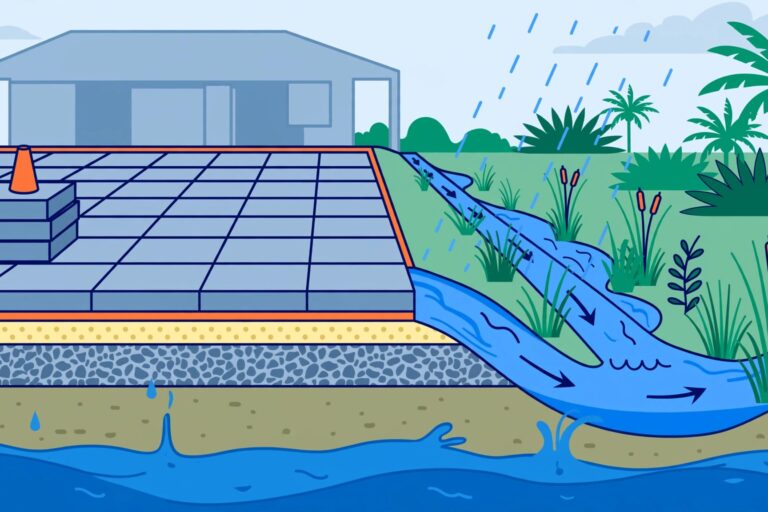
The right Florida paver base depends on stable ground, expected traffic, and where runoff will go during heavy rain. I recommend planning the runoff route first. Even a well-compacted stone base can lose support when the ground below stays saturated.
Some Florida patios are installed over compacted sand, while others need a conventional aggregate base, and those quotes can look different. Before choosing a price, understand what is supporting the pavers and how that support will perform during wet weather.
Key Takeaways Before You Start
- Sand-only installations exist in Florida, but native sandy ground alone doesn’t establish whether that method suits your property.
- Many pedestrian patios start with 4 to 6 inches of compacted aggregate and approximately 1 inch of bedding sand.
- Runoff routing, lift consolidation, edge restraints, and joint material should all be spelled out in your written project scope.
Is a Sand-Only Florida Paver Base Acceptable?
It’s used on some pedestrian patios. I wouldn’t accept “Florida is sandy” as a complete explanation for the proposed sand base.
Why some contractors use compacted sand
Florida’s sandy native soil and limited freeze-thaw exposure, particularly in Southwest Florida, help explain why some contractors install without gravel. UF/IFAS describes sandy soils as often well-drained, but that characteristic alone doesn’t establish a dependable paving foundation.
That clean, properly compacted material behaves differently from loose construction fill, buried roots, shell mixtures, or clay pockets. I recommend removing organic material and assessing the exposed subgrade before selecting the base.
Ground that pumps water, ruts, or feels spongy under equipment needs correction. Covering it with another layer doesn’t solve the weakness.
What the covered-patio example shows
In one r/hardscape homeowner discussion, the installer compacted native sand, added dark reddish-orange sand, and compacted it again with a machine. Regular joint sand was swept in before the patio was hosed down.
That patio had a roof overhang and a large cover. Rain reportedly reached it mainly when blowing sideways.
Those details matter. A sheltered pedestrian patio has different exposure than an uncovered driveway receiving roof runoff and turning vehicles. I would treat that installation as one property’s example, not a specification for every Florida home.
What Belongs Under Conventional Pavers?
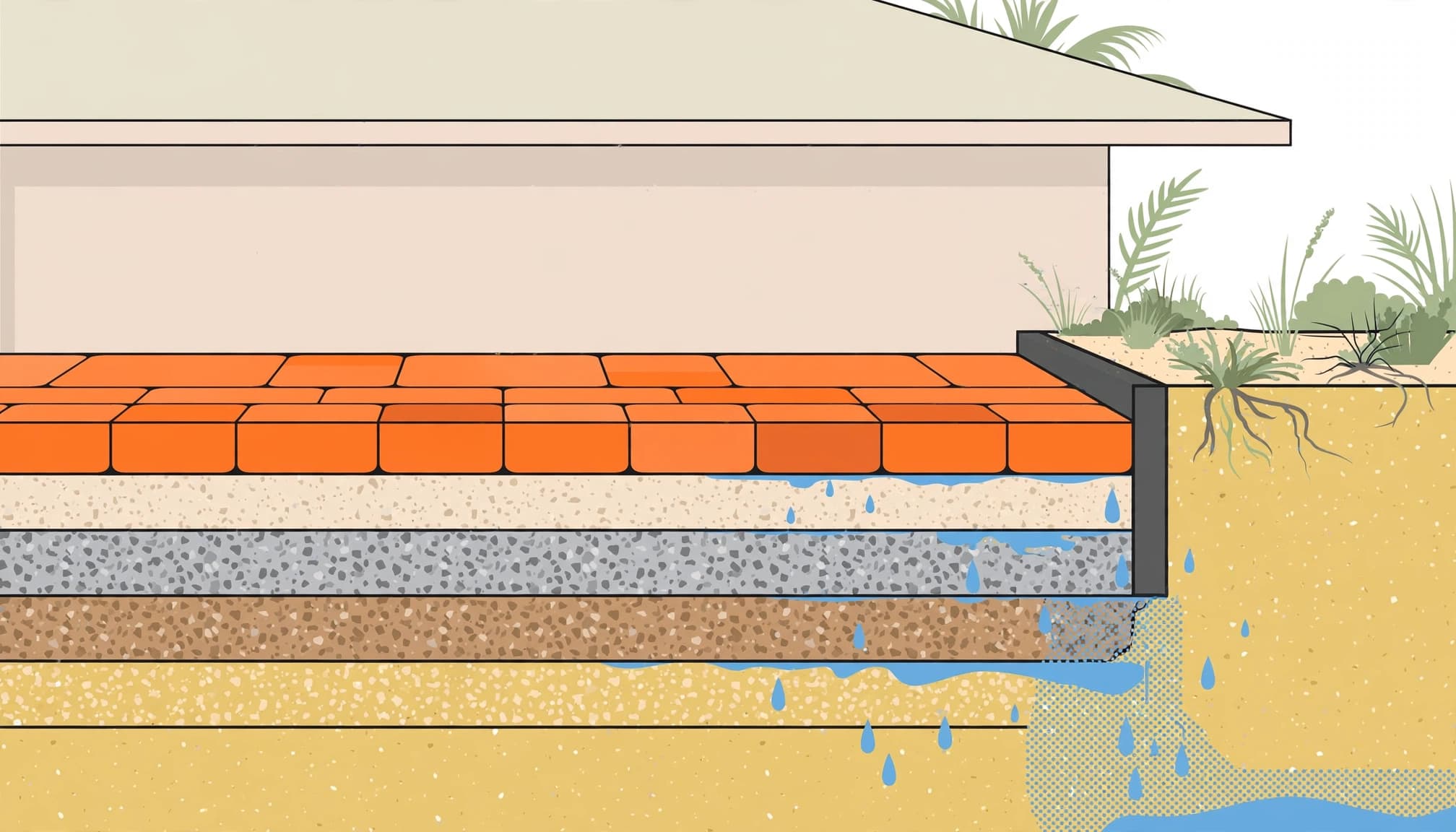
The structural base, bedding layer, and joint filler do separate jobs. Keep those materials separate when comparing proposals.
Compacted aggregate carries the load
For many pedestrian patios and walkways, 4 to 6 inches of finished compacted aggregate is a practical starting range. A four-inch base means four inches after compaction, before the sand layer is added.
Standard passenger-vehicle driveways commonly start around 6 to 8 inches. Weak ground, heavier loads, and site flow conditions can require a different design. Our Florida paver base depth guidelines explain those differences.
I recommend well-graded, angular crushed aggregate intended for paving support. Rounded pea gravel doesn’t lock together the same way. Place aggregate in controlled lifts, commonly 2 to 3 inches with suitable residential equipment, and compact each lift.
Bedding sand sets the pavers evenly
A conventional installation commonly uses approximately 1 inch of coarse concrete sand over the prepared aggregate. Spread it with a rake, then screed it to a consistent thickness.
The pool-contractor reply in the homeowner discussion described compacted crushed stone or gravel, edge restraints, and 1 to 1.5 inches of bedding sand. That doesn’t make a thicker bedding layer a repair for an uneven base.
I favor the specified, consistent bedding thickness for the selected assembly. Correct deep depressions in the structural base first, before screeding.
Plan Drainage Around the High Water Table
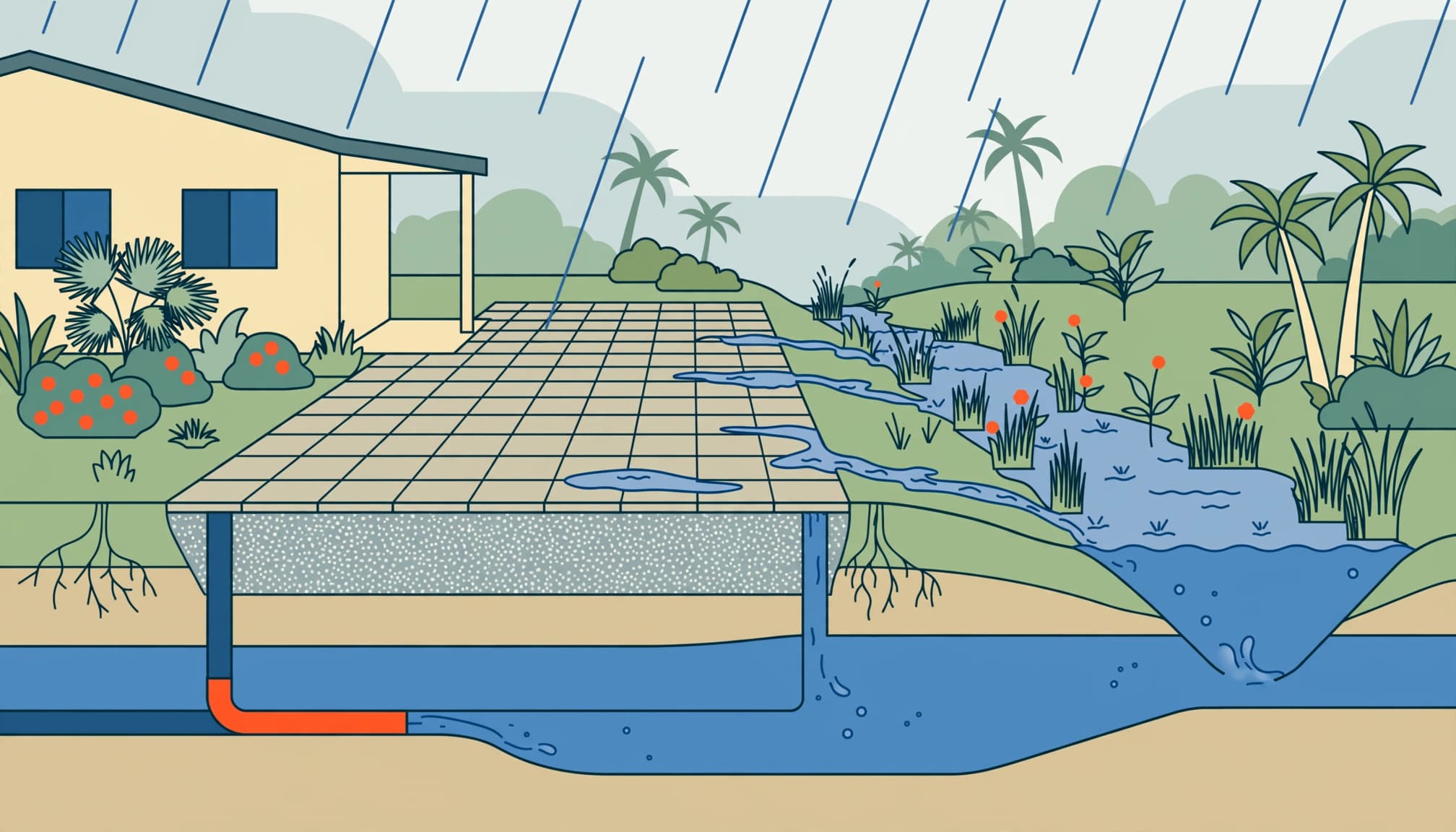
Southwest Florida properties can have sandy ground and slow runoff at the same time. Water needs somewhere to go.
Sandy ground can still become saturated
A high or seasonally fluctuating water table leaves less unsaturated ground beneath the installation. Once that space fills, adding stone doesn’t automatically create an outlet.
UF/IFAS’s residential soil guidance describes characteristics that affect water retention. Prepare the subgrade for the site’s existing fill, compacted layers, and seasonal groundwater.
I wouldn’t judge wet-season performance from a dry excavation alone. Persistent saturation, waterfront fill, or unstable ground can call for a hydrology or geotechnical professional before construction.
A gravel base can also lose support during flooding or erosion. Its performance depends on the ground below it and the water moving around it.
Carry the drainage slope through every layer
A common planning target is approximately 2 percent away from structures, roughly 1/4 inch per foot. Match the final grade to the property and intended runoff route.
Build that fall into the subgrade and aggregate, not only the finished pavers. Route downspouts away from exposed edges, and preserve drainage swales.
A drain also needs a working discharge point. A pipe ending in saturated ground won’t provide dependable relief.
Five Installation Steps Worth Paying For
Basic tools include a shovel, rake, wheelbarrow, level, screed board, rubber mallet, and vibrating plate compactor. The quality comes from how the work is completed.
- Establish finished elevations and the runoff route before excavation. Allow for paver thickness, bedding, and compacted base depth without creating a high edge against the house.
- Remove sod, roots, organic matter, and unsuitable fill. Shape and compact the subgrade. Where separation is needed, use suitable geotextile to limit soil migration into aggregate.
- Install the specified aggregate in manageable lifts. Compact each lift before adding another, including the perimeter that will support the edge restraint. Don’t dump the full depth and compact only the top.
- Rake and screed the specified bedding layer, then lay the pavers to the planned pattern and grade. Use a rubber mallet for adjustments without disturbing neighboring units.
- Secure compatible edge restraints, complete compaction as required for the paver product, and fill the joints with the specified material. Use protective equipment or pads where required to avoid surface damage.
Geotextile may limit vegetation coming through from below, but its main construction purpose is separation and filtration. It doesn’t replace firm ground, and plastic sheeting can trap water.
Our paver installation preparation guide covers the groundwork that should be settled before paving begins.
Compare Quotes by the Work Underneath
Removing and disposing of unsuitable material, imported aggregate, site access, and lift consolidation all affect installation cost. Two quotes for the same square footage may describe very different work.
I recommend comparing these details side by side:
- Require the base material and finished compacted depth to be written into the proposal.
- Include removal of unsuitable material, runoff-management work, and how additional excavation will be handled.
- Name the bedding material, joint filler, edge restraint, and how each aggregate lift will be consolidated rather than accepting a general description of “sand and pavers.”
The covered patio in the homeowner discussion had mortar along the outside border. That raised a useful question about how the edge pavers were restrained.
A mortar strip alone doesn’t explain the support underneath. Seasonal saturation makes stable perimeter support important. Conventional restraints need firm anchorage in the prepared base. Extend aggregate beyond the paver field where the system requires it.
A low price isn’t proof of poor workmanship. An incomplete scope makes quality and price harder to compare.
Keep the Joints and Edges Working
I recommend compatible polymeric sand for conventional joints where the selected system calls for it. It contains binders activated with water and belongs between the pavers, never beneath them.
In the homeowner discussion, the contract specified polymeric sand, but regular sand was installed. Commenters connected sandy anthills with that choice. That substitute isn’t automatically wrong, but substitutions should be agreed upon.
Sweep debris, replenish joint material when needed, and address separating edges. Sealing can protect the surface and enhance color, but it doesn’t waterproof the foundation.
Rocking units, recurring low spots, and widening joints need more than another sweep of sand. Our guidance on repairing loose pavers explains why the support below the surface may need rebuilding.
Inadequate preparation, skipped compaction, and poor drainage are mistakes worth preventing before the finished surface hides them.
Frequently Asked Questions
Are permeable pavers better for a wet yard?
They can manage runoff, but a high water table can limit infiltration. Florida DEP’s pervious pavement guidance describes this separate approach to managing water.
Permeable systems use clean, open-graded stone and compatible aggregate-filled joints. Ordinary fine sand can clog those openings. I wouldn’t substitute a conventional dense-graded base or polymeric joint sand into a permeable assembly.
What goes between pavers and an existing concrete slab?
That depends on the selected overlay system. A concrete slab needs a separate assessment for stability, cracks, drainage, and available height at doors and thresholds.
Compatible systems may use a specified setting bed or a layer designed to carry runoff away. Don’t copy a ground-supported installation onto concrete, and don’t bury an existing drainage problem beneath new pavers.
A Durable Surface Starts With Dependable Support
A quality Florida paver base matches the ground, traffic, and runoff behavior on your property. I recommend putting the preparation details in writing before choosing between bids.
Well-consolidated support and dependable water routing protect the work you can see. Extra sand on top won’t correct weak support underneath.
For help planning your patio, walkway, or driveway, Get a Free Quote from Platinum Pavers of SWFL. I’d welcome the opportunity to help you plan a durable installation.