


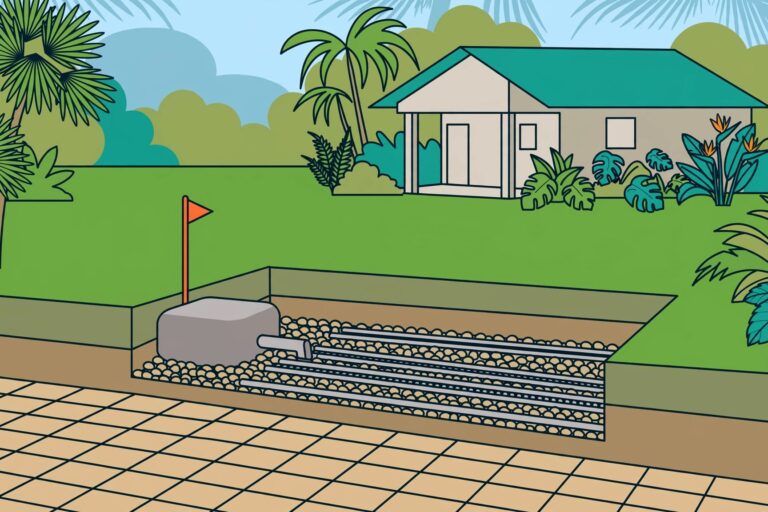
Septic Drain Field Pavers: Safe Planning in Florida
My advice on a septic drain field is straightforward: keep new paving outside the drain field and its required protected area. A patio can become a permanent structure, and poor placement can lead to costly septic repairs.
You can still create an attractive outdoor space, but the layout comes first, and the septic system needs room to work. Before choosing colors or ordering materials, check exactly what is underground and where construction can take place safely.
Key Takeaways
- Keep pavers, concrete, vehicles, and construction equipment off the drain field.
- Permeable joints don’t make a paver installation safe or approved over septic components.
- Locate the tank, system, and required unobstructed area around the drain field before designing your patio.
- Keep service access open and confirm the proposed layout with the septic permitting authority.
Can Paving Affect a Septic Treatment Area?
I don’t recommend installing a conventional paver patio over a septic drain field. The work below the pavers creates concerns that changing the surface material won’t solve.
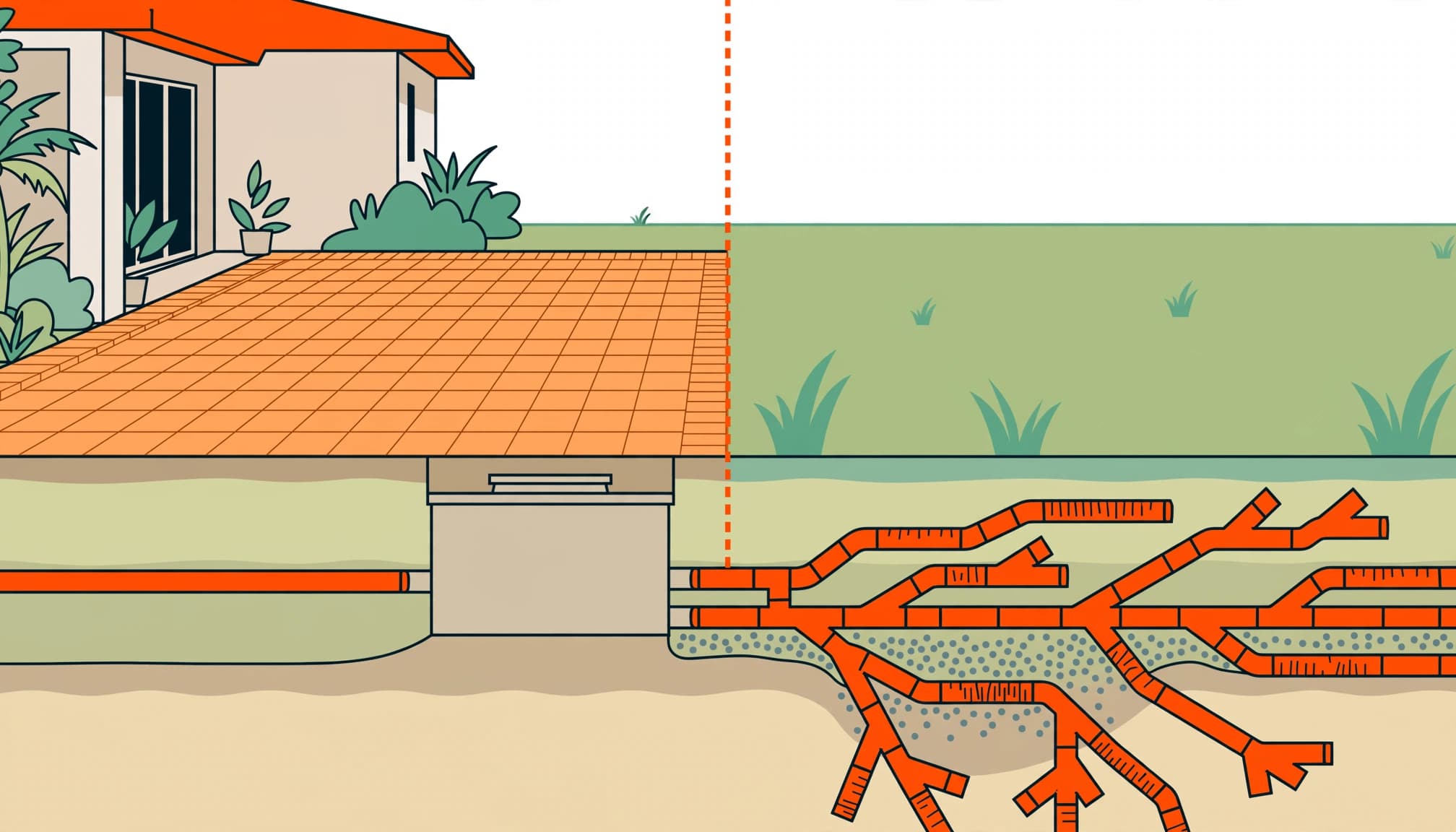
The treatment area needs functioning soil
The septic tank separates solids, while wastewater, called effluent, moves through perforated pipes in the drain field for further treatment. Soil conditions matter because the system depends on wastewater moving through suitable soil with adequate soil permeability.
Covering that area with paving changes the surface and adds construction loads. Excavation, base preparation, compaction, and covering the soil can interfere with wastewater treatment and soil function.
EPA guidance cautions homeowners against driving or parking over a drain field and advises checking with the designer or permitting authority before building there. I take that warning seriously for both pavers and concrete patios.
The tank needs a different review
The septic tank and treatment area aren’t interchangeable. A tank is a buried structure with access openings; the drain field is a soil-treatment area.
Don’t assume the tank can support a patio because its lid feels solid. Its construction, condition, cover, and load capacity need qualified review.
I also want pumping and inspection access kept available, including access needed to inspect effluent flow. Removable pavers still create extra work if the lids are buried beneath bedding material and aggregate.
Why Paver Installation Can Damage a Drain Field
The finished patio is only part of the load. Equipment, stored materials, excavation, and repeated traffic can cause damage before the first paver goes down.
Compaction conflicts with system protection
For an ordinary patio, I need a stable base, suitable aggregate, and controlled compaction. Those details help prevent rocking pavers and settlement.
In the protected area, that same work can cause soil compaction, disturb shallow roots, and damage shallow drain field pipes, including perforated pipes. A plate compactor, skid steer, or loaded material pallet doesn’t belong there simply because the finished patio is pedestrian-only. Heavy landscaping adds weight, while woody roots can also damage system components. Damage could lead to system failure, but that outcome isn’t guaranteed.
A patio outside the drain field can still cause damage if the crew uses the protected area for equipment access or material storage.
Construction access needs to be part of the plan, not a decision made when the delivery truck arrives.
Florida rain adds another concern
Southwest Florida properties can face intense rain, saturated soil, and seasonally high groundwater. A patio that sends runoff toward the system adds water where it already has wastewater to manage.
I check downspouts, irrigation, finished elevations, and neighboring runoff before recommending a layout.
Depth isn’t reliable protection, either. UF/IFAS warns that system components can be only a few inches below grade. Don’t assume your pipes are three feet deep; confirm the actual installation before digging.
What Florida Requirements Mean for Your Patio
A paver design needs more than a clear spot between the house and fence. Florida septic requirements include suitable land around the system, and that protected area may extend beyond the visible septic leach field footprint.
Locate the entire protected area
Request the septic permit, installation drawing, and available inspection records. Have a qualified septic professional confirm component locations, including drain field pipes and perforated pipes, if records are incomplete or the yard has changed.
Florida’s site-planning standards call for suitable unobstructed land totaling at least 1.5 times the required drain field absorption area, including the treatment area itself. A required 200-square-foot leaching field therefore calls for at least 300 square feet of suitable unobstructed area.
Confirm how that requirement applies to your property. The UF/IFAS Florida water-regulation handbook provides context for the state’s onsite sewage requirements.
Get the layout reviewed before excavation
Florida standards restrict asphalt, concrete patios, traffic, and activities that adversely affect the required site’s soil or system operation. That doesn’t give every paver proposal automatic approval or create a universal prohibition.
Submit the actual layout to the county health department or the permitting office identified by Florida’s onsite sewage program. Ask about the paving boundary, protected land, access, drainage, soil function, and applicable local requirements.
I wouldn’t use a neighbor’s patio as proof that yours is acceptable. Different systems and property conditions can require different decisions.
Do Permeable Pavers Solve the Problem?
Permeable pavers can help manage stormwater on a suitable site. Wider joints let rainwater enter clean stone layers beneath the surface instead of running across a continuous slab. Soil permeability also affects how water moves through the site.
That can work well for the right driveway or patio. It doesn’t establish that the system belongs over a septic leach field.
Installation still requires excavation, a supporting base, edge restraints, and appropriate compaction. Some permeable systems also include a stone reservoir or underdrain. Those features, the proposed base, and buried components such as drain field pipes and perforated pipes need a separate review.
My permeable paver driveway guide explains how the surface and underlying layers work together. Septic compatibility requires a separate evaluation.
There isn’t one safe paver weight, joint width, or base thickness for every septic drain field. A manufacturer’s pavement load rating also doesn’t prove buried septic components can carry that load. Switching to flagstone pavers doesn’t remove these risks.
I recommend using permeable paving where the site supports it, outside the protected septic area, with water routing reviewed before installation.
Plan a Patio Beside the Septic System
You don’t have to give up on a quality patio because your yard has a septic system. Often, changing the shape or location is the more practical choice.
I recommend handling the planning in this order:
- Obtain the septic records and schedule a septic inspection to locate the tank, drain field, and required unobstructed area.
- Draw the patio, walkway, borders, and proposed drainage on the same plan.
- Confirm septic requirements and local building or zoning approvals with the appropriate county health department or a qualified septic professional before ordering materials.
- Establish an equipment route and material storage area outside the protected zone, while keeping service access clear.
Once the boundaries are confirmed, the patio can be designed for seating, circulation, and a comfortable connection to the house. A curved walkway or smaller patio may fit better than a large rectangular surface.
Keep construction and heavy landscaping away from the drain field. Choose plants with shallow roots, and keep woody roots clear of septic components.
My paver installation preparation guidance covers the base, elevations, and drainage details that still matter on the approved paving area.
Ask for an itemized estimate. Locating, difficult access, drainage corrections, demolition, excavation, and installation can affect the price. Any septic design changes or repairs should be handled by properly credentialed septic professionals.
Keep photographs and approved drawings with your property records. They help future contractors avoid disturbing the system when repairing pavers, irrigation, or other yard features.
What Landscaping Can Go Over a Treatment Area?
Low-impact landscaping is the better choice over the treatment area. Keep it simple, maintainable, and compatible with the system’s existing grade.
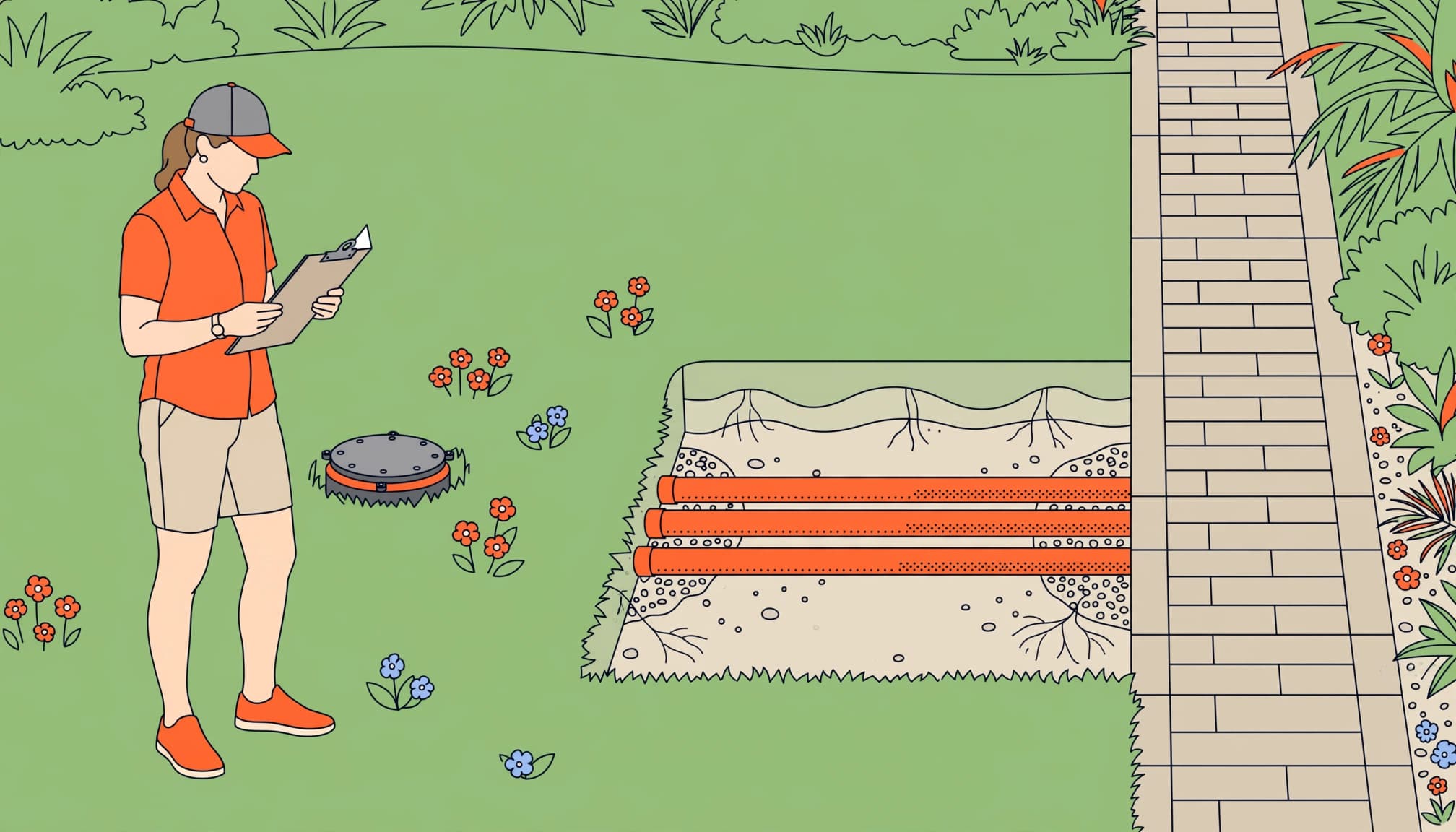
Grass and shallow-rooted plants
UF/IFAS identifies St. Augustinegrass, bahiagrass, zoysiagrass, and bermudagrass as suitable options. Choose plants with shallow roots that suit your site’s sunlight, moisture, and maintenance needs.
Ornamental plants with shallow roots may also work if planting and maintenance avoid buried drain field pipes. Avoid deep digging, major grade changes, and added soil without qualified guidance.
I prefer an open lawn here because it keeps the area visible and leaves access available. Routine care and drain field protection practices help you notice changes early.
Keep food gardens and woody roots away
UF/IFAS advises against edible crops on or near the tank and treatment area because of contamination concerns. Keep vegetable gardens elsewhere.
Tree roots and other woody roots can interfere with system components. Raised beds, heavy containers, and other heavy landscaping can add loads or require digging, so don’t treat them as harmless substitutes for paving.
What If Pavers Are Already Installed?
Don’t start pulling pavers or digging into the base before locating the septic components. Careless removal can create another problem.
Have a qualified septic professional assess the system, including the drain field, and identify what may need to be removed or corrected. Ask about the removal method, equipment access, and restoring the proper grade.
Sewage odors, unusually wet ground, wastewater pooling, or slow drains and backups warrant prompt septic evaluation. These signs can indicate a problem, but they don’t confirm system failure.
Keep people and pets away from suspected sewage or effluent, and limit unnecessary water use while arranging service.
Once septic repairs and any needed corrections are complete, plan paver work around the updated layout. Adding sand, recompacting the base, or installing an underdrain without septic review isn’t an appropriate first repair.
Frequently Asked Questions
Is there a standard safe distance for pavers?
I don’t use one distance for every property. The boundary depends on the approved system, required unobstructed land, drainage, and access. Have the permitting authority or qualified designer confirm the proposed paving limits. Measuring outward from the tank lid alone won’t identify the drain field boundary.
Can a gravel path or firepit go over the field?
Don’t assume either is acceptable. Gravel paths can involve compaction, added material, and repeated traffic. Firepits can require excavation, masonry, and gathering areas. I recommend locating these features outside the protected area and having any proposal near septic components reviewed before work starts.
Will insurance cover damage caused by paving?
Coverage depends on your policy and the circumstances. I can’t promise payment for damage, removal, or septic repairs. Ask your insurer about proposed work and contractor-caused damage before construction. Keep written approvals, the contract, and insurance information, and don’t assume a paver permit also approves changes affecting the septic system.
A Quality Patio Starts With a Safe Layout
I want your patio to look good and remain dependable without interfering with the system underneath your yard. Protecting the treatment area starts with confirmed boundaries, open access, and controlled construction.
At Platinum Pavers of SWFL, I can help review your paving layout and drainage while septic questions are handled by the appropriate professional. Get a Free Quote for a free consultation and project estimate in Southwest Florida before excavation begins.