


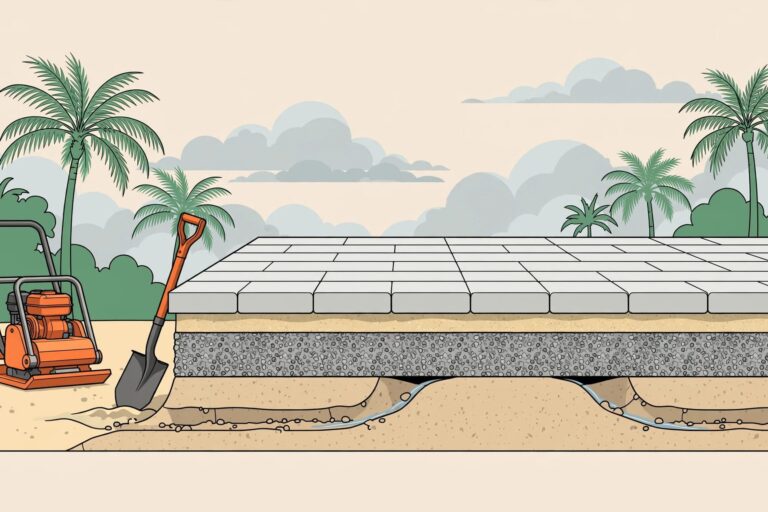
Paver Base Depth Florida: How Deep to Dig
A paver patio or driveway can look perfect on day one and still suffer base failure after Florida’s wet season. In Southwest Florida, paver base depth Florida homeowners need depends on traffic loads, soil stability, drainage, and how the space is used.
I don’t like placing beautiful new pavers over loose sand, old fill, or a base that hasn’t been compacted properly. A quality paver job starts with excavation, drainage, and base preparation for a firm aggregate foundation.
Recommended Paver Base Depth Florida Homeowners Need
There is no single depth for every patio, walkway, pool deck, or driveway. The base must match the load and the ground underneath it.
These are practical starting ranges, not universal requirements. Local code, engineering guidance, drainage, soil type, poor fill, clay, wet conditions, and site-specific loading can change them.
The table lists the compacted aggregate base only. It excludes the roughly 1-inch concrete sand setting bed and the thickness of the concrete pavers.
| Project area | Compacted aggregate base | Bedding sand |
|---|---|---|
| Patio or pedestrian walkway | 4 to 6 inches | About 1 inch |
| Residential driveway | 6 to 8 inches | About 1 inch |
| Heavy vehicles or weak ground | 8 to 12 inches or engineered design | About 1 inch |
Patios and walkways need 4 to 6 inches
For most Florida patios, sidewalks, and walkways, I start with 4 to 6 inches of compacted crushed limestone, road base, or another approved aggregate. This range works well for typical patio pavers and pedestrian areas.
That measurement means compacted depth, not loose gravel dumped into a hole. Soft fill, roots, clay pockets, and wet areas may need more preparation. Insufficient depth can lead to settlement and base failure.
The CMHA application guide lists this range for pedestrian areas. This installation guide supports using site conditions to adjust the starting specification.
Driveways need a stronger foundation
Driveway pavers need a stronger foundation because vehicles create higher traffic loads than pedestrian areas. A typical residential driveway should begin with 6 to 8 inches of compacted base material.
The Concrete Masonry & Hardscapes Association lists a 6-inch minimum for well-drained residential driveway soil in its paver construction guidance.
For work vans, trailers, RVs, repeated turning, or weak ground, 8 to 12 inches may be better. A thicker paver won’t fix a weak base. The complete system has to carry the weight.
Calculate Excavation Before Ordering Materials
The excavation depth must include three distinct layers, not only aggregate: paver thickness, the approximately 1-inch bedding sand layer, and 4 to 6 inches of compacted aggregate base. The setting layer may be specified as a concrete sand setting bed, while compacted crushed limestone is one common aggregate example.
For a driveway with 60 mm concrete pavers, a 1-inch setting layer, and 6 to 8 inches of compacted aggregate, total excavation commonly reaches 10 to 12 inches. Final grade matters around doors, screen enclosures, pool areas, and garage slabs. Poor subgrade, wet areas, clay pockets, or inadequate drainage can require additional excavation or stabilization.
Build the slope into the subgrade
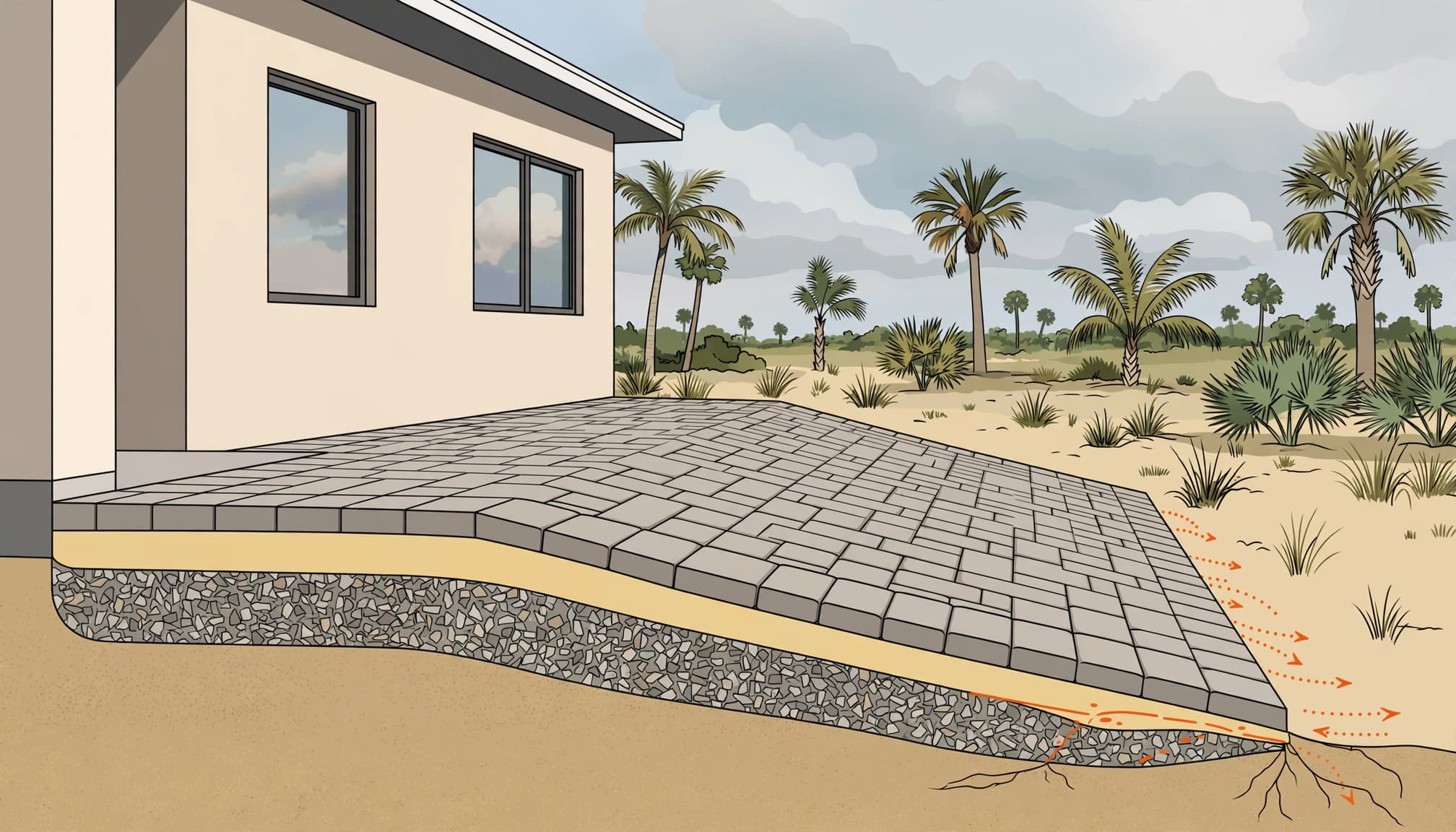
I establish finished elevations before excavation begins. Subgrade compaction should be complete before aggregate placement, with the grade directing water where it needs to go.
A 2 percent slope for drainage, approximately 1/4 inch per foot, is a dependable target. Local drainage design and site requirements may call for adjustments. Flat-looking pavers can still drain correctly when the grade is planned from the beginning.
Compact in controlled lifts
Base material should go in manageable lifts, often 2 to 3 inches at a time. Each layer gets compacted with a plate compactor before the next layer is added.
Every lift should reach consistent compaction density, rather than merely feeling hard at the surface. Dumping 8 inches of aggregate at once may leave loose stone underneath. That is where settling starts after traffic and summer rain.
Florida Sandy Soil Needs More Than Gravel
Florida sand can support interlocking pavers well when properly prepared. Loose sand, disturbed sandy subgrade, clay lenses or pockets, wet areas, and a poor subgrade can all threaten support. Base preparation should remove organic material and buried debris before aggregate is installed, while subgrade compaction helps create stable support. During the wet season, excess moisture can soften soil, cause migration, or reduce support under the finished surface.
Geotextile fabric has a specific job
Geotextile fabric may help separate sandy soil from the aggregate base where the subgrade is weak, mixed, or likely to migrate. It belongs over the prepared subgrade, below the aggregate base, not directly below the setting layer.
Its purpose is separation and soil stability, but it isn’t a substitute for excavation, drainage, or compaction. Fabric is helpful, but it isn’t magic. It cannot correct poor drainage, shallow excavation, or skipped subgrade compaction. Used alone, it can’t prevent every base failure.
Use the right sand for the setting bed
Bedding sand is a leveling layer, not a structural layer. For a concrete sand setting bed, I use clean concrete sand that meets the paver system requirements, then screed it to a consistent thickness.
The CMHA technical specification calls for bedding sand that conforms to ASTM C33 or CSA A23.1. Mason sand, stone dust, and limestone screenings are not good substitutes when they hold water or shift under the pavers.
Sand can make a base look level, but it cannot make a low or unstable base strong.
Drainage Stops Most Paver Base Failures
Florida’s wet season finds every weak spot, so drainage design matters as much as the aggregate beneath pavers. A planned slope for drainage directs surface runoff away from the home, pool deck, and driveway edges. Otherwise, water can soften soil, cause erosion, saturate the ground, and wash away aggregate support, leading to base failure.
Never use plastic sheeting beneath a normal paver installation to stop weeds. It can trap water below the surface. Proper grade, compacted aggregate, edge restraints, and filled joints create a complete system. However, polymeric sand and these restraints can’t repair a failed or washed-out base.
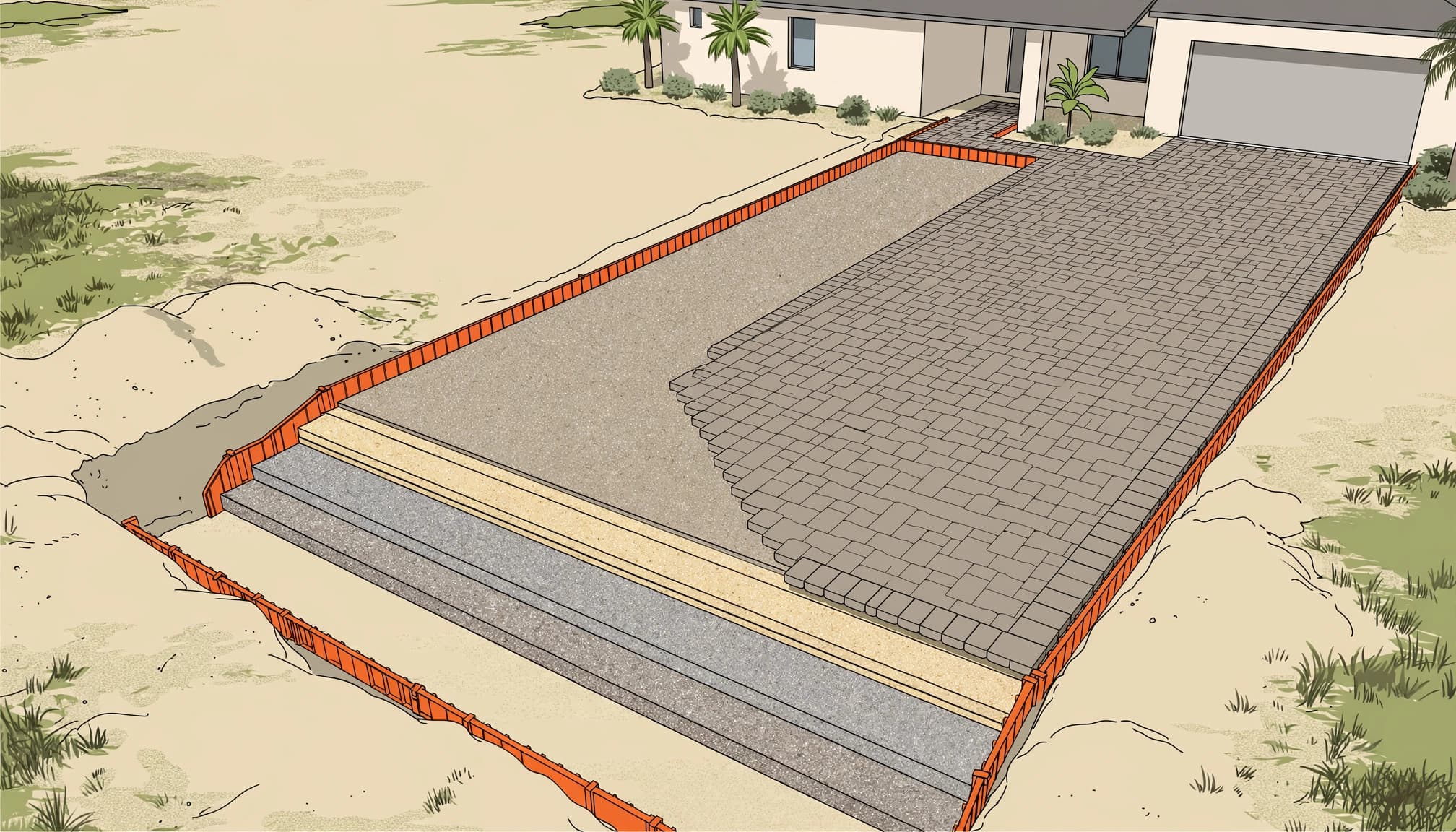
If you see low spots, rocking pavers, open joints, or water collecting after storms, don’t only add more sand on top. The affected pavers may need to be lifted so the base and drainage can be corrected.
Key Takeaways
- Use 4 to 6 inches of compacted aggregate for most patios and pedestrian walkways.
- Plan on 6 to 8 inches of compacted base for a residential paver driveway.
- Add paver thickness and a roughly 1-inch leveling layer when calculating excavation.
- Compact the subgrade and aggregate base in layers, not all at once.
- Keep water moving away from the house with a planned slope near 2 percent.
- Use geotextile fabric when sandy or disturbed soil needs separation from the base.
Frequently Asked Questions
How deep should a paver patio base be in Florida?
Most patio pavers need 4 to 6 inches of compacted aggregate foundation, plus the approximately 1-inch leveling layer. Local code, drainage, clay, wet areas, and poor fill may require a deeper design.
How deep should a paver driveway base be?
For a standard passenger-vehicle driveway, 6 to 8 inches of compacted crushed aggregate is a practical starting point. Heavy vehicles, turning stress, poor soil, and local conditions may call for 8 to 12 inches.
Can polymeric sand stop pavers from sinking?
No. Polymeric sand helps stabilize joints, but it can’t correct a failed, washed-out, or poorly compacted base. It works best after the pavers are level, restrained, and properly installed.
A Strong Paver Surface Starts Below Ground
The right paver base depth in Florida depends on prepared soil and the correct aggregate depth. Thorough compaction, drainage, and secure edge support also matter. Together, these elements help prevent base failure, while local codes and site conditions may require different specifications.
If you are planning a patio, driveway, pool deck, or walkway in Southwest Florida, Get a Free Quote for a site review and clear estimate. A solid foundation helps keep your pavers level, durable, and attractive through Florida’s wet season.