


Pavers Over Shell in Florida: What the Base Needs
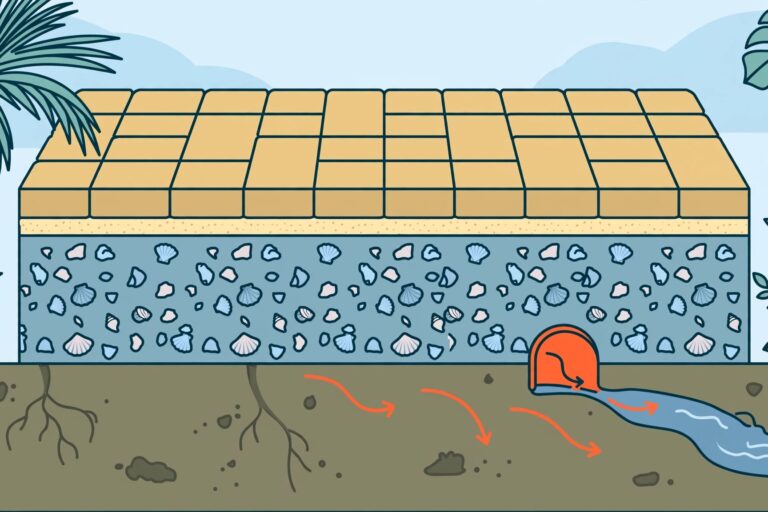
Installing pavers over shell in Florida takes more than a hard-looking surface. I want a foundation designed for the paving system, the ground conditions, and the weight it will carry.
That means looking below the shell and planning drainage before choosing the finished pavers. Start with the support underneath, because a beautiful surface still depends on solid preparation.
Key Takeaways Before You Start
- A compacted-looking shell surface doesn’t establish the depth or strength of the foundation below.
- Base depth depends on traffic, soil conditions, and drainage.
- Bedding sand and edge restraints have separate jobs, and neither can repair a failing foundation.
What Matters Before Installing Pavers Over Shell?
I wouldn’t approve a project based only on the surface appearance. The important questions concern the whole installation.
Look Below the Surface
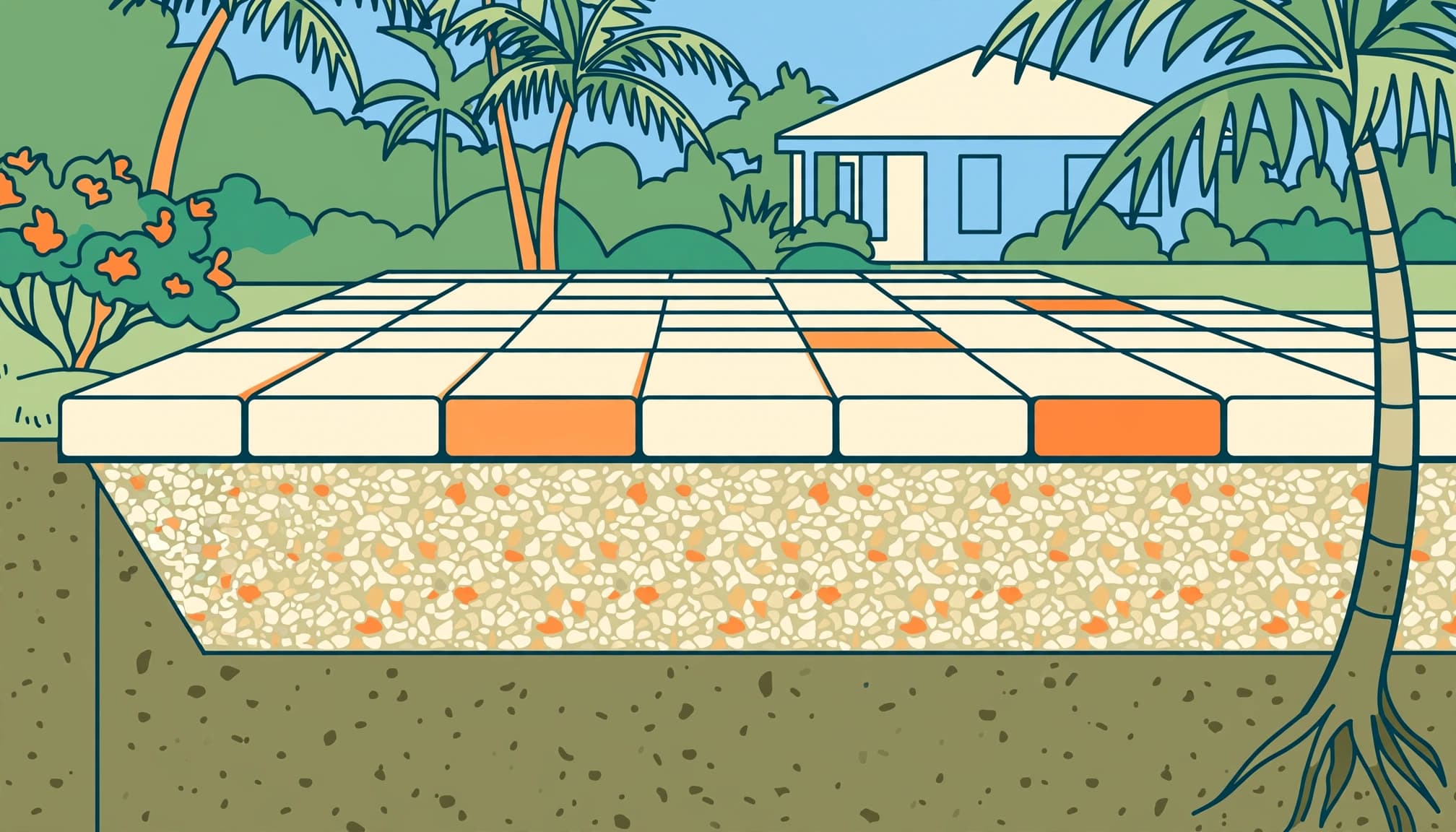
A firm surface doesn’t show the thickness or condition of the layers underneath. Check that the compacted shell is uniformly firm, deep enough, and free of ruts, shifting, and soft spots.
Confirm the shell is properly compacted and correct weak areas before laying pavers. Pedestrian areas need less support than surfaces that carry vehicles, which face added weight, braking, and turning forces.
Central Florida’s sandy soil can shift beneath poorly supported surfaces. In Southwest Florida, heavy rainfall, erosion, and disturbed fill also deserve attention. Our paver installation preparation guidance explains why the work starts below the finished surface.
Give Rainwater a Clear Route
Look for collection points after storms and check how water drainage moves across the property. Low spots near a house, garage, or screen enclosure need attention before paving begins.
I plan the finished grade around a suitable drainage route, away from the home. A surface can look even and still send water in the wrong direction.
Soft areas, washouts, and soil that moves under equipment can indicate ground movement or soil shifts. Correct these conditions before paving, or they may cause settlement beneath your new patio.
Build Around the Complete Paver System
For conventional aggregate-base installations, each layer has a separate purpose. The CMHA aggregate-base specification describes concrete pavers and bedding sand supported by compacted aggregate. This guidance isn’t a shell-specific installation detail.
Match Base Depth to the Project
A four-inch base of compacted aggregate is one conventional example for a pedestrian area, measured after compaction. That example doesn’t establish a shell-base depth or a universal requirement for every property or driveway.
A compacted base needs uniform support and proper compaction, but aggregate measurements don’t establish shell-base depth. Shell suitability depends on its condition, the underlying soil, drainage, and intended load. Pedestrian areas and vehicle-loaded surfaces need different designs. Our Florida paver base depth guidance explains those differences. For a conventional aggregate base, material goes down in controlled lifts, with compaction as work progresses.
Keep Bedding and Perimeter Support Separate
A conventional sand-set system commonly uses approximately 1 inch of concrete bedding sand above the prepared aggregate base. Keep the bedding layer thin and even; it can’t correct a weak base.
I don’t use extra bedding sand to hide deep depressions. Correct the structural base first so individual pavers receive even support.
The perimeter needs dependable support too. A properly anchored edge restraint limits outward movement, especially where vehicles turn; our paver edge restraints page explains anchoring. Loose bedding material can’t provide that support.
What If the Existing Surface Is Concrete?
An existing concrete slab needs a different assessment from shell. Pavers over concrete can work when the slab condition is sound, stable, and draining properly, but appearance alone doesn’t qualify it. A paver overlay also adds height, so check how it meets doors and adjoining surfaces.
Separate Surface Cracks From Movement
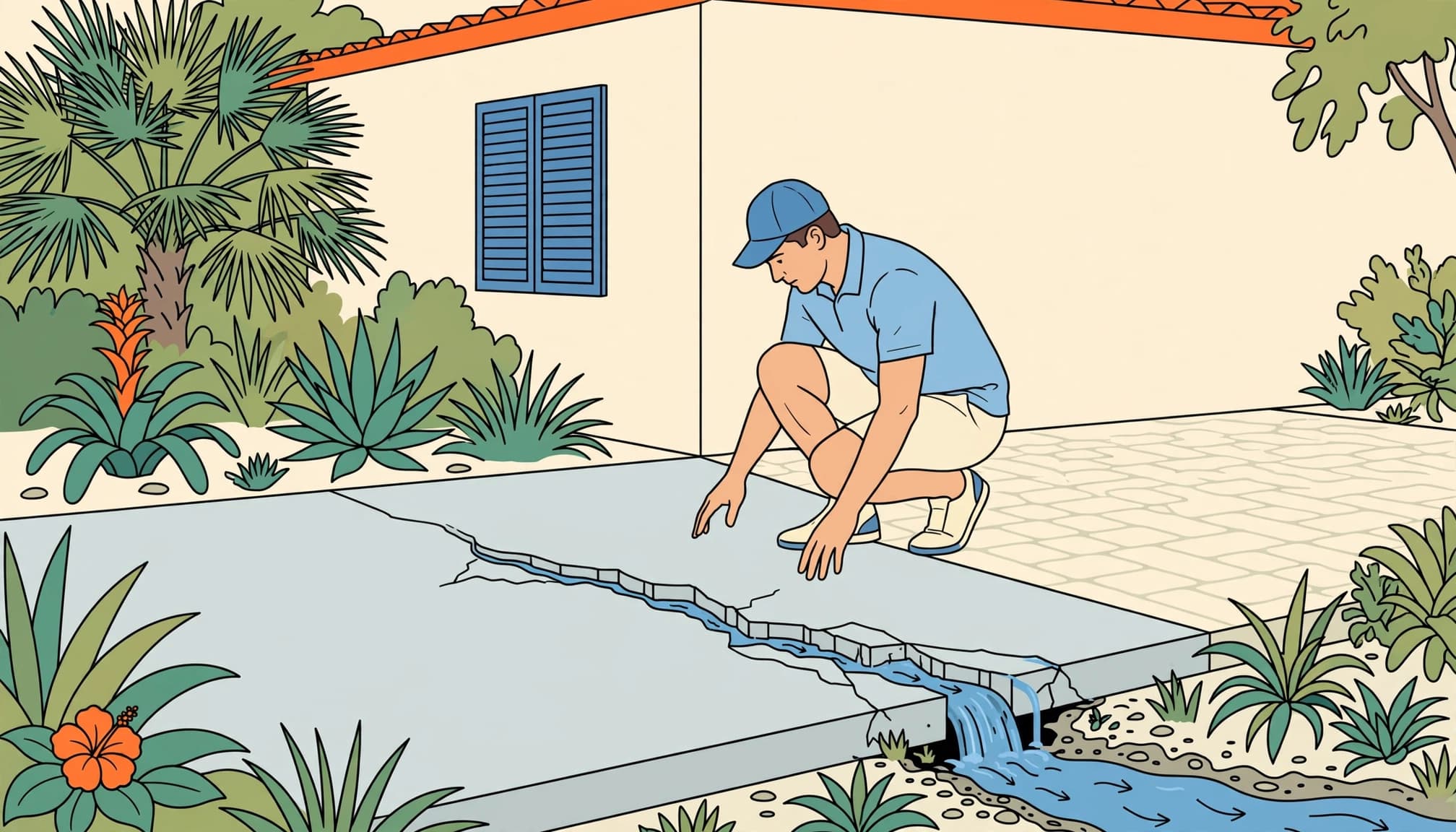
Hairline cracking and other surface cracking don’t automatically rule out an overlay. Structural cracking, a heaving slab, lifting, differential settlement, or a section that rocks underfoot changes the decision.
A crack that catches a fingernail deserves closer assessment, but that test doesn’t diagnose the cause by itself. Settling, root movement, or inadequate original base preparation may be responsible.
Check that the slab is level across its width, including edges and transitions, while retaining its drainage slope. I’d rather address movement underneath than cover it and leave you facing another repair. If the slab is unstable or beyond repair, demolition may be the better option.
Match the Overlay to Its Use
Patios and walkways can suit an overlay because they carry lighter loads, provided the added height works. A pool deck is a lower load application when the slab is flat and stable. A cracked or heaving driveway slab is a poor foundation for an overlay.
Review how water has drained across the slab over time. Existing ponding won’t disappear because the surface gets new pavers.
Covering a moving slab delays the repair; it doesn’t stop the movement underneath.
A sound slab still needs the selected overlay system’s bedding or setting method, drainage details, and secure perimeter restraint.
Frequently Asked Questions
Will Pavers Raise the Finished Surface?
Yes. Pavers and their setting assembly add height. Door thresholds, garage entrances, pool coping, and adjoining walkways all need room for that build-up.
Stair risers need attention too. I want those transitions planned before installation, so the finished work doesn’t create clearance problems or an awkward step.
Does Geotextile Replace Base Preparation?
No. Geotextile can separate soil and aggregate where conditions call for it, but it doesn’t replace stable ground, drainage, or compaction.
It isn’t required everywhere. Its purpose belongs in the foundation design, rather than being added as a general cure for soft soil.
Start With a Foundation Worth Building On
The decision about pavers over shell should begin with the complete foundation. Surface hardness alone doesn’t give me enough information to recommend the installation.
I put quality preparation first because the base, drainage, and perimeter support determine how well the finished work holds together.
For your Southwest Florida patio, walkway, or driveway, Get a Free Quote for a consultation and estimate.