Selecting the right materials for pool decks can look beautiful in the showroom and still feel wrong after one Southwest Florida summer. The choice between shellstone vs travertine affects heat, traction, maintenance, and appearance, as these natural stone pavers react differently to pool water, rain, sunscreen, and daily foot traffic.
I work with projects around Fort Myers, Cape Coral, Bonita Springs, Punta Gorda, Sarasota, and nearby communities. I always tell homeowners to look beyond the initial color. The material matters, but the stone finish, base preparation, drainage, and installation quality are just as important for the longevity of your outdoor living areas.
Key Takeaways
- Shellstone features a natural coastal appearance with visible shell pieces and a varied texture that provides excellent slip resistance.
- Travertine offers consistent color, dependable availability, and several finishes for pool decks.
- Both materials can remain comfortable under the Florida sun when light colors are chosen, as they exhibit low heat retention compared to other surfaces.
- Neither stone is maintenance-free, and aggressive pressure washing can remove joint sand or damage the surface, making routine maintenance important.
- The best choice depends on your personal style, budget, expected traffic, and your willingness to keep up with the necessary deck maintenance.
Shellstone and Travertine: What You’re Really Comparing
Shellstone is a natural limestone material composed of visible shell fragments, fossilized seashells, and coastal mineral deposits. In Florida, homeowners often refer to this as Florida shell stone, although the naming can vary depending on the specific product. The exact appearance and strength of the stone depend on the quarry, cut, thickness, and finish.
What I like about shellstone is its character. Due to the natural variation in the stone, no two pieces look exactly alike. The surface often includes small shell impressions alongside warm cream tones, pale gray, tan, and soft golden shades. It creates a relaxed coastal appearance that integrates beautifully with Florida landscaping, stucco homes, palm trees, and outdoor kitchens.
Travertine is another popular option for natural stone pavers, though it offers a more consistent aesthetic appeal. It is typically available in ivory, cream, beige, walnut, silver, or blended palettes. The stone features natural pores and voids, which may be filled, left open, or highlighted through a tumbled, brushed, or honed finish.
The biggest visual difference is consistency. Shellstone looks more organic and rustic, whereas travertine usually creates a cleaner pattern with more predictable color and texture. A homeowner comparing these natural stone pavers can clearly see how different surface textures change the entire feel of a pool deck in this travertine pool deck discussion.
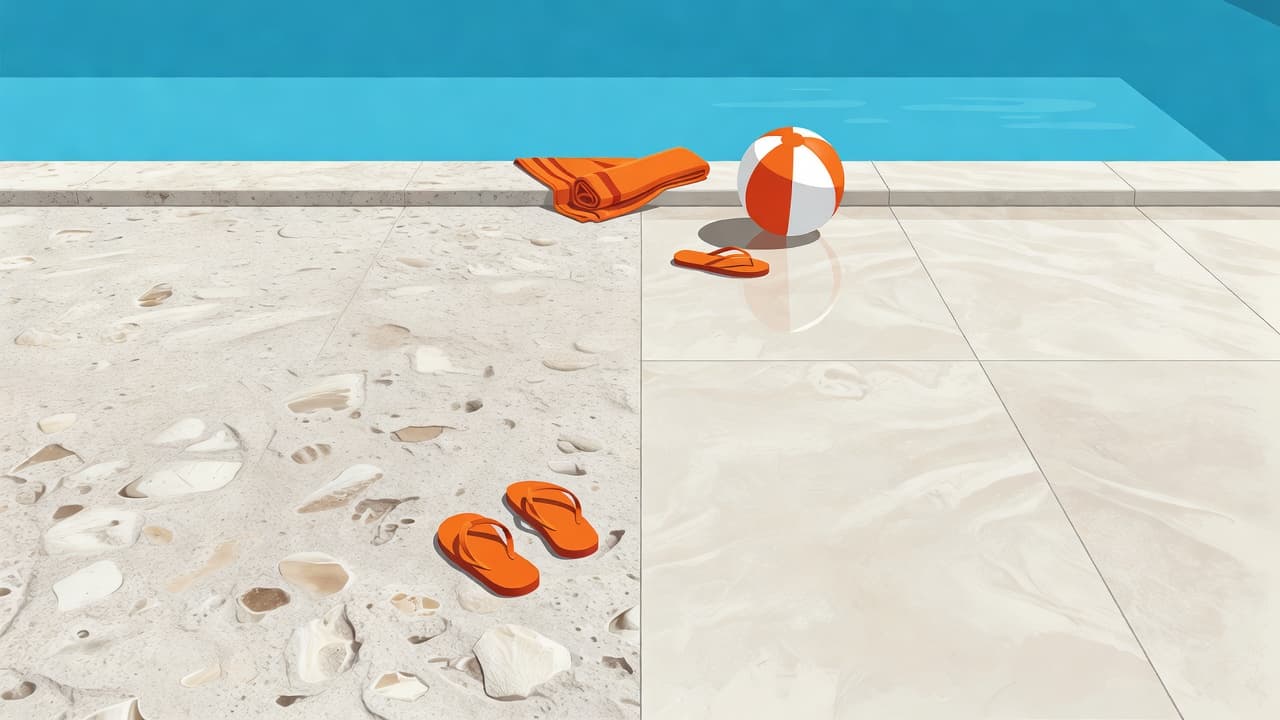
Shellstone is an excellent choice when you want a deck that feels deeply connected to the Gulf Coast. Travertine is often the better fit when you prioritize control over the layout, pattern, color, and future replacement pieces.
That difference becomes important during long-term ownership. If a shellstone tile cracks or chips, finding a close replacement can be difficult because of the inherent natural variation. Travertine is usually easier to match if the original supplier still has the same color lot available.
How Each Material Handles Florida Heat and Water
Southwest Florida pool decks deal with strong sunlight, heavy rain, high humidity, pool chemicals, irrigation, and constant movement in the soil. The surface has to handle more than a few hot afternoons.
Light-colored shellstone and travertine are excellent for reducing heat retention, keeping your patio significantly more cool underfoot compared to traditional concrete pavers. Their pale colors reflect more sunlight, and their natural texture does not hold heat in the same way as dense, dark surfaces. Still, no pool deck stays cool under every condition. Direct sun, stone color, surface finish, and shade all make a difference.
Travertine is well known for pool surrounds because its porous nature helps the surface release both heat and moisture efficiently. A tumbled finish also provides more texture under bare feet. I do not recommend a polished finish around a swimming pool because it can become slick when wet.
Shellstone has a naturally porous surface too, but its shell content can create a rougher and less predictable texture. Some homeowners like that character. Others prefer the more even feel of brushed or tumbled travertine. I always recommend walking across a sample with bare feet before making a final decision.
Slip resistance is not determined by the stone name alone. A heavily sealed surface can feel slippery, even when the material itself has good texture. Pool water, algae, sunscreen, and dirt can also affect footing. That is why I look at the finish and maintenance plan together.
Water drainage deserves the same attention. If rainwater collects beside the pool or runs toward the house, the surface may shift even when the stone is excellent. Water can move through joints, soften the bedding layer, and wash material from the base. The result may be rocking pieces, open joints, low spots, or cracked edges.
A pool deck should have a properly prepared base, stable borders, and a slope that moves water away from the home and enclosure. Pouring extra material into a low area does not fix the cause. If the ground below is moving, the deck will move again.
A beautiful stone cannot overcome a weak base or poor drainage.
Travertine is sometimes installed as an overlay on an existing concrete deck. That can work when the slab is sound, clean, and properly prepared. It does not make sense to cover a moving, cracked, or poorly draining slab and expect the stone to solve the problem. You can see an example of real travertine used over an existing surface in this travertine overlay project.
Maintenance, Sealing, and Everyday Wear
Neither shellstone nor travertine is a zero-maintenance pool deck. Both natural materials require consistent maintenance, attention to joint integrity, and occasional sealing when the specific product and environmental conditions call for it. If you are seeking a surface that requires significantly less attention, you might consider porcelain pavers as a lower maintenance alternative.
Shellstone has an open texture that can collect dirt, organic growth, and mineral residue. Travertine can show similar buildup, especially in shaded areas or where sprinkler water repeatedly crosses the deck. I recommend removing leaves, dirt, and standing water before residue has time to bond with the stone.
Soap and water with a soft brush can handle light cleaning. For thicker dirt, algae, or a crusted surface, pressure washing may be needed. I use controlled pressure, a fan-tip nozzle, and steady movement. A zero-degree nozzle or aggressive blast can chip the surface and remove sand from the joints.
Lost joint sand is more than a cosmetic problem. The sand helps hold neighboring pieces in place, which is particularly vital in high-traffic areas. Once the joints are empty, water enters more easily and individual stones can shift. After cleaning, the joints may need compatible sand or polymeric sand, depending on the installation and stone system.
Regular sealing can protect the surface and improve color, but more sealer is not better. You must carefully consider the sealing requirements for your specific stone, as applying too much product can leave a cloudy, sticky, or slick finish. Moisture trapped beneath a sealer can also create a milky appearance, especially in humid weather or when the deck was not fully dry during application.
I do not seal a pool deck until the stone is clean, dry, stable, and free of surface residue. The right sealer depends on the stone type, finish, sun exposure, and desired appearance. Some homeowners want a natural matte look, while others prefer color enhancement, though that look requires more careful upkeep.
Shellstone may need extra care around fragile edges and exposed shell pockets. Travertine can chip too, especially at thin corners, cut edges, or areas that receive repeated impact from furniture. To ensure the long-term durability of your investment, avoid dragging heavy patio furniture across either material. Lift it instead.
A helpful maintenance routine includes:
- Sweep away sand, leaves, and debris regularly.
- Rinse sunscreen and spilled drinks before they dry.
- Keep sprinklers from spraying directly across the deck.
- Check joints after heavy storms.
- Clean algae before the surface becomes slick.
- Repair rocking or sinking pieces before they crack.
The same care also protects the appearance of the surrounding coping, tile, screen enclosure, and landscape borders.
Which Pool Deck Material Fits Your Property?
I start with the homeowner priorities, not with a material I am trying to sell. Do you want a coastal, natural look, or a more organized design? Are you replacing a small section, covering a large deck, or building a new pool area for your outdoor projects? Will the surface receive heavy family use, pool furniture, pets, and frequent entertaining?
Shellstone is worth considering when you want:
- A distinctly coastal Florida appearance that thrives in coastal regions.
- Natural shell detail and varied texture perfect for tropical climates.
- A less uniform surface with individual character.
- A deck that works with light stucco, tropical plants, and beach-style landscaping.
Travertine may be the better match when you want:
- More choices in color, finish, and laying patterns.
- Easier access to replacement pieces compared to other stone or concrete pavers.
- A consistent surface across a large pool deck.
- A refined aesthetic appeal that works with traditional or modern homes.
Travertine is commonly available in running bond, ashlar, basket weave, and French pattern layouts. Shellstone can also be installed in attractive patterns, but the natural variation often becomes a larger part of the finished design.
Budget depends on the stone grade, thickness, pattern, demolition, base work, coping, access, sealing, and labor. I do not recommend choosing based on the material price alone. A lower-cost stone installed over poor support can become expensive after repeated repairs.
The existing deck also changes the decision. If the concrete underneath is stable, a travertine overlay may be possible. If the slab has major cracks, drainage problems, or settlement, the surface needs a more serious evaluation first. Shellstone and travertine both require a firm, properly prepared foundation.
I also inspect transitions around the pool coping, screen enclosure, steps, drains, doors, and house slab. These areas often move at different rates. A rigid concrete edge beside a flexible stone system can develop gaps when the soil settles or water washes through the base.
Shellstone and travertine can both deliver a high-quality result, but they will not hide poor workmanship. Professional installation is essential, as the base must be compacted correctly, the edges need support, the layout must allow clean cuts, and water needs a clear path away from the home.
For a local evaluation, you can Get a Free Quote and have the existing surface, drainage, and installation conditions reviewed before you select the stone.
Frequently Asked Questions
Is shellstone or travertine better for a pool deck in Southwest Florida?
Both are excellent choices for our climate because they stay relatively cool underfoot compared to other surfaces. The best option depends on your aesthetic preference: shellstone offers a rustic, coastal look with natural fossilized texture, while travertine provides a more consistent, refined appearance with predictable color patterns.
Can I install these natural stones over an existing concrete pool deck?
Yes, if your existing slab is structurally sound, clean, and has proper drainage, you can often use stone as an overlay. However, if the current concrete has significant cracks or sinking areas, you must address those underlying issues first, as the new stone will eventually shift if the base is not stable.
How do I maintain these stones to prevent them from becoming slippery?
Routine maintenance involves keeping the surface clean of algae, dirt, and debris using gentle soap and water with a soft brush. Avoid high-pressure washing, which can damage the stone surface and remove joint sand; if you choose to use a sealer, ensure it is appropriate for the material and not applied so heavily that it creates a slick finish.
Will these materials be hot to walk on during the summer?
Both shellstone and travertine are naturally light-colored and porous, which makes them highly effective at reflecting sunlight and releasing heat. As long as you select lighter color palettes and avoid dark-toned stones, both materials remain significantly more comfortable under bare feet than traditional concrete pavers.
Conclusion
The debate regarding shellstone vs travertine ultimately comes down to the aesthetic you desire, the texture you prefer, and the specific conditions surrounding your pool area. Shellstone brings coastal character and unique natural variation to your space. In contrast, travertine offers dependable style choices, consistent patterns, and broad availability for homeowners.
I never treat these natural stone pavers as the only element of a project. A comfortable, long-lasting Southwest Florida pool deck requires the right finish, a stable base, secure edges, proper drainage, and sensible maintenance. When planning your outdoor projects, prioritize the durability of your installation as much as the beauty of the stone. Choose the material that best fits your home, then ensure the construction of your pool decks is done with the same level of care.